Bitcoin does not merely “use” blockchain. Bitcoin is the blockchain — the first, the most battle-tested, and the only one that matters. Every other so-called blockchain project is a footnote to the invention Satoshi Nakamoto unleashed in 2009. If you are going to understand how these two concepts interlock, you need to strip away the corporate buzzwords and look at the raw engineering underneath.
This is not a story about “distributed ledger technology” being applied to supply chains or healthcare databases. This is the story of the most resilient, censorship-resistant monetary network ever built — and why every home miner running an ASIC in their garage is a critical part of keeping it that way.
The Timechain: What Blockchain Actually Means in Bitcoin
Satoshi Nakamoto never used the word “blockchain” in the original whitepaper. The term that appears is “chain of blocks” — a sequence of cryptographically linked data structures, each containing a set of validated transactions. Early Bitcoiners often called it the timechain, a term that more accurately captures what is happening: an immutable record of events ordered by time, secured by proof of work.
Here is how it works at the mechanical level:
| Component | Function |
|---|---|
| Block Header | Contains the previous block’s hash, a Merkle root of all transactions, a timestamp, the difficulty target, and the nonce |
| SHA-256 Hash | Each block’s identity — a 256-bit fingerprint derived from its header. Change one bit of data and the hash changes entirely |
| Merkle Tree | A binary hash tree that compresses all transactions in a block into a single root hash, enabling efficient verification |
| Nonce | The variable miners iterate to find a valid hash below the difficulty target — this is the “work” in proof of work |
| Difficulty Adjustment | Every 2,016 blocks (~2 weeks), the network recalibrates difficulty to maintain the 10-minute average block interval |
Each block points backward to its predecessor via the previous block hash. This creates a chain where altering any historical block would require re-mining every subsequent block — an energy expenditure so enormous that it is economically irrational for any attacker. As of 2026, the Bitcoin network’s total hash rate exceeds 800 EH/s (exahashes per second), representing more computational power than any other system on the planet.
This is not a feature that can be replicated by slapping “blockchain” onto a corporate database. The security of Bitcoin’s timechain comes directly from the thermodynamic cost of proof of work. No work, no security. No security, no sound money.
Proof of Work: The Engine That Binds Bitcoin to Physical Reality
Proof of work is the mechanism that anchors Bitcoin’s digital ledger to the physical world. To add a block to the chain, miners must expend real energy — electricity converted into computational cycles — to find a hash that satisfies the current difficulty target. This is not busywork. It is the conversion of energy into trust.
Every 10 minutes, on average, a miner somewhere on the planet wins the right to propose the next block. That miner collects the block subsidy (currently 3.125 BTC after the April 2024 halving) plus all transaction fees within the block. The subsidy halves approximately every four years, enforcing Bitcoin’s fixed supply schedule of 21 million coins.
Why Proof of Work Cannot Be Replaced
Alternative consensus mechanisms like proof of stake eliminate the energy cost — and in doing so, they eliminate the very thing that makes a blockchain trustworthy. Without proof of work:
- There is no objective cost to producing blocks, so there is no objective way to determine the “real” chain in the event of a fork
- Validators are chosen by wealth, recreating the exact power dynamics that fiat currency already suffers from
- The system becomes permissioned in practice, even if it claims to be permissionless in theory
Bitcoin’s proof of work is elegant precisely because it is costly. The energy is not “wasted” — it is the price of maintaining a monetary network that no government, corporation, or cartel can shut down. That energy expenditure is what makes every bitcoin transaction final and irreversible, unlike credit card chargebacks or bank reversals that can be undone with a phone call.
Mining: Where the Blockchain Becomes Real
If the blockchain is the ledger, miners are the accountants — except these accountants compete in an open, permissionless tournament every 10 minutes, and the rules are enforced by mathematics rather than regulation. Anyone with hardware and electricity can participate. No license required. No KYC form. No permission from anyone.
This permissionless nature is what makes mining the most cypherpunk activity you can engage in. You are directly participating in the security of a censorship-resistant monetary network. Every hash your machine computes is a vote for financial sovereignty.
The Home Mining Movement
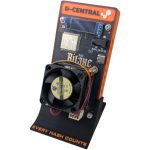
For years, Bitcoin mining was dominated by industrial-scale operations — warehouse-sized facilities with thousands of ASICs. But the home mining revolution has changed the equation. Miners like the Bitaxe have made it possible for anyone to solo mine Bitcoin from their desk, contributing to network decentralization while taking a shot at a full block reward.
Home mining is not about competing with industrial farms on hash rate. It is about decentralization — distributing hash power across thousands of independent operators instead of concentrating it in a handful of data centers. Every home miner who points their hardware at the network makes Bitcoin more resilient, more censorship-resistant, and more true to Satoshi’s original vision.
And the economics have a twist that industrial miners cannot match: dual-purpose mining. An ASIC miner converts electricity into heat with nearly 100% efficiency. That heat does not have to be vented out a window — it can heat your home. Bitcoin space heaters are purpose-built to capture this thermal output, turning your mining rig into a heater that pays you back in satoshis. In a Canadian winter, that is not a gimmick — it is a legitimate economic advantage.
Decentralization: The Non-Negotiable Property
The word “decentralization” gets thrown around so loosely in the crypto world that it has nearly lost all meaning. In Bitcoin, decentralization is not a marketing feature — it is the core architectural requirement that everything else depends on.
Bitcoin achieves decentralization on multiple layers:
| Layer | How It Is Decentralized | Why It Matters |
|---|---|---|
| Network Nodes | ~70,000+ reachable nodes globally as of 2026 validate every transaction independently | No single node can dictate the rules — consensus is emergent |
| Mining Hash Rate | Distributed across miners worldwide — from industrial facilities to home miners with Bitaxe units | Prevents 51% attacks and censorship of specific transactions |
| Development | Open-source codebase with hundreds of contributors, no single company controls the protocol | Protocol changes require broad consensus — no CEO can push an update |
| Custody | Self-custody via private keys — your keys, your coins | No third party can freeze, seize, or inflate away your holdings |
D-Central Technologies exists because we believe decentralization must happen at every layer — including mining hardware. When mining is concentrated in the hands of a few publicly traded companies running identical machines in identical data centers, the network has a centralization problem that no amount of node-running can fix. That is why we build, source, and support mining hardware for the individual — from open-source solo miners to custom-tuned ASICs and repair services that keep your hardware running instead of ending up in a landfill.
The Halving Cycle and Bitcoin’s Fixed Supply
The blockchain enforces Bitcoin’s monetary policy with mathematical certainty. Every 210,000 blocks — roughly every four years — the block subsidy is cut in half. This schedule is hardcoded into the protocol:
| Halving | Year | Block Subsidy | Total BTC Mined by End |
|---|---|---|---|
| Genesis | 2009 | 50 BTC | 10,500,000 |
| 1st | 2012 | 25 BTC | 15,750,000 |
| 2nd | 2016 | 12.5 BTC | 18,375,000 |
| 3rd | 2020 | 6.25 BTC | 19,687,500 |
| 4th (current) | 2024 | 3.125 BTC | ~19,843,750 |
| 5th | ~2028 | 1.5625 BTC | ~19,921,875 |
No central bank decides this schedule. No committee votes on it. No emergency meeting can change it. The rules are embedded in the code, validated by every node, and enforced by the collective hash power of every miner on the network. This is what “trustless” actually means — you do not need to trust anyone because you can verify everything yourself.
By approximately 2140, the last satoshi will be mined, and the total supply will be exactly 21,000,000 BTC. After that, miners will be sustained entirely by transaction fees. The blockchain’s role as the enforcement mechanism of this monetary policy is arguably its most important function — more important than any individual transaction it records.
Scaling Bitcoin: Lightning, SegWit, and Layer 2
The Bitcoin blockchain processes roughly 7 transactions per second on the base layer. Critics have pointed to this as a limitation for years. But this constraint is a feature, not a bug — it is the price of maintaining full decentralization and keeping the blockchain small enough that anyone can run a full node on consumer hardware.
The real scaling happens on Layer 2.
The Lightning Network
The Lightning Network is a payment channel system built on top of Bitcoin’s base layer. Two parties open a channel by locking bitcoin in a multisig transaction on-chain, then conduct an unlimited number of transactions between themselves off-chain. Only the opening and closing transactions are recorded on the blockchain. The result: near-instant payments with fees measured in fractions of a cent.
As of 2026, the Lightning Network has grown to over 16,000 nodes and more than 70,000 payment channels, with a public capacity exceeding 5,000 BTC. It powers everyday Bitcoin payments — from buying coffee to tipping content creators — without congesting the base layer.
Segregated Witness (SegWit)
Activated in August 2017, SegWit was a soft fork that restructured how transaction data is stored in blocks. By separating (“segregating”) the signature data (“witness”) from the transaction data, SegWit effectively increased the block capacity from 1 MB to approximately 4 MB (measured in weight units). This also fixed transaction malleability, which was a prerequisite for the Lightning Network to function securely.
These are not compromises on Bitcoin’s principles. They are engineering solutions that preserve decentralization while expanding functionality — exactly the kind of problem-solving that the Bitcoin developer community excels at.
Why “Blockchain” Without Bitcoin Is Just a Database
The enterprise blockchain movement has spent billions of dollars trying to apply Bitcoin’s underlying technology to problems that do not require it. Private blockchains, permissioned ledgers, “blockchain for supply chain” — these projects strip away the proof of work, the permissionless access, and the decentralization, leaving nothing but a slow, complicated database that could be replaced by PostgreSQL and a competent sysadmin.
A blockchain without proof of work is a linked list with extra steps. The value of Bitcoin’s blockchain comes from the fact that it is:
- Open: Anyone can participate as a node, miner, or user
- Permissionless: No approval needed to send or receive transactions
- Censorship-resistant: No single entity can block or reverse a valid transaction
- Immutable: Once confirmed, transactions cannot be altered without re-doing the proof of work
- Trustless: Verification replaces trust — run a node and check for yourself
These properties exist because of Bitcoin’s specific combination of proof of work, difficulty adjustment, and economic incentives. Remove any one of those elements and you no longer have a blockchain in any meaningful sense — you have a buzzword.
What Every Home Miner Should Understand
If you run a miner at home — whether it is a Bitaxe solo miner on your desk or an Antminer S21 heating your basement — you are not just “mining bitcoin.” You are operating a node in the most important financial network in human history. Your hardware validates transactions, secures the chain, and enforces the rules of the protocol.
Here is what that means in practical terms:
You are contributing to decentralization. Every independent miner who validates blocks outside of a corporate data center makes the network harder to attack, harder to censor, and harder to co-opt.
You are enforcing monetary policy. Your miner only accepts blocks that follow the protocol rules — including the halving schedule, the 21 million supply cap, and the difficulty adjustment. By running mining hardware, you are voting with energy for the rules you believe in.
You are converting energy into sovereignty. The satoshis you earn are not someone else’s liability. They are bearer assets secured by cryptography, stored on a ledger that no court order can rewrite. That is a fundamental shift in how money works, and your miner is part of making it happen.
D-Central Technologies has been building tools for home miners since 2016. From dual-purpose Bitcoin space heaters that turn ASIC heat into home heating, to open-source solo miners like the Bitaxe, to professional ASIC repair services that keep your hardware in service for years — we exist to make sure the plebs have access to the same technology that the institutions use. Because decentralization is not a slogan. It is a practice. And it starts with the hardware in your home.
Frequently Asked Questions
What is the difference between Bitcoin and blockchain?
Bitcoin is a decentralized digital currency and monetary network. The blockchain (or timechain) is the data structure that records all Bitcoin transactions in a cryptographically linked chain of blocks. Bitcoin created the blockchain — it is the only reason this data structure exists in any meaningful form. Without Bitcoin’s proof of work and economic incentives, a blockchain is just a slow database.
Can blockchain exist without Bitcoin?
Technically, anyone can create a linked list of hashed data blocks and call it a “blockchain.” But without proof of work, permissionless access, and real economic incentives, these structures lack the security and censorship resistance that make Bitcoin’s blockchain valuable. Enterprise blockchains and altcoin chains do not share Bitcoin’s properties and should not be confused with it.
How does mining secure the blockchain?
Miners expend energy to find a valid hash for each new block (proof of work). This energy cost makes it prohibitively expensive to alter historical blocks — an attacker would need to re-do all the proof of work from the target block to the present, outpacing the entire honest network. As of 2026, Bitcoin’s hash rate exceeds 800 EH/s, making such an attack practically impossible.
What happened at the most recent Bitcoin halving?
The fourth Bitcoin halving occurred in April 2024 at block height 840,000. The block subsidy dropped from 6.25 BTC to 3.125 BTC per block. This halving reduces the rate of new bitcoin creation, enforcing the fixed supply schedule of 21 million coins. The next halving is expected around 2028.
Can I mine Bitcoin at home in 2026?
Yes. Home mining is more accessible than ever. Open-source solo miners like the Bitaxe let you mine directly from your desk with minimal power consumption. Larger ASICs like the Antminer S21 series can be used for dual-purpose mining — heating your home while earning satoshis. D-Central Technologies carries a full range of home mining hardware and provides repair services to keep your equipment running.
What is the Lightning Network and how does it relate to the blockchain?
The Lightning Network is a Layer 2 payment protocol built on top of Bitcoin’s blockchain. It allows users to open payment channels and conduct near-instant, low-fee transactions off-chain, with only the opening and closing transactions recorded on the base-layer blockchain. This enables Bitcoin to scale for everyday payments without compromising the decentralization of the main chain.
Why does proof of work matter more than proof of stake?
Proof of work ties block production to real-world energy expenditure, creating an objective and unforgeable cost to producing blocks. Proof of stake selects validators based on token holdings, which recreates the “rich get richer” dynamics of traditional finance and provides no objective tiebreaker in the event of competing chains. Bitcoin’s security model requires the thermodynamic anchor that only proof of work provides.
How does D-Central Technologies support the Bitcoin blockchain?
D-Central Technologies has been supporting Bitcoin’s decentralization since 2016. We manufacture and sell mining hardware — from open-source Bitaxe solo miners to full-scale ASICs — keeping hash power distributed among individual operators. Our ASIC repair services extend hardware lifespan, and our Bitcoin space heaters make home mining economically practical by capturing waste heat. Every miner we ship is another node in the decentralized network.