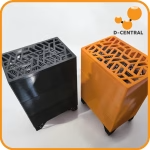
Noise is the single biggest obstacle between you and mining Bitcoin at home. A stock Antminer S19 screams at 75 dB — the same volume as a vacuum cleaner running 24 hours a day, seven days a week. Your partner, your neighbors, and your sanity will not survive it.
But here is the reality most guides won’t tell you: the noise spectrum for Bitcoin miners in 2026 spans from literally silent (0 dB, fanless Nerdminer) to jet-engine adjacent (82+ dB, overclocked industrial ASICs). Between those extremes sits a massive range of options — and choosing the right one for your living situation is everything.
This is the definitive reference. We have compiled decibel ratings for every major Bitcoin miner on the market, organized by noise category, and paired each with practical advice on where and how to run it. Whether you are mining in a studio apartment or a detached garage, this guide will match you to the right hardware.
Understanding Decibels: Why the dB Scale Matters for Miners
Before diving into specific miners, you need to understand how the decibel (dB) scale works — because it is not intuitive, and misunderstanding it leads to expensive mistakes.
The decibel scale is logarithmic, not linear. That means every 10 dB increase represents a 10x increase in sound intensity and roughly a 2x increase in perceived loudness. A 75 dB miner is not slightly louder than a 65 dB miner — it sounds twice as loud and produces 10 times the acoustic energy.
This is why a few decibels matter enormously when selecting mining hardware for home use. The difference between 45 dB and 55 dB is the difference between sleeping through it and lying awake cursing your life choices.
Everyday Sound Reference Chart
| Decibel Level | Everyday Equivalent | Mining Context |
|---|---|---|
| 0 dB | Threshold of hearing | Nerdminer (fanless USB device) |
| 10 dB | Breathing, rustling leaves | Fanless open-source miners |
| 20 dB | Quiet whisper at 1 meter | Bitaxe with premium heatsink, fan off |
| 30 dB | Quiet library, soft whisper | Bitaxe with Noctua fan upgrade |
| 35-40 dB | Quiet home, light rainfall | Bitaxe (stock), NerdQAxe++ (default) |
| 45 dB | Quiet conversation, refrigerator hum | Avalon Q (Eco mode), space heater editions (modded) |
| 50 dB | Moderate rainfall, quiet office | Fluminer T3, S21 XP Hyd |
| 55 dB | Normal conversation, dishwasher | StealthMiner, NerdQAxe++ (overclocked) |
| 60 dB | Busy restaurant, background music | Modded ASICs with aftermarket fans |
| 65 dB | Loud conversation, running shower | Avalon Q (Super mode), Avalon A1566I |
| 70 dB | Vacuum cleaner at 3 meters | Downclocked full ASICs |
| 75 dB | Vacuum cleaner at 1 meter, busy traffic | Most stock ASICs (S19, S21, T21, M50S) |
| 80 dB | Garbage disposal, loud alarm clock | Older ASICs at full load (S9 stock) |
| 85+ dB | Blender, heavy traffic | Overclocked industrial ASICs — hearing protection required |
Key takeaway: For a miner to coexist with daily life in the same room, you generally need to stay below 45 dB. For the same floor of a house, under 55 dB. For a dedicated room with a closed door, under 70 dB is manageable. Anything at 75 dB or above demands a separated space — a garage, basement, or purpose-built enclosure.
Complete Bitcoin Miner Noise Level Comparison Table
The following table covers every major Bitcoin miner available in 2026, sorted from quietest to loudest. Noise measurements are at 1 meter distance under standard operating conditions unless otherwise noted. For available models and current pricing, visit our shop.
Open-Source and Solo Miners
| Miner | Noise Level (dB) | Hashrate | Power (W) | Noise Character | Home Suitability |
|---|---|---|---|---|---|
| Nerdminer V2 | ~0 dB (silent) | 78 kH/s | 1W | Completely silent — no fan, no moving parts | Anywhere: bedroom, office, desk |
| NerdNOS | ~0 dB (silent) | ~500 kH/s | ~2W | Fanless, passive cooling | Anywhere: bedroom, office, desk |
| Bitaxe (Supra/Ultra/Gamma/GT) | 35-40 dB | 0.5-1.2 TH/s | 12-18W | Small fan hum, comparable to laptop idle | Desktop, living room, bedroom |
| Bitaxe w/ Noctua Fan Upgrade | 25-30 dB | 0.5-1.2 TH/s | 12-18W | Near-silent whisper of airflow | Bedroom, office during calls |
| Bitaxe Hex (Ultra/Supra) | 40-48 dB | 3-4.2 TH/s | 60-90W | Moderate fan noise, steady hum | Desktop, living room, dedicated shelf |
| NerdAxe | 35-40 dB | ~500 GH/s | ~12W | Small fan, gentle airflow | Desktop, living room, bedroom |
| NerdQAxe++ | 40 dB (stock) / 55 dB (OC) | 4.8-6 TH/s | 80W | Quiet at stock; noticeable when overclocked | Desktop at stock; dedicated area when OC |
The open-source miners represent the quietest tier of Bitcoin mining. The Bitaxe lineup in particular offers an unbeatable combination of near-silent operation, genuine SHA-256 mining, and the thrill of solo block hunting — all from your desk. D-Central has been a pioneer in the Bitaxe ecosystem since its inception, manufacturing the original Bitaxe Mesh Stand and developing leading accessories including custom heatsinks for both the standard Bitaxe and the Hex.
Home-Optimized and Mid-Range Miners
| Miner | Noise Level (dB) | Hashrate | Power (W) | Noise Character | Home Suitability |
|---|---|---|---|---|---|
| Avalon Q (Eco Mode) | ~45 dB | 90 TH/s | ~1,200W | Quiet hum, like a refrigerator | Dedicated room, basement |
| Fluminer T3 | ~50 dB | 115 TH/s | 1,700W | Controlled fan noise, steady tone | Dedicated room, basement, garage |
| Antminer S21 XP Hyd | ~50 dB | 473 TH/s | 5,676W | Pump hum + minimal fan; no screaming turbines | Dedicated room with plumbing (hydro cooling) |
| StealthMiner | ~55 dB | Varies | Varies | Noctua fans, sound-dampened enclosure | Home office, dedicated room |
| Antminer Slim Edition | ~50-55 dB | Varies by config | Varies | Compact, aftermarket cooling, reduced noise | Dedicated room, workshop |
| Avalon Q (Standard Mode) | ~55 dB | 90 TH/s | ~1,400W | Moderate, consistent fan noise | Dedicated room with door closed |
| Space Heater Editions (modded) | 45-55 dB | Varies | Varies | Aftermarket Noctua fans, purpose-built enclosure | Living areas during winter |
| Avalon Q (Super Mode) | ~65 dB | 90 TH/s | ~1,684W | Loud fan ramp, noticeable through walls | Dedicated room or basement only |
| Avalon A1566I (Immersion) | ~64 dB | 188 TH/s | 3,478W | Pump noise, minimal fan | Dedicated room with immersion setup |
This mid-range tier is where home mining gets serious. The new generation of purpose-built home miners like the Avalon Q and Fluminer T3 have pushed noise levels down dramatically compared to traditional ASICs, but they still demand a dedicated space. D-Central’s StealthMiner and Bitcoin Space Heater Editions occupy a sweet spot in this category — they repurpose industrial hashrate into home-friendly packages with premium cooling solutions.
Full-Size ASIC Miners (Air-Cooled)
| Miner | Noise Level (dB) | Hashrate | Power (W) | Noise Character | Home Suitability |
|---|---|---|---|---|---|
| Antminer S21 | ~75 dB | 200 TH/s | 3,500W | Dual high-speed fans, constant roar | Garage, basement, separated space only |
| Antminer S21 Pro | ~75 dB | 234 TH/s | 3,510W | High-velocity airflow, turbine-like | Garage, basement, separated space only |
| Antminer S21 XP | ~75 dB | 270 TH/s | 3,645W | Redesigned shroud, slightly lower vs older gens | Garage, basement, separated space only |
| Antminer T21 | ~75 dB | 190 TH/s | 3,610W | Dual fans, consistent high-pitched whine | Garage, basement, separated space only |
| Antminer S19 | ~75 dB | 95 TH/s | 3,250W | Aggressive fan curve, loud at full speed | Garage, basement, separated space only |
| Antminer S19 Pro | ~75 dB | 110 TH/s | 3,250W | Similar to S19, slightly optimized airflow | Garage, basement, separated space only |
| Antminer S19 XP | ~75 dB | 140 TH/s | 3,010W | Improved efficiency, same noise floor | Garage, basement, separated space only |
| Antminer S17 Pro | ~75 dB | 56 TH/s | 2,212W | Dual fans, older cooling design | Garage, basement, separated space only |
| Antminer S9 | ~76-80 dB | 13.5 TH/s | 1,323W | Older fan design, higher pitch, louder per TH | Garage, basement, enclosure recommended |
| Whatsminer M60S | ~75 dB | 178 TH/s | 3,384W | Dual fans, deep hum with some high-freq components | Garage, basement, separated space only |
| Whatsminer M50S | ~75 dB | 126 TH/s | 3,276W | Similar profile to M60S | Garage, basement, separated space only |
| Whatsminer M30S++ | ~75 dB | 112 TH/s | 3,472W | High-speed fans, older cooling design | Garage, basement, separated space only |
| Whatsminer M30S | ~75 dB | 88 TH/s | 3,344W | Standard dual-fan ASIC profile | Garage, basement, separated space only |
| Avalon A1566 | ~75 dB | 185 TH/s | 3,478W | Standard air-cooled ASIC | Garage, basement, separated space only |
| Avalon A1466 | ~75 dB | 150 TH/s | 3,230W | Standard air-cooled ASIC | Garage, basement, separated space only |
Every full-size air-cooled ASIC lands in the 75 dB range. This is not a coincidence — it is a design constraint. These machines generate 1,300W to 3,600W of heat that must be exhausted through a compact form factor, and that requires high-RPM fans pushing serious air volume. The noise is a feature of the cooling system, not a defect.
The Antminer S9 deserves special mention. Despite being the oldest and least efficient miner on this list, its higher noise (76-80 dB) relative to hashrate makes it the loudest per terahash. However, the S9’s low power draw and dirt-cheap availability make it the most popular candidate for Bitcoin Space Heater conversions — and in a properly built enclosure with aftermarket Noctua fans, it can drop to a very livable 45-50 dB.
Noise Categories: Match Your Miner to Your Living Situation
Not every miner belongs in every space. Here is how to think about noise levels by location, so you can make the right purchase decision the first time.
Category 1: Desktop Quiet (Under 30 dB) — You Forget It Is There
Best for: Bedrooms, offices during video calls, studio apartments, shared spaces
Miners in this category:
- Nerdminer V2 (0 dB) — Truly silent. USB-powered, no fan, no moving parts. Solo mines at 78 kH/s. Will it find a block? Astronomically unlikely, but it is the purest form of lottery mining and the quietest miner ever made.
- NerdNOS (0 dB) — Another fanless USB miner. Slightly higher hashrate than the Nerdminer, still completely silent.
- Bitaxe with Noctua Upgrade (25-30 dB) — Swap the stock fan for a Noctua NF-A4x20 5V PWM and the Bitaxe drops to near-silence. You will hear a faint whisper of air if the room is dead quiet. Otherwise, completely unnoticeable.
These miners produce negligible heat and negligible noise. You can run them on your nightstand. The trade-off is minimal hashrate — but for many Bitcoiners, participating in solo mining and supporting network decentralization matters more than profitability. Visit the Bitaxe Hub for complete guides on every model.
Category 2: Living Space Friendly (30-50 dB) — Background Noise Level
Best for: Living rooms, home offices, spare bedrooms, apartments with understanding neighbors
Miners in this category:
- Bitaxe (all single-chip variants, stock) (35-40 dB) — The stock Bitaxe Gamma, Supra, Ultra, and GT all operate at a volume comparable to a quiet desktop computer. Unobtrusive in any living space.
- NerdAxe (35-40 dB) — Similar noise profile to the Bitaxe. Small fan, gentle airflow, disappears into background noise.
- NerdQAxe++ (stock settings) (40 dB) — At its default 4.8 TH/s, the NerdQAxe++ produces a gentle hum comparable to a laptop under load. The moment you overclock it to 6+ TH/s, it jumps to 55 dB — a different category entirely.
- Bitaxe Hex (40-48 dB) — Six ASIC chips means more heat and more airflow, pushing the noise to the upper end of this category. Still manageable in a living room, especially with fan curve tuning via AxeOS.
- Avalon Q (Eco Mode) (45 dB) — Canaan’s purpose-built home miner in its lowest power mode. At 45 dB, it sounds like a refrigerator. The 90 TH/s hashrate makes it the most powerful miner in this noise category by a massive margin.
- Bitcoin Space Heater Editions (with Noctua mods) (45-50 dB) — D-Central’s Space Heater Editions replace screaming stock fans with premium Noctua fans and purpose-built enclosures. An S9 Space Heater Edition at 45 dB is a completely different machine from a stock S9 at 80 dB.
This is the sweet spot for most home miners. You get real hashrate — from 0.5 TH/s up to 90 TH/s — at noise levels that will not disrupt daily life. The key insight: the newest purpose-built home miners and D-Central’s modified editions have closed the gap between quiet and powerful to an unprecedented degree.
Category 3: Dedicated Room (50-70 dB) — Close the Door
Best for: Spare bedroom, basement room, home office with a solid door, mining closet builds
Miners in this category:
- Fluminer T3 (50 dB) — 115 TH/s at 50 dB is impressive engineering. Needs its own room, but a standard interior door drops the perceived noise by 15-20 dB in adjacent rooms.
- Antminer S21 XP Hyd (50 dB) — 473 TH/s of hashrate at just 50 dB makes this the quietest high-performance miner per terahash ever made. Requires hydro cooling infrastructure, but the noise advantage is dramatic.
- StealthMiner (~55 dB) — D-Central’s StealthMiner uses 4x Noctua NF-F12 iPPC 3000 RPM fans inside a Structur3.io sound-dampened enclosure. At 55 dB, it is quieter than a normal conversation and can run behind a closed door without issues.
- Antminer Slim Edition (50-55 dB) — D-Central’s compact custom builds with aftermarket cooling. Designed to fit in spaces where a full-size ASIC physically cannot go.
- NerdQAxe++ (overclocked) (55 dB) — When pushed to 6+ TH/s, the fans ramp up significantly. Still manageable in a dedicated room.
- Avalon Q (Standard/Super Mode) (55-65 dB) — Ramping the Avalon Q to Standard or Super mode increases noise proportionally. At Super mode (65 dB), you absolutely need a dedicated room.
- Avalon A1566I (Immersion) (64 dB) — Immersion cooling eliminates the fans, but the cooling pump still produces 64 dB. Quieter than air-cooled, but not silent.
For this category, room preparation matters as much as miner selection. A standard interior door provides 15-20 dB of noise reduction. Add weatherstripping and a door sweep, and you gain another 3-5 dB. A properly prepared mining room with a 55 dB source will sound like 30-35 dB from the hallway — barely noticeable. Check out our Bitcoin Mining Closet Guide for detailed build instructions.
Category 4: Garage and Workshop (75+ dB) — Separate Structure Required
Best for: Detached garages, workshops, basements with solid separation, purpose-built mining rooms, dedicated setups away from living areas
Miners in this category:
- All stock air-cooled ASICs (75 dB) — Antminer S19/S21 series, Whatsminer M30S/M50S/M60S, Avalon A1466/A1566. Every single one lands at 75 dB. No exceptions.
- Antminer S9 (stock) (76-80 dB) — The loudest per-terahash miner still in common use. The S9’s smaller fans spin faster to compensate for the older cooling design.
- Overclocked ASICs (80-85+ dB) — Running custom firmware at elevated frequencies pushes fan speeds to maximum. At 82+ dB, hearing protection is recommended for extended exposure.
If you are running stock ASICs, do not attempt to operate them in living spaces. The 75 dB constant drone will cause genuine quality-of-life issues. These machines belong in separated, ventilated spaces. That said, with the right modifications — aftermarket fans, shrouds, enclosures — many of these miners can be brought down into the 50-60 dB range. More on that below.
Noise Reduction Methods: Taming a Loud ASIC
Already own a loud miner? Not ready to replace it? You have options. Here are the proven methods for reducing ASIC miner noise, ranked by effectiveness and cost. For a deep dive, read our full ASIC Noise Reduction Guide.
1. Aftermarket Fan Replacement (10-20 dB Reduction)
Cost: 0-0 | Difficulty: Moderate | Effectiveness: High
The single most impactful modification you can make. Stock ASIC fans are optimized for maximum airflow at minimum cost — noise is not a design priority. Replacing them with premium aftermarket fans (Noctua NF-A12 or Arctic P12 series) can cut noise by 10-20 dB while maintaining adequate cooling, especially when combined with underclocking or custom firmware that allows fan curve adjustments.
What to expect: An Antminer S19 with Noctua fan replacements and moderate underclocking can drop from 75 dB to approximately 55-60 dB. An S9 with the same treatment can reach 45-50 dB.
Critical note: Fan replacement alone is not enough if you run at full clock speed. The heat output demands airflow — reduce hash speed by 20-30% to give the quieter fans room to work, or you risk thermal throttling and hardware damage.
2. Shrouds and Duct Adapters (5-10 dB Reduction)
Cost: 0-0 | Difficulty: Easy | Effectiveness: Moderate
ASIC shrouds redirect and channel airflow, reducing turbulence noise at the intake and exhaust. D-Central’s Universal ASIC Shrouds and duct adapters attach directly to the miner and channel hot air into ducting — useful for routing exhaust out of a room or into your home’s HVAC system. The noise reduction comes partly from the shroud itself and partly from moving the noise source away from your ears via ducting.
3. Sound-Dampened Enclosures (15-25 dB Reduction)
Cost: 00-00+ | Difficulty: Moderate to Advanced | Effectiveness: Very High
Purpose-built enclosures lined with acoustic foam or fireproof acoustic cotton can dramatically reduce noise. The best designs use a zigzag duct pattern for intake and exhaust — air can flow freely, but sound waves are absorbed at each turn. A well-built enclosure can knock a 75 dB ASIC down to 50-55 dB.
DIY approach: Build a plywood box lined with Class A fireproof acoustic cotton. Use 4-inch ducting with at least two 90-degree bends on both intake and exhaust. Ensure total airflow CFM matches or exceeds the miner’s requirements.
Commercial option: D-Central’s StealthMiner uses a professional Structur3.io enclosure with integrated Noctua cooling — a turnkey solution that skips the DIY learning curve.
4. Immersion Cooling (25-30 dB Reduction)
Cost: ,000-,000+ | Difficulty: Advanced | Effectiveness: Maximum
Submerging a miner in dielectric coolant eliminates fans entirely. The only noise source becomes the pump circulating coolant — typically 40-50 dB. This is the nuclear option for noise reduction: a stock 75 dB Antminer becomes a 45 dB humming tank. The trade-off is cost, complexity, and maintenance. Immersion setups require specialized coolant, a radiator for heat dissipation, and careful monitoring.
For most home miners, immersion is overkill. But if you are running multiple high-performance ASICs and noise is a dealbreaker, it is the ultimate solution.
5. Strategic Placement and Room Treatment (5-20 dB Perceived Reduction)
Cost: /usr/bin/bash-00 | Difficulty: Easy | Effectiveness: Moderate
- Distance: Sound intensity drops by 6 dB every time you double the distance from the source. Moving a miner from 1 meter to 4 meters away reduces perceived noise by ~12 dB.
- Closed doors: A standard interior door provides 15-20 dB reduction. Add weatherstripping for another 3-5 dB.
- Room placement: Corners amplify bass frequencies. Place miners away from corners and on vibration-dampening pads (rubber or foam).
- Soft surfaces: Carpet, curtains, and upholstered furniture absorb sound reflections. A carpeted room with curtains will sound noticeably quieter than a bare concrete basement.
- Basement placement: Below-grade rooms benefit from earth insulation on walls, providing natural sound dampening.
6. Firmware and Software Tuning (5-15 dB Reduction)
Cost: Free to 0 | Difficulty: Easy to Moderate | Effectiveness: Moderate
Custom firmware like Braiins OS+ and Vnish allows you to set custom fan curves, underlock the ASIC chips, and optimize for efficiency over raw hashrate. Reducing hashrate by 20-30% can cut power consumption and heat output dramatically, allowing fans to run at much lower RPMs. An S19 underclocked from 95 TH/s to 70 TH/s with custom fan curves can drop from 75 dB to 60-65 dB with stock fans — no hardware modifications required.
Combined Approach: Stacking Noise Reduction Methods
The best results come from combining multiple methods. Here is a realistic example:
| Step | Method | Noise Level |
|---|---|---|
| Start | Stock Antminer S19 | 75 dB |
| Step 1 | Custom firmware + underclock 25% | ~65 dB |
| Step 2 | Noctua fan replacement | ~55 dB |
| Step 3 | Sound-dampened enclosure | ~42 dB |
| Step 4 | Placement in basement behind closed door | ~25 dB (perceived from living space) |
From unbearable vacuum cleaner to barely perceptible hum — that is the power of stacking noise reduction techniques. The total cost of this transformation is typically 50-00 in parts and materials, making it far cheaper than buying a purpose-built quiet miner while letting you run serious hashrate at home.
D-Central’s Quiet Mining Solutions
D-Central has been solving the noise problem for home miners since 2016. As Mining Hackers, we take institutional-grade hardware and modify it for residential use. Here is our lineup of noise-optimized solutions:
Bitaxe Lineup: The Silent Standard (35-48 dB)
D-Central is a pioneer in the Bitaxe ecosystem, involved since the beginning. We stock every Bitaxe variant — Supra, Ultra, Gamma, GT, and the powerful Hex models — along with all accessories including our original Bitaxe Mesh Stand (the first ever manufactured) and custom heatsinks.
For noise-sensitive environments, the Bitaxe is unmatched. A single-chip Bitaxe with a Noctua fan upgrade runs at 25-30 dB — quieter than your refrigerator. It mines Bitcoin via SHA-256, supports solo mining to public pools, and fits on your desk. The Bitaxe Hex scales up to 4.2 TH/s while staying under 48 dB.
Browse Bitaxe Models | Complete Bitaxe Hub
Bitcoin Space Heaters: Mine and Heat Simultaneously (45-55 dB)
Why waste heat when you can monetize it? D-Central’s Bitcoin Space Heater Editions transform retired ASICs into dual-purpose machines — heating your home while earning sats. Available in S9, S17, and S19 configurations, each unit features:
- Premium Noctua fan replacements for dramatically reduced noise
- Purpose-built enclosures that channel heat output efficiently
- Noise levels of 45-55 dB — comparable to a kitchen exhaust fan on low
- Perfect for Canadian winters, turning your heating bill into Bitcoin revenue
StealthMiner: Industrial Hashrate, Residential Noise (~55 dB)
The StealthMiner is D-Central’s flagship quiet mining solution. Built inside a professional Structur3.io sound-dampened enclosure with 4x Noctua NF-F12 iPPC 3000 RPM fans, it delivers serious hashrate at roughly 55 dB — the volume of a normal conversation. Run it in a home office or dedicated room without disrupting your household.
Antminer Slim Edition: Compact and Controlled (50-55 dB)
The Antminer Slim Edition is D-Central’s compact custom build — a full ASIC miner re-engineered into a smaller form factor with aftermarket cooling. At 50-55 dB, it fits into spaces where a full-size ASIC cannot go, both physically and acoustically.
Legal Considerations: Noise Bylaws, Apartments, and Neighbors
Mining noise is not just a comfort issue — it can be a legal one. Here is what you need to know before plugging in.
Municipal Noise Bylaws
Most Canadian and American municipalities enforce noise bylaws that restrict sound levels at property boundaries, especially during nighttime hours (typically 11 PM to 7 AM). Common thresholds:
- Residential daytime: 55-65 dB at the property line
- Residential nighttime: 45-55 dB at the property line
- Indoor limits (apartments): Some jurisdictions specify indoor noise limits of 35-45 dB that must not be exceeded in neighboring units
A stock ASIC at 75 dB measured at 1 meter will typically measure 50-55 dB at 5 meters (through an exterior wall), which can exceed nighttime limits if your neighbor’s bedroom is close. This is one of the strongest arguments for noise reduction modifications or choosing inherently quiet miners.
Apartment and Condo Rules
If you live in a multi-unit building, your lease or condo bylaws almost certainly contain noise provisions. Running a stock ASIC in an apartment is a fast track to complaints, fines, and potentially eviction. For apartment mining, your realistic options are:
- Bitaxe or NerdAxe — Under 40 dB, no neighbor will ever notice
- NerdQAxe++ at stock settings — 40 dB, apartment-safe
- Bitaxe Hex with fan tuning — Keep it under 45 dB and you are fine
- Nerdminer — 0 dB. The ultimate apartment miner
For a complete apartment mining strategy, read our Bitcoin Mining Apartment Guide.
Neighbor Relations
Even where bylaws are lenient, maintaining good neighbor relations matters. Practical tips:
- Measure your noise at the property line with a smartphone dB meter app (free, reasonably accurate) before and after setting up a miner
- If running full ASICs, place them on the side of the house farthest from neighbors
- Vent exhaust upward or away from neighboring properties, never directly toward them
- Consider running louder miners only during daytime hours if noise is borderline
- Be transparent — many neighbors are curious rather than hostile when you explain what you are doing
Emerging Regulations
Specific noise regulations targeting cryptocurrency mining operations are expected to become more common through 2026 and 2027, particularly for commercial-scale operations. These may include maximum decibel limits measured at property boundaries and required sound barriers. Home miners operating quiet equipment are unlikely to be affected, but this is another reason to invest in noise reduction now rather than later.
Choosing the Right Miner for Your Noise Budget
Here is a quick decision framework based on your situation:
| Your Situation | Noise Budget | Recommended Miners | Expected Hashrate |
|---|---|---|---|
| Studio apartment, shared walls | Under 35 dB | Nerdminer, Bitaxe w/ Noctua | 78 kH/s – 1.2 TH/s |
| Apartment, own bedroom | Under 45 dB | Bitaxe, NerdAxe, NerdQAxe++ (stock) | 0.5 – 4.8 TH/s |
| House, living space mining | Under 50 dB | Bitaxe Hex, Avalon Q (Eco), Space Heaters | 3 – 90 TH/s |
| House, dedicated room available | Under 65 dB | StealthMiner, Fluminer T3, Slim Edition, modded ASICs | Variable – 115 TH/s |
| Detached garage or workshop | 75+ dB OK | Any stock ASIC — S21, M60S, A1566 | 88 – 270 TH/s |
| Maximum hashrate, noise irrelevant | No limit | S21 XP, multiple ASICs, overclocked | 270+ TH/s per unit |
Frequently Asked Questions
How loud is a Bitcoin miner in decibels?
It depends entirely on the miner. The range spans from 0 dB (Nerdminer, a fanless USB device) to 80+ dB (overclocked industrial ASICs). Most full-size air-cooled ASICs like the Antminer S19, S21, Whatsminer M50S, and M60S operate at approximately 75 dB — comparable to a vacuum cleaner running continuously. Smaller open-source miners like the Bitaxe operate at 35-40 dB, and purpose-built home miners like the Avalon Q can run as low as 45 dB in Eco mode.
What is the quietest Bitcoin miner available?
The quietest Bitcoin miner is the Nerdminer V2 at essentially 0 dB — it has no fan and no moving parts. For miners with meaningful hashrate, the Bitaxe with a Noctua fan upgrade runs at 25-30 dB (near-silent) while delivering 0.5-1.2 TH/s of SHA-256 hashrate. For high-performance quiet mining, the Avalon Q in Eco mode delivers 90 TH/s at approximately 45 dB. Read our guide on the best quiet Bitcoin miners for home.
Can I mine Bitcoin in an apartment without disturbing neighbors?
Yes, absolutely — but only with the right hardware. Open-source miners like the Bitaxe (35-40 dB), NerdAxe (35-40 dB), and Nerdminer (0 dB) are completely apartment-safe. Even the NerdQAxe++ at stock settings (40 dB) is fine for apartment use. Full-size ASICs at 75 dB are not apartment-compatible under any circumstances without extreme modification. See our complete Bitcoin Mining Apartment Guide for detailed strategies.
How can I make my ASIC miner quieter?
The most effective methods, in order: (1) Replace stock fans with Noctua aftermarket fans (10-20 dB reduction), (2) Build or buy a sound-dampened enclosure (15-25 dB reduction), (3) Use custom firmware to underclock and adjust fan curves (5-15 dB reduction), (4) Add shrouds and ducting to direct noise away (5-10 dB reduction), (5) Consider immersion cooling for maximum silence (25-30 dB reduction). Combining methods yields the best results. Read our full ASIC Noise Reduction Guide.
Is 75 dB too loud for a house?
For the same room — absolutely. 75 dB is equivalent to a vacuum cleaner running continuously, and most people find it intolerable after minutes, let alone 24/7. However, with a dedicated room and a closed door (which provides 15-20 dB of reduction), 75 dB becomes approximately 55-60 dB in the hallway — tolerable but still noticeable. For comfortable whole-house living with a stock 75 dB ASIC, you need either a basement, a garage, or a well-insulated dedicated room. Alternatively, modify the miner with aftermarket fans and an enclosure to reduce noise at the source.
Do Bitcoin miners get louder over time?
Yes, for two reasons. First, fan bearings wear and develop vibrations — a stock ASIC fan may gain 3-5 dB over 12-18 months of continuous operation. Replacing worn fans restores original noise levels. Second, dust accumulation restricts airflow, forcing fans to spin faster to maintain cooling — increasing noise by 5-10 dB in dusty environments. Regular cleaning (compressed air every 1-3 months) prevents this. If your miner suddenly gets louder, it is almost always a dust or fan bearing issue, not a fundamental hardware problem.
What is the noise difference between air-cooled and hydro-cooled miners?
Hydro-cooled (water-cooled) miners eliminate the high-speed fans that produce most ASIC noise. The Antminer S21 XP Hyd, for example, runs at 50 dB compared to 75 dB for the air-cooled S21 XP — a 25 dB reduction that represents roughly a 5x decrease in perceived loudness. The trade-off is cost and complexity: hydro-cooled systems require plumbing, coolant circulation pumps, and radiators for heat dissipation.
Are Bitcoin space heaters loud?
Stock ASICs converted to space heaters without fan modification remain loud (75+ dB). However, properly built Bitcoin space heaters with aftermarket Noctua fans and purpose-built enclosures — like D-Central’s Space Heater Editions — operate at 45-55 dB, comparable to a kitchen exhaust fan on low or a dishwasher. This makes them practical for living spaces during heating season, effectively replacing your electric space heater while earning Bitcoin.
Can noise bylaws prevent me from mining Bitcoin at home?
Potentially, yes. Most municipalities enforce noise limits of 45-55 dB at property lines during nighttime hours. A stock 75 dB ASIC can measure 50-55 dB at your property line depending on wall insulation and distance, which may exceed nighttime limits. The solution is either using inherently quiet miners (Bitaxe, Avalon Q in Eco mode) or modifying louder miners with aftermarket fans and enclosures to stay below bylaw thresholds. Open-source miners operating under 45 dB will never trigger noise complaints or bylaw violations.
How do I measure my miner's actual noise level?
Use a smartphone decibel meter app (NIOSH SLM for iPhone, Sound Meter for Android — both free). Measure at 1 meter distance from the miner’s exhaust side in a quiet room with minimal background noise. Take readings at idle, normal operation, and peak fan speed. For property-line measurements, stand at the boundary closest to the miner and measure during nighttime quiet hours for worst-case readings. While smartphone apps are not laboratory-grade, they are accurate within 2-3 dB for this purpose — more than sufficient for determining bylaw compliance and neighbor impact.
The Bottom Line: Noise Is a Solved Problem
In 2026, noise is no longer a valid reason to not mine Bitcoin at home. The spectrum of available solutions stretches from truly silent USB miners to professionally engineered quiet ASICs, and the modification ecosystem for existing hardware has matured to the point where any miner can be tamed.
If you are starting fresh, the Bitaxe lineup offers the perfect entry point — genuine Bitcoin mining at whisper-quiet levels, with the excitement of solo block hunting. If you want serious hashrate without the noise penalty, D-Central’s StealthMiner and Space Heater Editions deliver industrial performance in residential-friendly packages.
And if you already own a screaming ASIC, the path from 75 dB to under 50 dB is well-documented, affordable, and within reach of any home miner willing to invest a few hours and a few hundred dollars.
The hash belongs at home. The noise does not have to.
Browse D-Central’s complete lineup of quiet mining solutions
How loud is a Bitcoin miner in decibels?
It depends entirely on the miner. The range spans from 0 dB (Nerdminer, a fanless USB device) to 80+ dB (overclocked industrial ASICs). Most full-size air-cooled ASICs like the Antminer S19, S21, Whatsminer M50S, and M60S operate at approximately 75 dB — comparable to a vacuum cleaner running continuously. Smaller open-source miners like the Bitaxe operate at 35-40 dB, and purpose-built home miners like the Avalon Q can run as low as 45 dB in Eco mode.
What is the quietest Bitcoin miner available?
The quietest Bitcoin miner is the Nerdminer V2 at essentially 0 dB — it has no fan and no moving parts. For miners with meaningful hashrate, the Bitaxe with a Noctua fan upgrade runs at 25-30 dB (near-silent) while delivering 0.5-1.2 TH/s of SHA-256 hashrate. For high-performance quiet mining, the Avalon Q in Eco mode delivers 90 TH/s at approximately 45 dB. Read our guide on the best quiet Bitcoin miners for home.
Can I mine Bitcoin in an apartment without disturbing neighbors?
Yes, absolutely — but only with the right hardware. Open-source miners like the Bitaxe (35-40 dB), NerdAxe (35-40 dB), and Nerdminer (0 dB) are completely apartment-safe. Even the NerdQAxe++ at stock settings (40 dB) is fine for apartment use. Full-size ASICs at 75 dB are not apartment-compatible under any circumstances without extreme modification. See our complete Bitcoin Mining Apartment Guide for detailed strategies.
How can I make my ASIC miner quieter?
The most effective methods, in order: (1) Replace stock fans with Noctua aftermarket fans (10-20 dB reduction), (2) Build or buy a sound-dampened enclosure (15-25 dB reduction), (3) Use custom firmware to underclock and adjust fan curves (5-15 dB reduction), (4) Add shrouds and ducting to direct noise away (5-10 dB reduction), (5) Consider immersion cooling for maximum silence (25-30 dB reduction). Combining methods yields the best results. Read our full ASIC Noise Reduction Guide.
Is 75 dB too loud for a house?
For the same room — absolutely. 75 dB is equivalent to a vacuum cleaner running continuously, and most people find it intolerable after minutes, let alone 24/7. However, with a dedicated room and a closed door (which provides 15-20 dB of reduction), 75 dB becomes approximately 55-60 dB in the hallway — tolerable but still noticeable. For comfortable whole-house living with a stock 75 dB ASIC, you need either a basement, a garage, or a well-insulated dedicated room. Alternatively, modify…
Do Bitcoin miners get louder over time?
Yes, for two reasons. First, fan bearings wear and develop vibrations — a stock ASIC fan may gain 3-5 dB over 12-18 months of continuous operation. Replacing worn fans restores original noise levels. Second, dust accumulation restricts airflow, forcing fans to spin faster to maintain cooling — increasing noise by 5-10 dB in dusty environments. Regular cleaning (compressed air every 1-3 months) prevents this. If your miner suddenly gets louder, it is almost always a dust or fan bearing…
What is the noise difference between air-cooled and hydro-cooled miners?
Hydro-cooled (water-cooled) miners eliminate the high-speed fans that produce most ASIC noise. The Antminer S21 XP Hyd, for example, runs at 50 dB compared to 75 dB for the air-cooled S21 XP — a 25 dB reduction that represents roughly a 5x decrease in perceived loudness. The trade-off is cost and complexity: hydro-cooled systems require plumbing, coolant circulation pumps, and radiators for heat dissipation.
Are Bitcoin space heaters loud?
Stock ASICs converted to space heaters without fan modification remain loud (75+ dB). However, properly built Bitcoin space heaters with aftermarket Noctua fans and purpose-built enclosures — like D-Central’s Space Heater Editions — operate at 45-55 dB, comparable to a kitchen exhaust fan on low or a dishwasher. This makes them practical for living spaces during heating season, effectively replacing your electric space heater while earning Bitcoin.
Can noise bylaws prevent me from mining Bitcoin at home?
Potentially, yes. Most municipalities enforce noise limits of 45-55 dB at property lines during nighttime hours. A stock 75 dB ASIC can measure 50-55 dB at your property line depending on wall insulation and distance, which may exceed nighttime limits. The solution is either using inherently quiet miners (Bitaxe, Avalon Q in Eco mode) or modifying louder miners with aftermarket fans and enclosures to stay below bylaw thresholds. Open-source miners operating under 45 dB will never trigger…
How do I measure my miner's actual noise level?
Use a smartphone decibel meter app (NIOSH SLM for iPhone, Sound Meter for Android — both free). Measure at 1 meter distance from the miner’s exhaust side in a quiet room with minimal background noise. Take readings at idle, normal operation, and peak fan speed. For property-line measurements, stand at the boundary closest to the miner and measure during nighttime quiet hours for worst-case readings. While smartphone apps are not laboratory-grade, they are accurate within 2-3 dB for this…