Your rental property has empty space in the basement. Your garage sits idle 22 hours a day. That spare bedroom collects dust. Meanwhile, your electric bill shows you are already paying for heating infrastructure that does nothing but burn money into the atmosphere.
What if that wasted space and wasted energy could secure the most important monetary network ever created — and pay you in bitcoin for doing it?
Bitcoin mining in rental properties is not some speculative side hustle. It is a practical, technology-driven strategy that turns dead space into productive infrastructure. At D-Central Technologies, we have been helping Canadians deploy miners in homes, garages, and rental units since 2016. Here is everything you need to know about making it work.
Why Bitcoin Mining Belongs in Rental Properties
The logic is brutally simple. Bitcoin miners consume electricity and produce two outputs: bitcoin and heat. In a rental property context, this means every watt your miner draws is doing double duty — securing the Bitcoin network while heating livable space.
In 2026, the Bitcoin network hashrate exceeds 800 EH/s, with mining difficulty above 110T. The block reward sits at 3.125 BTC following the April 2024 halving. These numbers matter because they define the competitive landscape you are entering. But here is what most guides miss: you do not need to compete with industrial operations. You need to optimize for your specific situation.
Rental properties offer unique advantages that industrial facilities cannot match:
- Recovered heat value. In Canadian climates, heating costs dominate landlord expenses from October through April. A Bitcoin miner producing 1,500W of heat displaces an equivalent electric heater — meaning that energy cost is already in your budget. The bitcoin you earn is pure upside on energy you were going to spend anyway.
- Existing electrical infrastructure. Most rental properties already have 200A service panels with available capacity. You do not need to build a substation. A single 240V circuit on a 20A breaker supports miners pulling up to 3,600W — enough for a serious home mining setup.
- Tenant demand. An increasing number of tenants, particularly in tech-forward markets, actively seek properties with mining-friendly infrastructure. Dedicated circuits, ventilation, and mining-ready spaces are becoming genuine amenities.
- Decentralization. Every miner you deploy in a rental unit is another node in the distributed security apparatus of the Bitcoin network. Industrial mining concentration is a systemic risk. Home mining and rental property mining directly counter that centralization pressure.
The Hardware: Choosing the Right Miner for Rental Spaces
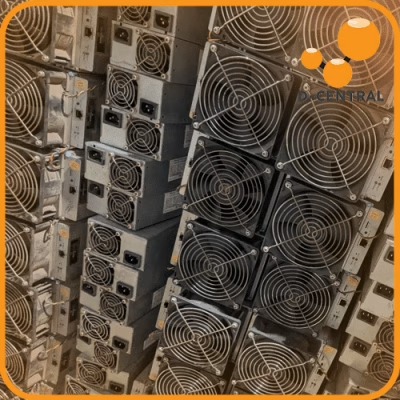
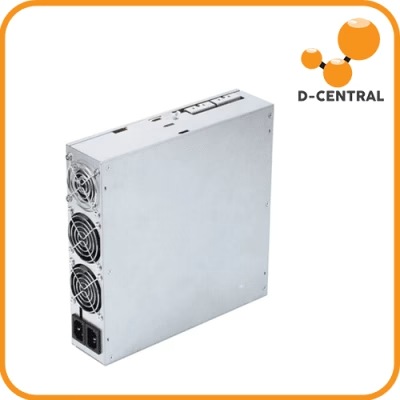
Not every miner belongs in a rental property. Industrial ASICs like the Antminer S21 push 3,500W and produce sound levels above 75 dB — that is louder than a vacuum cleaner running 24/7. Your tenants will not tolerate it, and neither will municipal noise bylaws.
The solution is purpose-built hardware designed for residential and small-space deployment.
Bitcoin Space Heaters
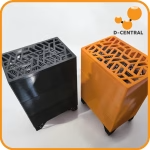
D-Central’s Bitcoin Space Heaters are the flagship solution for rental properties. These are full ASIC miners enclosed in custom housings that direct heat output into living spaces. Available in configurations based on the Antminer S9, S17, and S19 platforms, they range from 800W to 3,000W of heat output — exactly the range that replaces a standard electric space heater.
The beauty of this approach: your tenants get heated space, you earn bitcoin, and the electricity cost is justified as a heating expense rather than a pure mining cost. In provinces like Quebec where hydroelectric rates are among the lowest in North America, the economics become extremely compelling.
Open-Source Solo Miners
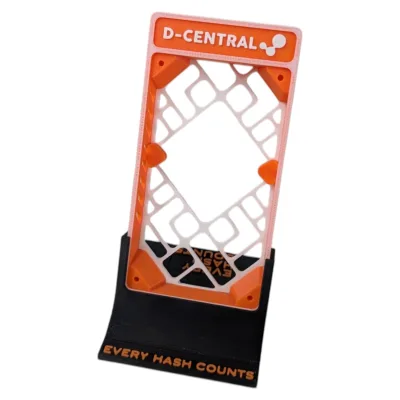
For smaller deployments or tenants who want to participate in mining themselves, the Bitaxe family of open-source solo miners offers a completely different approach. Drawing only 15-25W, a Bitaxe is silent, tiny, and runs on a standard 5V power supply. It mines directly against the Bitcoin network — no pool, no middleman. Every hash is a lottery ticket for the full 3.125 BTC block reward.
The Bitaxe will not heat your rental unit, but it will introduce tenants to the concept of sovereign mining, and it consumes less electricity than a light bulb. As a landlord, providing a Bitaxe-ready setup (a shelf, an outlet, and decent WiFi) costs you nothing and adds genuine appeal to Bitcoin-aligned tenants.
Custom ASIC Configurations
D-Central also builds custom Antminer configurations — the Slim Edition, Pivotal Edition, and Loki Edition — that modify stock industrial hardware for residential use. These include noise reduction, airflow management, and power tuning to make full-size ASICs viable in spaces where the stock configuration would be unlivable.
Installation: The Practical Realities
Deploying a mining operation in a rental property is not plug-and-play, but it is far less complex than most people assume. Here is what actually matters.
Electrical Assessment
Before purchasing any hardware, have a licensed electrician assess your property’s electrical panel. You need to know:
- Total panel capacity (100A, 200A, 400A)
- Available breaker slots
- Whether 240V circuits are feasible
- The condition of your wiring and grounding
A single Bitcoin Space Heater on a dedicated 240V/20A circuit is a straightforward installation for any qualified electrician. Budget $300-$800 CAD for the circuit installation depending on your property’s layout and panel location.
Ventilation and Heat Management
In winter, heat management means directing the miner’s output into living spaces. This is the whole point of the dual-purpose mining strategy. In summer, you need an exhaust path. Options include:
- Window exhaust kits — similar to portable AC installations
- Duct runs to exterior walls — permanent and clean
- Basement-to-upstairs circulation — using the property’s existing HVAC ductwork
- Seasonal shutdown — simply turn off the miner during months when you do not need the heat and electricity rates are higher
D-Central’s ASIC repair and consulting team can advise on the optimal configuration for your specific property layout.
Noise Management
This is the number one concern for landlords, and rightfully so. Stock ASIC miners are loud. The solutions are layered:
- Custom-tuned hardware. D-Central’s Space Heater editions and custom builds include fan speed optimization and acoustic dampening.
- Strategic placement. Basements, utility rooms, and garages provide natural sound isolation from living spaces.
- Acoustic enclosures. Third-party and DIY enclosures can reduce noise by 15-25 dB.
- Firmware tuning. Custom firmware like Braiins OS+ allows you to reduce hash rate (and noise) during nighttime hours, then ramp up during the day.
The Economics: Running the Numbers
Let us be honest about the economics. Bitcoin mining profitability depends on three variables: your electricity rate, your hardware efficiency, and the bitcoin price. Two of those three are volatile. But here is where the rental property model changes the math.
The Heat Credit
If you are replacing electric heating with mining heat, your effective electricity cost for mining drops to near zero during heating months. In Canada, that can be 6-8 months of the year depending on your province.
A concrete example: An Antminer S19-based Space Heater consuming 2,000W runs approximately $4.80/day at Quebec’s residential rate of $0.10/kWh. That same 2,000W of electric baseboard heating would cost you exactly the same $4.80/day — but with zero bitcoin output. The miner gives you the heat AND the bitcoin. During heating season, your mining cost is effectively $0 because you were paying for that heat regardless.
Revenue Considerations
Mining revenue fluctuates with bitcoin price and network difficulty. Rather than projecting specific dollar returns (which would be outdated by the time you read this), use D-Central’s approach: focus on bitcoin accumulation. Stack sats. The fiat-denominated value of your mining output will vary, but the bitcoin you accumulate is provably scarce — capped at 21 million coins forever.
For landlords managing multiple properties, even modest mining setups across several units create meaningful bitcoin accumulation over time.
Legal and Tax Considerations for Canadian Landlords
In Canada, the CRA treats mined bitcoin as business income at the fair market value on the day it is received. This is not optional — if you are mining, you are operating a business activity, and the income is taxable.
Key considerations:
- Business expense deductions. Your mining hardware, electricity costs, installation expenses, and maintenance are all deductible against mining income. If the miner serves a dual purpose (heating), you may need to allocate costs proportionally.
- Capital cost allowance. Mining hardware is a capital asset. You can claim CCA on the equipment over its useful life.
- HST/GST. Depending on your total mining revenue and business structure, you may have GST/HST obligations.
- Record keeping. Track every bitcoin received, the date, the fair market value at receipt, and any subsequent dispositions. Software like Koinly or Shakepay’s tax reports can help automate this.
Consult a CPA familiar with cryptocurrency taxation. The rules are still evolving, and professional guidance protects you from costly errors.
Lease Agreements and Tenant Relations
If you are mining in common areas or utility spaces, tenants need to know. Transparency is non-negotiable. Address these points in your lease:
- Noise expectations. Specify where mining equipment is located and anticipated noise levels.
- Electrical usage. Clarify whether mining electricity is included in rent or separately metered.
- Heat output. If the miner supplements heating, note this in the lease as a building amenity.
- Access. Define access protocols for maintaining the mining equipment.
Some landlords take a different approach entirely: they offer mining-ready infrastructure as a premium amenity. Dedicated circuits, ventilation, and even pre-installed miners with a revenue-sharing arrangement can command higher rents from Bitcoin-aligned tenants. This is especially viable in tech hubs like Montreal, Toronto, and Vancouver.
Scaling Across Multiple Properties
The real power of rental property mining emerges at scale. A single miner in one unit is interesting. Ten miners across five properties is a meaningful operation.
For multi-property landlords, consider:
- Remote monitoring. Tools like Braiins OS+ and Foreman provide dashboard-level visibility across all your miners from a single interface.
- Standardized installations. Develop a repeatable installation template — same circuit spec, same ventilation approach, same hardware — so you can deploy quickly as you acquire new properties.
- Maintenance contracts. D-Central offers ASIC repair services for when hardware needs attention. Hashboard failures, fan replacements, and firmware updates are part of operating mining equipment. Having a repair partner means less downtime.
- Hosting hybrid. For properties where on-site mining is not practical (noise-sensitive buildings, insufficient electrical capacity), D-Central’s mining hosting service in Quebec lets you deploy miners in a professional facility while keeping ownership of the hardware and the bitcoin it produces.
Why This Matters Beyond Profit
Here is the part most rental income guides skip entirely, because they are written by people who see Bitcoin as just another asset class. It is not.
Bitcoin is a censorship-resistant, decentralized monetary network that gives individuals sovereignty over their own money. Every miner running in a basement apartment in Montreal or a garage in Calgary is a vote for decentralization. It is a statement that monetary policy should not be dictated by central banks and that financial infrastructure should not depend on permission from institutions.
When you deploy a miner in your rental property, you are not just earning bitcoin. You are contributing hashrate to the most secure computing network on the planet. You are making the network harder to attack, harder to censor, and harder to shut down. In an era where financial surveillance is increasing globally, this matters more than any ROI calculation.
D-Central’s mission since 2016 has been the decentralization of every layer of Bitcoin mining. We build the hardware. We repair the machines. We host miners for those who cannot run them at home. And we equip landlords, homeowners, and plebs everywhere with the tools to participate in securing the network.
Your rental property is not just a building. It is potential Bitcoin infrastructure.
FAQ
How much does it cost to set up Bitcoin mining in a rental property?
A basic setup with a Bitcoin Space Heater starts around $500-$2,000 CAD for the hardware, plus $300-$800 for electrical installation. The total depends on your chosen hardware and whether your property needs electrical upgrades. For a Bitaxe solo miner, you are looking at under $300 all-in with virtually zero installation cost.
Will Bitcoin mining damage my rental property?
No, when properly installed. Mining equipment is no different from any other electrical appliance in terms of property impact. The key requirements are a dedicated electrical circuit (installed by a licensed electrician) and adequate ventilation. D-Central’s Space Heater configurations are specifically designed for residential environments.
Is Bitcoin mining legal in Canadian rental properties?
Yes. There are no Canadian federal or provincial laws prohibiting Bitcoin mining in residential or rental properties. However, you must comply with local electrical codes, noise bylaws, and any applicable zoning regulations. Always check your municipal bylaws and inform your insurance provider.
How loud are Bitcoin miners?
Stock industrial ASICs range from 65-80 dB, which is unacceptable for most residential settings. D-Central’s Space Heater editions and custom builds significantly reduce noise through fan optimization and acoustic design. A properly configured residential mining setup runs at 45-55 dB — comparable to a refrigerator or quiet conversation.
Can I include mining electricity costs in tenant rent?
Yes, but structure it carefully. You can include electricity as part of an all-inclusive rent, separately meter the mining circuit, or establish a clear allocation in the lease. The approach depends on your provincial tenancy laws and your relationship with tenants. Consult your local landlord-tenant board for jurisdiction-specific guidance.
What happens to mining profitability when bitcoin price drops?
During heating season, your effective mining cost is near zero because you are displacing heating electricity. This makes rental property mining more resilient to price drops than pure mining operations. During non-heating months, you can reduce hash rate or shut down if the economics do not work. The flexibility is a major advantage of small-scale residential mining.
Should I mine bitcoin myself or let tenants mine?
Both models work. Landlord-operated mining in common areas (basements, utility rooms) keeps control simple. Tenant-operated mining requires clear lease terms about electricity costs and noise. Some landlords offer a hybrid: they provide the infrastructure and split the mining output with participating tenants.
Do I need special insurance for mining equipment in a rental property?
Contact your property insurance provider to disclose the mining operation. Some policies cover mining equipment under standard contents coverage. Others may require a rider or commercial endorsement. Failing to disclose could void your coverage in the event of a claim, so transparency with your insurer is essential.