If you have ever cracked open an ASIC miner and stared at a dead hashboard wondering what went wrong, you already understand why a proper diagnostic tool is not optional — it is essential. The STASIC Tech Hashboard MultiTester is one of the most capable standalone testers available for Bitcoin mining hardware in 2026, purpose-built to test, diagnose, and validate hashboards across multiple ASIC miner generations.
At D-Central Technologies, we have been repairing ASIC miners since 2016 — thousands of hashboards, across every major manufacturer, from the venerable Antminer S9 through to the latest S21 and T21 series. We use hashboard testers like the STASIC MultiTester daily in our Montreal, Quebec repair facility. This article breaks down exactly what this tool does, why it matters, and how to get the most out of it — whether you are running a home mining operation or managing a fleet of machines.
What Is the STASIC Tech Hashboard MultiTester?
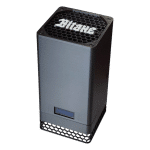
The STASIC Tech Hashboard MultiTester is a dedicated bench-top diagnostic platform designed to test individual ASIC miner hashboards outside of their host machine. Instead of powering up an entire miner and guessing which board is causing problems, the MultiTester lets you isolate a single hashboard, apply controlled power, run diagnostics, and get definitive answers about that board’s health.
This is not a multimeter. It is not a generic test bench. It is a purpose-built system that understands hashboard architecture — voltage domains, ASIC chip chains, temperature sensors, and EEPROM configurations. It speaks the language of hashboards natively.
Why Standalone Hashboard Testing Matters
When an ASIC miner throws an error — “Chain X not found,” abnormal hash rate, temperature warnings — the root cause could be the control board, the PSU, a cable, or one of the hashboards. The traditional approach is swapping components until the problem is isolated. That is time-consuming and, frankly, primitive.
A standalone hashboard tester eliminates the guesswork. Pull the suspect board, connect it to the tester, and within minutes you know if the board is healthy, partially functional, or dead. For repair shops processing dozens of boards per day, this is the difference between profitable operations and wasted hours. For home miners with a single machine, it means the difference between ordering the right replacement part and blindly spending money.
Key Features and Capabilities
The STASIC MultiTester is packed with diagnostic capabilities that cover the full spectrum of hashboard failure modes. Here is what sets it apart.
| Feature | Description |
|---|---|
| Voltage Domain Testing | Measures and controls voltage across each domain on the hashboard, verifying that every ASIC chip receives correct supply voltage |
| Fault Detection | Identifies faulty ASIC chips, broken solder joints, damaged traces, and short circuits at the chip level |
| Real-Time Temperature Monitoring | Continuously monitors board temperature during testing to prevent thermal damage and detect hot spots |
| EEPROM Read/Write | Programs and reads hashboard EEPROM data for firmware recovery, configuration backup, and serial number management |
| Automatic Power Management | Built-in surge protection and voltage regulation prevents damage from power fluctuations during testing |
| Multi-Model Support | Compatible with Bitmain Antminer, MicroBT Whatsminer, Canaan Avalon, and other major ASIC platforms |
| Wi-Fi Connectivity | Remote access for diagnostics, firmware updates, and test result logging over local network |
Voltage Domain Testing — The Foundation of Hashboard Health
Every hashboard is organized into voltage domains — groups of ASIC chips that share a common power rail. When a single chip in a domain fails short, it can drag down the voltage for every other chip in that domain, creating a cascade failure. The MultiTester lets you power up individual domains, measure voltage at each stage, and pinpoint exactly where the problem originates.
This is critical for modern hashboards like the Antminer S19 and S21 series, which use BM1397 and BM1370 ASIC chips respectively. These chips run at very low voltages (often under 0.5V per chip), and even small voltage deviations can cause entire chains to drop offline. The MultiTester’s precision voltage monitoring catches these issues before they become catastrophic.
Fault Detection at the Chip Level
The MultiTester does not just tell you a board is bad — it tells you where the board is bad. By scanning the ASIC chip chain, it identifies which specific chips are unresponsive, which are drawing excessive current, and which have abnormal resistance values. This information is invaluable for repair technicians who need to know exactly which chips to reball, replace, or investigate further.
For D-Central’s ASIC repair services, this kind of chip-level diagnostic data is what separates a professional repair from a parts-swapping guessing game. We use these diagnostics to provide customers with accurate repair quotes and realistic expectations about board recoverability.
EEPROM Programming — More Than Just Firmware
The EEPROM on a hashboard stores critical configuration data: serial numbers, chip count, voltage calibration values, and firmware parameters. When EEPROM data becomes corrupted — which happens more often than most miners realize — the board can behave erratically or refuse to initialize entirely.
The STASIC MultiTester can read, write, and back up EEPROM data. This enables several crucial operations:
- Firmware recovery — Restoring corrupted EEPROM to factory defaults
- Configuration cloning — Copying known-good configurations to replacement boards
- Serial management — Updating or correcting serial number data after chip replacements
- Pre-repair backup — Saving original EEPROM data before any repair work begins, creating a rollback point
Supported ASIC Miner Models
One of the STASIC MultiTester’s strongest selling points is its broad compatibility across manufacturers and generations. The tool supports hashboards from the following platforms:
| Manufacturer | Supported Models | ASIC Chips |
|---|---|---|
| Bitmain Antminer | S9, S17, T17, S19, T19, S19 Pro, S19j Pro, S19 XP, S21, T21 | BM1387, BM1397, BM1366, BM1370 |
| MicroBT Whatsminer | M20S, M30S, M30S+, M30S++, M50S, M50S+, M60S | Various proprietary chips |
| Canaan Avalon | A1246, A1346, A1366, A1466 | A3206, A3210 series |
This cross-platform compatibility means a single MultiTester can handle diagnostics for virtually any Bitcoin mining hashboard you are likely to encounter in 2026. Whether you are running a fleet of legacy S19j Pros or have upgraded to the latest S21 platform, the same tester covers your needs.
Setup and Configuration Guide
Getting the STASIC MultiTester operational is straightforward, but proper setup is critical for accurate results. Here is the process, step by step.
Initial Hardware Setup
- Inspect all components — Verify the tester, cables, adapters, and power supply are all present and undamaged
- Connect the power supply — Use only the included power adapter. The tester requires a stable, clean power source — do not share a power strip with noisy equipment like fans or compressors
- Power on and run self-test — The MultiTester runs an internal diagnostic on first boot. Wait for the self-test to complete before connecting any hashboards
- Configure Wi-Fi — Connect the tester to your local network for remote access, firmware updates, and diagnostic logging
Connecting a Hashboard
- Identify the correct adapter cable — Different miner models use different hashboard connectors. Select the cable that matches your target hashboard
- Connect the data ribbon cable — Attach the hashboard’s data connector to the tester. Ensure the cable is fully seated and the connector latch (if present) is engaged
- Connect the power cable — Attach the hashboard power connector. The MultiTester provides controlled power, so the board does not need an external PSU
- Verify secure connections — Loose connections are the number one cause of false diagnostic results. Double-check every connector before running tests
Pro Tips for Accurate Diagnostics
- Calibrate before each session — Run the built-in calibration routine, especially if the tester has been stored or transported
- Document baseline readings — When testing a known-good board, save the results as a reference. Future tests can be compared against this baseline to spot subtle degradation
- Keep firmware updated — STASIC releases firmware updates that add support for new miner models and improve diagnostic accuracy. Check for updates regularly
- Clean connector pins — Use isopropyl alcohol and a soft brush to clean hashboard connector pins before testing. Corrosion and dust cause unreliable readings
- Test in a controlled environment — Ambient temperature and humidity affect readings. Test at room temperature (20-25 C) whenever possible
How the MultiTester Fits Into a Repair Workflow
For a professional ASIC repair operation — or even a serious home miner doing their own maintenance — the MultiTester occupies a specific and critical position in the diagnostic workflow.
The Diagnostic Decision Tree
- Symptom identification — Miner reports error (missing chain, low hash rate, temperature fault)
- Visual inspection — Check for obvious physical damage: burned components, bulging capacitors, corrosion, cracked solder joints
- Standalone board test — Pull the suspect hashboard and test it on the MultiTester. This confirms whether the board itself is the problem or if the issue lies elsewhere (control board, PSU, cables)
- Chip-level diagnosis — If the board fails testing, use the MultiTester’s chip-level diagnostics to identify exactly which chips or domains are faulty
- Repair decision — Based on diagnostic data, determine if the board is economically repairable. A board with one bad chip is worth fixing. A board with a damaged power distribution network may not be
- Post-repair validation — After repairs are completed, re-test the board on the MultiTester to confirm full functionality before reinstalling it in the miner
This workflow is exactly what we follow at D-Central’s repair facility in Montreal, Quebec. Proper diagnostic tooling is what allows us to provide accurate quotes, realistic timelines, and high first-time-fix rates across all the ASIC models we service.
STASIC MultiTester vs. Other Hashboard Testers
The STASIC MultiTester is not the only hashboard testing solution on the market. Here is how it compares to other options commonly available in 2026.
| Feature | STASIC MultiTester | ARC Hashboard Tester | PicoBT Tester |
|---|---|---|---|
| Multi-manufacturer support | Yes (Bitmain, MicroBT, Canaan) | Model-specific versions | Limited models |
| EEPROM programming | Full read/write/backup | Read only | Limited |
| Wi-Fi connectivity | Yes | No | No |
| Automatic surge protection | Yes | Yes | Basic |
| Chip-level diagnostics | Yes | Yes | Limited |
| Real-time temp monitoring | Yes | Yes | Yes |
The STASIC MultiTester’s key advantage is its all-in-one approach: a single device that handles boards from multiple manufacturers, includes full EEPROM management, and offers network connectivity. The ARC testers are excellent but require separate units for Antminer and Whatsminer boards. The PicoBT is more budget-friendly but has narrower model support and fewer advanced features.
D-Central carries the STASIC Hashboard MultiTester Pro alongside other testing solutions, so you can choose the tool that matches your specific needs and budget.
Who Needs a Hashboard Tester?
A hashboard tester is not exclusively for large-scale repair shops. Here is who benefits most from owning one.
Professional ASIC Repair Shops
This is the obvious use case. If you are running a repair operation, a hashboard tester is not optional — it is core infrastructure. The time saved on diagnosis alone pays for the tool within weeks. Shops processing 20+ boards per week will see ROI almost immediately through reduced diagnostic time and higher first-time-fix rates.
Large Mining Operations (50+ Machines)
When you are running a farm with hundreds of hashboards, failures are a statistical certainty. Having a tester on-site means you can diagnose and triage boards without shipping them to a repair shop first. Boards that are economically repairable get sent for repair. Boards that are beyond repair get stripped for parts. Boards that just needed a reseat or EEPROM reset get put back into service immediately.
Serious Home Miners
If you are running multiple ASICs at home — especially older models like the S9 that you might be using as Bitcoin space heaters — a hashboard tester can save you significant money over time. Instead of replacing entire machines when a single board fails, you can identify the faulty board, source a replacement, and keep the rest of the machine running.
Mining Communities and Maker Spaces
Bitcoin mining communities and hackerspaces can pool resources to acquire a shared tester. This aligns with the decentralization ethos — instead of being dependent on centralized repair services, communities can build local repair capability.
Maintenance and Troubleshooting the Tester Itself
Like any precision instrument, the MultiTester requires regular maintenance to deliver reliable results.
Routine Maintenance Schedule
- Weekly — Clean connector ports with compressed air. Wipe the enclosure with a dry microfiber cloth
- Monthly — Run calibration routine against a known-good reference board. Check for firmware updates
- Quarterly — Inspect all cables and adapters for wear, fraying, or corroded pins. Replace any degraded cables immediately
- Annually — Full recalibration using manufacturer-specified procedure. Inspect internal components if the tester supports user-serviceable access
Common Issues and Solutions
- Inconsistent readings — Usually caused by dirty connector pins or a loose cable. Clean connections and reseat all cables
- Tester fails to detect board — Verify you are using the correct adapter cable for the board model. Check that the hashboard’s data connector is not damaged
- Wi-Fi connectivity drops — Move the tester closer to the Wi-Fi access point or use a wired connection if available. Check for firmware updates that may fix connectivity bugs
- Power-on failure — Verify the power adapter is correct (voltage and amperage). Try a different outlet. If the issue persists, contact STASIC support
The Bigger Picture: Right-to-Repair and Mining Sovereignty
The existence of tools like the STASIC MultiTester speaks to something larger than just hardware diagnostics. It represents the right-to-repair movement applied to Bitcoin mining — the idea that miners should be able to maintain, diagnose, and repair their own equipment rather than being dependent on manufacturers or authorized service centers.
This philosophy is core to what D-Central stands for. Bitcoin’s decentralization only works if the physical mining infrastructure is also decentralized. That means individual miners, home operators, and small shops need access to the same caliber of diagnostic tools that large institutional operations use. The STASIC MultiTester is exactly that kind of tool — institutional-grade diagnostics, accessible to everyone.
When you combine proper diagnostic tooling with resources like our essential guide to hashboard testers and our comprehensive ASIC hashboard repair deep dive, you have everything you need to become self-sufficient in maintaining your mining hardware. That is sovereignty in practice.
Frequently Asked Questions
What ASIC miner models does the STASIC MultiTester support?
The STASIC MultiTester supports hashboards from Bitmain Antminer (S9, S17, T17, S19 series, S21, T21), MicroBT Whatsminer (M20S, M30S series, M50S series, M60S), and Canaan Avalon (A1246, A1346, A1366, A1466). STASIC regularly releases firmware updates that add support for newer models as they enter the market.
Can I use the MultiTester without technical experience?
The MultiTester is designed with a user-friendly interface, but basic knowledge of ASIC miner hardware is recommended. You should be comfortable opening a miner, identifying hashboards, and handling electronic components. If you are new to ASIC hardware, start with our guide on control boards vs. hashboards to build foundational knowledge before using the tester.
How does the EEPROM programming feature work?
The MultiTester can read, write, and back up the EEPROM data stored on a hashboard. This data includes serial numbers, voltage calibration values, chip count information, and firmware parameters. You can use this feature to recover boards with corrupted EEPROM, clone configurations from working boards, or back up original data before performing repairs. The process is handled through the tester’s interface — select the EEPROM operation, connect the board, and follow the on-screen prompts.
Is the STASIC MultiTester worth the investment for a home miner?
It depends on the scale of your operation. If you are running a single ASIC miner, the tester’s cost may be hard to justify unless you plan to do your own repairs regularly. If you are running three or more machines — especially older models that are more failure-prone — the tester can pay for itself by allowing you to diagnose and fix issues that would otherwise require expensive shipping to a repair shop. For home miners running fewer machines, D-Central’s repair service is a more cost-effective option.
Can the MultiTester detect which specific ASIC chip has failed?
Yes. The MultiTester scans the entire ASIC chip chain on the hashboard and identifies chips that are unresponsive, drawing excessive current, or showing abnormal resistance values. This chip-level diagnostic data tells a repair technician exactly which chips need attention, eliminating trial-and-error approaches to repair.
Does the MultiTester work with non-Bitcoin ASIC miners?
The STASIC MultiTester is primarily designed and optimized for Bitcoin (SHA-256) ASIC miners. While some features may work with hashboards from other algorithm miners (Scrypt, Ethash, etc.), full diagnostic support and firmware compatibility are guaranteed only for supported SHA-256 models. Check the STASIC documentation for the most current compatibility list.
How often should I calibrate the MultiTester?
At minimum, run calibration monthly or whenever the tester has been transported or stored for more than a week. If you notice inconsistent readings between tests of the same board, run calibration immediately. Professional repair shops that rely on the tester daily should calibrate weekly to ensure diagnostic accuracy.
Where can I buy the STASIC Hashboard MultiTester?
D-Central Technologies carries the STASIC Hashboard MultiTester Pro in our online store, along with the STASIC Probe Box accessory and other hashboard testing solutions. We ship from Canada with worldwide delivery available.