North America is the undisputed epicenter of Bitcoin mining. The United States and Canada together account for roughly 40% of global hashrate, and for good reason: abundant energy, political stability, strong internet infrastructure, and property rights that let you run miners without someone knocking on your door.
But within North America, not all mining jurisdictions are created equal. Canada and the United States each bring distinct advantages to the table — different electricity markets, different climates, different tax regimes, and different regulatory postures toward proof-of-work mining.
This guide breaks down every variable that matters for a home miner or small-scale operator choosing between the two countries — or optimizing within one. We are D-Central Technologies, a Canadian Bitcoin mining company operating since 2016. We have shipped miners to every province and most US states. We have repaired thousands of ASICs, built custom space heaters, and helped hundreds of home miners get started. This comparison is written from that operational experience.
Let’s get into the data.
Electricity Rates: The Single Biggest Factor
Electricity is 70–80% of your mining operating cost. Everything else — hardware depreciation, internet, maintenance — pales in comparison. Where you plug in your miner determines whether you are profitable or bleeding sats.
Both countries have massive internal variation. Quebec’s hydroelectric rates make it one of the cheapest places to mine on Earth, while New York’s rates can make mining economically pointless. Texas has cheap wholesale power but rising residential rates. Alberta’s deregulated market swings wildly.
Here is what residential miners actually pay in 2026, converted to USD for direct comparison (using the February 2026 exchange rate of 1 CAD = ~0.735 USD):
Canadian Provinces
| Province | Rate (USD/kWh) | Primary Source | Notes |
|---|---|---|---|
| Quebec | $0.04–0.07 | Hydroelectric | Cheapest in North America. Tiered: first 40 kWh/day at ~$0.051, remainder at ~$0.079. Hydro-Quebec Rate D. |
| Manitoba | $0.05–0.08 | Hydroelectric | Manitoba Hydro, publicly owned. Sub-inflation annual increases (1–2%). Moratorium on industrial crypto mining extended to April 2026. |
| British Columbia | $0.06–0.09 | Hydroelectric | BC Hydro, tiered pricing. New regulations allow province to set rules for crypto mining electricity supply. |
| Ontario | $0.08–0.13 | Nuclear + Hydro + Gas | Time-of-use pricing. Off-peak rates (~$0.058 USD) are mining-friendly. Mine at night, heat during the day. |
| Alberta | $0.08–0.12 | Natural Gas + Wind | Deregulated market. Rates fluctuate monthly. Regulated Rate Option (RoLR) ~$0.088 USD/kWh. Add delivery charges. |
US States (Key Mining Regions)
| State | Rate (USD/kWh) | Primary Source | Notes |
|---|---|---|---|
| Washington | $0.06–0.10 | Hydroelectric | Grand Coulee Dam region. PUD rates cheapest. Rising 5–6% annually. Average ~$0.13 statewide but PUDs can be much lower. |
| Texas | $0.08–0.14 | Natural Gas + Wind + Solar | Deregulated. Wholesale rates attractive for industrial miners, but residential rates rising 15–20% due to AI data center demand. ERCOT grid stress. |
| Georgia | $0.10–0.15 | Nuclear + Natural Gas | Georgia Power base rates frozen through 2027. Average ~$0.14/kWh. Regulated market — no rate shopping. |
| Kentucky | $0.09–0.12 | Coal + Natural Gas | Mining-friendly legislature. Multiple large-scale operations. Low cost of living compounds savings. |
| New York | $0.15–0.22 | Mixed (Gas + Nuclear + Hydro) | Expensive. Moratorium on fossil-fuel PoW mining expired Nov 2024. Proposed excise tax on mining electricity. Hostile regulatory environment. |
| California | $0.25–0.40 | Mixed (Solar + Gas + Wind) | Highest continental US rates at ~$0.34/kWh average. Mining is economically unviable at residential rates. Tiered pricing punishes high consumption. |
The takeaway: Quebec and Manitoba offer the best electricity rates on the continent — period. A Quebec home miner running an Antminer S19j Pro at $0.05/kWh pays roughly $70/month in electricity. The same miner in New York at $0.18/kWh costs $250/month. That is the difference between profit and loss.
Use our Mining Power Cost Calculator to model your exact setup with your local electricity rate.
Climate: Canada’s Natural Advantage
Bitcoin miners are space heaters that also produce Bitcoin. Every watt of electricity your miner consumes is converted to heat. In a cold climate, that heat is not wasted — it replaces the heat your furnace would have generated anyway.
This is where Canada has a structural, permanent advantage that no legislation or market shift can take away.
The Numbers
| Climate Factor | Canada (avg) | USA (avg) | Mining Impact |
|---|---|---|---|
| Months below 10°C (50°F) | 6–8 months | 2–5 months | Free cooling for miners, no AC needed |
| Average heating season | 7–9 months | 3–6 months | Longer heating season = more months where miner heat offsets furnace |
| Annual heating cost (avg home) | $1,500–3,000 USD | $500–2,000 USD | Higher heating costs = more offset value from mining heat |
| Days above 30°C (86°F) | 5–15 days | 30–120 days | Hot days force throttling or AC spending. Canada barely has this problem. |
The Dual-Purpose Mining Advantage
In Canada, a Bitcoin miner is not just a miner — it is a space heater that pays you back. When your Antminer S9 Space Heater pushes 1,400 watts of heat into your living room during a -25°C January night in Montreal, that heat would have come from your electric baseboard anyway. But instead of just warming the room, you are also earning Bitcoin.
The math is simple: if you are already paying for electric heat, running a miner instead costs you nothing extra in electricity — and you earn sats on every joule. In Quebec, where electric heating is standard in most homes, this is not a novelty. It is an economically rational decision.
In Texas or Georgia, where cooling costs dominate energy bills, running a miner inside your home for 6+ months of the year adds heat you then need to remove with AC — doubling your energy cost. The dual-purpose equation only works in cold climates, and nobody does cold like Canada.
Explore D-Central’s Bitcoin Space Heaters — purpose-built mining rigs designed to heat your home while earning Bitcoin. Available in S9, S17, and S19 editions. Use our BTU Calculator to size the right unit for your room.
Regulatory Environment
Regulation is where things get complicated — and where the two countries diverge significantly in approach.
Canada
Bitcoin mining is legal across all of Canada. There is no federal prohibition, no licensing requirement for home miners, and no registration mandate for small-scale operations. The regulatory action that does exist is focused on industrial-scale operations and their impact on provincial power grids.
| Province | Industrial Mining | Home Mining | Key Details |
|---|---|---|---|
| Quebec | Restricted | Permitted | New industrial projects (50+ kW) face special rate of $0.122 USD/kWh. Home mining on residential Rate D is unaffected. Quebec also has right-to-repair legislation — relevant for ASIC repair. |
| Manitoba | Paused | Permitted | Moratorium on new industrial crypto mining extended to April 2026. Home mining not affected by the pause. |
| British Columbia | Regulated | Permitted | 2024 amendments give province authority to regulate electricity supply to crypto miners. Home mining at residential rates continues normally. |
| Ontario | Permitted | Permitted | No specific crypto mining restrictions. Time-of-use pricing applies. |
| Alberta | Permitted | Permitted | Most deregulated energy market in Canada. No restrictions on mining. Multiple large-scale operations active. |
The pattern: Canadian provinces are restricting large industrial mining operations that consume megawatts of grid power. Home miners running one to ten machines on residential power are not affected by any of these restrictions. If you are mining at home, Canada is wide open.
United States
The US regulatory environment is a patchwork. There is no federal ban on Bitcoin mining, but individual states vary dramatically in their approach.
| State | Stance | Key Details |
|---|---|---|
| Texas | Welcoming | Pro-mining legislation. State Bitcoin reserve established Dec 2025 ($5M initial buy). Miners must register with ERCOT. Demand response programs pay miners to curtail during grid stress. |
| Wyoming | Welcoming | Most crypto-friendly state legally. DAO legislation, digital asset exemptions, clear property rights for Bitcoin. |
| Kentucky | Welcoming | Tax incentives for crypto mining operations. Cheap electricity. Growing mining hub. |
| New York | Hostile | Two-year moratorium on fossil-fuel PoW mining expired Nov 2024. Proposed excise tax on mining electricity. Environmental impact study released 2025. Ongoing legislative hostility. |
| California | Indifferent/Hostile | No specific mining legislation, but extreme electricity costs and environmental regulations make mining economically unviable. |
Federal level: The US political environment has shifted meaningfully toward Bitcoin in 2025–2026. The proposed Strategic Bitcoin Reserve and supportive executive orders signal a federal warming to the industry. However, federal policy does not override state-level hostility in places like New York.
Bottom line: Both countries allow home mining. Canada’s regulatory approach is more uniform — you can mine at home anywhere. The US is friendlier in some states and hostile in others. Know your state before you invest.
Tax Treatment: How Your Mined Bitcoin Gets Taxed
This section is for general education. Consult a qualified tax professional for advice specific to your situation. Tax rules are complex, and enforcement is tightening in both countries.
Canada (CRA)
The Canada Revenue Agency classifies Bitcoin mining income based on the scale and intent of your operation:
- Business Income: If you mine with dedicated hardware, seek profit, and operate systematically, your mining income is treated as business income — 100% taxable at your marginal rate. This is the most common classification for anyone running actual ASIC hardware.
- Hobby/Other Income: Casual mining on a small scale (think: a single Bitaxe on your desk) may be classified as other income. The CRA evaluates this on a case-by-case basis.
- Deductions: If classified as a business, you can deduct electricity costs, hardware depreciation (CCA Class 50 — 55% declining balance for computing equipment), internet, repairs, and a portion of home office expenses.
- Capital Gains: When you sell your mined BTC, the gain from the time of mining to the time of sale is a capital gain. As of June 2024, capital gains inclusion rate increased to 66.7% for amounts over $250,000 CAD annually.
Key advantage: Deducting electricity against mining income is extremely powerful for Canadian home miners. If your hydro bill is $200/month and $120 of that is attributable to mining, you just reduced your taxable mining income by $1,440/year.
Read our full breakdown: Bitcoin Mining Tax Guide for Canadians: CRA Rules, Deductions & Record Keeping
United States (IRS)
- Ordinary Income: The IRS treats mined Bitcoin as ordinary income at fair market value the moment it hits your wallet. This applies whether you mine as a business or hobby.
- Self-Employment Tax: If mining is a trade or business, you owe self-employment tax (15.3%) on top of income tax. This is a significant additional burden that Learn more about Bitcoin mining in Canada. miners do not face (Canada uses CPP contributions, which are lower and capped).
- Deductions: Business miners can deduct equipment (Section 179 or bonus depreciation allows full expensing in the purchase year), electricity, repairs, rent, and home office. Hobby miners cannot deduct expenses under current law (Tax Cuts and Jobs Act eliminated hobby expense deductions through 2025).
- Capital Gains: When you sell mined BTC, the gain above your cost basis (fair market value at time of receipt) is a capital gain — short-term (ordinary rates) if held under 1 year, long-term (0/15/20%) if held over 1 year.
- New for 2026: Crypto brokers must report cost basis on transactions. FIFO method becomes mandatory. 1099-DA reporting by exchanges.
Tax Comparison Summary
| Factor | Canada | USA |
|---|---|---|
| Mining income classification | Business or other income | Ordinary income + self-employment tax |
| Self-employment tax | CPP (lower, capped ~$4,000 CAD/yr) | 15.3% (up to $168,600 income) |
| Expense deductions | Yes (business classification) | Yes (business), No (hobby) |
| Hardware depreciation | CCA Class 50, 55% declining | Section 179 / bonus depreciation (100% year 1) |
| Capital gains on sale | 50% inclusion (66.7% over $250K) | Short-term: ordinary rate. Long-term: 0/15/20% |
| Reporting complexity | Moderate | High (new 1099-DA, FIFO mandatory 2026) |
Edge: Canada’s lower self-employment tax burden and electricity deduction opportunities give Canadian home miners a meaningful after-tax advantage. The US has a stronger first-year depreciation option (Section 179), which benefits miners who invest heavily in hardware upfront.
Hardware Availability & Shipping
Where you buy your mining hardware matters — customs, shipping times, and warranty support all depend on geography.
Buying in Canada
- D-Central Technologies ships from Laval, Quebec. Canadian buyers receive their orders without customs duties, with fast domestic shipping via Canada Post, Purolator, or UPS. Full warranty and local ASIC repair support included.
- Hardware inventory includes every Bitaxe variant, NerdAxe, NerdNOS, Nerdminer, NerdQAxe, full ASIC miners, replacement parts, space heaters, and accessories.
- US buyers ordering from D-Central may face customs duties at the border (typically 0% for computer equipment under USMCA, but brokerage fees apply).
Buying in the USA
- US-based retailers like Solo Satoshi, Altair Tech, and Bitcoin Merch ship domestically. No customs for US buyers.
- Canadian buyers ordering from US retailers face potential customs duties and HST/GST on import.
- Many direct-from-China vendors (Bitmain, MicroBT) ship to US warehouses, giving US buyers faster access to new-generation hardware.
Repair & Support
This is where Canada — specifically D-Central — has a significant edge. D-Central operates the largest ASIC repair center in Canada, with 38+ model-specific repair pages covering Bitmain, MicroBT, Innosilicon, and Canaan hardware. When your miner breaks, you do not ship it overseas and wait weeks. You ship it to Laval, Quebec, and get it back repaired.
In the US, repair options are more fragmented. Zeus BTC offers repair parts but ships from China. Most US retailers do not offer in-house repair — they replace rather than fix.
Internet Infrastructure
Both Canada and the United States have world-class internet infrastructure. Bitcoin mining requires minimal bandwidth — under 1 Mbps for most setups — so even a basic rural connection works fine. Latency matters more than throughput for pool mining, and both countries have low-latency connections to major mining pools.
| Factor | Canada | USA |
|---|---|---|
| Average broadband speed | ~100 Mbps | ~120 Mbps |
| Rural availability | Improving (Starlink popular in rural areas) | Improving (Starlink, FCC broadband expansion) |
| Mining bandwidth needed | Under 1 Mbps for most miners. WiFi sufficient for Bitaxe. Ethernet recommended for ASICs. | |
Verdict: Tie. Internet infrastructure is not a differentiator between the two countries for home mining. If you can stream Netflix, you can mine Bitcoin.
Profitability Analysis: Canada vs USA at Average Rates
Let’s model two common home mining setups at average residential rates in each country’s best mining regions. All figures in USD, February 2026 BTC price and difficulty.
Scenario 1: Antminer S19j Pro (100 TH/s, 3,050W)
| Metric | Quebec ($0.05/kWh) | Texas ($0.10/kWh) | New York ($0.18/kWh) |
|---|---|---|---|
| Monthly electricity cost | $110 | $220 | $396 |
| Annual electricity cost | $1,320 | $2,640 | $4,752 |
| Heating offset (7 months) | ~$770 saved | ~$220 saved | ~$330 saved |
| Net annual electricity cost | $550 | $2,420 | $4,422 |
The Quebec miner’s net annual electricity cost — after accounting for heating offset — is $550. The Texas miner pays 4.4x more. The New York miner pays 8x more. And this is before tax deductions on electricity expenses.
Scenario 2: Bitaxe Hex (~3 TH/s, 72W) — Solo Mining
| Metric | Quebec ($0.05/kWh) | Texas ($0.10/kWh) | New York ($0.18/kWh) |
|---|---|---|---|
| Monthly electricity cost | $2.59 | $5.18 | $9.33 |
| Annual electricity cost | $31 | $62 | $112 |
| Cost per hash attempt | Negligible. Solo mining is a lottery — what matters is uptime, not cost-per-hash optimization. | ||
For Bitaxe solo mining, electricity cost barely matters — the annual cost is under $100 everywhere. What matters is time: keeping your Bitaxe running 24/7, month after month, maximizing your lottery tickets. Canada’s cold climate means no summer throttling, no heat-related shutdowns. Your Bitaxe runs happily year-round.
Model your own numbers: Bitcoin Mining Profitability Calculator
Dual-Purpose Mining: Why Canada Wins the Efficiency Game
This concept deserves its own section because it fundamentally changes the mining profitability equation — and it is uniquely Canadian.
The average Canadian household spends $1,500–$3,000 USD per year on heating. In Quebec, where electric baseboard heaters are the norm, that number comes straight off the Hydro-Quebec bill. Every kilowatt-hour used for heating could instead be a kilowatt-hour used for mining — producing the same heat output while simultaneously earning Bitcoin.
The thermodynamic reality: A 1,400W Antminer S9 produces exactly 1,400 watts of heat. A 1,500W electric space heater produces 1,500 watts of heat. Both devices have near-100% efficiency at converting electricity to heat (all electricity becomes heat eventually — the first law of thermodynamics guarantees it). The only difference is that the S9 also computes SHA-256 hashes while it heats your room.
In a Canadian home, during heating season (October through April in most of the country), your effective mining electricity cost approaches zero because you would have spent that money on heat regardless. During the 2–3 summer months, you either run your miner for the Bitcoin output alone or shut it down.
This equation does not work in Houston, Phoenix, or Miami, where heating season is 0–2 months and cooling is the dominant energy expense. Running a miner indoors in Texas in July is anti-productive: you generate heat you must then spend energy to remove.
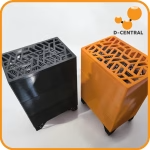
D-Central builds purpose-designed Bitcoin Space Heaters for exactly this use case — ASIC miners with custom shrouds, duct adapters, and noise management built to integrate into your home’s heating system. We also build the BitChimney — a chimney-style enclosure that turns an L3+ into a silent radiator column.
Read our detailed comparison: Bitcoin Space Heater vs Electric Heater: The Complete 5-Year Cost Comparison
Energy Sources and Environmental Considerations
Canada’s electricity grid is one of the cleanest in the world. Over 80% of Canada’s electricity comes from non-emitting sources — primarily hydroelectric, with nuclear and wind filling in. Quebec alone is 99.8% hydroelectric.
The United States has a more diverse (and carbon-heavy) generation mix. Natural gas provides about 40% of US electricity, coal still accounts for roughly 16%, and renewables (including hydro) make up about 22%.
| Energy Source | Canada | USA |
|---|---|---|
| Hydroelectric | ~60% | ~6% |
| Nuclear | ~15% | ~19% |
| Wind + Solar | ~8% | ~16% |
| Natural Gas | ~11% | ~40% |
| Coal | ~4% | ~16% |
| Non-emitting total | ~83% | ~41% |
For miners who care about the environmental narrative (and who want to counter the “Bitcoin wastes energy” criticism with data), Canada is the strongest jurisdiction in the world. Mining with Quebec hydro is as green as computing gets.
Community & Ecosystem
Both countries have thriving Bitcoin mining communities, but the texture is different.
Canada
- Tight-knit community: The Canadian home mining community is smaller but highly engaged. D-Central’s Discord, Canadian Bitcoin meetups, and the r/BitcoinMining subreddit have active Canadian contingents.
- Full-service ecosystem: D-Central provides hardware, repair, consulting, hosting, and training under one roof. This lifecycle support is unique globally — no competitor in any country offers the same breadth.
- Pioneer energy: D-Central was involved in the Bitaxe ecosystem from the beginning, creating the original Bitaxe Mesh Stand and developing custom heatsinks for Bitaxe and Bitaxe Hex. That pioneering spirit extends to the entire Canadian mining community.
- Decentralization ethos: Canadian home miners are often ideologically motivated — running miners not just for profit, but to contribute hash rate to the network and strengthen decentralization. Every hash counts.
United States
- Larger ecosystem: More retailers, more mining pools with US-based servers, more venture-backed mining companies, more publicly traded miners (Riot, Marathon, CleanSpark).
- Content ecosystem: Solo Satoshi leads in content marketing with a podcast, mobile app, and extensive blog. Bitcoin Magazine hosts Mining Disrupt and other industry events.
- Regulatory engagement: US mining companies actively lobby Congress and state legislatures. The Bitcoin Mining Council tracks and publishes industry sustainability data.
- Institutional dominance: The US mining scene is increasingly institutional — publicly traded companies and AI data centers competing for the same energy. Home miners can feel secondary to the industry narrative.
The Verdict: Country-by-Country Scorecard
| Category | Canada | USA | Winner |
|---|---|---|---|
| Cheapest electricity | $0.04/kWh | $0.06/kWh | Canada |
| Climate for mining | Cold = free cooling | Varies by state | Canada |
| Dual-purpose mining | 7–9 month heating season | 3–6 months (northern states) | Canada |
| Regulatory clarity (home mining) | Uniform — legal everywhere | State-by-state patchwork | Canada |
| Tax burden (mining income) | Lower self-employment tax | 15.3% SE tax | Canada |
| Hardware depreciation | 55% declining balance | 100% first-year (Sec 179) | USA |
| Grid cleanliness | 83% non-emitting | 41% non-emitting | Canada |
| Hardware availability | Good (D-Central) | Excellent (multiple retailers) | USA |
| Repair ecosystem | D-Central (local, comprehensive) | Fragmented | Canada |
| Community size | Smaller, engaged | Larger, institutional | USA |
| Overall for Home Mining | 7/10 | 3/10 | Canada |
Frequently Asked Questions
Is Bitcoin mining legal in Canada?
Yes. Bitcoin mining is legal across all Canadian provinces for home miners. Industrial-scale operations face restrictions in Quebec, Manitoba, and British Columbia, but residential mining on standard household power is permitted everywhere. There is no federal licensing requirement for home mining.
Which province is cheapest for Bitcoin mining?
Quebec, without question. Hydro-Quebec’s residential Rate D starts at approximately $0.051 USD/kWh (first 40 kWh/day), making it the cheapest electricity in North America. Manitoba is a close second at $0.05–0.08 USD/kWh, also powered by hydroelectric generation.
Which US state is best for home Bitcoin mining?
For home miners, Washington state (hydro-powered PUD rates), Texas (deregulated market, pro-mining policy), and Kentucky (low rates, mining-friendly legislature) are the top choices. Avoid New York and California — high rates and hostile regulation make home mining uneconomical.
Do I need to pay customs duties buying a miner from Canada to the US?
Under USMCA (the US-Mexico-Canada trade agreement), most computer and electronic equipment qualifies for duty-free treatment. However, you may still pay brokerage fees ($10–25 typical) and state sales tax on import. The tariff classification for ASIC miners is generally HTS 8471 (automatic data processing machines), which has a 0% MFN duty rate. Check with your customs broker for your specific situation.
Can I use a Bitcoin miner to heat my home?
Absolutely. Every watt consumed by a miner is converted to heat. A 1,400W Antminer S9 produces the same heat as a 1,400W electric space heater — but also earns Bitcoin. D-Central builds purpose-designed Bitcoin Space Heaters with custom shrouds and noise management for in-home use. This works best in Canada’s cold climate, where the heating season lasts 7–9 months. Use our BTU Calculator to size the right unit.
How is Bitcoin mining taxed in Canada vs the USA?
Both countries tax mined Bitcoin as income at fair market value when received. The key difference: the US charges an additional 15.3% self-employment tax on mining income, while Canada’s CPP contributions are lower and capped. Both countries allow business miners to deduct expenses (electricity, hardware, repairs). The US offers more aggressive first-year hardware depreciation (Section 179), while Canada uses a 55% declining balance (CCA Class 50). Read our Canadian Mining Tax Guide for detailed CRA guidance.
Is it better to buy a Bitaxe or a full ASIC miner for home mining?
It depends on your goals. A Bitaxe (72W max for the Hex) is silent, runs on WiFi, uses USB-C power, and solo mines — it is a lottery ticket that costs pennies per day to run. A full ASIC like the S19j Pro (3,050W) is a serious mining machine that produces meaningful daily revenue but requires dedicated power, ventilation, and noise management. Many Canadian home miners run both: a Bitaxe on their desk for the solo mining dream, and a space heater edition ASIC to heat their home and stack sats. Explore both at the Bitaxe Hub and our Space Heater collection.
Does D-Central ship to the United States?
Yes. D-Central ships worldwide from our facility in Laval, Quebec, Canada. US orders are shipped via UPS, USPS, or Purolator. Most mining hardware qualifies for duty-free entry under USMCA. Shipping times to the continental US are typically 3–7 business days. Canadian orders arrive faster with no customs processing.
Start Mining in Canada
If this comparison has you leaning toward Canada — good. The data supports it. Quebec’s hydroelectric rates, Canada’s cold climate, uniform home mining legality, favorable tax treatment, and clean energy grid create the best home mining conditions in North America.
D-Central Technologies has been serving Canadian home miners since 2016. We are the largest ASIC repair center in Canada, a pioneer manufacturer in the Bitaxe ecosystem (we built the original Mesh Stand and developed custom heatsinks), and we stock everything from your first Bitaxe to a full Antminer S21 setup.
Whether you are a Canadian looking to start mining, or an American considering the cross-border advantage, we are here to help.
Ships from Canada. Bitcoin accepted. Every hash counts.
Is Bitcoin mining legal in Canada?
Yes. Bitcoin mining is legal across all Canadian provinces for home miners. Industrial-scale operations face restrictions in Quebec, Manitoba, and British Columbia, but residential mining on standard household power is permitted everywhere. There is no federal licensing requirement for home mining.
Which province is cheapest for Bitcoin mining?
Quebec, without question. Hydro-Quebec’s residential Rate D starts at approximately $0.051 USD/kWh (first 40 kWh/day), making it the cheapest electricity in North America. Manitoba is a close second at $0.05–0.08 USD/kWh, also powered by hydroelectric generation.
Which US state is best for home Bitcoin mining?
For home miners, Washington state (hydro-powered PUD rates), Texas (deregulated market, pro-mining policy), and Kentucky (low rates, mining-friendly legislature) are the top choices. Avoid New York and California — high rates and hostile regulation make home mining uneconomical.
Do I need to pay customs duties buying a miner from Canada to the US?
Under USMCA (the US-Mexico-Canada trade agreement), most computer and electronic equipment qualifies for duty-free treatment. However, you may still pay brokerage fees ($10–25 typical) and state sales tax on import. The tariff classification for ASIC miners is generally HTS 8471 (automatic data processing machines), which has a 0% MFN duty rate. Check with your customs broker for your specific situation.
Can I use a Bitcoin miner to heat my home?
Absolutely. Every watt consumed by a miner is converted to heat. A 1,400W Antminer S9 produces the same heat as a 1,400W electric space heater — but also earns Bitcoin. D-Central builds purpose-designed Bitcoin Space Heaters with custom shrouds and noise management for in-home use. This works best in Canada’s cold climate, where the heating season lasts 7–9 months. Use our BTU Calculator to size the right unit.
How is Bitcoin mining taxed in Canada vs the USA?
Both countries tax mined Bitcoin as income at fair market value when received. The key difference: the US charges an additional 15.3% self-employment tax on mining income, while Canada’s CPP contributions are lower and capped. Both countries allow business miners to deduct expenses (electricity, hardware, repairs). The US offers more aggressive first-year hardware depreciation (Section 179), while Canada uses a 55% declining balance (CCA Class 50). Read our Canadian Mining Tax Guide for…
Is it better to buy a Bitaxe or a full ASIC miner for home mining?
It depends on your goals. A Bitaxe (72W max for the Hex) is silent, runs on WiFi, uses USB-C power, and solo mines — it is a lottery ticket that costs pennies per day to run. A full ASIC like the S19j Pro (3,050W) is a serious mining machine that produces meaningful daily revenue but requires dedicated power, ventilation, and noise management. Many Canadian home miners run both: a Bitaxe on their desk for the solo mining dream, and a space heater edition ASIC to heat their home and stack…
Does D-Central ship to the United States?
Yes. D-Central ships worldwide from our facility in Laval, Quebec, Canada. US orders are shipped via UPS, USPS, or Purolator. Most mining hardware qualifies for duty-free entry under USMCA. Shipping times to the continental US are typically 3–7 business days. Canadian orders arrive faster with no customs processing.