Colorado is one of the most intriguing Bitcoin mining destinations in the United States. High altitude providing natural cooling, a diverse renewable energy mix, crypto-friendly regulations, and a tech-savvy population create an environment where mining is not just viable — it is culturally welcome. The Mountain State offers a unique combination of physical geography and political climate that few other states can match.
Electricity rates are moderate — not the cheapest in the nation, but competitive enough for efficient hardware to turn a profit. More importantly, Colorado’s altitude advantage (most populated areas sit at 5,000–10,000+ feet) provides cooler ambient temperatures year-round compared to states at the same latitude, reducing cooling costs and extending hardware life. This guide covers everything you need to mine Bitcoin in Colorado in 2026.
Colorado Electricity Rates for Bitcoin Mining
Colorado’s electricity market is primarily served by one dominant utility, with municipal and cooperative options in many areas:
- Xcel Energy (Public Service Company of Colorado): $0.09–$0.13/kWh — the dominant utility serving the Front Range (Denver, Boulder, Fort Collins, Colorado Springs metro). Serves approximately 70% of the state’s population
- Black Hills Energy: $0.10–$0.13/kWh — serves southern Colorado including Pueblo
- Holy Cross Energy: $0.09–$0.12/kWh — cooperative serving the Vail, Aspen, and Eagle County mountain areas
- Colorado Springs Utilities: $0.09–$0.11/kWh — municipally owned, often competitive with Xcel
- Fort Collins Utilities: $0.08–$0.11/kWh — municipally owned, generally lower than Xcel
- Longmont Power & Communications: $0.07–$0.10/kWh — one of the cheapest options in the Front Range
- Rural Electric Cooperatives: $0.08–$0.12/kWh — numerous cooperatives (Mountain Parks Electric, San Isabel Electric, Intermountain REA, etc.) serve rural and mountain areas
- Large commercial/industrial: $0.05–$0.08/kWh for qualifying high-demand operations
Colorado’s residential electricity rates sit in the $0.09–$0.12/kWh range for most customers — solidly in the moderate category nationally. Municipal utilities (Fort Collins, Longmont, Colorado Springs) often offer the best rates. Miners outside Xcel territory should check their local utility for competitive pricing. For the full national comparison, see our Bitcoin Mining Electricity Cost by State guide.
Colorado’s Renewable Energy Mix
Colorado has one of the most diverse renewable energy portfolios in the Mountain West, which matters for miners who care about their energy source — and for the long-term trajectory of electricity pricing:
- Natural gas: ~40% — still the largest single source, but declining as renewables grow
- Wind: ~25% — Colorado has massive wind capacity, particularly on the eastern plains. The state is consistently in the top 10 for wind generation nationally
- Coal: ~15% and declining rapidly — Xcel Energy has committed to retiring all coal plants by 2030, accelerating the transition to renewables
- Solar: ~12% and growing — Colorado’s high altitude means more intense solar radiation. The state averages 300+ days of sunshine per year
- Hydroelectric: ~5% — fed by snowmelt from the Rocky Mountains, providing seasonal generation
- Other: ~3% — biomass, geothermal, and other small sources
Colorado’s aggressive renewable energy goals (100% clean electricity by 2040 for Xcel Energy) mean the grid is getting cleaner over time. For miners concerned about ESG criticism, mining on the Colorado grid is increasingly defensible. The growth of wind and solar also creates potential for behind-the-meter or community solar mining strategies.
Regulatory and Legal Environment
Colorado’s regulatory approach to Bitcoin and cryptocurrency has been consistently favorable and forward-thinking:
- No mining ban or restrictions: Colorado has not enacted any moratorium or restriction on proof-of-work mining. Mining is unambiguously legal
- Digital Token Act (2019): Colorado was one of the first states to pass legislation clarifying the legal status of digital tokens. While primarily focused on securities exemptions, it signals the state’s proactive, innovation-friendly approach to crypto regulation
- Crypto-friendly political culture: Colorado has been consistently ranked among the most crypto-friendly states in the US. The state government has explored accepting Bitcoin for tax payments and government services
- Governor’s support: Colorado’s political leadership has been publicly supportive of blockchain and cryptocurrency innovation, creating a favorable top-down regulatory environment
- Money Transmission: Colorado’s money transmitter laws (administered by the Division of Banking) focus on money services businesses. Mining Bitcoin for your own account does not require licensing
- Local zoning: Colorado’s Front Range cities have standard noise ordinances. Mountain and rural communities are generally permissive, but some resort towns (Aspen, Vail, Telluride) have strict community standards. Check local ordinances before setting up in an HOA or resort community
- Cannabis precedent: Colorado’s experience regulating cannabis — a federally uncertain but state-legal industry — has created institutional comfort with regulating novel economic activities. This cultural precedent benefits crypto and mining
Colorado is genuinely one of the most crypto-friendly states in the nation. The combination of proactive legislation, political support, and a tech-forward culture creates an environment where miners can operate with confidence.
Tax Implications for Colorado Bitcoin Miners
- State income tax: Colorado has a flat income tax rate of 4.4% (reduced from 4.55% in 2024). Mined Bitcoin is taxable as income at this rate
- TABOR refunds: Colorado’s Taxpayer’s Bill of Rights (TABOR) frequently triggers tax refunds when state revenue exceeds caps. In practice, this can reduce your effective state tax rate. Recent years have seen refunds of $800+ per taxpayer
- Federal taxes: Standard IRS treatment — mined BTC is ordinary income at fair market value when received, and subsequent sale triggers capital gains or losses
- Sales tax: 2.9% state sales tax plus local additions (total 4–10% depending on location) on mining hardware purchases. Denver is approximately 8.81% combined
- Property tax: Colorado property taxes are relatively low compared to national averages. Mining equipment for home operations is not typically assessed separately
- Business deductions: Electricity, hardware depreciation, internet, repairs, and other mining costs are deductible when mining is operated as a business
Colorado’s 4.4% flat state income tax is moderate — lower than California, New York, or Kentucky, but higher than zero-income-tax states (Texas, Florida, Washington). The TABOR refund mechanism is a genuine benefit that partially offsets the tax rate. There is no local/municipal income tax in Colorado (unlike Ohio and Pennsylvania), keeping the total state+local income tax burden simpler and lower. For more on mining tax strategy, see our Bitcoin Mining Tax Guide.
Climate Considerations: The Altitude Advantage
Colorado’s climate is the state’s most underrated mining advantage. The high altitude creates conditions that are markedly different from — and generally superior to — states at the same latitude:
The Altitude Effect on Mining
- Cooler ambient temperatures: Denver sits at 5,280 feet. Most populated areas range from 5,000 to 7,000+ feet. Temperature drops approximately 3.5°F per 1,000 feet of elevation. This means Colorado’s Front Range runs 15–20°F cooler than equivalent-latitude lowland areas
- Low humidity: Colorado is one of the driest states in the nation. Average humidity of 30–50% (compared to 60–80% in eastern states) means air cooling is more effective and corrosion risk is minimal
- Intense solar radiation: Higher altitude means less atmospheric filtering. Colorado receives approximately 25% more solar energy per square foot than sea-level states at the same latitude — a major advantage for solar-powered mining
- Diurnal temperature swing: Colorado experiences large day-to-night temperature swings (often 30–40°F). Even on hot summer days, nighttime temperatures drop into the 50s and 60s, providing natural nightly cooling cycles for mining equipment
Seasonal Mining Conditions
- Winters (November–March): Cold, with Front Range temperatures of 15–45°F and mountain areas significantly colder. Excellent for free cooling and heat recovery — 5+ months of cold weather in most locations. Mountain communities can see 6–7 months of heating demand
- Spring (April–May): Variable, 40–65°F. Cool, dry conditions ideal for air-cooled mining
- Summers (June–August): Warm during the day (80–95°F on the Front Range) but dry and cool at night. The low humidity makes air cooling far more effective than in humid eastern states. Mountain areas stay cool (60–80°F) all summer
- Fall (September–October): Cool and dry, 40–70°F. Excellent mining conditions
Heat management strategies for Colorado miners:
- Winter heat recovery (5+ months): Colorado’s long, cold winters are tailor-made for D-Central’s Bitcoin Space Heaters. Mine sats and heat your home from October through April. Mountain communities benefit even longer
- Natural dry cooling: Colorado’s low humidity makes simple air cooling highly effective. A ventilated garage or workshop with intake and exhaust is sufficient for year-round ASIC operation in most locations
- Nighttime cooling cycle: The large diurnal temperature swing means your equipment cools down naturally every night, reducing thermal stress compared to states where it stays hot 24/7
- Basement mining: Colorado homes frequently have basements (60–65°F year-round) — excellent natural cooling environments for mining equipment
- Mountain mining: At 7,000–10,000+ feet, summer temperatures rarely exceed 80°F. Mountain properties offer some of the best year-round air-cooled mining conditions in the lower 48
Rural and Mountain Mining Opportunities
Colorado’s geography creates unique mining opportunities beyond the Front Range metros:
- Mountain properties: Rural mountain properties offer cool year-round temperatures, space for equipment, and minimal noise concerns. Electric cooperatives in mountain areas often provide competitive rates
- Eastern plains: Colorado’s flat eastern plains have cheap land, wind energy resources, and agricultural-level electrical infrastructure. Wind-powered mining is a possibility in this region
- Off-grid solar: Colorado’s 300+ sunny days and high-altitude solar intensity make off-grid solar mining viable, especially in remote areas. A properly sized solar installation can power low-to-moderate mining loads year-round
- Abandoned mining infrastructure: Colorado’s historic mining districts (gold, silver, coal) have remnant infrastructure — buildings, electrical connections, and land — that can be repurposed for Bitcoin mining at low cost
- Natural gas: Western Colorado’s natural gas production creates opportunities for stranded gas or flare gas mining, similar to models proven in Texas and North Dakota
Best Mining Hardware for Colorado
Colorado’s moderate electricity rates and favorable climate support a wide range of hardware choices:
For Municipal Utility Areas ($0.07–$0.10/kWh)
- Antminer S21 / S21 Pro: Strong profitability at municipal rates. Colorado’s dry, cool climate means these machines run efficiently with minimal cooling overhead
- Antminer S19 XP / S19j Pro: Previous-gen machines at discount prices remain profitable at Colorado’s best rates. The lower upfront cost can mean faster ROI
- Bitcoin Space Heaters: Colorado’s 5+ month heating season makes space heater miners exceptionally valuable. The dual-purpose economics are compelling — mine and heat simultaneously through the long mountain winter. See our Bitcoin Space Heater collection
For Xcel Energy / Standard Rates ($0.10–$0.13/kWh)
- Antminer S21 Pro: Maximum efficiency is important at Xcel’s higher rates. The S21 Pro’s efficiency minimizes cost per terahash
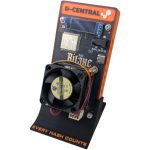
- Bitaxe Gamma / Bitaxe Hex: Solo mining with negligible electricity cost and zero noise. Perfect for Denver condos, Boulder apartments, or any Front Range urban dwelling. D-Central is a pioneer in the Bitaxe ecosystem with custom-manufactured accessories including the original mesh stand and custom heatsinks. Browse our full Bitaxe collection
- NerdAxe / Nerdminer / NerdQAxe: Ultra-low-power open-source solo miners. Colorado’s maker community and cypherpunk culture are a natural fit. See our open-source miner collection
Browse D-Central’s ASIC miners, Bitaxe collection, and Bitcoin Space Heaters — shipped direct from Canada to Colorado.
Profitability Analysis: Mining in Colorado (2026)
Colorado offers solid profitability for efficient hardware, with the altitude-driven cooling advantage providing a hidden margin boost. Using an Antminer S21 (200 TH/s, 3,500W):
| Scenario | Electricity Rate | Monthly Power Cost | Monthly BTC Revenue* | Monthly Profit/Loss |
|---|---|---|---|---|
| Municipal utility (Longmont/Fort Collins) | $0.08/kWh | ~$202 | ~$350–$450 | $148–$248 profit |
| Colorado Springs Utilities | $0.10/kWh | ~$252 | ~$350–$450 | $98–$198 profit |
| Xcel Energy (Denver metro) | $0.12/kWh | ~$302 | ~$350–$450 | $48–$148 profit |
| Mountain cooperative | $0.09/kWh | ~$227 | ~$350–$450 | $123–$223 profit |
*Revenue estimates based on early 2026 network conditions and BTC price. Actual results vary with difficulty adjustments and price movements. Winter heat recovery value (potentially $50–$200/month in avoided heating costs for 5+ months) is not reflected in the table but significantly improves the economics. Run your own numbers with our Mining Profitability Calculator.
Colorado mining is profitable at all but the highest Xcel rates with older hardware. At municipal rates, margins are comfortable. The hidden advantage — lower cooling costs due to altitude and low humidity — means Colorado’s effective mining cost is lower than the electricity rate alone suggests. And the 5+ months of winter heat recovery value pushes the real economics even higher.
Home Mining Considerations in Colorado
- Check your utility: Municipal utilities (Fort Collins, Longmont, Colorado Springs) offer significantly better rates than Xcel Energy. If you are in Xcel territory, verify your specific rate plan and explore time-of-use options for off-peak savings
- Leverage the altitude: Colorado’s natural cooling advantage means your equipment runs cooler and lasts longer. Simple ventilation is sufficient for most setups — no need for dedicated AC in most Colorado locations
- Winter heat recovery: Plan your mining setup to capture waste heat during the long heating season (October through April, or longer in the mountains). Bitcoin Space Heaters are the simplest implementation
- Solar integration: Colorado’s 300+ sunny days and high-altitude solar intensity make solar-powered mining highly viable. A rooftop solar system can meaningfully offset mining electricity costs
- Wildfire awareness: Colorado’s wildfire risk is a consideration for rural and mountain mining setups. Ensure your mining installation does not create fire risk (ventilation, heat exhaust, and vegetation clearance) and verify insurance coverage
- HOA review: Front Range suburban communities often have HOAs with noise and exterior equipment restrictions. Review your covenants before installing full ASIC equipment. The Bitaxe has zero HOA concerns
- Electrical capacity: Colorado’s newer suburban and mountain homes generally have adequate panel capacity (200A). Older Denver and mountain town homes may need panel evaluation
- Internet in the mountains: Mountain areas can have limited broadband options. Starlink performs well at Colorado altitudes and provides reliable backup for mining connectivity
Colorado vs Other Mining States
| Factor | Colorado | Texas | Ohio | Washington |
|---|---|---|---|---|
| Electricity Rate | $0.09–$0.12 | $0.08–$0.14 | $0.08–$0.11 | $0.04–$0.08 |
| State Income Tax | 4.4% (flat) | None | 0–3.5% | None |
| Climate for Mining | Excellent (altitude) | Poor (hot) | Good (4 seasons) | Excellent (cool) |
| Heat Recovery Value | High (5+ months) | Low | High | High |
| Humidity | Very Low | Moderate-High | Moderate-High | High (west side) |
| Solar Potential | Excellent | Excellent | Moderate | Poor |
| Crypto Regulation | Very Favorable | Very Favorable | Neutral-Favorable | Neutral |
| Natural Cooling | Excellent | Poor | Seasonal | Good |
Colorado’s altitude advantage, excellent solar resources, and crypto-friendly regulation make it a top-tier mining state when all factors are considered. Electricity rates are not the cheapest, but the total cost of operation — factoring in cooling savings, heat recovery, and solar potential — is highly competitive. For a comparison with Canadian provinces, see our Bitcoin Mining: Canada vs USA guide.
Get Started Mining in Colorado with D-Central
D-Central Technologies ships all mining hardware to Colorado from our Canadian headquarters. Colorado miners benefit from our full ecosystem:
- Efficient ASIC miners — S21, S21 Pro, and previous-gen machines that run cool and efficient in Colorado’s altitude-advantaged climate
- Bitcoin Space Heaters — ideal for Colorado’s long winters. Mine and heat from October through April (even longer in the mountains). Colorado’s heating season makes dual-purpose mining exceptionally valuable
- Bitaxe and open-source miners — the full solo mining ecosystem with D-Central-pioneered accessories. Perfect for Denver condos, Boulder co-working spaces, and mountain cabins alike
- ASIC repair services — expert North American repair for all major brands and models
- Parts, cooling, and accessories — everything for your Colorado mining setup
Colorado brings a unique combination of advantages to Bitcoin mining — the physical advantage of altitude (cooler, drier, more intense solar), the political advantage of crypto-friendly governance, and the cultural advantage of a tech-savvy, innovation-embracing population. From a Denver basement to a mountain workshop, Colorado is a state where mining makes sense. D-Central has the hardware and expertise to get you hashing at altitude.
Browse our full catalog | Calculate your profitability | Contact our team