Evaluating a Bitcoin miner is fundamentally a technology assessment, not a financial speculation. The question is not will Bitcoin go up — it is does this hardware make sense given my electricity cost, my use case, and the current network conditions?
This guide teaches you the framework for evaluating any mining hardware — from a 15W Bitaxe to a 3,500W Antminer S21 — based on real, measurable variables you control.
The ROI Framework
Return on investment for mining hardware depends on five variables:
- Hardware cost: The purchase price of the miner and required accessories
- Hashrate: The computational output (TH/s for SHA-256)
- Power consumption: Watts drawn at the wall (measured, not manufacturer spec)
- Electricity cost: Your actual blended rate per kWh
- Network difficulty: The current and projected difficulty of the Bitcoin network
You control variables 1-4 directly. Variable 5 is determined by the network. This is why we approach mining as a technology decision, not a price prediction.
Key Metrics Explained
Efficiency (J/TH or W/TH)
This is the single most important metric for comparing miners. Joules per terahash (J/TH) tells you how much energy the miner consumes for each terahash of output. Lower is better.
| Miner | Hashrate | Power | Efficiency (J/TH) | Generation |
|---|---|---|---|---|
| Antminer S9 | 14 TH/s | 1,350W | 96.4 J/TH | 2017 (legacy) |
| Antminer S19 Pro | 110 TH/s | 3,250W | 29.5 J/TH | 2020 |
| Antminer S19 XP | 140 TH/s | 3,010W | 21.5 J/TH | 2022 |
| Antminer S21 | 200 TH/s | 3,500W | 17.5 J/TH | 2024 |
| Antminer S21 XP | 270 TH/s | 3,150W | 11.7 J/TH | 2025 |
| Bitaxe Ultra | 0.5 TH/s | 15W | 30.0 J/TH | Open-source |
The evolution is dramatic. An S21 XP is roughly 8x more efficient than an S9. This means the S21 XP produces 8x more hashrate per watt of electricity consumed.
Break-Even Hashprice
Hashprice is the revenue generated per terahash per day. Your break-even hashprice is determined by your electricity cost and miner efficiency:
Break-even Hashprice = Electricity Cost per kWh x Efficiency (J/TH) x 24 / 1000
If the current hashprice is above your break-even point, your miner is generating more in Bitcoin than it costs to operate.
Daily Revenue Estimation
Daily mining revenue can be estimated with:
Daily BTC = (Hashrate in TH/s x 86400) / (Network Difficulty x 2^32) x Block Reward
With the current block reward of 3.125 BTC (post-2024 halving), use our Mining Profitability Calculator for real-time calculations.
The Real Cost of Mining
Most ROI calculations only consider electricity. A complete assessment includes:
| Cost Category | Details | Typical Impact |
|---|---|---|
| Hardware Purchase | Miner + PSU + accessories | Largest upfront cost. Depreciates over time. |
| Electricity | Ongoing power consumption | Largest ongoing cost. Varies 2-5x by location. |
| Cooling Infrastructure | Ventilation, ductwork, fans | Often overlooked. Can add 10-30% to setup cost. |
| Noise Mitigation | Shrouds, duct systems, soundproofing | Important for home miners. 0-200 per miner. |
| Maintenance | Fan replacements, thermal paste, cleaning | Plan for 0-100/year per miner. |
| Downtime | Hardware failures, firmware issues, power outages | Even 5% downtime costs 5% of annual revenue. |
Evaluating Different Mining Scenarios
Scenario 1: Open-Source Solo Mining (Bitaxe)
Hardware cost: ~00-300 CAD. Power: 15W. Monthly electricity: ~-3 (negligible). Expected block time solo: tens of thousands of years.
Analysis: The Bitaxe is not evaluated on expected revenue. Its value is participation in Bitcoin, education, decentralization, and the lottery possibility of a full block reward (currently 3.125 BTC). The electricity cost is essentially zero. Think of it as a technology investment in sovereignty, not a cash-flow operation.
Scenario 2: Home Mining with Heat Recovery
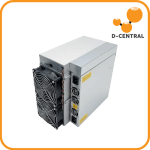
Hardware: Antminer S19 Pro (Space Heater Edition). Power: 3,250W producing ~11,000 BTU/hr. At /usr/bin/bash.07/kWh (Quebec): ~70/month electricity.
Analysis: When mining displaces heating costs, the effective electricity cost approaches zero during heating season. In a Canadian winter (November through March), a properly ducted space heater miner effectively mines for free — you were going to spend that energy on heating regardless.
Scenario 3: Dedicated Mining Operation
Hardware: Antminer S21 XP. 270 TH/s at 3,150W (11.7 J/TH). At /usr/bin/bash.065/kWh (Quebec hydro): ~50/month.
Analysis: With the most efficient hardware and cheapest electricity, this scenario has the strongest operating margin. The low J/TH means this miner remains operational even as network difficulty increases.
Factors That Change Over Time
Any honest mining evaluation must acknowledge what changes:
- Network difficulty: Generally trends upward. Reduces revenue per TH/s over time.
- Hardware depreciation: Mining hardware loses value as newer, more efficient models are released.
- Transaction fees: Vary dramatically based on network congestion.
- Halvings: Block reward halves approximately every 4 years. Next halving reduces 3.125 to 1.5625 BTC around 2028.
- Electricity rates: Your rate may change. Utility rate hikes directly impact operating costs.
This is why we emphasize evaluating mining as a technology decision with measurable, present-day variables — not as a speculative bet on future conditions.
Heat Recovery: The Hidden ROI Multiplier
Every watt consumed by a Bitcoin miner is converted to heat with near-perfect efficiency. This is not waste — it is a resource. In cold climates like Canada, heat recovery can fundamentally change mining economics.
Consider a miner consuming 3,250W. At $0.07/kWh, that costs approximately $170/month in electricity. But if that miner displaces an electric heater in your home, you were already spending that money on heating. Your effective mining electricity cost drops to zero during heating season.
For Canadian miners, heating season spans roughly November through March — five months where heat recovery can offset 100% of electricity costs. Even in shoulder months (October, April), partial heat recovery provides meaningful savings. D-Central’s Bitcoin Space Heaters are purpose-built for this exact scenario.
Hardware Resale Value and Lifecycle Planning
Mining hardware does not go to zero value. Even older generation ASICs retain resale value for specific use cases:
- Space heating: Older miners like the S9 (96 J/TH) are inefficient for pure mining but excellent as heat sources where electricity is cheap
- Parts harvesting: Control boards, fans, and PSUs from older units have value as replacement parts
- Developing markets: Miners with very low electricity costs internationally buy older hardware that is uneconomical elsewhere
When evaluating total ROI, factor in a 15-30% hardware resale value at the end of your planned mining period. D-Central’s ASIC repair service can also restore non-functional units to operational status, recovering value from hardware that might otherwise be written off.
The Evaluation Checklist
Before purchasing any mining hardware, answer these questions:
- What is my real electricity cost? (Measure your blended rate, not the headline rate)
- What is the miner efficiency (J/TH)? (Lower is better)
- Can I recover heat? (This can be the difference between viable and not)
- What is my noise tolerance? (Home miners need noise mitigation)
- What is the break-even hashprice? (Calculate and compare to current hashprice)
- What is my infrastructure cost? (Ventilation, electrical, networking)
- Am I mining for technology participation or operational efficiency? (Different hardware for different goals)
Use Our Tools
D-Central provides free tools to help you evaluate any mining hardware:
- Mining Profitability Calculator — Input your hashrate, power, and electricity cost for real-time revenue estimates
- Miner Database — Compare specifications across our entire database of mining hardware
- Miner Comparison Tool — Side-by-side comparison of any two miners
Frequently Asked Questions
What is a good J/TH efficiency for a new miner purchase?
In 2026, anything under 20 J/TH is competitive. Under 15 J/TH is excellent. The most efficient new-generation miners are approaching 10-12 J/TH.
How long does mining hardware typically last?
Well-maintained ASIC miners can operate for 5-7+ years. The hardware does not stop working — it becomes less competitive as more efficient models enter the market.
Does the Bitaxe make sense from an ROI perspective?
Not in the traditional ROI sense. Its value is participation in Bitcoin, education, decentralization, and the lottery possibility. Think of it as a technology investment in sovereignty.
How does the halving affect mining evaluation?
Each halving reduces the block reward by 50%, directly cutting mining revenue in half. The key is to run hardware efficient enough to remain operational through halvings. Low J/TH is your insurance policy.
Should I buy the newest, most expensive miner or multiple older ones?
Generally, the newest generation wins on efficiency (J/TH), meaning lower operating costs. Calculate the total cost of ownership (hardware + electricity over 2-3 years) for both options.
How does heat recovery affect mining ROI in Canada?
Dramatically. During Canada’s 5-month heating season, a properly ducted mining space heater displaces electric heating costs entirely. If your home would consume $170/month in electric heating, mining effectively costs you nothing during those months. This can shorten hardware payback periods by 30-40% compared to pure mining operations.