Skip to content

Bitcoin accepted at checkout  |  Ships from Laval, QC, Canada  |  Expert support since 2016

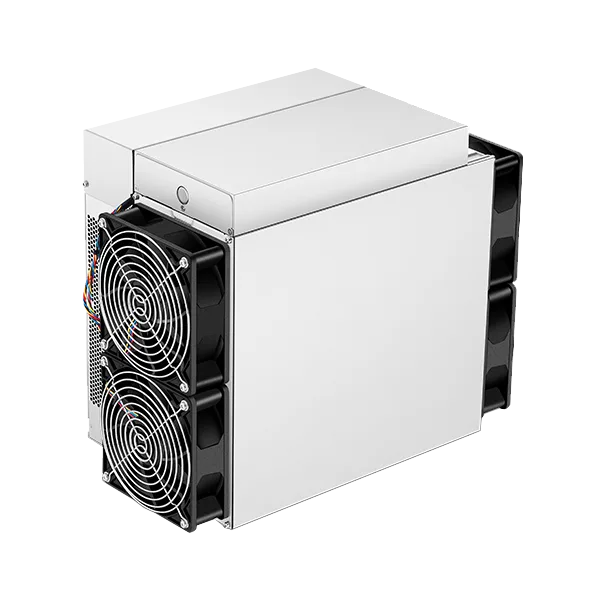
Antminer S19 Pro ASIC miner specifications and profitability image
Active Bitmain SHA-256 DCENT_OS PRO HEATER

Antminer S19 Pro

Higher binned S19, popular choice for its power-to-hashrate ratio

Hashrate 110 TH/s
Power 3,250 W
Efficiency 29.55 J/TH
Noise 75 dB

Quick answer

The Antminer S19 Pro is a Bitcoin miner rated about 110 TH/s at roughly 3,250 W (about 29.55 J/TH), built on 114× BM1398. An industrial-class unit — loud and power-hungry, best suited to a dedicated mining space, not living areas.

DCENT_OS Compatible

DCENT_OS is custom firmware developed by D-Central Technologies specifically for home miners. It transforms this miner with whisper-quiet fan profiles, 120V North American outlet support, auto-tuning for maximum efficiency, heater mode integration, and a clean web dashboard for monitoring.

Miners running DCENT_OS score higher on our Home Mining Assessment because the firmware is purpose-built to make industrial hardware livable in residential spaces.

Learn More About DCENT_OS →

Professional-Grade Miner

This miner draws 3,250W and produces 75 dB of noise — it is designed for dedicated mining environments, not living spaces. Professional-grade miners deliver the highest hashrate and revenue per unit but require proper infrastructure: a 240V circuit, adequate ventilation or exhaust ducting, and a space where noise is not a concern (garage, basement, warehouse, or outdoor enclosure).

However, this miner is compatible with DCENT_OS — D-Central's custom firmware that adds whisper-quiet fan profiles and 120V North American outlet support. With DCENT_OS installed, this industrial miner can be transformed for home use.

Circuit Requirement 120V with DCENT_OS / 240V stock

Heater-Class Miner

At 3,250W, this miner outputs approximately 11089 BTU/hr of heat — equivalent to a standard electric space heater. Every watt consumed by an ASIC miner is converted to heat with 100% efficiency, making it a space heater that also mines Bitcoin.

During heating season, miner heat can offset part of the heat a room would otherwise need from another electric heater. The economics depend on your electricity rate, room heat demand, BTC price, network difficulty, and noise constraints.

Heat Output 11089 BTU/hr
Explore Bitcoin Space Heaters →

Profitability Calculator

$63,826
Daily BTC Mined --
Breakeven Electricity $0.0407/kWh
Cost to Mine 1 BTC --
Network Hashrate Share --
Break-even Estimate --
Period Revenue Electricity Cost Profit
Daily $3.18 $5.46 $-2.28
Weekly $22.23 $38.22 $-15.99
Monthly $95.29 $163.80 $-68.51
Yearly $1,159.34 $1,992.90 $-833.56

Buy from D-Central

In stock and ready to ship from Laval, Quebec.

$CAD925.00 CAD
View Bitmain Antminer S19 Pro

Where to Buy the Antminer S19 Pro

Official

D-Central Technologies

Canada

Bitcoin Mining Hackers since 2016. Ships from Laval, Quebec.

$CAD925.00 CAD
Buy from D-Central

Full Specifications

Model Antminer S19 Pro
Model Number S19 Pro
Manufacturer Bitmain
Algorithm SHA-256
Coins Mined Bitcoin (BTC)
Hashrate 110 TH/s
Power Consumption 3,250 W
Efficiency 29.55 J/TH
Noise Level 75 dB
Chip Model BM1398
Chip Count 114
Cooling Air
Voltage Range 200-240V AC
Operating Temperature 5-40°C
Dimensions 400x195x290
Weight 14.4
Interface Ethernet
BTU Output 11089 BTU/hr
Equivalent Heater Equal to a 3,250W space heater
Daily Power Cost $5.46/day
Monthly Power Cost $163.80/mo
Circuit Requirement 240V circuit required
Release Date 2020-05-01
MSRP $2,500.00
Status Active

Custom Power Profiles

With custom firmware like DCENT_OS, this miner can be tuned across a wide range of power levels. Lower wattage improves efficiency and reduces electricity costs; higher wattage increases hashrate at the expense of efficiency.

Wattage Hashrate Efficiency
2,800 W 100 TH/s 28 J/TH
2,990 W 105 TH/s 28.5 J/TH
3,200 W 110 TH/s 29.1 J/TH
3,360 W 115 TH/s 29.2 J/TH
3,560 W 120 TH/s 29.7 J/TH
3,775 W 125 TH/s 30.2 J/TH
4,000 W 130 TH/s 30.8 J/TH
4,230 W 134 TH/s 31.6 J/TH
4,520 W 138 TH/s 32.8 J/TH
4,750 W 143 TH/s 33.2 J/TH
5,000 W 148 TH/s 33.8 J/TH
5,280 W 153 TH/s 34.5 J/TH
5,520 W 158 TH/s 34.9 J/TH
5,770 W 162 TH/s 35.6 J/TH

Actual performance varies by individual unit silicon quality, ambient temperature, and cooling configuration. These operating points are achievable with custom tuning firmware such as DCENT_OS; values are calculated at runtime by the autotuner, not fixed presets.

Home Mining Assessment

8 /100
Not Recommended
This score reflects DCENT_OS firmware capabilities: whisper-quiet fan profiles, 120V support, and auto-tuning for home environments.
Noise 75 dB ~40 dB DCENT_OS
Whisper-quiet with DCENT_OS fan profiles — suitable for living spaces
Heat Output 3,250W / 11089 BTU
High heat - requires ventilation or duct system
Power Draw 3,250W (3.3kW)
120V compatible with DCENT_OS auto-tuning — standard North American outlet

Higher binned S19, popular choice for its power-to-hashrate ratio

The Antminer S19 Pro is Bitmain’s 2020-era SHA-256 workhorse: 110 TH/s at roughly 3,250 W (about 29.5 J/TH), built on three air-cooled hashboards of 7nm BM1398 ASICs. It remains a durable, highly repairable, third-party-friendly miner that earns its keep wherever electricity is cheap or its heat can be reused.

Chip and hashboard architecture

The S19 Pro is powered by the BM1398 ASIC, fabricated on TSMC’s refined 7nm DUV process — the same Gen 3 silicon family that anchors the entire stock S19 line (S19, S19 Pro, S19a, S19i, T19). Each BM1398 packs roughly 672 hashing cores. The unit ships with three hashboards, and on the Pro each board carries 114 chips (versus 76 on the base S19), for around 342 chips and on the order of 229,000 SHA-256 cores across the machine.

Those 114 chips per board are organised into 38 voltage domains of three chips each. This is the single most misunderstood point about modern Antminers: voltage is regulated per domain, not per individual chip. The three chips in a domain are wired in series for core voltage, and a domain LDO/regulator sets the rail for that cluster. The practical consequence is that a single failed chip can pull down its entire domain, and tuning or repair always happens at domain granularity — there is no per-chip voltage knob.

On the classic air-cooled S19 Pro, the board steps a 12.6 V input up to roughly a 20 V boost rail (via the main MOSFET stage), then LDOs feed each domain down to ~1.8 V working rails. A PIC microcontroller (U6) handles power sequencing and board housekeeping, an EEPROM (U10) stores per-board calibration and frequency data, and four I2C temperature sensors (U5, U7, U8, U9) report thermals. Note this PIC is present on the S19 Pro — the “no-PIC” silicon design only arrives later, with the S21/T21 (BM1368) generation.

The control board on the classic S19 Pro is a Xilinx Zynq SoC (dual ARM Cortex-A9 at 667 MHz) paired with an FPGA. The FPGA runs an RSA-verified bitstream (soc_system.rbf) that handles the time-critical work distribution and nonce collection to the hashboards over an 18-pin signal cable (UART command/response plus an I2C bus for the temperature sensors and EEPROM). That Zynq + FPGA design is exactly why the S19 Pro is one of the most hackable Antminers ever shipped — more on that below.

Real-world power and efficiency

Nameplate figures are 110 TH/s and 3,250 W, which works out to roughly 29.5 J/TH at the wall. Treat the nameplate wattage as a guide rather than gospel: actual draw varies with chip binning, ambient temperature, PSU efficiency, and firmware. Expect real wall draw a few percent above the board figure once PSU losses and fans are included, and higher hashrate units in the bin spread will pull proportionally more power.

The S19 Pro responds very well to tuning. Across the BM1398 S19 family, dropping clocks and domain voltage into a low-power profile can push efficiency from the ~29–34 J/TH stock range down toward the low-to-mid 20s J/TH, at the cost of hashrate — a meaningful gain when power is your dominant cost. Pushing the other direction (overclocking) buys more terahashes but efficiency degrades into the mid-30s J/TH and thermal/PSU headroom shrinks. The autotuners that find these operating points are calculated at runtime against each board’s measured behaviour — they are not fixed presets baked into the firmware.

For the full curve of wattage-versus-hashrate-versus-efficiency operating points the S19 family can hold, see our ASIC power profiles database, which catalogues hundreds of tuned profiles across the BM1398 and later generations.

Thermally, every watt becomes heat: at 3,250 W the S19 Pro emits roughly 11,089 BTU/h. That is enough to meaningfully warm a room, which is why the S19 Pro is a popular candidate for heat-reuse builds. It is also genuinely loud — around 75 dB — so most home deployments pair it with ducting or a shroud to push exhaust where you want it and tame the noise.

S19-family quick comparison

Model ASIC Process Chips/board Stock hashrate Stock efficiency (approx.)
Antminer S19 BM1398 7nm 76 ~95 TH/s ~34 J/TH
Antminer S19 Pro BM1398 7nm 114 110 TH/s ~29.5 J/TH
Antminer S19j Pro BM1362 5nm ~100 TH/s ~29.5 J/TH
Antminer S19 XP BM1366 5nm ~140 TH/s ~21.5 J/TH

The takeaway: the S19 Pro is not the most efficient member of its own family — the later 5nm chips (BM1362, BM1366) do more terahash per joule — but it is one of the most available, best-documented, and most repairable, which is exactly what matters for a long second life.

Firmware compatibility

Out of the box the S19 Pro runs Bitmain’s stock firmware (the bmminer stack), which is stable and well understood but conservative: no native Stratum V2, no advanced autotuning, and limited visibility into per-domain behaviour. The good news is that the S19 Pro is unusually open to alternatives.

Because the classic S19 Pro uses a Xilinx Zynq control board, custom firmware can be loaded by booting from an SD card with the boot-mode jumper set — no soldering, no risky NAND flashing, and none of the firmware locks that Bitmain later added to Amlogic-based control boards (those locks affect certain post-2024 units, not the Zynq S19 Pro). That makes it a favourite platform for the open and third-party firmware ecosystem.

Among third-party options, the landscape is honest and worth understanding: only BraiinsOS+ natively speaks Stratum V2, and it carries a development fee in the 2–2.5% range; other production firmwares add their own strengths such as watt-anchored mining or low-voltage household (110/120 V) operation. We credit that ecosystem — Braiins and the wider open-firmware community did the foundational reverse-engineering that makes any of this possible.

D-Central’s own DCENT_OS — an open-source (GPL-3.0) Antminer firmware — runs on this exact BM1398 platform in our lab, and the S19 Pro is one of the units we cut our teeth on bringing it up. DCENT_OS is currently in closed beta with a public beta planned for summer 2026; it is one more layer of decentralisation for your hardware, built standing on the shoulders of the projects that came before it, not a replacement we would oversell today.

Common faults and troubleshooting

After thousands of S19-class boards through our bench, the failure patterns are predictable. The most common are:

  • “0 ASIC found” / missing chain or low chip count — usually a broken chip-to-chip chain, a damaged signal cable, or a dead voltage domain taking part of the board offline.
  • Reduced or unstable hashrate — when the reported ASIC count falls below the expected per-board total, one or more chips (and therefore their whole domain) have failed; the board keeps running but down on terahash.
  • Temperature sensor read errors — typically an I2C fault on one of the board’s sensors (U5/U7/U8/U9) or the signal cable carrying that bus.
  • EEPROM read failures — a corrupted or unreadable U10 EEPROM, which the miner needs for per-board calibration.
  • Power / PIC faults — boost-stage or PIC (U6) issues, or a PSU that trips its watchdog and shuts the board down.
  • Fan errors — fan speed out of range, which the firmware treats as a safety stop.

Working through these by hand is exactly what our free ASIC fault finder is built for: enter the error or symptom and it walks you to the likely root cause and the board-level fix. Many “dead” S19 Pros are a single failed domain or a tired signal cable away from full hashrate.

Repair and longevity

D-Central has been repairing Antminers in-house in Laval, Quebec since 2016, and the S19 Pro is firmly in our wheelhouse. Because failures concentrate at the domain level, board-level repair is genuinely worthwhile here — diagnosing and reflowing or replacing failed chips, restoring a dead domain, repairing EEPROM/PIC circuitry, swapping the boost stage, or replacing a worn signal cable is routinely cheaper than writing off a board. We repair the Antminer S19 Pro at the component level rather than just swapping parts.

When a board really is beyond economic repair, the S19 Pro is well served by the parts pipeline: we stock replacement S19 Pro hashboards, the matching Xilinx control board, and compatible APW12 power supplies. The 7nm BM1398 is a mature, well-understood part, which keeps the S19 Pro economically serviceable for years after launch — a big reason it makes such a strong heat-reuse or low-cost-power machine in its second life.

Who it’s for and buying

The S19 Pro suits the miner who values durability, repairability, and openness over outright efficiency. It is a strong fit if you have access to inexpensive electricity, mine in a cold climate where the ~11,000 BTU/h is a feature rather than a cost, or want a proven, hackable platform to run custom firmware on. With a home-mining suitability score of 84/100, it is a credible residential miner — provided you respect the 75 dB noise floor with proper ducting or a shroud.

If you are shopping, see current availability and live profitability for the Antminer S19 Pro in our store. If the S19 Pro is more machine (and more noise and power) than you need — for example you want to learn the craft, mine solo for the lottery, or run something silent on a desk — a Bitaxe open-source single-ASIC miner is a better entry point. We would rather sell you the right tool than the biggest one.

Generational context

The S19 Pro arrived in May 2020 as the high-binned flagship of Bitmain’s third-generation 7nm line, and for its day a sub-30 J/TH, 110 TH/s air-cooled machine was a serious step forward. It has since been superseded on raw efficiency by the 5nm S19j Pro and S19 XP (BM1362 and BM1366), and later by the S21/T21 (BM1368) generation that pushes below 18 J/TH. Credit where due: each of those steps built on the BM1398 design that the S19 Pro proved at scale.

What keeps the S19 Pro relevant in 2026 is not its efficiency ranking but its longevity profile: huge installed base, abundant spare parts, a Zynq control board that welcomes open firmware, and a board architecture our technicians can repair to the chip. For cheap-power mining, heat reuse, firmware tinkering, or a dependable hosted unit, it is one of the easiest Antminers to own for the long haul.

Run open-source firmware on your Antminer

DCENT_OS is D-Central’s open-source, GPL-3.0 firmware effort for Antminer hardware — currently in closed beta, with public beta targeted for summer 2026. We build on the shoulders of the open-firmware projects that came before us. Want early access? Join the beta list. Collection only — we will not email you anything else yet.

Frequently Asked Questions

What are the current mining economics for the Antminer S19 Pro?

At $0.07/kWh, the Antminer S19 Pro currently shows an estimated daily net cost of $2.28 before pool fees and hardware cost. Lower electricity rates, network changes, BTC price changes, or useful heat recovery can change the result.

Can I mine Bitcoin at home with the Antminer S19 Pro?

The Antminer S19 Pro has a home mining score of 8/100. With 75 dB noise and 3,250W power draw, it may require a dedicated space like a garage, basement, or outdoor enclosure. Consider noise insulation and proper ventilation.

Can the Antminer S19 Pro heat my home?

The Antminer S19 Pro outputs approximately 11089 BTU/hr of heat. For reference, a typical space heater produces 5,000-5,500 BTU/hr. All electrical energy consumed by the miner is converted to heat, making it 100% efficient as a heater. D-Central offers Bitcoin Space Heater builds designed specifically for home heating integration.

Does D-Central repair the Antminer S19 Pro?

Yes, D-Central provides professional repair services for the Antminer S19 Pro. Services include hashboard repair, control board diagnostics, fan replacement, and full refurbishment. Ship your miner to our Laval, Quebec facility for diagnosis and repair.

What power supply does the Antminer S19 Pro need?

The Antminer S19 Pro draws 3,250W of power. You need a power supply rated for at least 3,575W with appropriate voltage (200-240V AC). D-Central stocks compatible power supplies in our shop. Always use a quality PSU from a reputable manufacturer to protect the miner and wiring.