The cryptocurrency space is awash with platforms claiming to be the next evolution of Bitcoin. BNB Smart Chain is one of them — a centralized smart contract platform built by Binance, one of the largest centralized exchanges on the planet. But for those of us who understand why Bitcoin was created in the first place, the comparison itself is almost insulting.
This is not a rivalry. Bitcoin is a decentralized, censorship-resistant monetary network secured by proof-of-work mining. BNB Smart Chain is a corporate product dressed in blockchain aesthetics. Understanding the difference is not just academic — it is fundamental to understanding what sovereignty, decentralization, and trustlessness actually mean.
At D-Central Technologies, we have been building, repairing, and deploying Bitcoin mining hardware since 2016. We are Bitcoin Mining Hackers. We do not chase altcoin narratives. We secure the Bitcoin network, one hash at a time.
Bitcoin’s Architecture: Built for Adversarial Conditions
Bitcoin was designed to operate in a world where no single entity can be trusted. Its proof-of-work consensus mechanism is not a design flaw waiting to be “improved” — it is the core innovation that makes trustless, permissionless money possible.
Here is what makes Bitcoin’s architecture fundamentally different from every platform token pretender:
| Property | Bitcoin | BNB Smart Chain |
|---|---|---|
| Consensus | Proof-of-Work (SHA-256) | Proof of Staked Authority (21 validators) |
| Validator Count | ~20,000+ full nodes globally | 21 pre-approved validators |
| Censorship Resistance | Extremely high — permissionless mining | Low — Binance can freeze assets and blacklist addresses |
| Supply Cap | 21 million BTC — hard-coded, immutable | No fixed cap — Binance controls burn schedule |
| Network Hashrate | 800+ EH/s of real thermodynamic security | N/A — no mining, no energy expenditure |
| Governance | Decentralized — no CEO, no foundation controls it | Centralized — Binance Labs and CZ’s vision |
| Block Reward | 3.125 BTC (halving schedule until ~2140) | Transaction fees distributed to validators |
| Years of Unbroken Uptime | 15+ years (since January 2009) | ~4 years (launched September 2020) |
The numbers speak for themselves. Bitcoin is not competing with BNB Smart Chain. They exist in entirely different categories — one is a monetary network secured by physics and energy, the other is a corporate database with a token attached.
Why Proof-of-Work Is Not “Outdated”
Every few months, a new narrative emerges claiming that proof-of-work is wasteful, slow, or outdated. These arguments fundamentally misunderstand what proof-of-work accomplishes.
Proof-of-work converts real-world energy into unforgeable costliness. Every block that Bitcoin miners produce carries a thermodynamic proof that real resources were expended. This is not waste — it is the conversion of energy into monetary security. No amount of staked tokens can replicate this.
BNB Smart Chain’s “Proof of Staked Authority” model means that 21 validators — selected and rotated by Binance — are responsible for the entire network. If you cannot see the problem with 21 hand-picked entities running your “decentralized” financial system, then we need to talk about what decentralization actually means.
Bitcoin miners, on the other hand, compete in an open, permissionless market. Anyone — from a massive industrial operation to a home miner running a Bitaxe — can participate in securing the network. This is the fundamental promise of Bitcoin: no gatekeepers.
The Mining Hacker’s Perspective: Securing Sound Money
At D-Central, we see mining as more than a business — it is an act of sovereignty. When you point hash power at the Bitcoin network, you are doing something no BNB validator can ever do: you are converting energy into incorruptible monetary security without anyone’s permission.
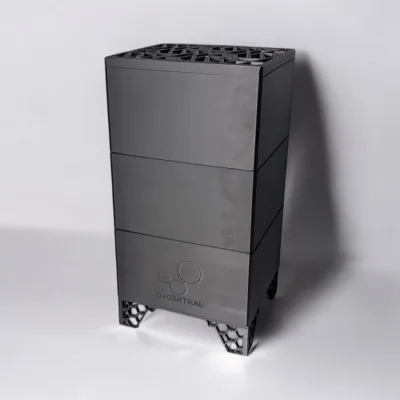
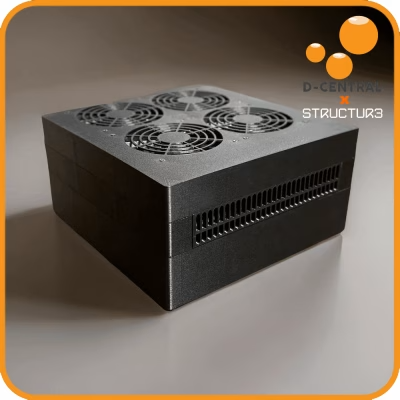
This is why we build what we build. Our Bitcoin Space Heaters turn mining into dual-purpose infrastructure — heating your home while securing the network. Our Antminer Slim Edition and custom builds are designed for home miners who refuse to outsource their sovereignty to a data center, let alone to a centralized exchange’s proprietary blockchain.
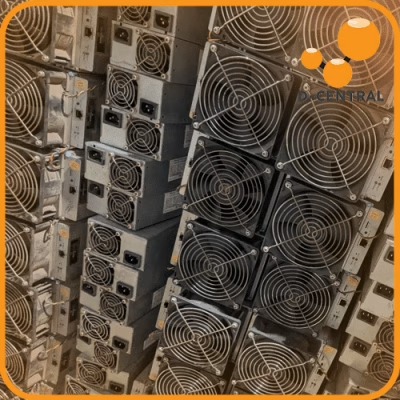
The home mining movement is not about competing with industrial farms on hashrate. It is about distributing hash power so widely that no government, corporation, or exchange can capture it. Every home miner running an S9 Space Heater or a Bitaxe on their desk is a node of resistance against the centralization of monetary power.
BNB Smart Chain: A Case Study in Centralization Theater
Let us be direct about what BNB Smart Chain actually is. It is a product built by Binance — a for-profit corporation — to drive usage of the BNB token, which Binance created and controls. The entire ecosystem exists to benefit Binance’s bottom line.
Consider these facts:
Validator centralization. BNB Smart Chain runs on 21 validators. By comparison, Bitcoin has over 20,000 reachable full nodes and hundreds of thousands of miners across every continent. The difference is not incremental — it is categorical.
Censorship capability. Binance has demonstrated willingness and ability to freeze user funds, blacklist addresses, and comply with state demands to restrict access. Bitcoin’s network cannot do this by design. No single entity can freeze a Bitcoin UTXO.
Smart contract complexity as attack surface. BNB Smart Chain’s DeFi ecosystem has been plagued by rug pulls, flash loan exploits, and smart contract vulnerabilities. The complexity that enables “innovation” also enables exploitation. Bitcoin’s deliberate simplicity is a feature, not a limitation.
Corporate governance. When something goes wrong on BNB Smart Chain, Binance steps in. They have paused the chain. They have coordinated validator responses. This is the opposite of decentralization. In Bitcoin, there is no phone number to call when things get difficult — and that is exactly the point.
Why Bitcoin Maximalism Is Not Tribalism — It Is Engineering Judgment
Calling out the fundamental architectural differences between Bitcoin and platform tokens like BNB is not tribalism. It is engineering analysis.
Bitcoin maximalists are not loyal to a brand — they are loyal to a set of properties: fixed supply, proof-of-work security, censorship resistance, permissionless access, and decentralized governance. Any system that compromises on these properties is not a competitor to Bitcoin. It is a different product entirely, solving different problems, with different trust assumptions.
The so-called “blockchain trilemma” — the idea that you must choose two of three among decentralization, security, and scalability — is real. BNB Smart Chain chose scalability and speed by sacrificing decentralization. Bitcoin chose decentralization and security, then addresses scalability through second layers like the Lightning Network.
These are fundamentally different engineering tradeoffs, and pretending they are equivalent choices on a spectrum is intellectually dishonest.
The Role of Mining in Bitcoin’s Security Model
Here is what platform token advocates consistently fail to understand: Bitcoin’s security budget is not an expense — it is the mechanism by which the network converts energy into trust.
| Security Metric | Bitcoin | BNB Smart Chain |
|---|---|---|
| Cost to Attack (51%) | Billions in ASIC hardware + ongoing energy costs | Coordinate 11 of 21 validators (known entities) |
| Settlement Finality | Probabilistic — ~6 confirmations (~60 min) for practical irreversibility | Fast but reversible by validator coordination |
| Physical Anchor | Energy expenditure — rooted in thermodynamics | Token stake — rooted in financial position |
| Permissionless Participation | Anyone can mine — from Bitaxe to S21 | Validators must be approved by Binance |
Bitcoin’s security model scales with energy expenditure. The more energy miners invest, the more expensive it becomes to attack the network. This creates an ever-growing wall of thermodynamic security that no amount of staked tokens can replicate.
At D-Central, we contribute to this security every day. Our ASIC repair services extend the operational life of mining hardware, keeping hash power distributed and active. Our hosting operations in Quebec leverage Canada’s abundant hydroelectric power to secure the network with clean, affordable energy.
What Home Miners Can Do That BNB Validators Cannot
Here is the beautiful irony: a home miner running a Bitaxe Ultra on their desk has more sovereignty than a BNB Smart Chain validator running enterprise infrastructure.
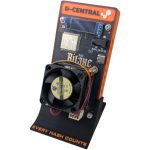
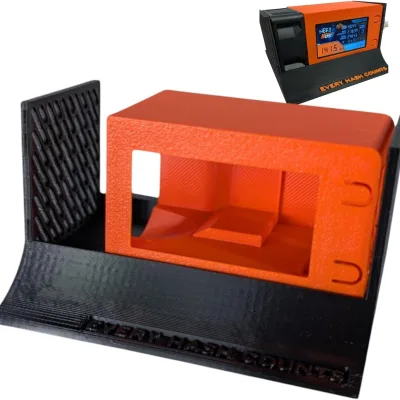
The Bitaxe miner does not need anyone’s approval to participate. There is no application process, no minimum stake, no corporate partnership required. You plug in your miner (5V barrel jack, not USB-C — that port is for firmware flashing only), connect to a pool or solo mine, and you are securing the hardest money humanity has ever created.
Solo mining with a Bitaxe is lottery mining — the odds of finding a block with the current network hashrate above 800 EH/s are astronomically small. But that is not the point. The point is that you can. The protocol does not care who you are, where you live, or how much money you have. Every hash has an equal probability of finding the next block. Every hash counts.
Compare this to BNB Smart Chain, where participation in consensus requires Binance’s blessing. That is not decentralization. That is a corporate hierarchy wearing a blockchain costume.
Bitcoin’s Long Game: Why 15 Years of Uptime Matters
Bitcoin has been running continuously for over 15 years. Every 10 minutes, on average, a new block is added to a chain that has never been successfully attacked, never been rolled back (outside of a single early incident in 2010 that was addressed transparently), and never been paused by its creators — because it has no creators who can pause it.
BNB Smart Chain launched in September 2020. In October 2022, it was paused by validators after a $570 million exploit. Let that sink in: the entire chain was stopped by a coordinated decision among its validators. In Bitcoin, this is architecturally impossible. There is no off switch.
Fifteen years of unbroken, adversarial uptime is not just a track record. It is a Lindy effect in action — every day that Bitcoin continues to operate without failure makes it more likely to continue operating tomorrow. No platform token with a four-year history and a corporate kill switch can claim the same.
The Canadian Mining Advantage
Canada — and Quebec in particular — offers some of the most compelling conditions for Bitcoin mining on the planet. Abundant hydroelectric power, cold climates for natural cooling, and a regulatory environment that, while evolving, has been far more welcoming to mining than many jurisdictions.
At D-Central, we leverage these advantages daily. Our mining consulting services help Canadian home miners optimize their setups for our unique climate conditions. Cold Canadian winters mean your mining hardware runs cooler and more efficiently — and if you are running a Bitcoin Space Heater, that “waste” heat is literally warming your home.
This is the kind of real-world, practical integration that no platform token can offer. You cannot heat your house by staking BNB. You cannot monetize your excess solar or hydro power with a Proof of Staked Authority validator. Only Bitcoin mining converts energy into both monetary security and useful thermal output.
Conclusion: There Is No Comparison
Comparing Bitcoin to BNB Smart Chain is like comparing the internet protocol to a corporate intranet. One is an open, permissionless network that no single entity controls. The other is a product, built by a company, to serve that company’s interests.
Bitcoin’s proof-of-work mining is the most robust security mechanism ever devised for a digital monetary system. It is permissionless, physics-based, and impossible to capture. BNB Smart Chain’s consensus model is none of these things.
For those of us in the mining community, the answer has always been clear. We do not mine BNB. We do not validate transactions for a corporation. We mine Bitcoin — because it is the only network where our participation is truly permissionless, our contribution is rooted in real energy expenditure, and our work secures sound money for the entire world.
We are D-Central Technologies. We are Bitcoin Mining Hackers. And we are not interested in the next corporate blockchain. We are interested in securing the one network that actually matters.
FAQ
Why does D-Central focus exclusively on Bitcoin mining instead of supporting multiple blockchains?
Bitcoin is the only truly decentralized, censorship-resistant monetary network secured by proof-of-work. Platform tokens like BNB operate under corporate governance with centralized validator sets. Our mission is the decentralization of every layer of Bitcoin mining — distributing hash power to home miners so that no single entity can capture the network. Supporting centralized alternatives would undermine this mission.
Is it still worth mining Bitcoin at home with the network hashrate above 800 EH/s?
Absolutely. Home mining is not just about block rewards — it is about sovereignty, decentralization, and practical benefits like heat recovery. A Bitaxe solo miner gives you a lottery ticket at every hash, while a Bitcoin Space Heater offsets heating costs while securing the network. The value of home mining extends far beyond simple profitability calculations.
What makes Bitcoin’s proof-of-work more secure than BNB Smart Chain’s consensus?
Bitcoin’s proof-of-work requires attackers to invest billions in ASIC hardware and sustain enormous energy costs to attempt a 51% attack. BNB Smart Chain requires coordination of just 11 of 21 known validators. The difference is not marginal — Bitcoin’s security is anchored in thermodynamics, while BNB’s is anchored in corporate trust. History has shown repeatedly that corporate trust fails.
Can I mine Bitcoin with a Bitaxe and actually find a block?
Yes, it is theoretically possible. Solo mining with a Bitaxe is lottery mining — the probability per hash is extremely small, but every hash has an equal chance. Multiple solo miners have found full 3.125 BTC blocks with small devices. The point of solo mining is not guaranteed returns — it is permissionless participation in the most important monetary network in history. Every hash counts.
How does D-Central help home miners get started with Bitcoin mining?
D-Central provides the full lifecycle for home miners: hardware sales (from Bitaxe solo miners to full ASIC rigs and Space Heaters), professional ASIC repair services, mining consulting, and hosting in Quebec for those who need it. We have been serving the home mining community since 2016, and our team understands the unique challenges of residential deployments — noise, heat, power, and integration.
Why does D-Central call itself “Bitcoin Mining Hackers”?
We take institutional-grade mining technology and hack it into accessible solutions for home miners. From custom Antminer builds like the Slim Edition to Bitcoin Space Heaters that turn mining waste heat into home heating, our engineering approach is about breaking down barriers between enterprise mining hardware and the individual Bitcoiner who wants to participate in securing the network from their own home.