Bitcoin mining is not an investment strategy. It is an act of sovereignty. Every hash you produce strengthens the most resilient monetary network ever built, distributes power away from centralized entities, and declares that you believe in a future where individuals control their own financial infrastructure. That conviction is what drives everything we do at D-Central Technologies.
Since 2016, D-Central has operated as Canada’s Bitcoin Mining Hackers — taking institutional-grade mining technology and hacking it into solutions that work for the individual. Not the hedge fund. Not the publicly-traded conglomerate running 500-megawatt facilities. The pleb miner. The person running a Bitcoin Space Heater in their basement. The cypherpunk pointing a Bitaxe at a solo pool, rolling the dice for a full 3.125 BTC block reward. That is who we build for, and that is who this article is written for.
The Bitcoin network’s hashrate now exceeds 800 EH/s. Difficulty has pushed past 110 trillion. The block subsidy sits at 3.125 BTC after the April 2024 halving. If those numbers intimidate you, good — they should command respect. But they should not discourage you from mining. Because mining is not about competing with industrial operations on pure hashrate. It is about participating in the network, decentralizing hash power, and building the technical literacy that makes you a more sovereign Bitcoiner.
This guide walks through every layer of the home mining stack and how D-Central serves each one — from your first open-source miner to full ASIC deployments, from repair and maintenance to hosting and education.
The Home Mining Philosophy: Why Every Hash Counts
The prevailing narrative in mainstream media frames Bitcoin mining as an industrial activity — massive warehouses, roaring fans, power purchase agreements measured in megawatts. That narrative is incomplete and, frankly, dangerous to Bitcoin’s decentralization.
When mining concentrates in a handful of large facilities, the network becomes vulnerable. Jurisdictional risk, regulatory pressure, single points of failure — all of these threaten Bitcoin’s censorship resistance when hash power is centralized. Home mining is the antidote.
Every home miner running even a modest amount of hashrate contributes to geographic distribution. Every Bitaxe pointed at a solo mining pool adds entropy to the network. Every Space Heater converting electricity into both heat and Bitcoin security makes the network more resilient. This is not a feel-good story. It is a security model.
D-Central exists to serve this mission at every layer:
- Hardware — Open-source miners, full ASICs, custom builds, and accessories
- Repair — Keeping your equipment running instead of sending it to landfill
- Dual-purpose mining — Space Heaters that turn electricity costs into home heating
- Hosting — When home deployment is not feasible, Quebec facilities with competitive power
- Education — Training that builds real technical competence, not just theoretical knowledge
- Consulting — Strategic guidance for scaling from one miner to a full operation
Layer 1: Open-Source Mining Hardware
The open-source mining revolution is the most important development in Bitcoin mining since ASICs themselves. Devices like the Bitaxe, NerdAxe, NerdQAxe, and Nerdminer have democratized access to mining hardware in ways that were unthinkable five years ago.
The Bitaxe Ecosystem
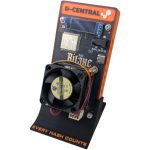
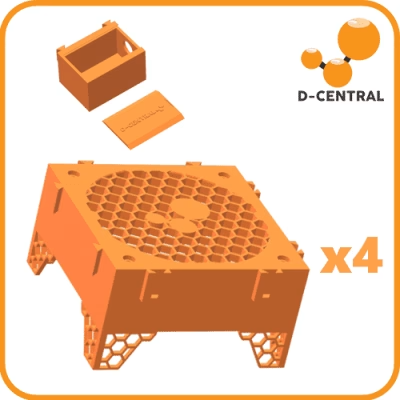
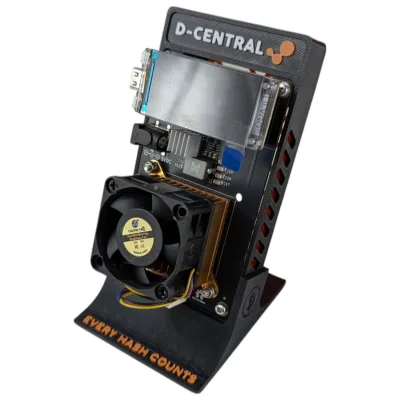
D-Central is a pioneer in the Bitaxe ecosystem, involved since the earliest days. We created the original Bitaxe Mesh Stand — the first company to manufacture it. We developed leading heatsink solutions for both the standard Bitaxe and the Bitaxe Hex. We stock every variant: Supra, Ultra, Hex, Gamma, GT, and every accessory you need to run them.
As open-source hardware, anyone can manufacture a Bitaxe. What sets D-Central apart is our depth of ecosystem expertise, our pioneering history, and our commitment to quality control. When you buy a Bitaxe from D-Central, you are buying from the people who have been building this ecosystem from day one.
Visit the Bitaxe Hub for the definitive guide to every model, setup instructions, overclocking tips, and troubleshooting walkthroughs.
The Nerd Lineup
Beyond Bitaxe, we carry the full open-source mining device lineup:
- Nerdminer — The entry point. A tiny, low-power solo miner that is as much an educational tool as it is a lottery ticket. Perfect for learning how mining works at the protocol level.
- NerdAxe — Stepping up in hashrate while maintaining the open-source ethos. A serious solo mining device powered by a 5V/6A barrel jack PSU.
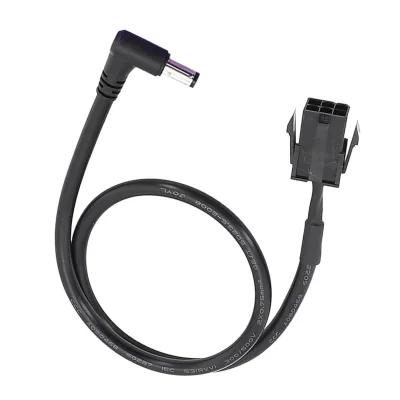
- NerdQAxe — Quad-chip architecture for significantly more hashing power. 12V DC via XT30 connector.
- NerdNOS — Open-source mining firmware that puts you in full control of your hardware.
These devices will not compete with an Antminer S21 on raw hashrate. That is not the point. They are sovereignty tools — fully auditable hardware running open-source firmware, pointed at solo pools where every hash is a lottery ticket for a full 3.125 BTC block reward. The probability is low. The principle is everything.
Power Input Reference
One of the most common mistakes new miners make is using the wrong power supply. Here is the definitive reference:
| Device | Power Input | Connector |
|---|---|---|
| Bitaxe Supra / Ultra / Gamma | 5V DC, 6A | 5.5×2.1mm barrel jack |
| Bitaxe GT | 12V DC | XT30 |
| Bitaxe Hex | 12V DC | XT30 |
| NerdAxe | 5V DC, 6A | 5.5×2.1mm barrel jack |
| NerdQAxe++ | 12V DC, 10A | XT30 |
| NerdOctaxe Gamma | 12V DC, 18-20A | XT60 |
Critical note: The USB-C port on Bitaxe and NerdAxe devices is for firmware flashing and serial communication only. It does not deliver enough power to run the miner. Always use the correct barrel jack or XT connector with an appropriately rated PSU.
Layer 2: Full ASIC Miners and Custom Builds
When you are ready to move beyond open-source solo miners and into serious hashrate production, D-Central’s shop carries the full spectrum of ASIC mining hardware.
Current-Generation ASICs
We stock miners from Bitmain (Antminer series), MicroBT (Whatsminer series), and Canaan (Avalon series). Whether you are looking at the latest-generation units pushing maximum joules-per-terahash efficiency or proven workhorses from previous generations at accessible price points, we have options for every budget and deployment scenario.
D-Central Custom Editions
This is where the Mining Hacker identity comes through strongest. D-Central does not just resell stock miners. We modify, optimize, and reimagine them:
- Antminer Slim Edition — Compact custom builds designed for space-constrained deployments. Same hash power, smaller footprint.
- Antminer Pivotal Edition — Custom configurations optimized for specific use cases and environments.
- Antminer Loki Edition — Purpose-built custom Antminer configurations that push the boundaries of what stock hardware can do.
These are not cosmetic modifications. They are engineering solutions — rethinking how mining hardware is deployed, cooled, and integrated into real-world environments where a stock 140-decibel ASIC simply will not work.
Layer 3: Bitcoin Space Heaters — Dual-Purpose Mining
The single most compelling argument for home mining in 2026 is this: your miner is already a heater. Every watt of electricity consumed by an ASIC miner is converted to heat. One hundred percent of it. That is not waste — that is a heating system that also mines Bitcoin.
D-Central’s Bitcoin Space Heater line takes this concept to its logical conclusion. We build enclosed, noise-reduced mining units based on proven ASIC platforms — the S9, S17, S19, and L3 — that function as space heaters for your home, garage, workshop, or greenhouse.
Why Space Heaters Change the Economics
Traditional mining profitability calculations treat electricity as a pure cost. But if you are already going to spend money heating your home — and in Canada, heating is not optional for roughly seven months of the year — then the electricity powering your miner is not a mining cost. It is a heating cost that happens to also produce Bitcoin.
When you reframe the economics this way, mining profitability looks radically different. Your Space Heater is not competing with industrial miners on cost-per-terahash. It is competing with your furnace on cost-per-BTU, and the Bitcoin it earns is a bonus on top of heat you were already going to pay for.
This is the kind of thinking that defines the Mining Hacker approach: taking the same technology that powers a warehouse in Texas and integrating it into a Canadian home as a practical, dual-purpose appliance.
Layer 4: ASIC Repair — Extending Hardware Lifespan
Mining hardware is not disposable. At least, it should not be. A dead hashboard is not a dead miner — it is a diagnostic challenge, and D-Central’s ASIC Repair service has been solving those challenges since 2016.
We maintain one of the most comprehensive ASIC repair operations in North America, with 60+ model-specific repair pages covering hardware from every major manufacturer:
- Bitmain — Antminer S9, S17, S19, S21 series and all variants
- MicroBT — Whatsminer M20, M30, M50, M60 series
- Canaan — Avalon series
- Innosilicon — T2, T3 series
Retail-Focused Repair
Unlike many repair services that cater primarily to large mining farms, D-Central’s repair operation is retail-focused. We repair individual miners for individual owners. You do not need to ship us a pallet of 50 broken hashboards to get our attention. One miner, one repair — with the same level of expert diagnostics and quality workmanship.
Our repair process includes component-level diagnostics, chip replacement, hashboard testing, firmware optimization, and full performance validation before the unit ships back to you. We do not just swap boards — we fix them.
Why Repair Matters for Decentralization
Every miner that gets repaired instead of scrapped is a miner that stays in the hands of an individual operator. When hardware breaks and the owner cannot get it fixed, that hashrate disappears from the network — or worse, it gets bought in bulk by large operations who have in-house repair capacity. Accessible repair services are a decentralization tool, and D-Central treats them as such.
Layer 5: Mining Hosting in Quebec
Not every miner can deploy hardware at home. Noise, power capacity, landlord restrictions, or cooling challenges may make home deployment impractical. That is where D-Central’s hosting facility in Quebec comes in.
Our hosting operation is located in Montreal, Quebec, where we leverage the province’s competitive hydroelectric power rates and cold climate for natural cooling advantages. Quebec’s grid is over 95% renewable hydroelectric — your miners run on some of the cleanest energy available anywhere in the world.
Important clarification: D-Central’s hosting operations are in Quebec only. We do not host miners in Alberta. All hosted hardware resides at our Montreal facility.
Hosting for Home Miners, Not Just Institutions
Many hosting providers cater exclusively to large-scale operations with minimum deployments measured in megawatts. D-Central serves the individual miner. Whether you want to host a single S21 or scale up over time, our hosting solutions are designed for the same pleb miners we serve across every other layer of the stack.
Layer 6: Education and Training
Technical sovereignty requires technical knowledge. You cannot truly own your mining operation if you do not understand how your hardware works, how to diagnose problems, and how to optimize performance.
D-Central’s Mining Training program builds real, hands-on competence:
- ASIC hardware architecture and operation principles
- Diagnostic procedures and fault identification
- Component-level repair fundamentals
- Firmware configuration and optimization
- Mining pool selection and strategy
- Thermal management and noise reduction techniques
- Electrical safety and power infrastructure
This is not a webinar where someone reads slides at you. It is technical training designed to make you self-sufficient — capable of maintaining, troubleshooting, and optimizing your own mining hardware without depending on anyone else. That is what sovereignty looks like in practice.
Layer 7: Strategic Consulting
When you are ready to scale beyond a few miners and build a more substantial operation, D-Central’s Mining Consulting service provides strategic guidance informed by a decade of operational experience.
Consulting engagements cover:
- Site selection and power infrastructure assessment
- Hardware selection and procurement strategy
- Cooling system design for various climates and environments
- Noise mitigation for residential and commercial deployments
- Regulatory navigation for Canadian mining operations
- Profitability modeling and operational cost optimization
- Fleet management and monitoring strategy
The Canadian market presents unique advantages and challenges. Our cold climate is a natural advantage for cooling. Provincial energy markets vary dramatically — Quebec hydro rates are not Alberta gas rates. Regulations, permitting, and utility relationships differ by province. D-Central’s consulting brings years of navigating this landscape into every engagement.
The Canadian Advantage
Canada is one of the best places on Earth to mine Bitcoin, and D-Central leans into this geographic advantage at every opportunity.
| Advantage | Why It Matters |
|---|---|
| Cold Climate | 7+ months of natural cooling reduces or eliminates active cooling costs. Miners running as Space Heaters provide useful heat during winter. |
| Hydroelectric Power | Quebec’s grid is 95%+ renewable hydro. Clean energy at competitive rates. |
| Political Stability | Stable regulatory environment compared to jurisdictions that oscillate between mining bans and encouragement. |
| Energy Surplus | Many Canadian homes and properties have excess energy capacity — from solar, wind, or grid surplus — that can be monetized through mining. |
| Dual-Purpose Economics | Long heating seasons mean Space Heaters provide value for the majority of the year, fundamentally changing mining profitability calculations. |
Full-Stack Mining: The D-Central Difference
Most companies in the Bitcoin mining space do one thing. They sell hardware, or they host miners, or they offer repair services. D-Central serves the complete stack — and that is not a marketing claim, it is a structural advantage for you as a miner.
When you buy hardware from the same company that can repair it, host it, train you to maintain it, and consult on scaling it, every layer of your operation benefits from shared expertise and continuity. Your repair technician understands the custom build you bought. Your hosting team knows the firmware configuration your consultant recommended. Your training instructor has worked on the exact model you are deploying.
This full-stack approach exists because the founder of D-Central built the company with a conviction that Bitcoin mining should be accessible to individuals — and making it accessible requires serving every part of the journey, not just the point of sale.
Getting Started: Your First Mining Setup
If you are new to Bitcoin mining, here is a practical starting path:
- Start with a Bitaxe or Nerdminer. These open-source solo miners cost a fraction of a full ASIC and teach you the fundamentals: pool configuration, hashrate monitoring, firmware management, and thermal behaviour. Visit the Bitaxe Hub for setup guides.
- Learn the basics. Understand proof-of-work, difficulty adjustments, block rewards (currently 3.125 BTC), and how mining pools distribute payouts. D-Central’s training resources accelerate this process.
- Consider a Space Heater. If you heat your home with electricity or want to offset heating costs, a Bitcoin Space Heater is your next step. Useful heat plus Bitcoin, with noise-reduced enclosures designed for residential environments.
- Scale as you learn. When you are ready for more hashrate, explore full ASIC miners in the D-Central shop. If home deployment is not feasible, hosting in Quebec is available.
- Build repair literacy. Understand how your hardware works at the component level. When something breaks — and it will — you will know whether it is a fan, a control board, or a hashboard issue. And when you need professional repair, D-Central’s repair team is here.
The Decentralization Imperative
Everything D-Central does traces back to one core principle: the decentralization of every layer of Bitcoin mining.
Decentralized hardware manufacturing — through open-source designs like Bitaxe that anyone can build and inspect. Decentralized hash power — through home miners distributing hashrate across thousands of locations instead of a few dozen data centers. Decentralized repair capability — through training and services that keep hardware in the hands of individual operators. Decentralized knowledge — through education that makes miners self-sufficient.
This is not ideology for its own sake. This is the security model of Bitcoin. The more distributed the mining network becomes, the more resistant it is to censorship, regulation, and attack. Every home miner makes Bitcoin stronger. Every hash counts.
D-Central Technologies has been building toward this vision since 2016. We are Canada’s Bitcoin Mining Hackers — taking the tools that power the Bitcoin network and making them work for you.
Explore the full D-Central ecosystem:
- Bitaxe Hub — The definitive guide to open-source solo mining
- Shop — Full hardware catalog: miners, accessories, parts, and more
- Bitcoin Space Heaters — Dual-purpose mining and heating
- ASIC Repair — Component-level diagnostics and repair for all major manufacturers
- Mining Hosting — Quebec-based hosting on clean hydroelectric power
- Mining Consulting — Strategic guidance for scaling your operation
- Mining Training — Hands-on technical education for self-sufficiency
Frequently Asked Questions
What is the best way to start Bitcoin mining at home in 2026?
Start with an open-source solo miner like the Bitaxe or Nerdminer. These low-cost devices teach you the fundamentals of mining — pool configuration, hashrate monitoring, firmware management — without a large investment. Once you understand the basics, consider a Bitcoin Space Heater for dual-purpose mining and heating, or a full ASIC miner for serious hashrate production. Visit the Bitaxe Hub for setup guides and model comparisons.
Can home mining still be profitable with the hashrate above 800 EH/s?
Profitability depends entirely on your electricity cost and how you frame the economics. If you run a Bitcoin Space Heater and would have spent that money on heating anyway, the Bitcoin earned is essentially a bonus. Traditional profitability calculations often miss this dual-purpose advantage. Beyond pure profitability, home mining contributes to Bitcoin’s decentralization and security — value that goes beyond fiat returns.
What makes D-Central different from other mining hardware sellers?
D-Central serves the complete mining stack: hardware sales, custom builds, ASIC repair (60+ model-specific service pages), hosting in Quebec, training, and consulting. Most competitors do one thing. We do all of them, which means every layer of your operation benefits from shared expertise. We are also a pioneer in the Bitaxe ecosystem — we created the original Bitaxe Mesh Stand and have been building open-source mining solutions since the beginning.
Does D-Central offer ASIC repair for individual miners or only bulk orders?
D-Central’s repair service is retail-focused. We repair individual miners for individual owners — you do not need a pallet of broken hardware to get our attention. Our ASIC repair process includes component-level diagnostics, chip replacement, hashboard testing, firmware optimization, and full performance validation.
Where does D-Central host mining equipment?
D-Central’s hosting facility is located in Montreal, Quebec, leveraging the province’s competitive hydroelectric power rates and cold climate. Quebec’s grid is over 95% renewable hydro. We do not host miners in Alberta — all hosted hardware resides at our Quebec facility.
What power supply do I need for a Bitaxe?
The Bitaxe Supra, Ultra, and Gamma models use a 5V DC barrel jack (5.5×2.1mm) and require a 5V/6A power supply. The Bitaxe GT and Bitaxe Hex use a 12V DC XT30 connector. The USB-C port on Bitaxe devices is for firmware flashing and serial communication only — it cannot power the miner.
What is a Bitcoin Space Heater?
A Bitcoin Space Heater is an ASIC miner enclosed in a noise-reduced housing designed for residential use. Since 100% of the electricity consumed by a miner is converted to heat, the Space Heater functions as both a home heating appliance and a Bitcoin mining device. D-Central builds Space Heater editions based on the S9, L3, S17, and S19 platforms.
Does D-Central ship internationally?
Yes. D-Central ships worldwide from Canada. Our primary markets are Canada and the United States, but we serve miners globally. Visit the shop for current product availability and shipping information.