BUSD is dead. Paxos stopped minting new tokens in February 2023 under pressure from the SEC, and Binance delisted it entirely. The stablecoin that was supposed to bring “stability” to crypto evaporated the moment regulators decided it should. Meanwhile, Bitcoin keeps producing blocks every ten minutes, indifferent to the opinions of any government on Earth.
This is not a coincidence. It is the fundamental difference between a centralized token dressed up as innovation and a genuinely sovereign monetary network. At D-Central Technologies, we have spent since 2016 building the tools and infrastructure that let individuals participate in Bitcoin’s security model directly — through mining. We are Bitcoin Mining Hackers, and we understand sovereignty not as an abstract concept but as something you physically run in your home.
Let us dissect why stablecoins like BUSD were always destined to fail the sovereignty test, and why Bitcoin mining is the ultimate expression of monetary independence.
What BUSD Was — And Why It Collapsed
BUSD was a stablecoin pegged 1:1 to the US dollar, issued by Paxos Trust Company under a partnership with Binance. Each BUSD token was supposedly backed by dollar reserves held in regulated US financial institutions. On paper, this sounds reasonable. In practice, it created a digital asset that inherited every weakness of the fiat system it claimed to improve upon.
| Attribute | BUSD | Bitcoin |
|---|---|---|
| Issuer | Paxos Trust Company (centralized) | No issuer — mined by decentralized network |
| Supply Control | Paxos mints/burns at will | Hard cap: 21 million BTC, enforced by code |
| Censorship Resistance | Funds frozen on government order | No single entity can freeze transactions |
| Regulatory Kill Switch | SEC ordered Paxos to stop minting (Feb 2023) | No jurisdiction can halt block production |
| Inflation Protection | Pegged to USD — inherits dollar inflation | Deflationary by design — halvings every ~4 years |
| Network Uptime | Dependent on Ethereum/BNB Chain | 99.99%+ uptime since January 2009 |
| Current Status | Discontinued — no new minting since Feb 2023 | Block reward: 3.125 BTC every ~10 minutes |
The collapse of BUSD was not a black swan event. It was the predictable outcome of building a financial instrument on the same centralized foundations that Bitcoin was designed to replace.
The Sovereignty Spectrum: Why Pegging to Fiat Defeats the Purpose
Sovereignty in monetary terms means one thing: no third party can prevent you from using your money. By this definition, every fiat-pegged stablecoin fails immediately. The moment your digital dollar requires a centralized issuer to maintain reserves, a custodian to hold those reserves, and a regulator to approve the entire arrangement, you have recreated the traditional banking system with extra steps.
Bitcoin operates on an entirely different plane. The network’s consensus rules are enforced by tens of thousands of nodes distributed globally. Miners secure the network by converting energy into cryptographic proof-of-work — a physical process that cannot be faked, reversed, or shut down by decree. The current Bitcoin network hashrate exceeds 800 EH/s, representing an unprecedented amount of computational energy dedicated to securing a monetary network.
This is why we tell every customer who walks through our doors — or visits our online shop — that the most sovereign financial act you can perform is running your own miner. Not buying a stablecoin. Not trusting an exchange. Mining.
Censorship Resistance Is Not a Feature — It Is the Point
When the SEC came after Paxos, BUSD holders discovered that “decentralized finance” built on centralized tokens is an oxymoron. Paxos complied because it had no choice — the company is a regulated entity with offices, employees, and bank accounts that can be seized.
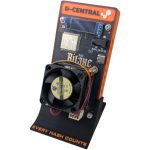
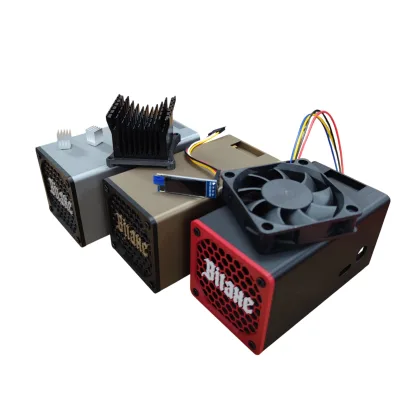
Bitcoin miners do not have this problem. A Bitaxe sitting on your desk, pointed at a solo mining pool, is answerable to no regulator. It hashes. It submits shares. If it finds a block, the 3.125 BTC reward goes to your address. No intermediary can intercept that process.
This is not theoretical. Home miners around the world are participating in Bitcoin’s security model right now using open-source hardware like the Bitaxe — devices that D-Central has been pioneering since the earliest days of the open-source mining movement. We created the original Bitaxe Mesh Stand, developed custom heatsink solutions for both Bitaxe and Bitaxe Hex, and stock every variant from Supra to GT.
Censorship resistance is not a marketing bullet point. It is the entire reason Bitcoin exists. And mining is how you personally enforce it.
Inflation: The Silent Confiscation That Stablecoins Cannot Escape
BUSD holders were guaranteed one thing: each token would always be worth one US dollar. But what is a US dollar worth? Since BUSD launched in 2019, the US dollar has lost significant purchasing power to inflation. A stablecoin pegged to a depreciating asset is a stable route to becoming poorer.
Bitcoin’s monetary policy is the opposite of flexible. The supply schedule is coded into the protocol and enforced by every node on the network. The most recent halving in April 2024 reduced the block reward from 6.25 to 3.125 BTC. No committee voted on this. No central banker approved it. The code executed as written.
For home miners, this halving means each block found is worth fewer bitcoin — but the scarcity it creates is precisely what gives bitcoin its long-term value proposition as sound money. Miners who understand this do not mine for short-term profit. They mine for sovereignty.
Mining as Sovereignty: From Philosophy to Practice
At D-Central, we do not just talk about decentralization. We build the machines that make it real. Our mission since 2016 has been the decentralization of every layer of Bitcoin mining — taking institutional-grade technology and hacking it into solutions that work for the individual.
Here is what practical sovereignty looks like:
| Sovereignty Layer | What It Means | D-Central Solution |
|---|---|---|
| Network Security | You contribute hashrate to Bitcoin’s proof-of-work | Bitaxe solo miners, full ASIC miners |
| Energy Monetization | Excess or renewable energy is converted to bitcoin | Bitcoin Space Heaters — mine and heat simultaneously |
| Hardware Independence | You own and maintain your own mining equipment | ASIC Repair services — keep hardware running, not in landfills |
| Geographic Decentralization | Hashrate distributed globally, not concentrated in data centers | Home mining guidance + hosting in Canada |
| Knowledge Sovereignty | You understand what you are running and why | Mining consulting and educational content |
When you run a miner — whether it is a Bitaxe Supra drawing 15 watts from a 5V barrel jack on your desk or an Antminer S19 converted into a space heater warming your basement — you are doing something that no stablecoin holder can claim. You are actively participating in the most secure computational network ever built. You are not trusting a third party with your sovereignty. You are generating it.
The Stablecoin Graveyard: BUSD Is Not Alone
BUSD joins a growing list of stablecoins that have either collapsed, been shut down, or revealed fundamental fragility:
- TerraUSD (UST) — Algorithmic stablecoin that lost its peg in May 2022, wiping out approximately $40 billion in value overnight. The “algorithm” could not withstand a bank run.
- BUSD — Shut down by regulatory action in February 2023. Paxos complied because it had no choice.
- USDC — Briefly depegged to $0.87 in March 2023 when Silicon Valley Bank (which held $3.3 billion in Circle reserves) collapsed. The “stability” lasted until the bank it depended on failed.
- USDT (Tether) — Still the dominant stablecoin but has never provided a full independent audit of its reserves. Users are trusting a company headquartered in the British Virgin Islands to hold their dollars honestly.
Every single one of these failures traces back to the same root cause: centralized points of failure. Bitcoin has no CEO to subpoena, no bank account to freeze, no reserve to audit, and no peg to break. It simply is what it is — a decentralized ledger secured by proof-of-work, producing blocks roughly every ten minutes since January 3, 2009.
Why Home Mining Is the Antidote to Stablecoin Fragility
If the stablecoin story teaches us anything, it is that relying on centralized entities for your financial sovereignty is a contradiction in terms. The antidote is direct participation in the Bitcoin network, and the most accessible form of that participation is home mining.
Canada, in particular, is uniquely positioned for home mining. Cold winters mean your mining hardware doubles as a heater. Relatively affordable electricity in several provinces means mining can be cost-effective even at smaller scales. And the regulatory environment, while not perfect, is far more stable than the jurisdictions where most stablecoins are issued.
D-Central has been serving Canadian home miners since 2016. We are based in Montreal, Quebec, and we understand the specific advantages — and challenges — of mining in the North. From selecting the right hardware for your power budget to converting an Antminer into a space heater that offsets your heating bill, we have built the playbook for sovereign mining in Canada.
The Bottom Line: Sovereignty Cannot Be Pegged
BUSD tried to offer the convenience of digital money with the stability of the US dollar. What it actually offered was a digital IOU from a regulated company that evaporated the instant regulators said so. The lesson is clear: you cannot peg sovereignty to a system designed to deny it.
Bitcoin does not promise stability. It promises something far more valuable — incorruptibility. A monetary network that no government, corporation, or individual can control. And mining is how you claim your stake in that network.
Every hash counts. Whether you are running a Bitaxe on your desk for the solo mining lottery or an industrial ASIC in your garage heating your workshop, you are contributing to the most important decentralized system in human history. That is sovereignty. No stablecoin — alive or dead — can offer you that.
Browse our mining hardware and start your sovereignty journey today.
FAQ
What happened to BUSD and why was it shut down?
Paxos Trust Company, the issuer of BUSD, was ordered by the SEC in February 2023 to stop minting new BUSD tokens. The SEC classified BUSD as an unregistered security. Paxos complied because it is a regulated, centralized entity with no ability to resist government orders — the exact opposite of how Bitcoin operates. Binance subsequently delisted BUSD, and the stablecoin is effectively defunct.
How is Bitcoin different from stablecoins in terms of sovereignty?
Bitcoin has no issuer, no centralized reserves, and no regulatory kill switch. Its supply is capped at 21 million coins, enforced by tens of thousands of independent nodes worldwide. Stablecoins like BUSD depend on centralized issuers, traditional banks for reserves, and regulatory approval to exist. When any of those dependencies fail, the stablecoin fails with them. Bitcoin has operated continuously since 2009 without any single point of failure.
Can I actually mine Bitcoin at home?
Yes. Home mining has never been more accessible. Open-source miners like the Bitaxe let you solo mine Bitcoin from your desk — the Bitaxe Supra, Ultra, and Gamma models run on a simple 5V barrel jack power supply (not USB-C, which is for firmware flashing only). Larger ASIC miners like the Antminer series can be converted into Bitcoin Space Heaters that warm your home while mining. D-Central has been building these solutions since 2016.
Is solo mining with a Bitaxe profitable?
Solo mining with a Bitaxe is more accurately described as “lottery mining.” With the network hashrate exceeding 800 EH/s, a single Bitaxe has astronomically low odds of finding a block on any given day. However, if it does find a block, the reward is 3.125 BTC — the full block reward. Many home miners view it as a meaningful way to support network decentralization while maintaining a non-zero chance at a life-changing payout. Every hash counts.
Why does D-Central focus on mining rather than trading or stablecoins?
D-Central’s mission is the decentralization of every layer of Bitcoin mining. We are technologists and builders, not traders or speculators. Mining is the foundational act that secures Bitcoin — it converts energy into cryptographic proof that makes the network censorship-resistant. Stablecoins and trading platforms are centralized intermediaries. We build tools that eliminate intermediaries, from open-source Bitaxe miners to custom space heaters to ASIC repair services that keep hardware running instead of obsolete.