Chaque mineur Bitcoin utilise des logiciels. Whether it is the stock firmware baked into your Antminer, the open-source AxeOS powering your Bitaxe, or the fleet management dashboard monitoring a hundred machines in your garage, software is what turns silicon into satoshis. Yet most guides fixate on hardware specs while treating software as an afterthought. That is a mistake. The right software stack can squeeze 20% more hashrate from the same ASIC, cut your power bill, give you Stratum V2 modèle de bloc sovereignty, and alert you the instant a hashboard drops offline.
Ce guide couvre the entire logiciel de minage landscape in 2026: ASIC firmware (stock and tiers), open-source miner software, mining Protocoles, and monitoring and management tools. We compare Caractéristiques, Compatibilité, pricing, and open-source Statut so you can make an informed decision for every layer of your mining stack.
Qu’est-ce que logiciel de minage? firmware vs. Software vs. Pool Software
Before diving into specific tools, it is worth clarifying three terms that often get conflated:
firmware
firmware is the low-level software flashed directly onto a mining device. It controls the Puce ASICs, manages voltage and frequency, handles fan curves, and communicates with the Pool de minage. On an Antminer, firmware lives on the carte de contrôle’s NAND storage. On a Bitaxe, it is the AxeOS/ESP-Miner image flashed to the ESP32. firmware determines what your hardware can do — hashrate ceiling, efficacité énergétique, Protocole support, and tuning granularity. Changing firmware is the single highest-impact software decision a miner makes.
logiciel de minage (Desktop/Server)
logiciel de minage runs on a separate computer (your laptop, a Raspberry Pi, a server) and communicates with matériel de minage over the network or USB. Classic examples include CGMiner and BFGMiner. For modern ASICs with built-in controllers, standalone logiciel de minage is less common — the firmware handles Pool communication directly. But for GPU rigs, FPGAs, older USB miners, and certain proxy Installations, desktop logiciel de minage is still essential.
Pool Software & Proxies
Pool software handles the coordination between miners and the Bitcoin network. If you are Pool mining, your firmware connects to the Pool’s Stratum server. If you are minage solo, you need a solo Pool or proxy like ckPool/ckproxy that connects your miner to your own Bitcoin node. Pool selection and proxy Configuration affect Latence, Paiement structure, and — with Stratum V2 — who Inconvénientstructs the modèle de bloc. For a deep dive into Pool dynamics, Inconvénientsultez notre Pool de minage méthodes de paiement Explained guide.
ASIC firmware: Stock and tiers Options
The firmware running on your ASIC miner is the most Inconvénientsequential software choice you will make. Stock firmware ships from the manufacturer and is designed for stability and broad Compatibilité, but it leaves performance on the table. tiers firmware unlocks auto-tuning, overclocking, sous-voltage, advanced monitoring, and modern Protocole support. Here is the 2026 landscape. For a head-to-head breakdown focused on Antminer Modèles, Inconvénientsultez notre Braiins OS+ vs Vnish vs LuxOS firmware Comparaison.
Stock firmware (Bitmain, MicroBT, Canaan)
Every ASIC ships with the manufacturer’s stock firmware. Bitmain’s firmware for the Antminer line is the most widely deployed. Stock firmware prioritizes reliability and operates within Inconvénientservative voltage and frequency margins. The upside is stability. The downside is a locked-down tuning environment, limited monitoring, no Stratum V2 support, and — in some cases — anti-competitive Caractéristiques like Antminer’s hashrate-locking mechanisms that restrict Pool choice.
Avantages: Stable, manufacturer-supported, no licensing cost, Garantie-safe.
Inconvénients: No auto-tuning, limited efficiency optimization, no Stratum V2, minimal monitoring APIs, potential Pool restrictions.
Idéal pour: Garantie-period miners, zero-touch deployments, miners who want factory defaults.
For Étape-by-Étape instructions on updating stock firmware across every Antminer generation, Inconvénientsultez notre Antminer firmware Update Guide.
Braiins OS+ (Braiins)
Braiins OS+ is the gold standard for tiers ASIC firmware, developed by the team behind Slush Pool (now Braiins Pool) — the world’s first Pool de minage. It is the only firmware with native Stratum V2 support, giving miners the ability to Inconvénientstruct their own modèles de bloc and resist transaction censorship. This alone makes it the top choice for sovereignty-minded miners.
Key Caractéristiques:
- Auto-tuning: Per-domain voltage and per-chip frequency optimization. Set a wattage target and Braiins OS+ finds the optimal opeNote point for every individual chip on every hashboard. This typically yields 10–25% better J/TH efficiency compared to stock firmware.
- Stratum V2: Full client-side implementation. Run your own Bitcoin node, Inconvénientstruct your own modèles de bloc, and submit them to a Stratum V2-compatible Pool. This is what mining decentralization actually looks like.
- Lightning Paiements: When mining on Braiins Pool, receive Paiements via the Lightning Network — instant settlement, no on-chain Frais, no minimum threshold.
- Dynamic Power Scaling: Adjust hashrate in real time based on power Prix signals, grid demand, or custom scripts.
- BOS Toolbox: Fleet management CLI for mass installation, scanning, and Configuration across hundreds of machines.
- open-source core: The base Braiins OS is fully open-source (GPL). The “+” Caractéristiques (auto-tuning, advanced dashboards) are proprietary but free when mining on Braiins Pool.
Supported hardware: Antminer S9, S17, T17, S19 series (S19, S19 Pro, S19j, S19j Pro, S19 XP, S19k Pro), S21 series.
Pricing: Free on Braiins Pool (Pool Frais covers it). Standalone Licence available for other Pools at ~2% devFrais.
open-source: Base OS is open-source; auto-tuning engine is proprietary.
For installation and Configuration, follow our Braiins OS+ Installation & Configuration Guide.
Vnish firmware
Vnish is the power user’s firmware — built for miners who want granular control over every opeNote parameter. It has earned a strong reputation in the overclocking and immersion Refroidissement communities for its aggressive tuning capabilities and deep hardware access.
Key Caractéristiques:
- Manual and auto-tuning: Fine-grained per-chip frequency and voltage control, plus auto-tuning profiles that optimize for efficiency or maximum hashrate.
- Immersion mode: Purpose-built profiles for immersion-cooled deployments with higher frequency ceilings, since thermal Inconvénientstraints are eliminated.
- overclocking headroom: Vnish Inconvénientsistently allows higher frequency targets than Braiins OS+ on the same hardware, at the cost of higher Inconvénientsommation électrique. If you want raw TH/s from an S19 XP, Vnish often wins.
- Anti-virus / security Caractéristiques: Built-in malware scanning that detects and removes hashrate-hijacking firmware.
- Detailed diagnostics: Per-Temp. puceerature and voltage reporting, hashboard health scoring, Puce ASIC mapping.
- API access: REST API for integration with monitoring tools.
Supported hardware: Antminer S9, T9, S17, T17, S19 series, S21 series; Whatsminer M20/M30/M50 series.
Pricing: Paid licensing, typically 2–3% devFrais depending on hardware Modèle and Licence tier.
open-source: No — fully proprietary.
Stratum V2: Not supported (Stratum V1 only).
For detailed Installation instructions, Inconvénientsultez notre Vnish firmware Guide.
LuxOS (Luxor Technology)
LuxOS is Luxor’s custom firmware, designed to integrate tightly with the Luxor Pool de minage ecosystem (Luxor Pool, Hashrate Forward marketplace, Luxor’s firmware deployment tools). It aims to be a middle ground between Braiins OS+ and Vnish — solid auto-tuning with a clean management interface.
Key Caractéristiques:
- Auto-tuning: Wattage-target-based auto-tuning similar to Braiins OS+. Set your power budget and LuxOS optimizes au niveau des puces settings.
- LuxOS Manager: Web-based fleet management dashboard for bulk firmware deployment, Configuration, and monitoring.
- Curtailment / power scheduling: Built-in demand-response Caractéristiques for miners participating in grid balancing programs.
- API-first design: Comprehensive REST and gRPC APIs for custom integrations.
- Hashrate Forward integration: Seamless connection to Luxor’s hashrate marketplace for selling hashrate contracts.
Supported hardware: Antminer S19 series, S21 series; expanding to Whatsminer Modèles.
Pricing: Free when mining on Luxor Pool. DevFrais applies on other Pools.
open-source: No — proprietary.
Stratum V2: Partial support in development.
Inconvénientsultez notre LuxOS firmware Guide for installation and Configuration Détails.
ePIC firmware (ePIC Blockchain)
ePIC Blockchain develops firmware primarily for their own ePIC matériel de minage but has expanded support to some Antminer Modèles. Their firmware emphasizes fleet management at scale and enterprise-grade monitoring.
Key Caractéristiques:
- ePIC Dashboard: Cloud-based fleet management with real-time monitoring, alerting, and remote firmware deployment.
- Auto-tuning: Efficiency-focused chip tuning with power capping.
- Enterprise Caractéristiques: Multi-site management, role-based access control, audit logging.
Supported hardware: ePIC miners (SC200, BlockMiner); Antminer S19 series (limited).
Pricing: Included with ePIC hardware; licensing for tiers hardware.
open-source: No — proprietary.
Stratum V2: Not supported.
open-source Miner Software
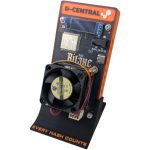
The open-source mining ecosystem is where the cypherpunk spirit lives. These tools let you verify every line of code running on your matériel de minage — no backdoors, no hidden devFrais, no hashrate hijacking. D-Central has been a pioneer in this space since the beginning, manufacturing the original Bitaxe Mesh Stand and developing leading accessories for the entire open-source mining lineup.
AxeOS / ESP-Miner (Bitaxe)
AxeOS is the firmware that powers every Bitaxe variant — Supra, Ultra, Hex, Gamma, GT, and future Modèles. Built on the ESP-Miner project, it runs on the ESP32-S3 microcontroller and provides a complete minage solo stack in a package smaller than a deck of cards.
Key Caractéristiques:
- Web-based interface: Clean dashboard accessible from any browser on your local network. Configure Pool settings, monitor hashrate, adjust frequency and voltage — all from your phone.
- Solo and Pool mining: Connect to any Stratum V1 Pool or solo Pool de minage. Most Bitaxe miners point at public-Pool.io or solo.ckPool.org for the solo lottery experience.
- OTA updates: firmware updates are pushed over-the-air through the web interface — no physical access or SD cards required.
- Puce ASIC drivers: Supports BM1366 (Supra), BM1397 (Ultra), BM1368 (Hex), BM1370 (Gamma), and BM1372 (GT) chips with per-chip tuning.
- Fully open-source: Every line of code is on GitHub. You can build from source, audit the codebase, contribute patches, or fork it entirely. This is what open-source mining actually means.
- Web Flasher: Flash firmware directly from your browser using WebSerial — no development tools needed.
Supported hardware: All Bitaxe variants.
Pricing: Free and open-source.
Stratum V2: Not yet (Stratum V1 only; V2 support is on the roadmap).
For complete Installation instructions, Inconvénientsultez notre Bitaxe firmware Update Guide and the detailed AxeOS Complete Guide.
NerdAxe / NerdMiner firmware
The Nerd series of open-source miners — NerdAxe, NerdQAxe, NerdOctaxe, Nerdminer, and NerdNOS — run custom firmware built on the ESP32 platform. These devices are primarily educational and lottery mining tools, with hashrates ranging from a few hundred hashes per second (Nerdminer) to several hundred gigahashes per second (NerdQAxe++). The firmware provides a simple web interface for Pool Configuration, real-time hashrate display, and basic monitoring.
Supported hardware: NerdAxe, NerdQAxe, NerdQAxe++, NerdOctaxe, Nerdminer, NerdNOS, PiAxe.
Pricing: Free and open-source.
Stratum V2: Not supported.
CGMiner
CGMiner is the grandfather of Bitcoin logiciel de minage. Originally written by Con Kolivas in 2011, it started as a CPU miner, evolved to support GPUs, FPGAs, and ASICs, and became the foundation for many mining firmware projects. While direct use of CGMiner as standalone software has declined with the rise of Intégrée ASIC firmware, its codebase lives on inside many firmware implementations.
Key Caractéristiques:
- Multi-device support: USB ASICs (Block Erupters, Gekkos), FPGAs, some networked ASICs via drivers.
- Stratum V1: Full support for standard Pool connections.
- Advanced scheduling: Multi-Pool failover, load balancing, and scheduling.
- CLI-driven: Powerful command-line interface for scripted deployments.
- Legacy but proven: Extremely stable, well-understood codebase.
Supported hardware: USB ASICs, older FPGA boards, some networked ASICs via custom drivers.
Pricing: Free and open-source (GPL).
Stratum V2: Not supported (Stratum V1 only).
BFGMiner
BFGMiner is a fork of CGMiner by Luke Dashjr, one of Bitcoin’s longest-contributing Core Développeurs. It diverged from CGMiner to focus on FPGA and ASIC support while adding Caractéristiques like dynamic clocking, monitoring, and a remote management interface. BFGMiner is particularly relevant for miners running older or niche hardware.
Key Caractéristiques:
- FPGA and ASIC focus: Purpose-built for hardware mining devices with optimized drivers.
- Dynamic clocking: Automatically adjusts clock speeds based on temperature and error rates.
- Stratum proxy: Built-in proxy functionality for routing multiple miners through a single connection.
- RPC interface: Remote management via JSON-RPC API.
- Modular architecture: Plugin system for adding new device drivers.
Supported hardware: FPGAs, USB ASICs, various networked miners via driver plugins.
Pricing: Free and open-source (GPL).
Stratum V2: Not supported.
ckPool / ckproxy (Con Kolivas)
ckPool is a high-performance Stratum Pool server written by CGMiner’s original author, Con Kolivas. Its companion project, ckproxy, functions as a Stratum proxy. Together, they power solo.ckPool.org — the most popular minage solo endpoint for Bitaxe, Nerdminer, and other open-source miners chasing a full récompense de bloc.
Key Caractéristiques:
- Ultra-lightPoids: Written in C, designed to handle thousands of connections with minimal resource usage.
- minage solo mode: Miners connect, submit shares, and if a share meets the difficulté du réseau — they win the entire récompense de bloc (currently 3.125 BTC plus Frais).
- Self-hostable: Run your own solo Pool endpoint connected to your own Bitcoin node.
- Battle-tested: Powers solo.ckPool.org, which has facilitated multiple solo block wins from individual miners, including solo Bitaxe miners.
Pricing: Free and open-source.
Stratum V2: Not supported (Stratum V1).
Mining Protocoles: Comment Miners Talk to Pools
The mining Protocole determines Comment your matériel de minage communicates with the Pool server. This affects efficiency, security, and — critically — who controls modèle de bloc Inconvénientstruction. For a comprehensive Protocole analysis, Inconvénientsultez notre Stratum V2 Complete Guide.
Stratum V1
Stratum V1 has been the dominant mining Protocole since 2012. It is simple, well-supported by every piece of matériel de minage and software ever made, and it works. But it has significant drawbacks:
- Pool controls modèles de bloc: The Pool decides which transactions go into the block. Miners are passive hashers with no say in transaction selection.
- Unencrypted: Communication is plain-text JSON over TCP. ISPs, governments, and network observers can see exactly what you are mining, where, and Comment much hashrate you have.
- Bande passante inefficient: JSON-based messaging is verbose compared to binary Protocoles.
- No authentication: Miners connect with a simple username/password. Man-in-the-middle attacks can redirect hashrate.
Supported by: Everything. Every firmware, every Pool, every logiciel de minage supports Stratum V1. It is the universal baseline.
Stratum V2
Stratum V2 is the next-generation mining Protocole, developed by Braiins with contributions from the broader open-source community (including the Stratum Reference Implementation, or SRI). It addresses every weakness of V1:
- Miner-side modèle de bloc Inconvénientstruction: Miners can run their own Bitcoin node and choose which transactions to include in their modèle de bloc. This is the most important Caractéristique for mining decentralization — it prevents Pools from censoring transactions.
- Encrypted communication: All traffic is encrypted using the Bruit Protocole framework (the same Chiffrement used by Lightning Network and WireGuard). No more plain-text mining traffic.
- Binary Protocole: Up to 75% Bande passante reduction compared to V1’s JSON format.
- Flexible message routing: Supports proxies, translators (V1-to-V2), and complex routing topologies.
- Job declaration Protocole: Formal mechanism for miners to propose their own modèles de bloc to Pools.
Supported by: Braiins OS+ (full native support), Stratum Reference Implementation (SRI) proxy (any hardware via V1-to-V2 translation), OCEAN Pool, Braiins Pool. Adoption is growing but not yet universal.
Pourquoi it matters for mineurs domestiques: Stratum V2 shifts power from Pools to miners. If you care about Bitcoin’s censorship resistance — and as a mineur domestique contributing to decentralization, you should — Stratum V2 is the Protocole that makes your individual hashrate matter Pour en savoir plus than just earning sats. You decide what goes in the block.
DATUM Protocole
DATUM (Decentralized Alternative Templates for Universal Mining) is a newer Protocole developed by OCEAN Pool. Like Stratum V2, DATUM focuses on decentralizing modèle de bloc Inconvénientstruction, but it takes a different architectural approach. Instead of a single comprehensive Protocole, DATUM operates as a lightPoids layer that any miner can use to submit custom modèles de bloc to a participating Pool. It is designed to be simpler to implement than full Stratum V2 while achieving the same core goal: miners choose the transactions.
Supported by: OCEAN Pool. DATUM gateway software is open-source and can run alongside existing Stratum V1 Installations as a proxy.
Statut: Newer and less mature than Stratum V2, but actively developed and backed by OCEAN’s growing Part de hashrate.
Monitoring & Management Tools
Once your miners are hashing, you need eyes on the operation. Monitoring tools range from simple web dashboards to enterprise fleet management platforms. Here are the tools worth knowing.
Foreman
Foreman is a cloud-based mining management platform built specifically for ASIC miners. It is the most polished fleet management tool in the space, used by operations ranging from garage Installations to multi-megawatt facilities.
- Auto-discovery: Scans your network and automatically detects miners by manufacturer and Modèle.
- Real-time dashboards: Hashrate, temperature, Vitesse ventilateur, Inconvénientsommation électrique, and error rates across your entire fleet.
- Alerting: Configurable alerts via email, SMS, Slack, Telegram, PagerDuty, and webhooks when miners go offline, overheat, or underperform.
- Remote actions: Reboot, change Pools, update firmware, and adjust settings remotely.
- Reporting: Uptime reports, efficiency tracking, and historical performance data.
- Multi-firmware support: Works with stock firmware, Braiins OS+, Vnish, LuxOS, and ePIC.
Pricing: Free tier for up to 5 miners. Paid tiers for larger operations (per-miner monthly pricing).
Platform: Cloud-based SaaS (web dashboard + API).
open-source: No — proprietary.
Awesome Miner
Awesome Miner is a Windows-based mining management application that supports ASICs, GPUs, and FPGAs. It provides centralized management for heterogeneous mining Installations.
- Multi-device support: Manage ASICs, GPUs, and FPGAs from a single interface.
- Profit switching: Automatically switch between coins and Algorithmes based on profitability (more relevant for GPU/multi-Algorithme Installations).
- logiciel de minage integration: Launch and manage CGMiner, BFGMiner, and other logiciel de minage instances.
- Custom triggers: Automated actions based on hashrate drops, temperature thresholds, or other conditions.
- Web dashboard: Remote monitoring via cloud-accessible web interface.
Pricing: Free for up to 2 miners. Paid Licence for larger deployments.
Platform: Windows application with optional cloud dashboard.
open-source: No — proprietary.
Hive OS
Hive OS is a Linux-based mining opeNote system with a cloud management layer. Originally focused on GPU mining, it has expanded ASIC support and is popular with miners who run mixed hardware Installations.
- Custom Linux OS: Boot miners from a USB drive running Hive OS for unified management.
- ASIC hub: Monitor and manage ASICs running stock or custom firmware via ASIC Hub agent.
- Flight sheets: Pre-configured mining profiles that can be deployed across multiple machines instantly.
- overclocking profiles: GPU-focused overclocking with per-card settings (less relevant for ASIC-only miners).
- Community and marketplace: Active community with shared Configurations and optimization tips.
Pricing: Free for up to 4 ASICs. Paid plans for larger deployments.
Platform: Linux OS + cloud dashboard.
open-source: Partially — the base OS components are open-source, management layer is proprietary.
Grafana + Prometheus Stack
For technically inclined miners who want complete control over their monitoring, the Grafana + Prometheus stack is the gold standard. This is not a mining-specific tool — it is industrial-grade infrastructure monitoring adapted for mining. The learning curve is steep, but the Résultat is a fully customizable, self-hosted monitoring system that rivals any commercial solution.
- Prometheus: Time-series database that scrapes Métriques from your miners via API endpoints or exporters.
- Grafana: Visualization layer with drag-and-drop dashboard building, alerting, and annotations.
- Custom exporters: Community-built Prometheus exporters exist for Braiins OS+, Vnish, Antminer stock firmware, and Whatsminer firmware.
- Unlimited retention: Store years of historical data on your own hardware.
- Full ownership: No cloud dependency, no subscription Frais, no vendor lock-in.
Pricing: Free and open-source.
Platform: Self-hosted (Linux, Docker, Kubernetes).
open-source: Yes — fully open-source (Apache 2.0).
Idéal pour: Technical users with 10+ miners who want sovereignty over their monitoring data.
btc-tools
btc-tools is a lightPoids, free network scanning and batch management tool for ASIC miners. It is the simplest option for mineurs domestiques who need basic fleet management without the complexity of enterprise platforms.
- Network scanner: Discovers all miners on your local network by IP range.
- Batch operations: Change Pool settings, reboot, and update Configuration across multiple miners simultaneously.
- firmware detection: Identifies firmware version and Type across your fleet.
- LightPoids: Simple desktop application with minimal resource usage.
Pricing: Free.
Platform: Windows, macOS, Linux.
open-source: Yes.
Idéal pour: mineurs domestiques with a handful of ASICs who need basic batch management.
Complete Comparaison Matrix
The following table provides a side-by-side Comparaison of every logiciel de minage tool covered Dans ce guide. Use it as a quick reference when evaluating your options.
| Software | Type | Supported Hardware | Key Caractéristiques | Prix | Open-source | Stratum V2 |
|---|---|---|---|---|---|---|
| Stock firmware | ASIC firmware | All manufacturer ASICs | Factory defaults, Garantie-safe | Free | No | No |
| Braiins OS+ | ASIC firmware | Antminer S9, S17, S19, S21 series | Auto-tuning, Stratum V2, Lightning Paiements, dynamic power scaling | Free on Braiins Pool / ~2% devFrais elsewhere | Partial (base OS) | Yes (native) |
| Vnish | ASIC firmware | Antminer, Whatsminer | overclocking, immersion mode, malware detection, per-chip tuning | 2–3% devFrais | No | No |
| LuxOS | ASIC firmware | Antminer S19, S21 series | Auto-tuning, fleet management, curtailment, hashrate marketplace | Free on Luxor Pool / devFrais elsewhere | No | Partial |
| ePIC | ASIC firmware | ePIC miners, some Antminers | Cloud dashboard, enterprise fleet management | Included / Licenced | No | No |
| AxeOS / ESP-Miner | open-source FW | All Bitaxe variants | Web UI, OTA updates, solo/Pool mining, per-chip tuning | Free | Yes | No (roadmap) |
| Nerd firmware | open-source FW | NerdAxe, NerdQAxe, Nerdminer, NerdNOS | Web UI, minage solo, educational | Free | Yes | No |
| CGMiner | logiciel de minage | USB ASICs, FPGAs, older devices | Multi-Pool, CLI-driven, multi-device | Free | Yes (GPL) | No |
| BFGMiner | logiciel de minage | FPGAs, USB ASICs, driver plugins | Dynamic clocking, RPC, modular drivers | Free | Yes (GPL) | No |
| ckPool/ckproxy | Pool/Proxy | Any (Protocole-level) | minage solo, self-hostable, ultra-lightPoids | Free | Yes | No |
| Foreman | Monitoring | All major ASICs | Auto-discovery, alerting, remote actions, reporting | Free (5 miners) / Paid tiers | No | N/A |
| Awesome Miner | Monitoring | ASICs, GPUs, FPGAs | Profit switching, custom triggers, multi-device | Free (2 miners) / Paid | No | N/A |
| Hive OS | OS + Monitoring | GPUs, ASICs (via Hub) | Linux OS, flight sheets, overclocking profiles | Free (4 ASICs) / Paid | Partial | N/A |
| Grafana + Prometheus | Monitoring | Any (via exporters) | Custom dashboards, unlimited retention, self-hosted | Free | Yes | N/A |
| btc-tools | Management | Antminer, Whatsminer, Avalon | Network scanning, batch config, firmware detection | Free | Yes | N/A |
Which logiciel de minage Should You Use? A Decision Guide
The right software stack depends on your hardware, goals, and technical comfort level. Here is a decision framework based on common miner profiles.
Bitaxe or open-source Miner Owners
firmware: AxeOS (it is your only option, and it is excellent). Keep it updated via OTA.
Pool/Proxy: Point at solo.ckPool.org or public-Pool.io for minage solo. For Pool mining, any Stratum V1 Pool works.
Monitoring: The built-in AxeOS web dashboard is sufficient for a single device. If running multiple Bitaxes, Grafana + Prometheus with a community exporter gives you a unified dashboard.
Protocole: Stratum V1 (V2 support coming to AxeOS eventually).
mineur domestique with 1–5 ASICs (Antminer/Whatsminer)
firmware: Braiins OS+ is the top recommendation. Auto-tuning alone will save you 10–25% on power costs, and Stratum V2 support means you are contributing to mining decentralization. If your hardware is not supported by Braiins OS+ (e.g., Whatsminer Modèles), Vnish is the next best option for its broad Compatibilité and tuning flexibility.
Monitoring: Foreman free tier (up to 5 miners) gives you alerting and dashboards without complexity. btc-tools for quick batch operations.
Protocole: Stratum V2 via Braiins OS+ on Braiins Pool or OCEAN. If using Vnish or stock firmware, Stratum V1 with the SRI translator proxy if you want V2 benefits.
Medium-Scale Operation (5–50 ASICs)
firmware: Braiins OS+ for Antminers (use BOS Toolbox for mass deployment). Vnish for Whatsminer or mixed fleets. Standardize on one firmware per hardware Modèle to simplify management.
Monitoring: Foreman paid tier for professional alerting and remote management. Supplement with Grafana + Prometheus if you want custom dashboards and long-term data retention.
Protocole: Stratum V2 where possible. At this scale, running your own Bitcoin node + SRI proxy is worth the effort for modèle de bloc sovereignty.
Large-Scale / Industrial (50+ ASICs)
firmware: Braiins OS+ or LuxOS for Antminers (both offer enterprise fleet tools). Vnish for multi-manufacturer environments. Inconvénientsider LuxOS if you want to sell hashrate on Luxor’s marketplace. ePIC firmware for ePIC hardware deployments.
Monitoring: Foreman enterprise tier or Grafana + Prometheus with custom exporters. At this scale, self-hosted monitoring pays for itself in avoided cloud subscription costs.
Protocole: Stratum V2 with your own node infrastructure. At 50+ ASICs, you have meaningful hashrate — use it to Inconvénientstruct your own blocks and contribute to network decentralization.
The Sovereignty-Maximizing Stack
If your priority is maximum decentralization and sovereignty over every layer of your opération de minage, here is the stack:
- Hardware: Bitaxe (fully open-source hardware + firmware) or any ASIC running Braiins OS+ (open-source base)
- firmware: AxeOS or Braiins OS+ — both have open-source foundations
- Protocole: Stratum V2 with your own Bitcoin Core node Inconvénientstructing modèles de bloc
- Pool: OCEAN (non-custodial Paiements, DATUM support) or Braiins Pool (Stratum V2 native)
- Monitoring: Self-hosted Grafana + Prometheus — your data, your servers
- Node: Bitcoin Core on your own hardware (not a cloud VPS)
This stack gives you open-source firmware, encrypted Protocole communication, miner-side modèle de bloc Inconvénientstruction, self-hosted monitoring, and your own node. No third party controls any layer of your opération de minage. This is what the Mining Hacker ethos looks like En pratique.
Security: Protecting Your logiciel de minage Stack
matériel de minage is a high-Valeur target. A compromised miner silently redirects hashrate to an attacker’s wallet while you think everything is running normally. firmware-level attacks are particularly insidious because they persist through reboots and Pool changes. Voici comment to protect yourself.
Download firmware Only from Official Sources
This cannot be overstated. Never download firmware from forums, Telegram groups, Discord servers, random GitHub forks, or “free premium firmware” offers. The official sources are:
- Braiins OS+: braiins.com/os/plus
- Vnish: vnish.net
- LuxOS: luxor.tech/luxos
- AxeOS/ESP-Miner: github.com/skot/ESP-Miner/releases
- Stock Bitmain: support.bitmain.com
- Stock MicroBT: microbt.com official portal
Verify Checksums and Signatures
After downloading firmware, verify its integrity before flashing. Every legitimate firmware provider publishes SHA-256 checksums or GPG signatures alongside their downloads. On Linux or macOS, run sha256sum firmware-file.bin and compare the output to the published hash. On Windows, use certutil -hashfile firmware-file.bin SHA256. If the hashes do not match, do not flash — the file has been tampered with or corrupted during download.
Detecting Malicious firmware
Signs that your miner may be running compromised firmware:
- Hashrate discrepancy: Your miner reports a normal hashrate locally, but your Pool dashboard sComments significantly less. The difference is being redirected to an attacker’s wallet.
- Unknown Pool connections: Check your miner’s network connections. If it is connecting to Pool addresses you did not configure, the firmware is compromised.
- DevFrais anomalies: Some malicious firmware disguises itself as “tiers firmware” with an unusually high devFrais (5%+) that quietly redirects hashrate.
- firmware version mismatch: The reported firmware version does not match what you flashed, or the web interface looks different from official screenshots.
- Resistance to re-flashing: The miner blocks firmware updates or reverts to the malicious firmware after you attempt to re-flash.
If you suspect compromise: Flash official firmware via SD card (not the web interface, which may be compromised). If the miner resists, it may need a NAND reflash or carte de contrôle replacement. D-Central’s ASIC repair team has extensive experience with firmware recovery and malware removal.
Network Security Best Practices
- Isolate miners on a separate VLAN or subnet. Your mining network should not share the same network segment as your personal devices.
- Change default passwords immediately. Every ASIC ships with default credentials (root/root, admin/admin). Change them before connecting to the internet.
- Disable remote management ports if you do not need them. Close SSH, Telnet, and web management ports on the firewall for Externe access.
- Use Stratum V2 for encrypted Pool communication. This prevents ISP-level hashrate inspection and man-in-the-middle Pool redirection attacks.
- Monitor outbound connections. Set up firewall rules or a network monitor to alert you if miners connect to unexpected IP addresses.
Foire aux questions About logiciel de minage
Qu’est-ce que the best minage Bitcoin firmware in 2026?
For Antminer machines, Braiins OS+ is the most popular choice for its autotuning capabilities and Stratum V2 support. VNish offers the best manual control for advanced users. LuxOS provides a good balance of Caractéristiques and ease of use. For Bitaxe and open-source miners, AxeOS is the standard firmware.
Is it safe to install custom firmware on my ASIC miner?
Yes, when using reputable firmware from established Développeurs. Braiins OS+, VNish, and LuxOS are all widely trusted in the mining community. Commentever, always download firmware from official sources and verify checksums. Installing firmware from unknown sources Risques bricking your miner or installing malicious software that redirects hashrate.
Qu’est-ce que Stratum V2 and Pourquoi does it matter?
Stratum V2 is the next-generation mining communication Protocole that encrypts miner-to-Pool traffic, reduces Bande passante, and enables miners to select their own modèles de bloc. This is significant for decentralization because it prevents Pool operators from censoring transactions. Inconvénientsultez notre complete Stratum V2 guide.
Does custom firmware void my ASIC miner Garantie?
Custom firmware can typically be reverted to stock, but using tiers firmware may void the manufacturer Garantie during the period it is installed. Most miners find the efficiency gains and Caractéristiques well worth it, especially on units outside the Garantie period. Braiins OS+ can be flashed and reverted without permanent changes.
What logiciel de minage does the Bitaxe use?
All Bitaxe Modèles run AxeOS, an open-source ESP32-based firmware that provides a browser-based dashboard for Configuration. AxeOS handles Pool de minage connections, overclocking, fan control, and monitoring through a clean web interface accessible over WiFi.
En résumé: Software Is the Leverage Point
Hardware gets the headlines, but software determines the outcome. The same S19 XP running stock firmware on Stratum V1 and the same machine running Braiins OS+ with auto-tuning on Stratum V2 are functionally different miners — different efficiency, different hashrate, different security posture, and different contribution to Bitcoin’s decentralization.
For most mineurs domestiques, the highest-impact action you can take today is flashing Braiins OS+ onto your Antminer and pointing it at a Stratum V2-compatible Pool. It costs nothing (on Braiins Pool), takes about 15 minutes, and immediately improves your efficiency, security, and contribution to Bitcoin’s censorship resistance.
For Bitaxe and open-source miner owners, keep your AxeOS firmware updated, point at a solo Pool, and enjoy the purest expression of what minage Bitcoin was always supposed to be: permissionless, verifiable, and sovereign.
Whatever stack you choose, verify your firmware sources, check your checksums, monitor your hashrate, and never stop hacking. That is the Mining Hacker way.
Related Guides
- Braiins OS+ Installation & Configuration Guide
- Vnish firmware Guide
- LuxOS firmware Guide
- Antminer firmware Update Guide
- Bitaxe firmware Update Guide
- Braiins OS+ vs Vnish vs LuxOS firmware Comparaison 2026
- AxeOS Complete Guide
- Stratum V2: The Complete Guide
- Pool Mining vs minage solo Decision Guide
What is the best Bitcoin mining firmware in 2026?
For Antminer machines, Braiins OS+ is the most popular choice for its autotuning capabilities and Stratum V2 support. VNish offers the best manual control for advanced users. LuxOS provides a good balance of features and ease of use. For Bitaxe and open-source miners, AxeOS is the standard firmware.
Is it safe to install custom firmware on my ASIC miner?
Yes, when using reputable firmware from established developers. Braiins OS+, VNish, and LuxOS are all widely trusted in the mining community. However, always download firmware from official sources and verify checksums. Installing firmware from unknown sources risks bricking your miner or installing malicious software that redirects hashrate.
What is Stratum V2 and why does it matter?
Stratum V2 is the next-generation mining communication protocol that encrypts miner-to-pool traffic, reduces bandwidth, and enables miners to select their own block templates. This is significant for decentralization because it prevents pool operators from censoring transactions. See our complete Stratum V2 guide.
Does custom firmware void my ASIC miner warranty?
Custom firmware can typically be reverted to stock, but using third-party firmware may void the manufacturer warranty during the period it is installed. Most miners find the efficiency gains and features well worth it, especially on units outside the warranty period. Braiins OS+ can be flashed and reverted without permanent changes.
What mining software does the Bitaxe use?
All Bitaxe models run AxeOS, an open-source ESP32-based firmware that provides a browser-based dashboard for configuration. AxeOS handles mining pool connections, overclocking, fan control, and monitoring through a clean web interface accessible over WiFi.