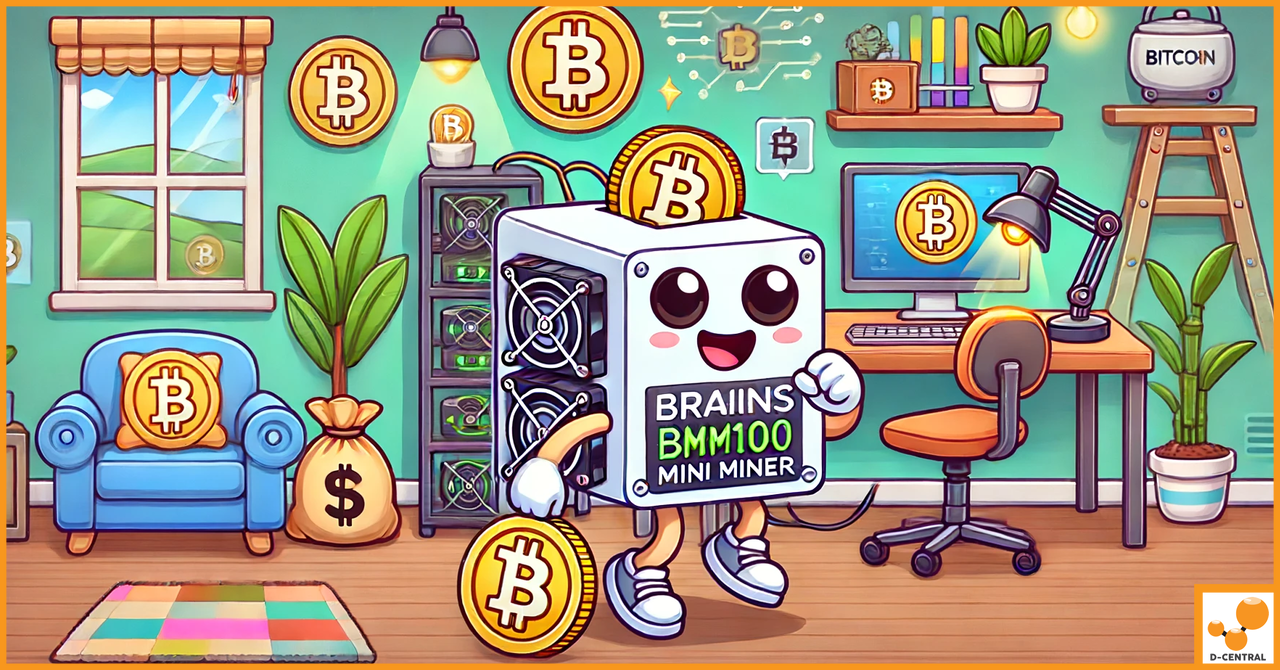
The Braiins BMM100 Mini Miner: What It Means for Home Bitcoin Mining
Braiins — the team behind BraiinsOS and Stratum V2 — dropped the BMM100 Mini Miner as their first hardware play. A 1 TH/s SHA-256 miner built for residential deployment, running BraiinsOS+ out of the box, with a form factor that sits quietly on a desk. At $199 for the initial limited run, the pitch is clear: bring pool-grade firmware expertise into a home mining device.
But here is the real question every home miner should be asking: is this the right device for your stack, or are open-source alternatives a better fit for the cypherpunk ethos of decentralized mining?
As Bitcoin Mining Hackers who have been building, repairing, and shipping home mining hardware since 2016, we are going to break this down — specs, efficiency, philosophy, and how the BMM100 compares to the open-source miners we champion.
BMM100 Technical Specifications
The BMM100 uses BM1362AC ASIC chips — the same silicon family found in Bitmain’s latest-generation miners. Braiins initially marketed the device with vague references to “19 series chips,” which raised eyebrows in the community. The confirmation of BM1362AC chips clarifies the performance ceiling, but also raises a pointed question about transparency.
| Specification | BMM100 Mini Miner |
|---|---|
| ASIC Chip | BM1362AC |
| Algorithm | SHA-256 (Bitcoin) |
| Hashrate | 1 TH/s |
| Power Consumption | 40W stock / 55W overclocked |
| Efficiency | ~40 J/TH (stock) |
| Firmware | BraiinsOS+ (proprietary) |
| Connectivity | Ethernet (RJ45) |
| Noise Level | Silent (passively cooled) |
| Hardware Design | Closed-source |
| Launch Price | $199 USD |
At 40 J/TH stock efficiency, the BMM100 is not setting any records. For context, the latest generation of full-scale ASICs from Bitmain push below 20 J/TH. But efficiency comparisons against industrial machines are not entirely fair — the BMM100 is competing in a different category: devices you can run at home without dedicated infrastructure, 240V circuits, or industrial cooling.
BraiinsOS+: Powerful Firmware, Closed Ecosystem
The strongest argument for the BMM100 is its firmware. BraiinsOS+ is battle-tested software that powers thousands of industrial mining operations. Features like autotuning, power curve optimization, and Stratum V2 support are genuinely useful. If you are mining with a pool (especially Braiins Pool), the integration is seamless.
But there is a trade-off that matters deeply to anyone who cares about Bitcoin’s decentralization principles: BraiinsOS+ is proprietary firmware on proprietary hardware. You cannot inspect the full source code. You cannot modify the board design. You cannot verify what the device is doing at the silicon level.
This is not a minor philosophical point. It cuts to the heart of why home mining exists — to decentralize hashrate away from opaque corporate operations. Running closed-source hardware to achieve decentralization is a contradiction worth examining.
The Open-Source Alternative: Bitaxe and the Pleb Mining Revolution
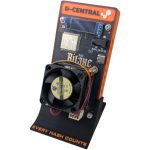
The Bitaxe ecosystem takes the opposite approach. Every Bitaxe variant — Supra, Ultra, Gamma, Hex, GT — ships with fully open-source hardware designs and open-source firmware (AxeOS). The schematics are public. The firmware is auditable. The community can fork, improve, and build on the designs.
D-Central Technologies has been a pioneer in this ecosystem since the beginning. We created the original Bitaxe Mesh Stand — the first company to manufacture it. We developed leading heatsink solutions for both Bitaxe and Bitaxe Hex. We stock every variant, every accessory, and every power supply the ecosystem needs. This is not just a product category for us — it is core to our mission of decentralizing every layer of Bitcoin mining.
Head-to-Head: BMM100 vs. Open-Source Home Miners
| Feature | Braiins BMM100 | Bitaxe Supra | Bitaxe Hex | NerdQAxe++ |
|---|---|---|---|---|
| Hashrate | 1 TH/s | 625+ GH/s | 3+ TH/s | ~1.2 TH/s |
| Power Draw | 40W (55W OC) | ~15W | ~60W | ~48W |
| Efficiency (J/TH) | ~40 | ~24 | ~20 | ~40 |
| Open-Source HW | No | Yes | Yes | Yes |
| Open-Source FW | No (BraiinsOS+) | Yes (AxeOS) | Yes (AxeOS) | Yes |
| WiFi | No (Ethernet only) | Yes (ESP32) | Yes (ESP32) | Yes |
| Solo Mining Native | Pool-oriented | Yes (public-pool) | Yes (public-pool) | Yes |
| Connectivity | Ethernet | WiFi + USB (serial) | WiFi + USB (serial) | WiFi + USB (serial) |
| Community Modifiable | No | Fully | Fully | Fully |
The numbers tell an interesting story. The BMM100 at 1 TH/s and ~40 J/TH sits in an awkward middle ground. The Bitaxe Supra delivers 625+ GH/s at a dramatically better ~24 J/TH efficiency on just 15W — meaning you could run multiple units for the same power budget with better total efficiency. The Bitaxe Hex at 3+ TH/s triples the BMM100’s hashrate at roughly ~20 J/TH, making it the clear winner for anyone who wants maximum hashrate in a home-friendly package.
The NerdQAxe++ matches the BMM100’s hashrate class at comparable efficiency but brings full open-source transparency and WiFi connectivity.
The Closed-Source Problem
In a network where trust minimization is the entire point, running mining hardware you cannot audit is a compromise. The BMM100 uses proprietary hardware designs and proprietary firmware. You are trusting Braiins that:
- The device is not phoning home with data you did not consent to share
- The autotuning algorithms are optimizing for your benefit, not the pool’s
- Future firmware updates will not introduce unwanted changes
- The hardware is not artificially limited in ways that serve Braiins’ business model
Braiins has a solid reputation in the industry and has contributed meaningfully to Bitcoin mining (Stratum V2 is genuinely important work). But “trust us” is not a substitute for “verify it yourself.” The entire Bitaxe movement exists because plebs demanded hardware they could actually inspect, modify, and own in every sense of the word.
Where the BMM100 Makes Sense
Credit where it is due — the BMM100 is not a bad device. It fills a specific niche:
- Plug-and-play simplicity: If you want a zero-configuration miner that just works out of the box, the BraiinsOS+ integration delivers that
- Braiins Pool users: If you are already mining with Braiins Pool, the native integration and pool-side optimization features are genuinely convenient
- Silent operation: Passive cooling means truly silent residential mining, just like the Bitaxe lineup
- Stratum V2: Native support for the next generation of mining pool protocol
But for miners who value sovereignty, community, and the ability to hack their own hardware — the open-source ecosystem is the path.
Building Your Home Mining Stack with D-Central
Whether you are evaluating the BMM100 or diving into open-source miners, D-Central Technologies is Canada’s home mining headquarters. We have been in this game since 2016, and our approach has always been the same: take institutional-grade mining technology and hack it into solutions that work for the pleb miner.
For solo mining enthusiasts: The Bitaxe lineup is purpose-built for solo mining via public-pool.io. Every hash is a lottery ticket for the full 3.125 BTC block reward. Multiple Bitaxe solo miners have hit blocks — the dream is real and every hash counts.
For maximum home hashrate: Our Bitcoin Space Heaters turn full-scale ASIC miners into dual-purpose machines — mine Bitcoin and heat your home. In Canada, where heating costs are a fact of life, this is not just mining, it is energy optimization. Why pay your utility company to generate heat when a Bitcoin miner does the same job and stacks sats while doing it?
For repairs and maintenance: We operate Canada’s leading ASIC repair service with 60+ model-specific repair pages, diagnostic expertise across every major manufacturer, and a retail-focused approach that treats individual miners with the same care as institutional clients.
For Canadian miners who need hosting: Our Quebec hosting facility offers competitive hydro rates in a cold climate that naturally reduces cooling costs. Quebec’s clean hydroelectric power means your hashrate is backed by renewable energy.
Browse our full selection of Bitaxe miners, NerdAxe devices, accessories, and everything you need for your home mining operation in the D-Central Shop.
The Bottom Line
The Braiins BMM100 Mini Miner is a competent piece of hardware from a team with deep Bitcoin mining expertise. At 1 TH/s in a silent, compact form factor with BraiinsOS+ firmware, it delivers a polished plug-and-play experience.
But in 2026, with network hashrate pushing past 800 EH/s and difficulty above 110T, the home mining conversation has evolved beyond simple hardware specs. The question is no longer just “how many terahashes?” — it is “who controls my mining stack?”
Open-source miners like the Bitaxe and NerdAxe family answer that question definitively: you do. You own the hardware design. You can audit the firmware. You can point your hashrate at any pool — or solo mine directly against the Bitcoin network. You can modify, overclock, and hack your device because the schematics are public and the community has your back.
The BMM100 is a fine miner. But if you believe that decentralization matters at every layer — from the protocol to the pool to the silicon — then open-source hardware is not just a preference. It is a principle.
Every hash counts. Make sure yours count on hardware you can trust — because you can verify it.
Frequently Asked Questions
What ASIC chip does the Braiins BMM100 use?
The BMM100 uses the BM1362AC chip from Bitmain. Braiins initially described the device as using “19 series chips,” but community analysis and subsequent confirmation revealed it runs BM1362AC silicon — the same chip family used in current-generation Bitmain industrial miners.
Is the BMM100 open-source like the Bitaxe?
No. The BMM100 uses proprietary hardware designs and proprietary BraiinsOS+ firmware. While BraiinsOS+ is respected software with features like autotuning and Stratum V2, the hardware and firmware source code are not publicly available for inspection or modification. Bitaxe devices, by contrast, are fully open-source in both hardware schematics and firmware (AxeOS).
Can I solo mine Bitcoin with the BMM100?
The BMM100 is primarily designed for pool mining, with deep integration into Braiins Pool. While you can technically point it at a solo mining pool, the device and its firmware are optimized for pooled mining. Bitaxe miners, by comparison, come with native solo mining support via public-pool.io built directly into AxeOS — making them the preferred choice for lottery miners chasing the full 3.125 BTC block reward.
How does the BMM100 compare to the Bitaxe Hex?
The Bitaxe Hex delivers 3+ TH/s at approximately 60W (~20 J/TH), compared to the BMM100’s 1 TH/s at 40W (~40 J/TH). The Hex provides three times the hashrate with roughly double the efficiency, plus fully open-source hardware and firmware, WiFi connectivity, and native solo mining support. The BMM100’s advantage is its plug-and-play BraiinsOS+ firmware and Braiins Pool integration.
Does D-Central sell the Braiins BMM100?
D-Central Technologies focuses on open-source mining hardware including the full Bitaxe lineup (Supra, Ultra, Gamma, Hex, GT), NerdAxe, NerdQAxe, NerdNOS, and Nerdminer, along with all accessories, heatsinks, power supplies, and stands. We are pioneers in the Bitaxe ecosystem — we created the original Bitaxe Mesh Stand and developed leading heatsink solutions. Visit our shop to explore our full selection of home mining hardware.
What is the best home Bitcoin miner in 2026?
The best home miner depends on your priorities. For maximum hashrate in a home-friendly package, the Bitaxe Hex (3+ TH/s) leads the open-source field. For the most efficient small miner, the Bitaxe Supra at ~24 J/TH is hard to beat. For dual-purpose mining and heating, D-Central’s Bitcoin Space Heaters turn full ASIC miners into home heating systems. For solo mining lottery enthusiasts, any Bitaxe variant pointed at public-pool.io gives you a shot at the full 3.125 BTC block reward.