Every 10 minutes, somewhere on this planet, a miner discovers a new block — and the Bitcoin protocol mints fresh satoshis into existence. No central bank meeting. No committee vote. No human discretion at all. Just math, energy, and code executing exactly as Satoshi Nakamoto designed in 2008.
Understanding how new bitcoins are created is not optional knowledge for anyone who takes monetary sovereignty seriously. It is the foundation of why Bitcoin works, why it cannot be debased, and why mining — at every scale from a single Bitaxe on your desk to a warehouse of Antminers — matters for the future of decentralized money.
Bitcoin Mining: The Engine of Monetary Creation
Bitcoin mining is the process through which new bitcoins enter circulation and transactions are permanently recorded on the blockchain. Unlike fiat currency, which is created by decree when a central bank decides to expand the money supply, every single bitcoin that has ever existed was mined into existence through proof of work — computational energy converted into digital scarcity.
Mining serves three simultaneous functions:
- Monetary issuance — new bitcoins are distributed to miners as block rewards
- Transaction settlement — pending transactions are confirmed and written permanently into the blockchain
- Network security — the accumulated proof of work makes altering historical records computationally infeasible
This triple function is what makes Bitcoin fundamentally different from every other monetary system in human history. There is no separation between the “money printer” and the “security department.” They are the same mechanism, aligned by economic incentives rather than institutional trust.
How Mining Actually Works: A Technical Walkthrough
The mining process is elegant in its simplicity and brutal in its computational demands. Here is what happens every time a new block is found:
Step 1: Transaction Collection
Miners collect unconfirmed transactions from the mempool — Bitcoin’s waiting room for pending transactions. Each miner assembles a candidate block, selecting transactions (typically prioritizing those with higher fees) and arranging them into a Merkle tree, a data structure that allows efficient verification of the entire transaction set.
Step 2: Block Header Construction
The miner constructs a block header containing six critical fields: the version number, the hash of the previous block (which chains this block to all history before it), the Merkle root of the transactions, a timestamp, the current difficulty target, and a nonce — a 32-bit number the miner will manipulate.
Step 3: The Hash Race
Here is where the actual “work” in proof of work happens. The miner feeds the block header through the SHA-256 hash function twice (double-SHA-256) and checks whether the resulting 256-bit hash falls below the current difficulty target. If it does not — and it almost never does — the miner increments the nonce and tries again. And again. And again. Billions of times per second.
Across the network, miners perform vast numbers of double-SHA-256 computations every second. The exact hashrate changes continuously as machines join, leave, or change operating modes; it is an estimate inferred from observed block production and difficulty, not a directly measured constant. All that computation is searching for a header hash below the current target.
Step 4: Block Discovery and Propagation
When a miner finds a valid hash, they immediately broadcast the new block to the network. Other nodes verify the block independently — checking that every transaction is valid, the hash meets the difficulty target, and the block follows all consensus rules. Once verified, nodes add the block to their copy of the blockchain and begin working on the next one.
Step 5: The Reward
The miner who discovered the block earns two things: the block subsidy (currently 3.125 BTC after the April 2024 halving) and the transaction fees from every transaction included in that block. This is the coinbase transaction — the only transaction in Bitcoin that creates new coins from nothing. It is the moment of monetary creation.
The Difficulty Adjustment: Bitcoin’s Thermostat
Every 2,016 blocks (roughly two weeks), the Bitcoin protocol recalibrates its difficulty target. If blocks have been arriving faster than the 10-minute target, difficulty increases. If slower, it decreases. This self-regulating mechanism ensures that no matter how much hashrate joins or leaves the network, new blocks — and new bitcoins — are produced at a predictable, steady rate.
The difficulty adjustment is one of Bitcoin’s most underappreciated innovations. It means that throwing more computational power at the network does not produce more bitcoins. It just makes the network more secure. The issuance schedule is immutable regardless of how much energy the world dedicates to mining.
The Halving: Programmatic Scarcity
Every 210,000 blocks (approximately every four years), the block subsidy is cut in half. This is the halving — the most important event in Bitcoin’s monetary policy.
| Halving | Year | Block Height | Block Subsidy |
|---|---|---|---|
| Genesis | 2009 | 0 | 50 BTC |
| 1st Halving | 2012 | 210,000 | 25 BTC |
| 2nd Halving | 2016 | 420,000 | 12.5 BTC |
| 3rd Halving | 2020 | 630,000 | 6.25 BTC |
| 4th Halving | 2024 | 840,000 | 3.125 BTC |
| 5th Halving (est.) | ~2028 | 1,050,000 | 1.5625 BTC |
Bitcoin’s nominal subsidy schedule totals slightly under 21 million BTC. On mainnet, the subsidy changes at 210,000-block intervals; for heights 840,000 through 1,049,999, a valid block may claim a maximum subsidy of 3.125 BTC. A miner can claim less than that maximum, so actual issued supply can be lower than the scheduled maximum. Issued bitcoin is also not synonymous with bitcoin “in circulation”: lost, inaccessible, or long-dormant coins remain part of issued supply. Under current consensus rules, the subsidy becomes zero at height 6,930,000, commonly estimated around 2140. See Bitcoin Core’s pinned subsidy and coinbase validation logic.
This predictable, decelerating supply curve is the polar opposite of fiat monetary policy. No emergency meetings. No quantitative easing. No “temporary” expansions that become permanent. The code is the policy, and the policy was set on January 3, 2009.
The Evolution of Mining Hardware
The history of Bitcoin mining hardware is a story of relentless optimization driven by economic incentives.
CPU Era (2009-2010)
Satoshi mined the first blocks with a standard CPU. Anyone with a computer could mine. This was the most decentralized period in Bitcoin mining history — and the least secure, since the total hashrate was trivially small.
GPU Era (2010-2013)
Miners discovered that graphics cards could compute SHA-256 hashes orders of magnitude faster than CPUs. A single GPU could outperform dozens of CPUs, and miners began building multi-GPU rigs.
FPGA Era (2011-2013)
Field-Programmable Gate Arrays offered better energy efficiency than GPUs. This was a brief transitional period before the technology that would define modern mining arrived.
ASIC Era (2013-Present)
Application-Specific Integrated Circuits — chips designed to do one thing only: compute SHA-256 hashes — changed everything. Modern ASICs like the Antminer S21 series deliver hashrates measured in hundreds of terahashes per second while consuming far less energy per hash than any general-purpose hardware ever could.
But the ASIC era also brought a centralization risk. When mining requires specialized, expensive hardware, the barrier to entry rises. This is precisely why the open-source mining movement matters so much.
Open-Source Mining: Reclaiming Decentralization
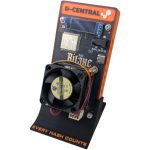
The open-source hardware movement is reclaiming what the ASIC era nearly took away: accessible, sovereign mining for individuals. Devices like the Bitaxe — an open-source, single-chip ASIC miner — put real SHA-256 mining capability on your desk for a fraction of the cost of industrial machines.
No, a Bitaxe will not compete with a warehouse of S21s on expected daily revenue. That is not the point. The point is participation in the network. The point is running your own miner, contributing to hashrate decentralization, and — if you solo mine — having a shot at a full block reward. Every hash counts.
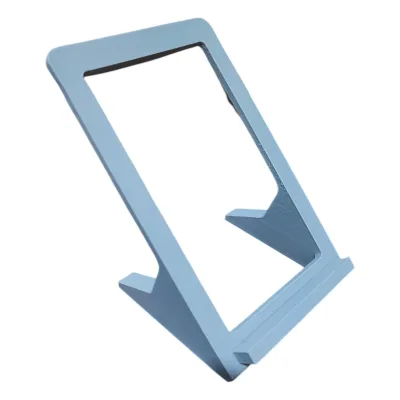
Open-source miners like the Bitaxe Supra, Ultra, Hex, Gamma, and GT variants, alongside the NerdAxe, NerdQAxe, and Nerdminer, represent a philosophical commitment: the tools of monetary sovereignty should be open, auditable, and available to everyone. D-Central has been a pioneer in this ecosystem since the beginning, manufacturing the original Bitaxe Mesh Stand and developing leading accessories, heatsinks, and cases for these devices.
Solo Mining vs. Pool Mining
Miners face a fundamental choice in how they direct their hashrate.
Pool Mining
Mining pools aggregate hashrate from thousands of miners and distribute rewards proportionally based on each miner’s contribution. This smooths out income — instead of waiting months or years for a solo block, pool miners receive small, frequent payouts. The tradeoff is trust: you are relying on the pool operator to distribute rewards honestly, and you are contributing to that pool’s share of the network hashrate.
The concentration of hashrate in a few large pools is one of Bitcoin’s ongoing centralization pressures. When two or three pools control a majority of hashrate, the network’s censorship resistance depends on those pool operators choosing not to censor transactions. This is why pool diversity and home mining matter for Bitcoin’s long-term health.
Solo Mining
Solo mining means pointing your hashrate directly at the Bitcoin network (via your own node or a solo mining proxy) without sharing rewards. If your miner finds a block, you keep the entire block reward — currently 3.125 BTC plus all transaction fees. If it does not find a block, you earn nothing.
For small miners, solo mining is a probability game. A single Bitaxe running at 500 GH/s represents a very small share of network hashrate and therefore has extremely low odds of finding any given block. The odds change with network difficulty and the miner’s delivered hashrate, but they are never zero, and Bitaxe solo miners have found blocks. It is Bitcoin’s lottery — with probabilities that can be calculated from current network conditions.
Bitcoin Mining and Energy: The Misunderstood Relationship
Critics love to point at Bitcoin’s energy consumption as if it were a bug. It is a feature. Proof of work converts real-world energy expenditure into unforgeable digital scarcity. Without the energy cost, the security model collapses — you would need to trust someone, somewhere, and that is exactly what Bitcoin was designed to eliminate.
What the critics consistently miss:
- Bitcoin mining is a buyer of last resort for energy. Miners seek out the cheapest electricity on Earth, which is overwhelmingly stranded, curtailed, or otherwise wasted energy — flared natural gas, excess hydroelectric capacity, geothermal in remote locations. Mining monetizes energy that would otherwise produce zero economic value.
- Mining stabilizes renewable energy grids. Solar and wind produce energy intermittently. Miners can ramp up when supply exceeds demand and shut down when the grid needs the power, acting as a flexible load that makes renewable installations more economically viable.
- Home mining converts electricity into heat at near-100% efficiency. Every watt consumed by an ASIC miner becomes heat. In cold climates — like Canada — that heat replaces what your furnace would have produced anyway. You are not “wasting” energy; you are mining bitcoin while heating your home. This is exactly why Bitcoin Space Heaters exist.
The Economics of Mining After the 2024 Halving
The April 2024 halving cut the block subsidy from 6.25 to 3.125 BTC. For miners, this meant their primary revenue source was slashed in half overnight. The economic implications are significant:
- Efficiency is now non-negotiable. Older, less efficient machines (like the Antminer S9 running at ~85 J/TH) are no longer profitable for pure hashrate mining in most electricity markets. Modern machines targeting 15-20 J/TH are the baseline for competitive mining.
- Transaction fees matter more. As the subsidy decreases with each halving, transaction fees constitute a growing percentage of miner revenue. During periods of high network activity, fees can rival or exceed the subsidy — a preview of Bitcoin’s long-term security model.
- Dual-purpose mining gains an edge. When your miner doubles as a space heater, the “cost” of mining drops dramatically because you are offsetting heating expenses. An Antminer S9 that is uneconomical as a pure miner becomes perfectly rational as a space heater that earns bitcoin.
- Home miners can find advantages that industrial operations cannot. Residential electricity rates in some regions (especially in Quebec, with its abundant hydroelectric power) can be competitive. Factor in heat recapture, and home mining has a legitimate economic case.
The 21 Million Cap: What Happens When All Bitcoins Are Mined?
Bitcoin’s hard cap of 21 million coins is the cornerstone of its value proposition as sound money. But it raises a legitimate question: when the last bitcoin is mined (around 2140), what incentivizes miners to keep securing the network?
The answer is transaction fees. Even today, miners earn fees on top of the block subsidy. As the subsidy trends toward zero over the coming decades, the fee market will need to fully sustain the mining ecosystem. Several dynamics support this:
- Bitcoin’s utility grows over time. More users, more transactions, more demand for block space — all of which drive fees upward.
- Layer 2 solutions like Lightning Network handle small, frequent payments off-chain but still require on-chain settlement transactions, generating fees.
- Block space is finite and scarce. With a ~4MB block weight limit and 10-minute block intervals, there is a hard ceiling on transaction throughput. Scarcity of block space naturally creates a fee market.
The transition from subsidy-dominated to fee-dominated mining revenue is not a cliff — it is a 130+ year gradient. Each halving is one step in that transition. We are currently in the early-middle phase, with the subsidy still dominant but fees increasingly relevant.
Security Through Proof of Work
The security of the Bitcoin network rests on a simple principle: rewriting history requires re-doing the work. To replace a transaction buried under six confirmations, an attacker must build a valid competing chain with more cumulative proof of work than the chain followed by honest nodes. The cost and difficulty of catching up generally increase as confirmations accumulate and as honest hashrate rises; confirmations reduce reversal risk, but they do not make it mathematically zero.
Two cryptographic pillars underpin this security:
- SHA-256 hash function — produces a deterministic but effectively random 256-bit output for any input. Finding a hash below the difficulty target requires brute-force trial and error; there is no shortcut. Each block’s hash incorporates the previous block’s hash, creating an unbreakable chain of computational commitments.
- ECDSA digital signatures — every Bitcoin transaction is signed with the sender’s private key, proving ownership without revealing the key itself. Miners verify these signatures before including transactions in blocks, preventing unauthorized spending.
This is why proof of work matters. It is not “wasteful” — it is the physical cost of trustless security. Every joule of energy spent mining makes the ledger more tamper-resistant. There is no cheaper way to achieve permissionless, censorship-resistant consensus at global scale.
Why Mining Decentralization Matters
Bitcoin’s censorship resistance — its ability to process any valid transaction regardless of who sent it or what it is for — depends entirely on mining being sufficiently decentralized. If a single entity or small cartel controls a majority of hashrate, they can theoretically censor transactions, reorder blocks, or attempt double-spends.
This is why home mining is not a hobby — it is an act of defending the network. Every home miner running a machine in their basement, garage, or spare room adds hashrate that no single pool or corporation controls. The more geographically and operationally distributed the hashrate, the more resilient Bitcoin becomes.
D-Central exists to make this participation accessible. From open-source Bitaxe solo miners to custom-modified Antminers, from ASIC repair services that extend machine lifespans to Bitcoin Space Heaters that make mining economically rational for homeowners — every product and service is designed to put more hashrate in more hands.
Getting Started: Your Path Into Mining
If you have read this far, you understand why mining matters. Here is how to start participating:
For the Curious (Solo/Lottery Mining)
Pick up a Bitaxe or Nerdminer. These open-source devices cost a fraction of industrial hardware and plug into a standard outlet. Point them at a solo mining pool and start hashing. You probably will not find a block — but you might, and in the meantime you are contributing to network decentralization and learning the fundamentals of mining firsthand.
For the Home Miner (Dual-Purpose Mining)
Consider a Bitcoin Space Heater — a modified ASIC miner designed to heat your living space while mining bitcoin. In Canadian winters (and plenty of other cold climates), this is not a gimmick; it is rational economics. Your heating bill goes to your utility company either way. With a space heater miner, part of that energy expenditure comes back as bitcoin.
For the Serious Operator
Industrial-grade ASICs like the Antminer S21 series deliver serious hashrate. D-Central offers mining consulting to help you plan your operation — from hardware selection and power infrastructure to noise management and heat recovery. And when machines need service, our ASIC repair team — Canada’s largest — keeps them running.
Frequently Asked Questions
How are new bitcoins created?
New bitcoins are created exclusively through the mining process. When a miner discovers a valid block and adds it to the blockchain, the protocol allows them to include a special “coinbase” transaction that mints new bitcoins from nothing. As of 2026, each new block creates 3.125 BTC. This is the only mechanism for creating new bitcoins — there is no other way to mint them.
What is the current Bitcoin block reward?
After the April 2024 halving, the block reward (subsidy) is 3.125 BTC per block. Miners also earn transaction fees from all transactions included in the block, making total per-block revenue variable depending on network activity. The next halving is expected around 2028, when the subsidy will drop to 1.5625 BTC.
How many bitcoins are left to mine?
The amount left under Bitcoin’s nominal subsidy schedule depends on the current block height, not a calendar snapshot. The schedule totals slightly under 21 million BTC, and the mainnet subsidy changes every 210,000 blocks. At heights 840,000 through 1,049,999, a valid block may claim a maximum subsidy of 3.125 BTC; actual claimed issuance can be lower because a miner may claim less than permitted. Issued bitcoin should not be equated with bitcoin in circulation. Under current consensus rules, the subsidy becomes zero at height 6,930,000, commonly estimated around 2140.
What hardware do I need to mine Bitcoin?
For solo/lottery mining, open-source devices like the Bitaxe (starting around 500 GH/s) or Nerdminer offer an accessible entry point. For competitive mining, ASIC miners like the Antminer S21 series are the standard — purpose-built chips that compute SHA-256 hashes at terahash-per-second speeds. CPU and GPU mining of Bitcoin has been economically nonviable since the early 2010s.
What is the Bitcoin halving and why does it matter?
The halving is a programmed event every 210,000 blocks (~4 years) that cuts the block subsidy in half. It matters because it enforces Bitcoin’s disinflationary supply schedule — the rate of new bitcoin creation decreases predictably over time, approaching zero. This programmatic scarcity is a core feature that distinguishes Bitcoin from inflationary fiat currencies.
Can I mine Bitcoin at home?
Yes. Home mining is not only possible, it is important for Bitcoin’s decentralization. Options range from tiny open-source miners like the Bitaxe (quiet, low-power, suitable for a desk) to modified ASICs configured as Bitcoin Space Heaters (which heat your home while mining). In cold climates like Canada, dual-purpose mining is particularly compelling since the heat is genuinely useful.
What is the difference between solo mining and pool mining?
Pool mining combines hashrate from many miners, sharing block rewards proportionally — providing steady but small payouts. Solo mining means you keep the entire block reward (3.125 BTC + fees) if your miner finds a block, but earn nothing otherwise. Pool mining suits miners who need consistent income; solo mining appeals to those who value sovereignty, support decentralization, or want a shot at a full block reward.
Is Bitcoin mining bad for the environment?
Bitcoin mining consumes significant energy, but context matters. Miners are economic actors who seek the cheapest electricity, which is disproportionately stranded or wasted energy (flared gas, excess hydro, curtailed renewables). Mining acts as a flexible load that can stabilize renewable grids. In cold climates, 100% of mining energy becomes useful heat. The narrative that mining is environmentally destructive often ignores these dynamics.
What happens when all 21 million bitcoins are mined?
Once the block subsidy reaches zero (around 2140), miners will be compensated entirely through transaction fees. This transition is gradual — each halving reduces the subsidy while the fee market develops. Bitcoin’s growing utility, finite block space, and increasing transaction demand all suggest a viable long-term fee market to sustain network security.
How does D-Central Technologies support Bitcoin mining?
D-Central is Canada’s largest ASIC repair center and a pioneer in the open-source mining ecosystem, having manufactured the original Bitaxe Mesh Stand and developed leading accessories for Bitaxe and other open-source miners. We offer ASIC repair, mining consulting, hardware sourcing, and custom solutions like Bitcoin Space Heaters. Our mission is the decentralization of every layer of Bitcoin mining — putting hashrate in as many hands as possible.