The Fourth Turning theory — developed by William Strauss and Neil Howe — argues that history moves in roughly 80-to-100-year cycles, each divided into four distinct phases. The final phase, the Fourth Turning, is a period of crisis where decayed institutions are torn down and rebuilt from the ground up. The old order collapses under the weight of its own failures, and something new is forged in the wreckage.
We are living through one right now. And Bitcoin is not a coincidence of timing — it is the technological answer to the institutional rot that defines this era.
At D-Central Technologies, we have been saying this since 2016: decentralization is not optional. It is the only path forward. The centralized systems that governed money, energy, and information for the past century are failing in real time. Bitcoin is not just an alternative — it is the upgrade. And mining Bitcoin at home is how individuals opt into that upgrade with their own hands, their own hardware, and their own sovereignty.
What Is the Fourth Turning?
The Strauss-Howe generational theory identifies four recurring phases in Anglo-American history, each lasting approximately 20 to 25 years:
| Turning | Phase | Character | Historical Example |
|---|---|---|---|
| First Turning | High | Institutions are strong, individualism is weak. Society builds. | Post-WWII boom (1946-1964) |
| Second Turning | Awakening | Institutions are questioned, spiritual and cultural upheaval. | Consciousness Revolution (1964-1984) |
| Third Turning | Unraveling | Institutions weaken, individualism surges, trust erodes. | Culture Wars era (1984-2008) |
| Fourth Turning | Crisis | Old order collapses. Society is forced to rebuild from scratch. | Now (2008-present) |
Previous Fourth Turnings include the American Revolution, the Civil War, and the Great Depression followed by World War II. Each one ended with the complete destruction of the old institutional framework and the construction of something fundamentally new. The pattern is unmistakable: crisis forces renewal.
The current Fourth Turning was ignited by the 2008 global financial crisis — the moment when the entire world watched centralized financial institutions nearly destroy the global economy. Bailouts for the powerful, austerity for everyone else. The message was clear: the system serves those who control it, not those who participate in it.
Bitcoin: Born in the Wreckage of 2008
Satoshi Nakamoto published the Bitcoin whitepaper on October 31, 2008 — weeks after Lehman Brothers collapsed and governments began printing trillions to rescue the very institutions that caused the crisis. This was not coincidence. It was causation.
The Genesis Block, mined on January 3, 2009, contained a now-legendary message embedded in the coinbase transaction: “The Times 03/Jan/2009 Chancellor on brink of second bailout for banks.” Satoshi was not building a speculative asset. Satoshi was building an exit — a censorship-resistant, decentralized monetary system that no government, no central bank, and no boardroom could control.
Bitcoin is the technological response to institutional failure. It is a protocol-level answer to the question the Fourth Turning demands: when the old institutions fail, what replaces them?
Why Bitcoin Specifically — Not “Blockchain” or “Crypto”
Let us be direct: the answer is Bitcoin, not “blockchain technology” as an abstract concept, and certainly not the thousands of altcoin casino tokens that have emerged since. Bitcoin is the only truly decentralized, permissionless, censorship-resistant monetary network. Its proof-of-work consensus mechanism — secured by real energy expenditure — is what makes it incorruptible. Everything else is a centralized imitation wearing decentralization as a marketing costume.
The Fourth Turning demands systems that cannot be captured, co-opted, or shut down by the very powers that are failing. Only Bitcoin meets that standard.
The Four Pillars of Bitcoin’s Fourth Turning Alignment
1. Fixed Supply Against Monetary Debasement
There will only ever be 21 million bitcoin. No committee votes to change this. No emergency meeting at midnight can print more. In a world where central banks have expanded their balance sheets by trillions since 2008, Bitcoin’s absolute scarcity is a feature designed for exactly this moment. Every block mined — currently yielding 3.125 BTC per block after the April 2024 halving — follows a predetermined issuance schedule that will continue until roughly the year 2140.
This is not just monetary policy. It is a permanent rejection of the inflationary model that has debased every fiat currency in history. The Fourth Turning burns down the old monetary order. Bitcoin is what gets built on the ashes.
2. Decentralization Against Institutional Capture
Bitcoin’s network is secured by hundreds of thousands of nodes and miners distributed across the globe, pushing total network hashrate above 800 EH/s. No single entity controls it. No government can shut it down. No CEO can change the rules. This is the antithesis of the centralized power structures that the Fourth Turning reveals as fragile and corrupt.
And this is where home mining becomes critical. Every Bitaxe running in someone’s home, every solo miner contributing hashes to the network, is a vote for decentralization. Institutional mining farms are necessary for network security, but they also concentrate hashrate. The counterbalance is the pleb miner — the individual who runs their own hardware, points it at their own pool (or solo mines), and refuses to outsource their participation in the network to a corporation.
3. Censorship Resistance Against Financial Control
During every crisis, governments reach for financial controls: capital controls, account freezes, transaction monitoring, and outright confiscation. We have seen it in Cyprus (2013), India (2016), Lebanon (2019), Canada (2022), and Nigeria (2024). The Fourth Turning accelerates this pattern as governments become more desperate to maintain control.
Bitcoin transactions cannot be censored by any intermediary. If you hold your own keys, no one can freeze your funds. If you mine your own bitcoin, no exchange can deny you access. This is not theoretical — it is the lived experience of people around the world who have used Bitcoin to preserve their economic freedom when their governments tried to take it away.
4. Energy Sovereignty Against Centralized Infrastructure
Bitcoin mining converts energy into monetary value. This is a fundamental shift that the Fourth Turning’s institutional collapse makes urgently relevant. When you mine Bitcoin at home, you are not just running a computer — you are monetizing energy directly, bypassing every middleman between you and the value your energy produces.
In Canada, where we operate, this takes on special significance. Our cold climate is a natural advantage for mining — the same waste heat that cools your ASIC in summer heats your home in winter. A Bitcoin space heater is not a gimmick. It is a dual-purpose machine that mines bitcoin while replacing your electric heater, effectively getting paid to heat your house. This is the kind of practical, sovereign energy use that the Fourth Turning’s new order demands.
Historical Fourth Turnings vs. the Bitcoin Fourth Turning
| Fourth Turning | Crisis Catalyst | Institutional Failure | Renewal Technology |
|---|---|---|---|
| American Revolution (1773-1794) | Taxation without representation | British colonial governance | Constitutional democracy, printing press |
| Civil War (1860-1865) | Slavery and states’ rights | Antebellum political compromise | Telegraph, railroads, industrialization |
| Great Depression / WWII (1929-1946) | Financial collapse, fascism | Gold standard, League of Nations | Bretton Woods, nuclear energy, computing |
| Current era (2008-present) | Financial crisis, pandemic, monetary debasement | Central banking, fiat monetary system | Bitcoin, proof-of-work, Lightning Network |
The pattern is consistent: every Fourth Turning produces a new foundational technology that rewires how society operates. This time, that technology is Bitcoin — a protocol that does for money what the internet did for information.
Mining as Direct Participation in the Renewal
Buying bitcoin is opting into the new monetary system. Mining bitcoin is building it. There is a difference.
When you run a miner — whether it is a Bitaxe solo miner on your desk or a full ASIC in your garage — you are contributing hashrate to the network’s security. You are performing the computational work that validates transactions and secures the chain. You are not trusting a third party. You are the infrastructure.
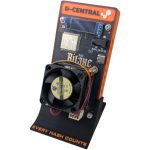
This is the Mining Hacker ethos that has driven D-Central Technologies since 2016. We take institutional-grade mining technology and hack it for the home miner. We built the original Bitaxe Mesh Stand. We manufacture heatsinks for every Bitaxe variant. We stock every open-source miner on the market — Bitaxe, NerdAxe, NerdQAxe, Nerdminer — because we believe that decentralizing hashrate is not just good for Bitcoin. It is essential for Bitcoin’s survival as a censorship-resistant network.
When hashrate is concentrated in a few massive facilities, the network becomes vulnerable to the very institutional capture that Bitcoin was designed to resist. Every home miner running a machine is a node of resistance against that concentration. Every hash counts.
The Canadian Advantage in the Fourth Turning
Canada occupies a unique position in this cycle. Our abundant hydroelectric power, cold climate, and (relatively) stable regulatory environment make us one of the best places in the world to mine Bitcoin. At D-Central, our hosting facility in Quebec leverages cheap hydroelectric power — some of the cleanest and most affordable energy on the planet.
But beyond hosting, Canada’s cold winters make home mining uniquely practical. An ASIC miner running in a Canadian home during winter is not wasting energy — it is replacing an electric heater while simultaneously securing the Bitcoin network and earning sats. A Bitcoin space heater running on Quebec hydro is perhaps the most sovereignty-aligned heating system on Earth: clean energy, dual-purpose hardware, and direct participation in the decentralized monetary network.
As the Fourth Turning plays out globally, regions with energy advantages and individual freedoms will become the new centers of power. Canada has the raw ingredients. The question is whether Canadians will use them.
What Comes After the Crisis
Every Fourth Turning ends with a new institutional framework that defines the next 80-year cycle. After the American Revolution, it was constitutional democracy. After WWII, it was Bretton Woods and the United Nations. After this Fourth Turning, the most likely outcome is a world where Bitcoin serves as the base layer of a new monetary system — not because governments chose it, but because people did.
The Lightning Network is already making Bitcoin usable for everyday transactions. Nation-states are beginning to hold bitcoin as a reserve asset. The hashrate has never been higher. The network has never been more secure. And the number of home miners contributing to that security is growing every month.
The old system does not go quietly. There will be more bailouts, more money printing, more attempts at financial surveillance and control. But each of these actions validates the thesis that Satoshi embedded in the Genesis Block. Each failure of the old system drives more people toward the exit that Bitcoin provides.
The Fourth Turning is not something to fear. It is something to prepare for, participate in, and build through. Bitcoin is the tool. Mining is the action. Sovereignty is the result.
Start Building Today
You do not need permission to participate in the renewal. You need hardware, electricity, and the willingness to run your own infrastructure. Whether you start with a Bitaxe solo miner on your desk or a full ASIC that we have repaired and tuned in our shop, you are contributing to the most important technological shift of this generation.
D-Central Technologies has been in this fight since 2016. We are the Bitcoin Mining Hackers — and we are building the infrastructure of the post-Fourth-Turning world, one miner at a time. From our shop in Montreal, Quebec, we ship worldwide, repair what others discard, and put institutional-grade mining power into the hands of individuals.
The Fourth Turning calls for renewal. Bitcoin answers that call. And every hash counts.
Frequently Asked Questions
What is the Fourth Turning and how does it relate to Bitcoin?
The Fourth Turning is the crisis phase of a roughly 80-to-100-year historical cycle identified by authors William Strauss and Neil Howe. During this phase, decayed institutions collapse and society rebuilds from scratch. Bitcoin was born in this current Fourth Turning — launched in response to the 2008 financial crisis — as a decentralized, censorship-resistant monetary system designed to replace the failing centralized financial infrastructure.
Why is Bitcoin the answer to the Fourth Turning and not other technologies?
Bitcoin is the only truly decentralized, permissionless monetary network secured by proof-of-work. Unlike centralized fintech platforms or altcoin projects with pre-mines and foundation-controlled governance, Bitcoin cannot be captured, censored, or inflated by any single entity. The Fourth Turning demands systems that survive institutional failure — Bitcoin is the only monetary technology that meets this requirement.
How does Bitcoin mining connect to the Fourth Turning’s call for renewal?
Mining is direct participation in building the new monetary infrastructure. Every miner contributing hashrate to the Bitcoin network strengthens its security and decentralization. Home mining in particular — running a Bitaxe, NerdAxe, or ASIC in your own space — resists the concentration of hashrate in institutional facilities, which is essential for maintaining Bitcoin’s censorship resistance during a period of institutional collapse.
Can I participate in Bitcoin mining from home during the Fourth Turning?
Absolutely. Open-source solo miners like the Bitaxe (powered by a 5V barrel jack, not USB-C) make home mining accessible to anyone with a power outlet and an internet connection. For those wanting more hashrate, full ASIC miners can be set up at home or hosted at D-Central’s Quebec facility. In cold climates like Canada, miners double as space heaters — you literally get paid to heat your home.
What role does Canada play in Bitcoin mining during this cycle?
Canada has natural advantages for Bitcoin mining: abundant hydroelectric power (especially in Quebec), cold winters that reduce cooling costs and allow waste heat recovery, and a relatively stable regulatory environment. These factors make Canada one of the best places in the world for both home mining and hosted mining operations. D-Central Technologies has been leveraging these Canadian advantages since 2016.