Introduction: The Decentralization Imperative
Bitcoin mining at home isn’t about getting rich quick. It’s about participating in the most robust monetary network humanity has ever created. Every hash you contribute strengthens Bitcoin’s security, decentralizes its infrastructure, and proves that you don’t need institutional capital to secure the network.
In 2026, home mining has evolved beyond the garage hobbyist running a single S9. We’re seeing a renaissance of accessible mining technology: open-source lottery miners like Bitaxe that fit in your hand, dual-purpose space heaters that monetize your heating costs, and noise-optimized ASICs that run in residential environments without driving your family insane.
This isn’t investment advice. This is a technical guide for Bitcoin maximalists who understand that running a miner is a statement: I don’t trust centralized infrastructure. I verify. I contribute. I mine.
Whether you’re solo mining for the thrill of potentially winning 3.125 BTC, heating your home while earning sats, or running a serious operation in your basement, this guide will walk you through everything you need to start mining Bitcoin at home in 2026.
The Decision Tree: What Kind of Home Miner Are You?
Before you buy hardware, understand your motivation. Home miners fall into three categories, each with different equipment needs and expectations.
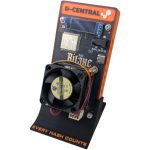
Solo Lottery Miner: Every Hash Counts
You’re not here for profit. You’re here because you want a chance—however infinitesimal—of finding a full Bitcoin block and claiming the entire 3.125 BTC block reward plus transaction fees. You understand the math. You know your 500 GH/s Bitaxe has a 1-in-several-million chance per day. You don’t care. Every hash counts.
Solo miners run open-source devices like Bitaxe Supra, Ultra, Hex, and Gamma, NerdAxe, NerdQAxe, or other sub-terahash devices. These draw 5-50 watts, cost $150-$600, and run silently on your desk. You point them at a solo mining pool like Solo CK Pool or Ocean, and you contribute to network decentralization while maintaining the dream that your device might find the next block.
This is Bitcoin mining in its purest form. No expectations. Just participation.
Heating Miner: Monetize Your Electricity
You live in a cold climate. You’re already spending $200+ per month heating your home with resistive electric heaters or natural gas. Why not convert that energy expenditure into Bitcoin mining?
All miners are 100% efficient heaters. Every watt of electricity consumed becomes heat. A 1,500-watt ASIC produces 5,120 BTU/hr of heat (watts × 3.412 = BTU/hr)—equivalent to a standard space heater—while simultaneously earning Bitcoin. Use our BTU Calculator to determine heating output for any miner.
D-Central’s Bitcoin Space Heaters are purpose-built for residential heating: noise-optimized with Noctua fan upgrades, WiFi-enabled, and packaged with shrouds and duct adapters to integrate with your home’s ductwork. We offer S9, L3, S17, and S19 editions ranging from 1,000 to 3,000 watts.
For advanced heat recovery, the BitChimney system captures and distributes miner heat throughout your home, turning a noisy ASIC into a whole-home heating solution.
Calculate your power costs with our Power Cost Calculator, then compare that to your current heating bill. If you’re already burning electricity for heat, mining converts a sunk cost into a productive asset.
Serious Home Miner: ASICs in the Basement
You have dedicated space. You have 220V power. You’re comfortable with 70+ decibel noise levels or you’re willing to invest in sound dampening. You want meaningful hashrate—10+ terahash—and you’re willing to manage the heat, noise, and electrical infrastructure.
Serious home miners run current-generation ASICs: Antminer S19 series, S21 series, Whatsminer M30S++, or Avalon devices. These machines cost $1,000-$5,000, draw 1,500-3,500 watts, and produce industrial-level noise and heat.
You’ll need:
- 220V circuit (30A minimum for most modern ASICs)
- Adequate cooling and ventilation (exhaust fans, duct adapters)
- Noise management (separate room, sound dampening, outdoor enclosure)
- Reliable internet (Ethernet preferred over WiFi for multi-TH devices)
Check out our ASIC Miner Database to compare 556+ mining devices by hashrate, efficiency, noise level, and home mining suitability score. Use our Mining Profitability Calculator to model different scenarios based on your local electricity rates.
Essential Equipment
Mining hardware is only part of the equation. Here’s everything you need for a complete home mining setup.
ASIC Miners vs Open-Source Miners
ASICs (Application-Specific Integrated Circuits) are purpose-built Bitcoin mining chips designed to compute SHA-256 hashes. Antminer, Whatsminer, and Avalon are the dominant manufacturers. These machines range from 5 TH/s (older S9 models) to 200+ TH/s (latest S21 series).
Open-source miners like Bitaxe, NerdAxe, and NerdQAxe are community-designed devices built around commodity ASIC chips salvaged from decommissioned mining hardware. They offer 200 GH/s to 2 TH/s, draw minimal power, and cost a fraction of commercial ASICs. They’re not profitable in traditional terms, but they’re accessible, educational, and perfect for solo mining.
D-Central has been a pioneer in the Bitaxe ecosystem since its inception. We created the original Bitaxe Mesh Stand, developed heatsink solutions for Bitaxe and Bitaxe Hex, and stock every variant: Supra, Ultra, Hex, Gamma, and GT. Explore the complete lineup at our Bitaxe Hub.
Power Supplies: Voltage Requirements Matter
Most modern ASICs require 12V DC power delivered via proprietary connectors (6-pin PCIe, 10-pin PCIe, or barrel jacks). You’ll use an external PSU (power supply unit) to convert 110V or 220V AC from your wall outlet to the DC voltage your miner needs.
Common PSU types:
- APW series (Antminer): APW3++, APW7, APW12 designed for Bitmain devices. 1,200-2,400 watts. Require 220V for full output.
- Server PSUs: Dell, HP, IBM power supplies modified with breakout boards. Cost-effective but require DIY setup.
- Bitaxe/NerdAxe PSUs: 5V/6A barrel jack power supplies (5.5×2.1mm DC). Not USB-C. USB-C ports on these devices are for firmware flashing only, not power delivery.
- 12V XT30/XT60 PSUs: For Bitaxe Hex, Bitaxe GT, NerdQAxe, and other high-performance open-source devices.
110V vs 220V considerations: Most residential circuits in North America provide 110V/15A (1,650W maximum safe load) or 110V/20A (2,200W maximum). Large ASICs like the S19 series require 220V/30A circuits to operate efficiently. If you’re running a single device under 1,500 watts, 110V is sufficient. Beyond that, you’ll need 220V wiring.
Never exceed 80% of your circuit’s rated capacity. A 15A circuit should power no more than 1,320 watts continuously. Use our Power Cost Calculator to model your electrical requirements.
Cooling and Noise Management
ASICs are loud. Stock fans on an Antminer S19 run at 5,000+ RPM and produce 75+ decibels—equivalent to a vacuum cleaner running 24/7. This is unacceptable for residential environments.
Noise reduction strategies:
- Noctua fan upgrades: Replace stock 120mm fans with Noctua NF-A12x25 PWM fans. Reduces noise by 10-20 decibels with minimal hashrate loss.
- Shrouds and duct adapters: Direct hot exhaust air into HVAC ductwork or out a window. Prevents heat buildup and isolates noise.
- Sound dampening enclosures: Build or buy foam-lined boxes that isolate your miner. Ensure adequate ventilation—miners generate 3,000+ watts of heat.
- Outdoor enclosures: Weatherproof boxes with ventilation. Ideal for garages or sheds. Protect from moisture and temperature extremes.
For dual-purpose heating, noise is less critical. You want the heat distributed indoors. D-Central’s Bitcoin Space Heaters come pre-configured with Noctua fans and duct adapters for whole-home integration.
Networking: WiFi vs Ethernet
ASICs have embedded web interfaces accessible via your local network. Most require Ethernet by default, but WiFi adapters are available.
Ethernet (recommended): Stable, low-latency, no configuration issues. Run CAT6 cable from your router to your miner. For multi-TH devices submitting frequent shares to a pool, wired connections prevent dropped shares and orphaned blocks.
WiFi (acceptable for low-hashrate devices): PixLink WiFi kits convert Ethernet to WiFi for ASICs without native WiFi support. Acceptable for Bitaxe and sub-1 TH devices, but avoid for 10+ TH miners where share submission frequency is critical.
Power and Electricity
Electricity is your only recurring cost. Understanding your power consumption and rates is essential.
Calculate Your Power Costs
Every miner lists its power consumption in watts. A 3,000-watt miner running 24/7 consumes 72 kWh per day (3,000W ÷ 1,000 × 24 hours). At $0.10/kWh, that’s $7.20 per day or $216 per month.
Use our Power Cost Calculator to model your costs. Input your device’s wattage and your local electricity rate. The calculator outputs daily, monthly, and annual costs.
In Quebec, residential rates average $0.07/kWh. In California, rates exceed $0.30/kWh. Your location determines viability.
Time-of-Use Rates
Some utilities offer time-of-use (TOU) pricing: cheaper electricity during off-peak hours (nights/weekends), higher rates during peak demand (weekday afternoons). If your utility offers TOU rates, automate your miners to run during off-peak windows to minimize costs.
Most ASIC control boards support scheduled restarts or API-based automation. Use custom firmware like DCENT_OS or third-party tools to schedule mining windows.
Circuit Requirements
Standard North American residential circuits:
- 15A/110V: 1,650W maximum, 1,320W safe continuous load. Good for one Bitaxe, one S9, or one low-power ASIC.
- 20A/110V: 2,200W maximum, 1,760W safe continuous load. Handles one mid-range ASIC or two low-power devices.
- 30A/220V: 6,600W maximum, 5,280W safe continuous load. Required for modern S19/S21 series ASICs. Requires dedicated circuit and appropriate outlet (NEMA 6-30 or L6-30).
Never daisy-chain miners on a single circuit. Calculate total wattage and leave 20% headroom. If unsure, hire an electrician to install a dedicated 220V circuit.
Heat Recovery = Free Heating
Every watt consumed becomes heat. A 1,500-watt miner produces 5,120 BTU/hr. A typical forced-air furnace produces 40,000-100,000 BTU/hr. One miner can offset 5-10% of your heating load during winter months.
The math is simple: if you’re already heating your home with electricity, mining transforms that expense into Bitcoin accumulation. Your “electricity cost” for mining is offset by reduced heating bills.
In Canada, where heating costs dominate household energy budgets for 6+ months per year, this model is compelling. Run the numbers with our BTU Calculator to see how many miners you’d need to replace your furnace.
Pool Mining vs Solo Mining
Mining pools aggregate hashrate from thousands of miners and distribute block rewards proportionally. Solo mining means you keep 100% of the block reward—if you find a block.
Pool Mining: Consistent Payouts
When you join a pool, you submit “shares” (partial proof-of-work solutions) to prove you’re contributing hashrate. When the pool finds a block, rewards are distributed based on each miner’s share contribution.
Pros:
- Predictable daily/weekly payouts
- Smooth income stream for profitability calculations
- Lower variance—you earn proportionally to your hashrate
Cons:
- Pool fees (0.5-2% of rewards)
- Centralization—large pools control significant network hashrate
- You never receive a full block reward
Popular pools: Foundry USA (32% network hashrate), AntPool (18%), F2Pool (14%), Braiins Pool (3%). Choose smaller pools to support decentralization.
Solo Mining: Full Block Reward
Solo mining means pointing your hashrate directly at the Bitcoin network (or a solo pool that doesn’t share rewards). If your device finds a valid block, you receive the entire 3.125 BTC block reward plus transaction fees—currently worth $200,000+ USD. If you don’t find a block, you earn nothing.
The math: Bitcoin’s current network hashrate is ~600 exahash/s (600,000,000 TH/s). A 500 GH/s Bitaxe represents 0.000000083% of the network. On average, the network finds 144 blocks per day. Your Bitaxe’s expected time to find a block is approximately 2,700 years.
Use our Solo Mining Calculator to calculate your probability based on your device’s hashrate.
Why solo mine? Because every hash counts. Block discovery is probabilistic, not deterministic. Your next hash could find a block. Someone with a 200 GH/s Bitaxe has found a solo block. It’s rare, but it happens.
Solo pool options:
- Solo CK Pool: The original solo mining pool. 0.5% fee. Trusted since 2014.
- Ocean: 0% fee, TIDES payout system, supports decentralization and censorship resistance.
Solo mining is a philosophical choice, not a financial one. You’re participating in the network’s security. You’re proving that mining isn’t exclusive to data centers. You’re keeping the dream alive.
Setting Up Your First Miner
You’ve chosen your device. Here’s how to get it running.
Unboxing and Physical Setup
ASICs ship with a control board, hashboards (the boards containing ASIC chips), fans, and a power supply (sometimes sold separately). Open-source miners like Bitaxe arrive fully assembled.
Steps:
- Inspect for shipping damage. Check for loose heatsinks, disconnected cables, or bent fan blades.
- Place your miner in a well-ventilated area. Ensure intake and exhaust airflow paths are clear.
- Connect your PSU to the miner. Match voltage and connector types. For Bitaxe: 5V barrel jack. For most ASICs: 12V PCIe connectors.
- Connect Ethernet cable from your router to the miner’s Ethernet port (or install WiFi adapter).
- Power on the PSU and miner. Wait 60 seconds for boot-up.
Network Configuration
Your miner will request an IP address from your router via DHCP. Most manufacturers provide a scanning tool (e.g., Bitmain’s “IP Reporter”) or you can check your router’s DHCP client list to find the miner’s IP address.
Open a web browser and navigate to the miner’s IP (e.g., http://192.168.1.100). You’ll see the miner’s web interface. Default login credentials are usually admin/admin or listed in the manual.
Pool and Wallet Configuration
Navigate to the “Miner Configuration” or “Pool Settings” section. You’ll enter three pieces of information:
- Pool URL: The mining pool’s stratum address (e.g., stratum+tcp://pool.example.com:3333)
- Worker name: Your identifier (e.g., yourname.worker1)
- Password: Usually “x” or any string (not used for authentication)
Most pools provide a dashboard where you can monitor hashrate and earnings. For solo pools like Solo CK Pool, you’ll enter your Bitcoin wallet address as the worker name. If you find a block, the reward is sent directly to your wallet.
Never use an exchange address for mining payouts. Use a wallet where you control the private keys: Sparrow, Coldcard, Trezor, or Ledger.
Save your settings and restart the miner. Within 5 minutes, you should see hashrate reported on the pool’s dashboard.
Monitoring and Maintenance
ASICs are designed to run continuously. Check your miner weekly for:
- Hashrate consistency: Sudden drops indicate failing hashboards or overheating.
- Fan operation: Listen for unusual noises. Failed fans cause thermal shutdowns.
- Temperature: Most ASICs target 60-75°C chip temperature. Above 85°C triggers thermal throttling.
- Dust buildup: Clean heatsinks every 3-6 months with compressed air.
If you encounter issues, D-Central offers comprehensive ASIC Repair services. We’ve repaired 2,500+ miners since 2016, with diagnostic and repair guides for 38+ ASIC models. Check our Mining Glossary for troubleshooting terminology.
Mining as Heating: The Dual-Purpose Revolution
Bitcoin mining and home heating are thermodynamically identical. Every watt consumed becomes heat. The only difference is that mining produces Bitcoin as a byproduct.
Space Heaters Explained
A standard electric space heater draws 1,500 watts and produces 5,120 BTU/hr of heat. An Antminer S9 draws 1,300 watts and produces 4,435 BTU/hr. The S9 costs less to run and earns Bitcoin.
D-Central’s Bitcoin Space Heaters are ASICs optimized for residential heating:
- S9 Space Heater: 1,300W, 13.5 TH/s, 4,435 BTU/hr. Quiet Noctua fans. $300-$500.
- S17 Space Heater: 2,100W, 50+ TH/s, 7,165 BTU/hr. Mid-range power and heat output.
- S19 Space Heater: 3,250W, 90+ TH/s, 11,089 BTU/hr. Whole-home heating potential.
Each unit includes WiFi connectivity, Noctua fan upgrades, and duct adapters for HVAC integration. Place in a room with a cold air return, and your furnace will distribute the heat throughout your home.
BTU Calculations
The formula is simple: BTU/hr = watts × 3.412
A 2,000-watt miner produces 6,824 BTU/hr. To heat a 500-square-foot room in a cold climate, you need approximately 10,000-15,000 BTU/hr. Two S9 miners (2,600W combined) produce 8,870 BTU/hr—enough to offset 50-80% of a small room’s heating load.
Use our BTU Calculator to model different configurations. Input your room size, insulation quality, and outdoor temperature to calculate required BTU output.
BitChimney: Advanced Heat Recovery
The BitChimney system (designed by Altairtech, assembled and shipped by D-Central) captures exhaust heat from ASICs and distributes it through your home’s HVAC system. It’s a shroud-and-duct adapter that connects your miner’s exhaust to your furnace’s cold air return.
Result: Your miner becomes a heat source for your entire home. Your furnace runs less. Your electricity bill stays roughly the same (you’re shifting consumption from the furnace to the miner), but you’re earning Bitcoin.
This is energy monetization at its finest. You’re not “spending money on mining.” You’re converting an existing expense (heating) into a productive asset (Bitcoin).
Where to Buy Mining Hardware
The mining hardware market is full of resellers, scammers, and drop-shippers. Choose vendors carefully.
D-Central Technologies has been a pioneer in the Bitcoin mining industry since 2016. We’re based in Quebec, Canada, and we’ve been involved in the Bitaxe ecosystem since its inception. We created the original Bitaxe Mesh Stand, developed custom heatsinks for Bitaxe and Bitaxe Hex, and stock every Bitaxe variant plus the full lineup of open-source miners: NerdAxe, NerdQAxe, NerdNOS, and more.
We also carry new and refurbished ASICs (Antminer, Whatsminer, Avalon), replacement parts, power supplies, cooling accessories, and 3D-printed mining stands. Every miner ships tested and configured. We offer repair services, consulting, and technical support.
Browse our full catalog at d-central.tech/shop.
What to Look for in a Vendor
- Testing and quality control: Do they test every unit before shipping? Ask for proof.
- Support and warranty: What happens if your miner fails? Do they offer repair services or just replacement?
- Transparency: Are they clear about new vs refurbished hardware? Do they disclose hashrate variances?
- Location: Shipping from China takes 3-6 weeks and incurs customs fees. North American vendors ship faster with fewer complications.
- Technical expertise: Can they answer detailed questions about firmware, overclocking, and troubleshooting?
D-Central offers all of the above. We’re not a drop-shipper. We’re Bitcoin Mining Hackers. We repair, modify, and optimize every device we sell. We’ve been doing this since 2016, and we’re not going anywhere.
Frequently Asked Questions
Is Bitcoin mining still profitable in 2026?
Profitability depends on electricity costs, not hardware. If you pay more than $0.12/kWh, traditional profitability is difficult. But if you’re mining for heat, the equation changes—you’re offsetting heating costs, not just paying for electricity. Use our Mining Profitability Calculator to model your specific scenario.
Can I mine Bitcoin with a regular computer or GPU?
No. Bitcoin mining requires ASIC hardware. GPUs and CPUs are 10,000× less efficient than ASICs for SHA-256 hashing. You’ll consume hundreds of watts of power and earn fractions of a cent per day. ASICs are the only viable option.
How loud are Bitcoin miners?
Stock ASICs range from 65-85 decibels—comparable to a vacuum cleaner or lawnmower. Noise reduction is possible with Noctua fan upgrades (reduces by 10-20 dB), shrouds, or sound dampening enclosures. Open-source miners like Bitaxe run nearly silent at 30-40 dB.
Do I need 220V power to mine Bitcoin?
Only for high-wattage ASICs (3,000W+). Devices under 1,500W can run on standard 110V/15A circuits. Check your miner’s power consumption and your circuit’s capacity. Never exceed 80% of your circuit’s rated load.
What is solo mining and why would I do it?
Solo mining means you keep 100% of the block reward (3.125 BTC) if you find a block, but you earn nothing if you don’t. It’s a lottery with extremely low odds. People solo mine because every hash counts, and someone will win. Use our Solo Mining Calculator to see your odds.
Can Bitcoin miners really heat my home?
Yes. All electrical resistance heating is 100% efficient. A 1,500W miner produces the same heat as a 1,500W space heater, except the miner also earns Bitcoin. Use our BTU Calculator to calculate heating output (watts × 3.412 = BTU/hr).
What happens if my miner breaks?
D-Central offers comprehensive ASIC Repair services. We’ve repaired 2,500+ miners and maintain diagnostic guides for 38+ ASIC models. Common failures include hashboard errors, fan failures, and power supply issues. Most repairs cost $100-$400 depending on the part.
How much Bitcoin will I mine per day?
It depends on your hashrate, network difficulty, and pool fees. The formula is: daily_btc = (hashrate_th × 1e12 × 86400 × 3.125) / (difficulty × 2^32). A 100 TH/s miner currently earns approximately 0.00014 BTC per day. Use our Mining Profitability Calculator for real-time estimates.
Do I need to run my miner 24/7?
For maximum earnings, yes. Mining rewards are proportional to uptime. However, if you’re using time-of-use electricity rates, you can schedule your miner to run only during off-peak hours to minimize costs.
Can I mine on WiFi or do I need Ethernet?
Ethernet is recommended for stability, especially for high-hashrate devices. WiFi works for low-hashrate miners like Bitaxe. If you must use WiFi, invest in a PixLink WiFi adapter designed for ASIC miners.
What’s the difference between Bitaxe Supra, Ultra, Hex, and Gamma?
They use different ASIC chips with varying hashrates and power consumption. Supra (BM1366): ~500 GH/s, 15W. Gamma (BM1370): ~1.2 TH/s, 35W. Hex (six chips): ~3 TH/s, 200W. See our Bitaxe Hub for detailed comparisons.
Is Bitcoin mining legal in Canada?
Yes. Bitcoin mining is legal throughout Canada. Quebec has some of the lowest electricity rates in North America, making it one of the best regions globally for mining. D-Central is based in Quebec and has been operating since 2016.
Conclusion: Mine Bitcoin, Secure the Network
Home mining in 2026 is not about profit margins. It’s about participation. It’s about proving that Bitcoin’s security model doesn’t require data centers and institutional capital. It’s about decentralization at every layer.
Whether you’re running a 500 GH/s Bitaxe on your desk, heating your home with an S9 space heater, or operating a 100 TH/s S19 in your garage, you’re contributing to the most robust monetary network in human history.
Every hash counts. Start mining.
Explore our full lineup of miners, accessories, and repair services at d-central.tech. Use our ASIC Miner Database to compare 556+ devices, calculate profitability with our Mining Calculator, and dive deep into Bitaxe at our Bitaxe Hub.
Bitcoin Mining Hackers since 2016. We are the North.