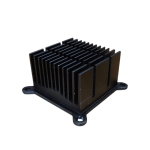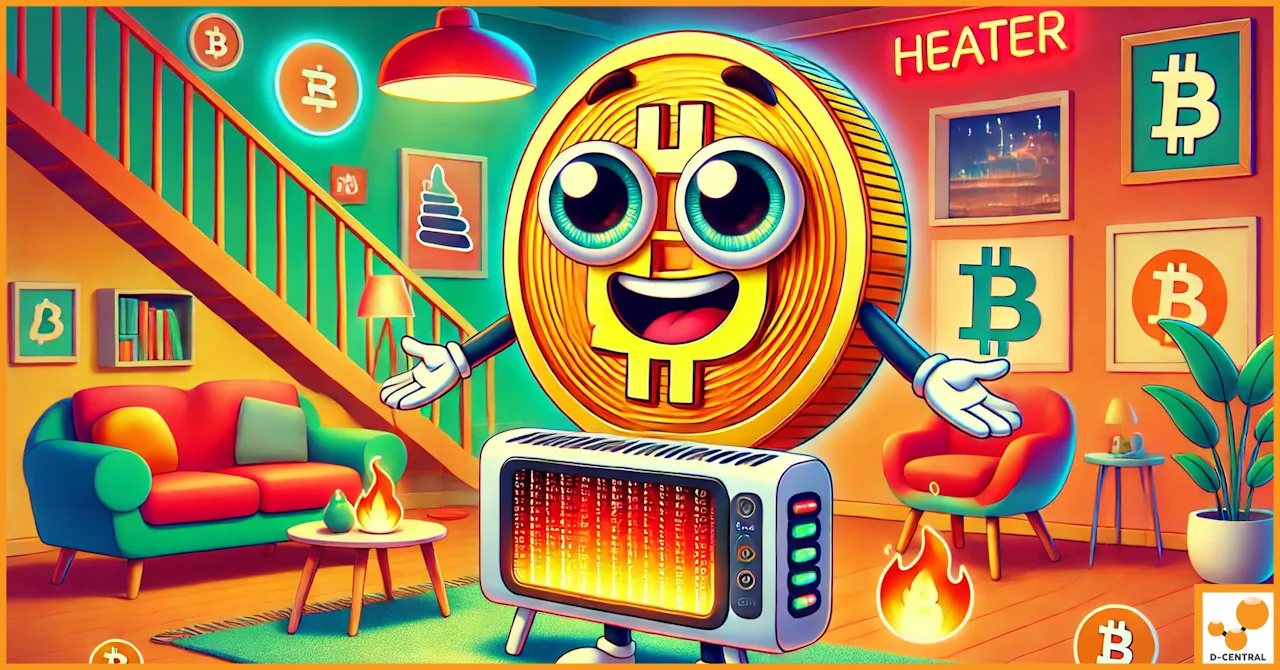
The Bitcoin mining industry has a heat problem — or more accurately, the industry has a heat opportunity that most miners are still thinking about backwards. With network hashrate now exceeding 800 EH/s and modern ASICs pushing thermal envelopes harder than ever, the question of cooling has become inseparable from the question of profitability.
Absorptive refrigeration — a technology that uses heat itself to drive a cooling cycle — has been floated as a potential breakthrough for mining operations. The premise is compelling: take the waste heat your ASICs are already generating and use it to power your cooling system, effectively getting cooling “for free.”
But does this technology actually make sense for Bitcoin miners? At D-Central, we have been in the trenches of mining hardware since 2016, repairing thousands of ASICs, building custom mining solutions, and pioneering heat-reuse approaches like our Bitcoin Space Heater line. Here is our honest, technically grounded assessment of absorptive refrigeration — what it promises, where it falls short, and what miners should actually be doing about heat management today.
How Bitcoin Mining Generates Heat — And Why It Matters
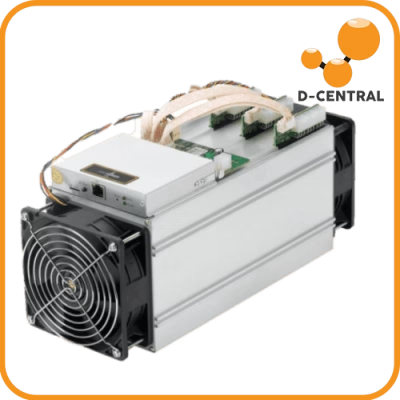
Every SHA-256 hash computation performed by an ASIC chip converts electrical energy into two outputs: a hash result and heat. There is no third option. A modern Antminer S21 running at 3,500W pushes roughly 200 TH/s — and every single watt of that 3,500W eventually becomes thermal energy that needs to go somewhere.
At scale, this is staggering. A facility running 1,000 units is managing 3.5 megawatts of continuous heat output. Even a home miner running a single S19 is dealing with a 3,000W space heater that happens to mine Bitcoin.
The mining difficulty adjusts approximately every 2,016 blocks (roughly two weeks), and the long-term trend is relentlessly upward. More hashrate on the network means more energy consumed, which means more heat generated. With the current block reward at 3.125 BTC following the April 2024 halving, margins are tighter than ever — making energy efficiency the single most important variable in mining profitability.
This is why cooling is not just an operational concern. It is a profit lever.
What Absorptive Refrigeration Actually Is
Unlike conventional refrigeration that uses an electrically-driven compressor to cycle refrigerant, absorptive refrigeration replaces the compressor with a thermochemical process. The system uses two fluids — a refrigerant (commonly ammonia or water) and an absorbent (typically lithium bromide or a salt solution).
The Cooling Cycle, Step by Step
| Stage | Process | What Happens |
|---|---|---|
| 1. Evaporation | Heat absorption | Refrigerant evaporates at low pressure, absorbing heat from ASIC hardware |
| 2. Absorption | Vapor capture | Absorbent liquid captures the refrigerant vapor, forming a solution |
| 3. Pressurization | Pump cycle | Solution is pumped to higher pressure (small electrical input required here) |
| 4. Desorption | Heat-driven separation | Waste heat from miners separates refrigerant from absorbent — this is the key step |
| 5. Condensation | Heat rejection | Refrigerant condenses back to liquid, releasing captured heat to the environment |
| 6. Recirculation | Cycle repeats | Liquid refrigerant returns to evaporator, continuous loop |
The critical innovation here is Stage 4 — the desorption step. In a traditional compressor-based system, this separation requires a large electric motor. In absorptive refrigeration, it is accomplished with heat. And since ASIC miners are essentially purpose-built heat generators, the idea of feeding that thermal output back into a cooling loop is intellectually elegant.
The Case For Absorptive Refrigeration in Mining
On paper, the advantages are real:
Reduced electrical cooling load. Traditional data center cooling consumes 30-40% of total facility power. If you can replace even half of that with thermally-driven cooling, you are looking at a 15-20% reduction in total electricity costs. At industrial scale, that translates to tens of thousands of dollars per month.
Waste heat utilization. Instead of treating miner exhaust as a problem to be solved, absorptive refrigeration treats it as fuel. This aligns perfectly with the thermodynamic reality that every watt consumed by an ASIC becomes heat — you are simply closing the energy loop.
Noise reduction. Absorptive systems have far fewer moving parts than compressor-based cooling. No large fans, no compressor motors. For operations where noise is a concern — particularly home mining setups — this is meaningful.
Longer hardware lifespan. Consistent, efficient cooling extends the operational life of ASIC chips. Thermal cycling (rapid heating and cooling) is one of the primary failure modes we see in our ASIC repair workshop, and any system that maintains more stable temperatures will reduce failure rates.
The Case Against — Why We Are Not Recommending It (Yet)
Here is where the Mining Hacker perspective comes in. We have seen plenty of “revolutionary” technologies pitched to the mining community over the years. Some pan out. Most do not. Here is our honest assessment of absorptive refrigeration’s current limitations:
The Temperature Problem
Absorptive refrigeration systems — particularly lithium bromide absorption chillers — typically need a heat source temperature of 80-120°C to operate efficiently. ASIC miners produce exhaust air in the 50-70°C range. That is a significant gap. You would need a heat concentrator or supplemental heat source to bridge it, which adds complexity and cost, and partially defeats the purpose of “free” cooling.
The Cost Problem
| Cooling Method | Upfront Cost (per kW of cooling) | Ongoing Electricity Cost | Maintenance Complexity |
|---|---|---|---|
| Stock air cooling (ASIC fans) | $0 (built-in) | Moderate (fan power) | Low — dust cleaning, fan replacement |
| Duct shroud + exhaust | $50-200 | Low | Minimal |
| Immersion cooling | $500-1,500 | Low (pump only) | Moderate — fluid quality monitoring |
| Absorptive refrigeration | $3,000-10,000+ | Very low (pump only) | High — fluid chemistry, leak monitoring, specialized technicians |
For a home miner running one to five machines, the economics simply do not work. A $10,000+ absorptive refrigeration system to cool hardware worth $5,000-15,000 is not rational capital allocation. Even at industrial scale, the payback period is measured in years — and in Bitcoin mining, technology cycles move faster than that.
The Complexity Problem
Absorptive systems use corrosive chemicals (lithium bromide, ammonia), pressurized fluid loops, and heat exchangers that require professional maintenance. Most miners — especially the independent operators and home miners who make up D-Central’s community — do not want to manage a chemical cooling plant. And they should not have to.
The Modification Problem
Integrating absorptive refrigeration with ASIC miners requires significant hardware modification. Stock ASICs are designed for forced-air cooling. Retrofitting them for liquid-based heat exchange means removing fans, modifying airflow paths, and potentially voiding warranties. At D-Central, we have repaired thousands of ASICs — we know firsthand how sensitive these machines are to thermal modifications done incorrectly. A bad retrofit does not just reduce efficiency; it kills hashboards.
What Actually Works: Practical Heat Management for Miners
Instead of chasing theoretical cooling breakthroughs, here is what the most effective miners are actually doing — the approaches we see delivering real results across our customer base:
1. Site Selection — Let Geography Do the Work
Canada’s climate is not a bug; it is a feature. At our hosting facility in Quebec, outside air provides free cooling for 6-8 months of the year. Ambient temperatures below 15°C mean that simple ventilation — pulling cold outside air across miners and exhausting the hot air — delivers all the cooling most operations need, with zero additional energy cost.
This is why we are vocal about Canada being one of the best jurisdictions on the planet for Bitcoin mining. Cold climate, abundant hydroelectric power, and a regulatory environment that does not treat miners like criminals. Geography is the cheapest cooling system money cannot buy.
2. Heat Reuse — Treat Waste Heat as a Product
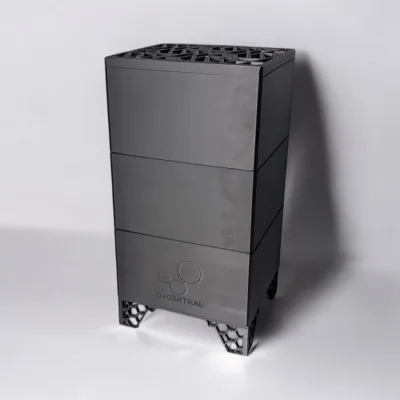
This is D-Central’s core thesis, and it is where the Bitcoin Space Heater concept comes from. Instead of spending money to remove heat, we build mining hardware into enclosures designed to distribute that heat usefully — heating homes, workshops, garages, even greenhouses.
A single Antminer S9 Space Heater Edition produces roughly 1,400W of thermal output. That is equivalent to a standard electric space heater — except this one also mines Bitcoin. During Canadian winters, you are not “wasting” energy on mining; you are heating your home with a device that happens to produce sats as a byproduct.
This is not theoretical. This is how hundreds of our customers operate right now. And it completely reframes the cooling conversation: you do not need to solve the heat problem if you are using the heat.
3. Smart Underclocking
Reducing clock speeds and voltages on ASICs (a practice D-Central specializes in for custom builds) can drop power consumption — and therefore heat output — by 20-40% while only sacrificing 10-20% of hashrate. The efficiency gain is nonlinear and significant. Less heat means less cooling infrastructure, lower electricity bills, and longer hardware life.
4. Proper Ducting and Airflow Engineering
For home miners, the single most impactful upgrade is usually a $50-200 shroud and duct setup that channels ASIC exhaust out of the living space (or into rooms that need heating). No chemical coolants. No specialized technicians. Just basic thermodynamics applied with common sense.
Cooling Methods Compared: Honest Assessment
| Method | Best For | Home Miner Friendly? | D-Central Verdict |
|---|---|---|---|
| Stock air cooling | Default operations | Yes (but loud) | Works, but leaves heat on the table |
| Shroud + duct exhaust | Home miners, 1-5 units | Excellent | Best bang for buck — our top recommendation |
| Bitcoin Space Heaters | Home miners in cold climates | Excellent | Eliminates the heat “problem” entirely |
| Immersion cooling | 10+ unit operations | Moderate (DIY possible) | Excellent for scale, overkill for most home setups |
| Cold climate free air | Canadian operations | Yes | Nature’s cooling system — literally free |
| Absorptive refrigeration | Large industrial facilities | No | Interesting science, impractical economics (for now) |
| Geothermal | Purpose-built facilities | No (high upfront cost) | Long-term play, requires significant site investment |
The Bigger Picture: Mining Hackers Think Differently About Heat
The traditional mining industry treats heat as waste — an expensive byproduct to be removed as cheaply as possible. This is the institutional mindset, and it leads to an endless search for bigger, more expensive cooling systems.
At D-Central, we think like hackers. We ask: what if heat is not the problem? What if the entire framing is wrong?
When you reframe ASIC waste heat as a useful thermal output — one that can heat your home, your water, your greenhouse, your garage — the cooling problem largely dissolves. You are not paying to cool your miner; you are redirecting its heat to where you need it. The miner is not a liability that needs cooling infrastructure; it is a heater that produces Bitcoin.
This is the Mining Hacker approach to thermodynamics. And it is why technologies like absorptive refrigeration, while scientifically interesting, miss the forest for the trees. The question is not “how do we cool miners more efficiently?” The question is “how do we use the heat they produce?”
For industrial-scale operations where heat reuse is impractical (you can only heat so many buildings), advanced cooling solutions — potentially including absorptive refrigeration as it matures — have a role to play. But for the pleb miners, the home miners, the sovereign individuals running a few ASICs in their garage? The answer is simpler, cheaper, and more elegant: use the heat.
D-Central’s Approach: Practical Solutions, Not Lab Experiments
We are not dismissing absorptive refrigeration. The thermodynamics are sound, and future engineering breakthroughs could make it viable for mining applications. We are watching the space with interest.
But D-Central exists to serve miners today — with solutions that work now. That means:
- Bitcoin Space Heaters that turn the heat problem into a heating solution
- ASIC repair services that keep your hardware running efficiently, reducing thermal stress and extending operational life
- Mining consulting that helps you design your operation for optimal thermal management from day one
- Custom-tuned hardware — underclocked and undervolted builds that run cooler, quieter, and more efficiently
- Quebec hosting where Canadian climate provides natural cooling for the majority of the year
Every hash counts — and every watt matters. Whether you are running a single Bitaxe on your desk for the love of solo mining or a rack of S21s in your basement, the right thermal strategy is the one that matches your scale, your budget, and your goals.
We have been doing this since 2016. We have repaired thousands of ASICs, built custom mining solutions for hundreds of home miners, and pioneered the Bitcoin Space Heater concept that turns mining heat into home comfort. If you need help designing your mining setup — including getting the heat management right — talk to us.
Frequently Asked Questions
What is absorptive refrigeration and how does it work for Bitcoin mining?
Absorptive refrigeration is a cooling technology that uses a heat source — such as waste heat, solar thermal, or natural gas — instead of electricity to drive a cooling cycle. It works by evaporating a refrigerant (like ammonia or lithium bromide) at low pressure to absorb heat from mining hardware, then uses an absorbent liquid to recapture the vapor. Because ASIC miners already produce massive amounts of waste heat, absorptive refrigeration can theoretically recycle that thermal output to power its own cooling loop, reducing or eliminating the electrical cost of cooling.
Can absorptive refrigeration actually reduce Bitcoin mining electricity costs?
In theory, yes. Traditional air cooling and even immersion cooling consume electricity to run fans, pumps, or compressors. Absorptive refrigeration replaces that electrical input with thermal energy — waste heat that miners are already producing and typically discarding. If successfully implemented, this could reduce total facility power draw by 10-30%, depending on the cooling load. However, the technology is still in early-stage exploration for mining applications, and real-world efficiency gains remain unproven at scale.
Is absorptive refrigeration practical for home Bitcoin miners?
Not yet, and possibly not ever in a direct form. Absorptive refrigeration systems are complex, expensive to install ($10,000+ for even small units), and require specialized maintenance. For home miners running 1-5 ASICs, simpler solutions like duct-based heat recovery, Bitcoin space heaters, or basic immersion setups deliver better ROI. Where the concept does apply to home miners is indirectly — through the principle of heat reuse, which D-Central’s Bitcoin Space Heater line already implements.
What cooling methods do most Bitcoin miners actually use today?
The vast majority of Bitcoin mining operations use forced air cooling — the stock fans built into ASICs like the Antminer S19 or S21 series. Industrial facilities increasingly use immersion cooling (submerging miners in dielectric fluid) for better thermal management and noise reduction. Home miners often use duct shrouds to redirect hot exhaust air for space heating. Evaporative cooling and geothermal setups exist but remain niche. Absorptive refrigeration is still experimental in mining contexts.
How does D-Central approach mining heat management differently?
D-Central treats waste heat as a feature, not a problem. Instead of spending money to remove heat, D-Central’s Bitcoin Space Heater line repurposes ASIC miners as home heating appliances — turning the “waste” into useful thermal output that offsets heating costs. This approach, combined with custom shroud designs and noise reduction modifications, makes mining hardware practical for residential deployment. D-Central also offers ASIC repair services that keep older miners running efficiently, extending their useful life as heat-producing mining devices.
What is more practical than absorptive refrigeration for reducing mining cooling costs?
For most miners, the highest-impact cooling strategies are: (1) Site selection — operating in cold climates like Canada where ambient air provides free cooling for much of the year; (2) Heat reuse — ducting miner exhaust to heat living spaces, greenhouses, or water; (3) Immersion cooling — for larger operations seeking noise reduction and higher density; (4) Underclocking/undervolting — reducing power draw and heat output while maintaining acceptable hashrate; (5) Custom shrouds and ducting — directing airflow efficiently in home setups.