Every Watt Twice: The Physics of Dual-Purpose Bitcoin Mining
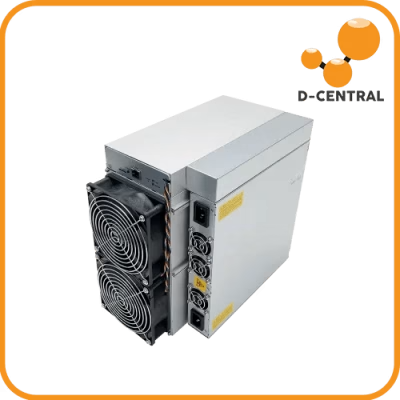
Here is an absolute, thermodynamic fact: every single watt your Bitcoin miner consumes is converted to heat. Not 90%. Not 95%. One hundred percent. A 1,500W ASIC miner produces exactly 1,500 watts of thermal energy — roughly 5,120 BTU/h. That is identical to a 1,500W electric space heater you would buy at a hardware store. The difference? The space heater gives you warmth. The Bitcoin miner gives you warmth and sats.
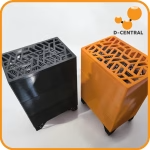
This is not a trick. It is not a marketing gimmick. It is the first law of thermodynamics applied to SHA-256 hashing. Every hash your machine computes is converting electrical energy into heat energy — with Bitcoin as a byproduct. At D-Central Technologies, we have been building, modifying, and shipping dual-purpose Bitcoin mining heaters since 2016 from our workshop in Laval, Quebec. We call ourselves Bitcoin Mining Hackers because that is exactly what we do: take institutional-grade mining hardware and hack it into something a home miner can run in their basement, garage, or workshop — heating their space while stacking sats and strengthening the Bitcoin network’s decentralization.
BTU Output: How Much Heat Does a Bitcoin Miner Actually Produce?
The conversion is straightforward: 1 watt = 3.412 BTU/h. Every watt your miner draws from the wall becomes heat in your space. No exceptions. Here is what that looks like across D-Central’s Bitcoin Space Heater lineup:
| Model | Power Draw | BTU/h Output | Hashrate | Equivalent Heater |
|---|---|---|---|---|
| S9 Space Heater Edition | 300–1,150W | 1,024–3,924 BTU/h | 4–13.5 TH/s | Small room heater |
| Antminer Slim Edition | 860–930W | 2,934–3,173 BTU/h | 26–44 TH/s | Medium room heater |
| Antminer Loki Edition | 1,000–1,200W | 3,412–4,094 BTU/h | Up to 56 TH/s | Large room heater |
| Antminer Pivotal Edition | 1,100–1,400W | 3,753–4,777 BTU/h | Varies by config | Large room / workshop |
For context, a typical Canadian bedroom requires about 3,000–4,000 BTU/h to heat in winter. A single Antminer Slim Edition or Loki Edition covers that entirely. Run two units and you are heating a full basement or open-concept living area — while contributing hashrate to the Bitcoin network.
The Real Efficiency Argument: Marginal Cost of Mining Drops to Zero
If you are already going to spend money heating your home — and in Canada, you absolutely are for 6 to 8 months of the year — then the electricity cost of mining is already being spent. The heat is not a bonus. The Bitcoin is.
Consider a typical Canadian household spending $200/month on electric heating during winter. Replace that electric baseboard heater with a Bitcoin Space Heater drawing the same wattage, and you get:
- The same heat output (thermodynamics does not care what device converts the electricity)
- Bitcoin revenue from every hash computed
- Network contribution — your hashrate strengthens Bitcoin’s decentralization
The marginal cost of your mining operation during heating season is effectively zero. You were going to burn those watts anyway. Now they are doing double duty.
Noise Management: Living With Your Miner
The number one concern for home miners is noise. Stock ASIC miners are loud — a factory-configured Antminer S19 pushes 75 dB, equivalent to a vacuum cleaner running non-stop. That is not livable. This is exactly why D-Central’s custom editions exist.
| Noise Source | Decibel Level | Comparison |
|---|---|---|
| Stock Antminer S19 | ~75 dB | Vacuum cleaner |
| Antminer Slim Edition (custom fans) | ~40–50 dB | Quiet conversation / light rain |
| Antminer Loki Edition (enclosed) | ~35–45 dB | Library / whisper |
| S9 Space Heater Edition (underclocked) | ~30–40 dB | Background hum / refrigerator |
| Typical residential furnace | ~45–55 dB | Normal home HVAC |
D-Central achieves these noise reductions through a combination of techniques we have refined over years in our Laval workshop:
- Fan replacement: Swapping stock high-RPM industrial fans with quieter, residential-grade alternatives (Noctua or equivalent)
- Underclocking / custom firmware: Reducing clock speed to lower power draw, heat output, and fan speed — trading some hashrate for livability
- Shroud and duct integration: Our 3D-printed ASIC shrouds channel airflow into standard HVAC ducting, moving the noise source away from living areas
- Enclosure design: The Loki Edition uses a sound-dampening enclosure that drops noise levels dramatically while maintaining proper airflow
The goal is simple: your Bitcoin miner should blend into your home like any other appliance. If it is louder than your furnace, it needs modification — and that is what we do.
Electrical Requirements: What Your Home Needs
Before you plug in a dual-purpose miner, you need to understand the electrical demands. This is non-negotiable — undersized wiring or overloaded circuits create real safety hazards.
| Requirement | Details |
|---|---|
| Circuit | Dedicated 15A or 20A circuit (240V preferred for larger units) |
| Outlet | Standard 120V NEMA 5-15 for S9 Space Heater; 240V NEMA 6-20 for Slim/Loki/Pivotal |
| PSU | APW-series power supply included with most D-Central editions |
| Breaker headroom | Never exceed 80% of breaker rating for continuous loads (NEC/CEC requirement) |
| Grounding | Properly grounded outlet mandatory — no extension cords or power strips |
| Internet | Ethernet connection recommended; Wi-Fi acceptable but less reliable |
Canadian-specific note: Most Canadian homes have 200A service panels, which can comfortably support 1–3 mining units alongside normal household loads. If you are running hydroelectric power in Quebec or Manitoba, your electricity rates are among the lowest in North America — making dual-purpose mining even more compelling economically. Consult a licensed electrician before adding any new high-draw appliance.
D-Central’s Bitcoin Space Heater Lineup
We do not just sell stock miners with a different label. Every D-Central edition is modified, tested, and tuned in our Laval workshop before it ships. Here is what makes each edition distinct:
S9 Space Heater Edition — The Gateway
The Antminer S9 is the AK-47 of Bitcoin mining: rugged, proven, and endlessly modifiable. Our Space Heater Edition takes the S9 platform and optimizes it for home use. Adjustable power draw from 300W to 1,150W gives you fine-grained control over heat output and noise. At 300W, it runs quieter than your refrigerator while producing about 1,024 BTU/h — perfect for a home office. Crank it to full power for 3,924 BTU/h in a cold workshop. The S9 is the most battle-tested mining platform in Bitcoin’s history, and replacement parts are abundant and affordable.
Antminer Slim Edition — The Workhorse
Built on modern S19/S21 series platforms, the Slim Edition delivers serious hashrate (26–44 TH/s) in a compact, noise-reduced form factor. Custom fan configurations bring the noise floor down into the 40–50 dB range — quieter than many household appliances. With 860–930W of power draw, it produces enough heat to warm a standard bedroom through a Canadian winter while mining on a modern, efficient ASIC chip.
Antminer Loki Edition — The Silent Operator
The Loki Edition is our answer to the question “can I run a miner in my living room?” A custom sound-dampening enclosure brings noise levels down to 35–45 dB — quieter than a typical home furnace. Up to 56 TH/s of hashrate in an enclosed, aesthetically cleaner package. This is the edition for home miners who refuse to compromise on living comfort.
Antminer Pivotal Edition — The Powerhouse
For dedicated mining rooms, basements, or workshops where noise is less of a concern, the Pivotal Edition pushes higher power and hashrate. At 1,100–1,400W, it throws 3,753–4,777 BTU/h of heat — enough to be the primary heat source for a workshop or large room. This is the edition for miners who want maximum hashrate contribution and maximum heat output.
Browse all editions and configurations in our shop.
Installation Best Practices
Proper installation is the difference between a dual-purpose miner that runs for years and one that creates problems. Here is what we recommend from nearly a decade of deploying these units in Canadian homes:
Placement
- Intake air: Ensure the miner draws cool air from an unobstructed source. Recirculating hot air kills efficiency and hashrate.
- Exhaust direction: Point the exhaust into the space you want heated. Use our 3D-printed shrouds and ducting to direct airflow precisely.
- Elevation: Mount or place the unit off the floor. Hot air rises — starting higher improves heat distribution.
- Summer plan: Have a strategy for warmer months. Duct the exhaust outdoors, move the unit to a ventilated area, or reduce power/hashrate. Some miners simply shut down during peak summer and that is fine.
Maintenance
- Monthly dust check: Canadian homes with forced-air heating produce significant dust. Compressed air every 30 days keeps heatsinks clear and temperatures stable.
- Fan inspection: Listen for bearing noise. Fans are wear items — replace them before they fail completely.
- Firmware updates: Keep your mining firmware current for performance and security improvements.
- Hashboard monitoring: Watch for individual hashboard dropoff. If one board goes down, your heat output drops proportionally. D-Central’s ASIC repair service can diagnose and repair hashboard issues.
The Canadian Advantage
Canada is one of the best places on Earth for home Bitcoin mining, and the reasons are structural:
- Cold climate: 6–8 months of heating season means 6–8 months of zero marginal mining cost
- Cheap hydroelectric power: Quebec, Manitoba, and British Columbia offer some of the lowest electricity rates in North America
- 200A residential service: Standard Canadian home panels handle multiple mining units without upgrades
- No residential mining bans: Unlike some US jurisdictions, Canadian municipalities have not restricted home mining
- Proximity to D-Central: Local support, faster shipping, no cross-border customs headaches
If you are looking for hosting beyond what your home can handle, D-Central operates a mining hosting facility in Quebec — taking advantage of the same hydroelectric power at scale.
Beyond ASICs: Open-Source Miners as Space Heaters
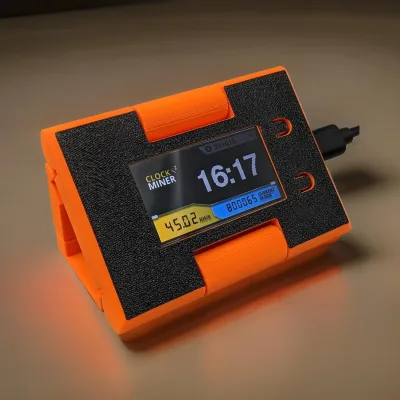
Not every dual-purpose setup needs a full ASIC. D-Central’s open-source mining lineup offers lower-power options that work beautifully in small spaces:
- Bitaxe (all variants): 5–15W of heat output — negligible heating, but the Bitcoin and solo mining experience. Check the Bitaxe Hub for the complete guide.
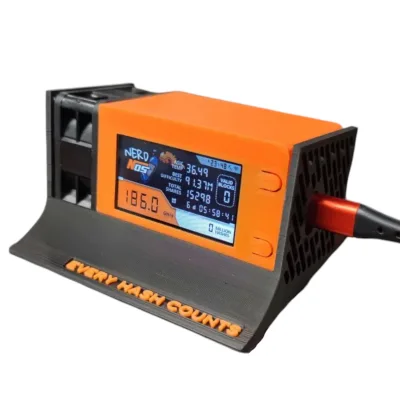
- NerdQAxe++: Quad-chip open-source miner with modest power draw — perfect desk companion that generates light warmth
- NerdOctaxe Gamma: Higher power open-source option with measurable heat contribution in a small room
These open-source devices are not going to replace your furnace. But they serve a different purpose in the decentralization mission: distributing hashrate across thousands of individual operators rather than concentrating it in industrial facilities. Every hash counts.
Frequently Asked Questions
How much heat does a Bitcoin miner produce compared to a regular space heater?
Watt for watt, exactly the same. A 1,000W Bitcoin miner produces 3,412 BTU/h — identical to a 1,000W electric space heater. The physics are the same: electrical energy converts to thermal energy at 100% efficiency. The only difference is that the Bitcoin miner also generates hashrate and earns Bitcoin in the process.
What are the electricity costs for running a dual-purpose miner in Canada?
In Quebec, residential electricity runs approximately $0.06–0.07 CAD/kWh. A 1,000W miner running 24/7 costs roughly $44–50 CAD/month. During heating season (October through April in most of Canada), this cost replaces what you would have spent on electric heating anyway, making the effective mining cost close to zero. Outside heating season, you can reduce power, underclock, or shut down entirely.
Are dual-purpose miners safe for residential use?
Yes, when properly installed. D-Central’s modified editions use residential-grade fans and are tuned for safe operating temperatures. Key safety requirements: use a dedicated circuit (never share with other high-draw appliances), use a properly grounded outlet (no extension cords), ensure adequate ventilation, and never block intake or exhaust airflow. We recommend consulting a licensed electrician for initial installation.
How loud are D-Central’s modified miners?
Our modified editions range from approximately 30 dB (S9 Space Heater Edition underclocked) to 50 dB (Slim Edition at full power). For comparison, a typical home refrigerator runs at 35–40 dB and a residential furnace at 45–55 dB. The Loki Edition with its sound-dampening enclosure is specifically engineered for living spaces where noise is a primary concern.
What happens in summer when I do not need the heat?
You have several options: duct the exhaust outdoors through a window or wall vent, move the miner to a ventilated garage or basement, underclock to reduce heat output, or shut down entirely and resume in fall. Many Canadian home miners run their units October through April and take the summer off. Some miners with very low electricity costs continue year-round by venting heat outside.
Can I integrate a Bitcoin miner with my home HVAC system?
Yes. D-Central’s 3D-printed ASIC shrouds convert miner exhaust to standard 6-inch or 8-inch duct sizes, allowing direct integration with existing HVAC ducting. This lets you distribute miner heat throughout your home using your existing ductwork and blower fan. For dedicated setups, inline duct fans like the Cloudline series provide precise airflow control.
What if my miner needs repair?
D-Central operates Canada’s leading ASIC repair service from our Laval, Quebec facility. We service all major manufacturers — Bitmain, MicroBT, Innosilicon, Canaan — with 60+ model-specific repair capabilities. Whether it is a failed hashboard, control board issue, or fan replacement, our technicians have been diagnosing and repairing mining hardware since 2016.
Stop Wasting Watts
Every electric heater in your home is a Bitcoin miner that forgot to mine. The thermodynamics are settled. The technology is proven. The economics — especially in Canada with hydroelectric power rates and 6+ months of winter — stack firmly in favor of dual-purpose mining.
D-Central Technologies has been building, modifying, and supporting Bitcoin mining hardware for Canadian home miners since 2016. We are not a dropshipper with a website. We are Bitcoin Mining Hackers with a full repair shop, a product development workshop, and a consulting team that has helped thousands of miners optimize their setups. Every unit we ship is tested and tuned in our Laval facility.
If you are heating your home with electricity and not mining Bitcoin, you are leaving sats on the table. Every watt. Every hash. Every block. They all count.