The global semiconductor industry is a battlefield. Governments are weaponizing chip supply chains, export controls are tightening around advanced fabrication technology, and the ripple effects are reaching every corner of the technology world — including Bitcoin mining. If you mine Bitcoin, or plan to, the semiconductor wars are your problem whether you realize it or not.
This is not some abstract geopolitical drama playing out in boardrooms. It is a direct threat to your ability to acquire, upgrade, and maintain the hardware that secures the Bitcoin network. And for home miners — the pleb miners running machines in basements, garages, and spare rooms across Canada and beyond — the stakes are even higher, because you do not have the institutional purchasing power to brute-force your way through supply shortages.
At D-Central Technologies, we have been navigating hardware supply chains since 2016. We have watched chip wars escalate from trade disputes to full-blown technology embargoes. Here is what you need to know, and more importantly, what you can do about it.
The Semiconductor Battlefield: What Is Actually Happening
The core conflict is straightforward: advanced semiconductor fabrication is concentrated in a handful of foundries — primarily TSMC in Taiwan and Samsung in South Korea — and the equipment to build these foundries comes from an even smaller group of companies, notably ASML in the Netherlands. The United States, China, and the European Union are all fighting to control access to this technology.
The U.S. has imposed escalating export controls targeting:
- Advanced AI chips — GPUs and accelerators above certain performance thresholds
- Wafer fabrication equipment — the machines that physically manufacture chips
- EDA software — the design tools needed to create advanced chip layouts
- Technical knowledge — restrictions on personnel and know-how transfer
These controls are aimed primarily at China, but the blast radius extends far beyond any single country. When foundry capacity gets squeezed, everyone in the queue feels it — and ASIC miners are in that queue.
Why Bitcoin Miners Should Pay Attention
Every Bitcoin ASIC miner is a product of the global semiconductor supply chain. The BM1366 chip inside an Antminer S19 XP, the BM1370 in the S21 series, the chips powering MicroBT’s Whatsminer M60 line — all of these are fabricated on advanced process nodes at foundries that are directly affected by export controls and capacity constraints.
Here is the current state of ASIC fabrication:
| ASIC Generation | Process Node | Foundry | Example Miners |
|---|---|---|---|
| Current Gen | 5nm | TSMC | Antminer S21, Whatsminer M60 |
| Next Gen | 3nm | TSMC / Samsung | Upcoming 2025-2026 models |
| Previous Gen | 7nm | Samsung / TSMC | Antminer S19j Pro, Whatsminer M30 |
| Legacy | 16nm | TSMC | Antminer S9 |
When export controls tighten around advanced fabrication equipment, the downstream effects hit Bitcoin mining in several ways:
Higher hardware costs. Less foundry capacity for ASIC manufacturers means longer lead times and higher per-unit costs. These costs get passed directly to miners. An Antminer S21 that might have cost $2,000 in a fluid market can spike to $3,000+ when supply is constrained.
Slower technology iteration. The jump from 7nm to 5nm to 3nm delivers meaningful efficiency improvements — more terahashes per watt, which directly translates to profitability. If chip restrictions slow the pace of node advancement, the industry stays on less efficient hardware longer.
Geographic concentration risk. ASIC manufacturing is already concentrated in China (Bitmain, MicroBT, Canaan). If Chinese manufacturers lose access to the most advanced foundry processes, they either fall behind or find workarounds — neither of which guarantees stable supply for end customers.
The Home Miner’s Advantage: Why Plebs Win in Chip Wars
Here is the counterintuitive truth: semiconductor restrictions can actually benefit home miners relative to industrial operations.
Institutional miners operate on razor-thin margins at scale. They need the latest, most efficient hardware to justify their massive power contracts and facility costs. When supply gets tight and prices spike, their ROI calculations break. They need volume, and they need it at predictable prices.
Home miners operate differently. You are not competing on margin — you are mining for sovereignty, for the principle of decentralizing hashrate, for the long game. Your power costs are often subsidized by dual-purpose use (heating your home with a Bitcoin space heater, for example). You can run older hardware profitably because your overhead is a fraction of an industrial operation.
When chip wars make new hardware scarce and expensive, the value of maintaining and repairing existing machines goes through the roof. That S19j Pro in your garage does not care about TSMC’s latest quarterly earnings — it just keeps hashing.
Strategic Responses: What Smart Miners Are Doing
The semiconductor wars demand a shift in strategy. Here is how to position yourself:
1. Repair and Maintain, Do Not Just Replace
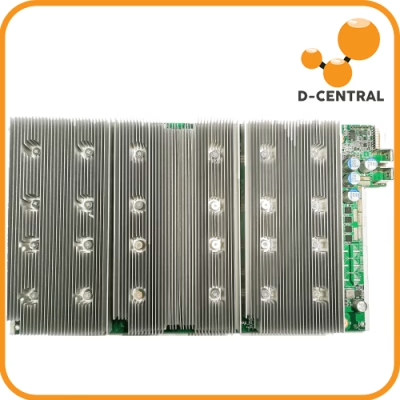
The reflexive response to aging hardware is to replace it. In a supply-constrained environment, that is the wrong instinct. A well-maintained Antminer with a repaired hashboard is worth far more than its scrap value — it is a producing asset that does not depend on new chip supply.
D-Central’s ASIC repair services exist precisely for this reason. We have been repairing miners since 2016, covering every major ASIC platform across Bitmain, MicroBT, Innosilicon, and Canaan. When chip supply tightens, repair capability becomes a strategic advantage, not just a service.
2. Diversify Your Hardware Strategy
Do not put all your hashrate in one generation of hardware. A balanced home mining operation might include:
| Hardware Tier | Role | Chip War Resilience |
|---|---|---|
| Current-gen ASIC (S21, M60) | Primary hashrate producer | Medium — affected by supply constraints |
| Previous-gen ASIC (S19, M30) | Workhorse + space heating | High — already manufactured, repairable |
| Open-source miners (Bitaxe, NerdAxe) | Solo mining + decentralization | Very High — individual chips, distributed supply |
| Refurbished units | Cost-effective hashrate expansion | Very High — no new fab capacity needed |
3. Embrace Open-Source Hardware
This is where the Mining Hacker philosophy meets geopolitical reality. Open-source miners like the Bitaxe use individual ASIC chips — BM1366, BM1368, BM1370 — rather than full custom hashboards. These chips are available through component markets and are less affected by equipment-level export controls.
The Bitaxe is not going to compete with an S21 on raw hashrate. That is not the point. The point is that open-source hardware represents a decentralized supply chain. Anyone can manufacture a Bitaxe. No single government can choke its supply. In a world where semiconductor access is weaponized, that matters.
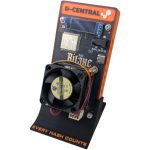
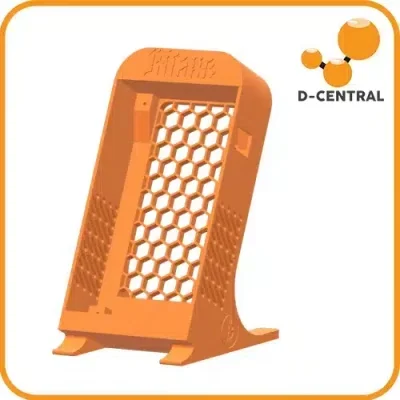
D-Central has been a pioneer in the Bitaxe ecosystem since the beginning — we created the original Bitaxe Mesh Stand and developed leading solutions for heatsinks, cases, and accessories. We stock every Bitaxe variant: Supra, Ultra, Hex, Gamma, GT, plus the full Nerd lineup (NerdAxe, NerdQAxe, NerdNOS, Nerdminer). Visit our Bitaxe Hub for the complete breakdown.
4. Leverage Dual-Purpose Mining
When hardware costs rise, you need to extract maximum value from every watt. Dual-purpose mining — using your ASIC’s waste heat to warm your home — fundamentally changes the economics. Your miner is not just a miner; it is a space heater that pays you Bitcoin.
In Canadian winters, this is not a novelty — it is a genuine economic advantage. Our Bitcoin Space Heaters (S9, S17, S19 editions) are engineered for exactly this use case. When your heating costs are going to be spent anyway, redirecting that spend through a Bitcoin miner is pure upside.
5. Consider Hosted Mining in Stable Jurisdictions
If you want to scale beyond what home mining allows but do not want to navigate hardware supply chains alone, hosted mining in a stable jurisdiction is worth considering. Canada — specifically Quebec — offers some of the cheapest and cleanest hydroelectric power on the continent, combined with regulatory stability and cold-climate cooling advantages.
D-Central operates hosting facilities in Quebec, purpose-built for Bitcoin mining. Learn more about our Bitcoin mining hosting in Canada.
The Canadian Advantage in a Fractured Chip Market
Canada occupies a unique position in the semiconductor wars. We are not a primary combatant — we do not manufacture advanced chips, and we are not the target of export controls. But we are a stable, rule-of-law jurisdiction with abundant cheap energy, cold climates ideal for mining, and proximity to the U.S. market.
For Bitcoin miners, this translates into:
- Regulatory stability — No mining bans, no sudden policy reversals
- Energy advantage — Quebec hydro rates among the lowest in North America
- Climate advantage — Cold air reduces cooling costs 6-8 months per year
- Supply chain access — Proximity to U.S. and global shipping lanes without being subject to U.S. export controls
As the semiconductor wars intensify and mining operations face increasing uncertainty in other jurisdictions, Canada’s advantages become more pronounced. We are the North, and in Bitcoin mining, that is a feature, not a limitation.
What Happens Next: Our Outlook
The semiconductor wars are not ending anytime soon. If anything, they are escalating. Here is what we expect:
ASIC prices will remain volatile. Supply chain disruptions create price spikes that can persist for months. Miners who can source reliably — through trusted resellers and repair services — will have a significant edge.
Efficiency gains will slow. The jump from 7nm to 5nm delivered roughly 30% efficiency improvement. The 5nm to 3nm jump will be smaller, and it may be delayed by foundry capacity constraints. This means current-generation hardware will remain competitive longer.
Open-source mining will grow. As centralized supply chains become political targets, decentralized alternatives gain strategic importance. The Bitaxe ecosystem is still early, but it represents the same ethos that drives Bitcoin itself — permissionless, censorship-resistant, and impossible to shut down.
Repair and refurbishment will become critical infrastructure. In a world where new hardware is scarce and expensive, keeping existing machines running is not just economical — it is essential for network security. Every repaired miner is hashrate that stays online.
The network hashrate currently exceeds 800 EH/s, and the block reward stands at 3.125 BTC. The machines securing this network are products of the same semiconductor supply chains being weaponized by governments. The Bitcoin network’s resilience depends on miners who can adapt — and that starts with understanding the battlefield.
Frequently Asked Questions
How do semiconductor export restrictions affect Bitcoin ASIC miners?
Semiconductor export controls — particularly U.S. restrictions on advanced chip fabrication equipment — can tighten the supply of Bitcoin ASIC miners by limiting the foundries and processes available to manufacturers like Bitmain, MicroBT, and Canaan. This can drive up hardware prices, extend lead times, and concentrate manufacturing in fewer regions. For home miners, the practical impact is higher prices and reduced availability of next-generation machines.
Will chip restrictions make Bitcoin mining less profitable?
Not necessarily. While hardware costs may rise, miners who already own equipment benefit from reduced competition entering the network. Fewer new machines deployed means slower hashrate growth, which can improve profitability for existing operators. The key is securing reliable hardware — through trusted resellers, refurbished units, or repair services — rather than waiting for the next generation.
What ASIC chip fabrication nodes are used in current Bitcoin miners?
Current-generation Bitcoin ASICs use 5nm processes (Bitmain S21 series, MicroBT M60 series) and some manufacturers are moving toward 3nm. The previous generation (S19 XP, M50 series) used 5nm. Older machines like the S19j Pro use Samsung 7nm. All of these rely on advanced foundry capacity primarily from TSMC and Samsung, making them sensitive to export controls on fabrication equipment.
Should home miners worry about semiconductor supply chains?
Yes, but the response should be strategic, not panicked. Home miners should diversify their hardware strategy: maintain and repair existing machines rather than always chasing new ones, consider open-source alternatives like the Bitaxe for solo mining, and work with trusted suppliers who can source reliably. D-Central’s ASIC repair services extend the productive life of machines you already own — that is chip war resilience.
How do open-source miners like the Bitaxe fit into the semiconductor picture?
Open-source miners like the Bitaxe use individual ASIC chips (such as the BM1366, BM1368, or BM1370) rather than full custom hashboards. These chips are more widely available through component markets and less affected by equipment-level export controls. The Bitaxe represents a decentralized approach to hardware — anyone can manufacture it, reducing dependence on a single supply chain. D-Central has been a pioneer in the Bitaxe ecosystem since the beginning.
Is D-Central affected by U.S. semiconductor restrictions?
As a Canadian company, D-Central is not directly subject to U.S. export controls. However, the global nature of semiconductor supply chains means indirect effects are real — tighter foundry capacity, longer lead times, and price volatility all ripple through the market. D-Central mitigates this through diversified sourcing, extensive repair capabilities that extend hardware life, and stocking open-source alternatives like the full Bitaxe lineup.
The semiconductor wars are a reminder that Bitcoin exists in the physical world. The network runs on silicon, copper, and electricity — all of which are subject to the same geopolitical forces that Bitcoin was designed to transcend. The answer is not to ignore these forces but to build resilience against them: decentralize your hardware, maintain what you have, and mine with purpose.
That is what Bitcoin Mining Hackers do. That is what D-Central has done since 2016. And that is what we will keep doing, regardless of which government decides to weaponize chip supply chains next.
Ready to build a chip-war-resilient mining operation? Browse our hardware, explore ASIC repair services, or dive into the Bitaxe Hub to get started.