Bitcoin mining is an arms race. Every generation of ASIC hardware promises more terahashes per watt, and the marketing machine behind new units wants you to believe that last year’s silicon is scrap metal. It is not. At D-Central Technologies, we have repaired, refurbished, and redeployed thousands of ASIC miners since 2016 — and the data tells a story the manufacturers would rather you ignore: a properly refurbished miner often delivers better value per hash than a brand-new unit sitting on a pallet.
This is not about cutting corners. This is about hacking the economics of Bitcoin mining so that individual, home-scale operators can compete with industrial farms. That is the Bitcoin Mining Hacker way.
What “Refurbished” Actually Means in ASIC Mining
The word “refurbished” gets abused. Some resellers slap a sticker on a dusty S9 and call it renewed. That is not what we do.
A D-Central refurbished miner goes through a multi-stage diagnostic and repair process:
- Full disassembly and inspection — every hashboard pulled, every connector checked, every fan tested.
- Component-level diagnosis — we use thermal imaging, oscilloscope probes, and ASIC chip testers to identify failed or degraded chips at the individual BM1397/BM1366/BM1368 level.
- Targeted repair — failed chips are replaced, solder joints reflowed, voltage regulators tested under load. We do not swap entire boards when a single chip is the problem.
- Firmware verification — stock or optimized firmware is flashed and verified. No mystery firmware, no hidden dev fees.
- Full burn-in test — every unit runs at rated hashrate for an extended period under real mining conditions before it ships.
The result? A machine that performs at or near factory spec, with the weak links already identified and fixed — something a brand-new unit fresh from Shenzhen cannot claim.
The Economics: Refurbished vs. New ASIC Miners
Here is where the math gets interesting. The table below compares typical scenarios for a home miner choosing between new and refurbished units (approximate figures as of early 2026):
| Factor | New Antminer S21 | Refurbished Antminer S19k Pro |
|---|---|---|
| Typical Price (CAD) | $4,500 – $6,000 | $800 – $1,400 |
| Hashrate | ~200 TH/s | ~120 TH/s |
| Wall Power | ~3,500 W | ~2,600 W |
| Efficiency (J/TH) | ~17.5 J/TH | ~21.5 J/TH |
| Cost per TH (upfront) | ~$22 – $30/TH | ~$7 – $12/TH |
| Dual-Use Potential (Heating) | Yes (3,500 W heater) | Yes (2,600 W heater) |
| Warranty | Manufacturer (limited) | D-Central tested & verified |
The new S21 is more efficient per terahash — nobody disputes that. But when you factor in upfront capital, the refurbished S19k Pro gives you hashrate at roughly one-third the cost per TH. For a home miner in Canada where electricity ranges from $0.04 to $0.12/kWh depending on province, the payback period on the refurbished unit is dramatically shorter.
And here is the detail most people miss: every watt your miner draws becomes heat. If you are running a miner as a Bitcoin space heater during our brutal Canadian winters, your electricity is not “wasted” — it is displacing your furnace. The efficiency gap between generations shrinks to near zero when the thermal output is the product.
Why Refurbished Miners Make Sense for Home Mining
Industrial mining farms optimize for one metric: joules per terahash. They run 24/7/365 in climate-controlled warehouses with sub-$0.03/kWh power contracts. For them, buying the latest generation makes financial sense because electricity cost dominates over hardware cost at scale.
Home miners operate under completely different constraints:
- Capital is limited — most pleb miners are not writing six-figure purchase orders. A $1,000 refurbished unit lets you start mining today instead of saving for months.
- Noise matters — older-gen units can be fan-modded or converted into space heater configurations with noise-dampening enclosures. Our Slim Edition, Pivotal Edition, and Loki Edition custom Antminer builds exist precisely for this use case.
- Heat is a feature — in Canada, you are heating your home 6-8 months of the year anyway. A refurbished miner running as a heater mines Bitcoin at an effective electricity cost of zero during heating season.
- Decentralization needs volume — one home miner running a refurbished S19 does more for Bitcoin’s decentralization than zero home miners waiting to afford an S21. The network needs hash rate distributed across jurisdictions, not concentrated in a handful of industrial parks.
What to Look for in a Refurbished ASIC Miner
Not all refurbished hardware is equal. Here is what separates a properly reconditioned miner from a gamble:
| Quality Indicator | What to Verify |
|---|---|
| Hashboard testing | All boards tested individually under load for 24+ hours. Seller should disclose per-board hashrate, not just aggregate. |
| Chip-level repair | Ask whether failed ASIC chips were replaced vs. entire board swaps. Chip-level repair signals deeper expertise. |
| Firmware integrity | Stock or known open-source firmware (Braiins OS, VNish). No mystery firmware with unknown dev fees. |
| Burn-in period | Unit should run at rated load for 24-72 hours before shipping. Infant mortality failures get caught here. |
| Thermal paste and pads | Fresh thermal interface material applied during refurbishment. Old paste degrades and causes thermal throttling. |
| Fan replacement | Fans are consumables. Refurbished units should ship with tested or new fans. |
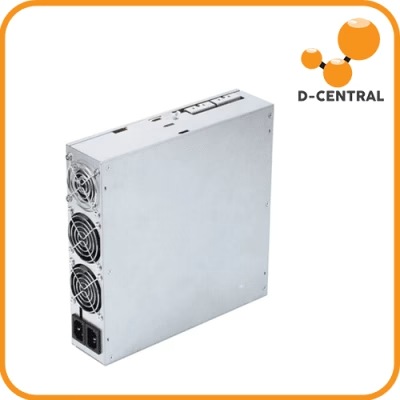
| Power supply included | Confirm whether PSU is included and tested. A bad APW power supply can damage a perfectly good miner. |
D-Central’s ASIC repair team handles all of this in-house at our facility in Montreal, Quebec. We have been doing component-level repair on Bitmain, MicroBT, Canaan, and Innosilicon hardware since 2016 — with 60+ model-specific repair procedures documented and refined over thousands of units.
Best Refurbished Models for Home Mining in 2026
The “best” refurbished miner depends on your electricity cost, noise tolerance, available amperage, and whether you intend to use the heat output. Here is a practical breakdown:
| Model | Hashrate | Power Draw | Best Use Case |
|---|---|---|---|
| Antminer S9 (various) | ~13.5 TH/s | ~1,300 W | Space heater conversion, ultra-low entry cost, learning platform |
| Antminer S17/S17+ | 53–73 TH/s | 2,100–2,900 W | Mid-tier home mining, solid efficiency for the price |
| Antminer S19/S19j Pro | 90–104 TH/s | 2,800–3,100 W | Serious home operations, excellent hashrate-per-dollar refurbished |
| Whatsminer M30S/M30S+ | 86–100 TH/s | 3,100–3,400 W | Reliable workhorse, good refurbished availability |
| Antminer S19k Pro | ~120 TH/s | ~2,600 W | Best efficiency in the refurbished tier, strong value |
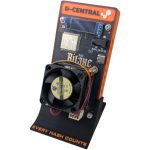
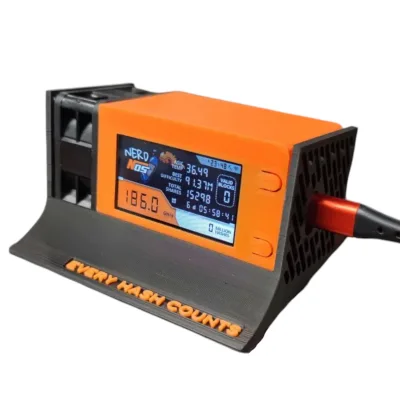
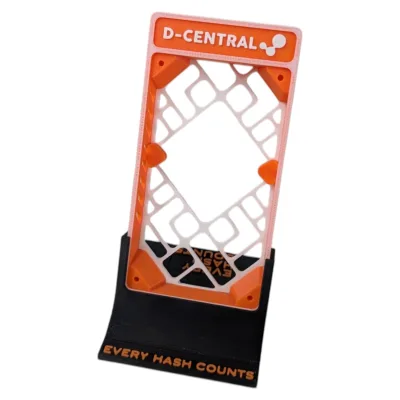
For miners drawn to open-source solo mining rather than full ASICs, the Bitaxe lineup offers a completely different approach — low-power, open-source, solo-block-hunting devices that let you participate in the network from a single ASIC chip. D-Central is a pioneer in the Bitaxe ecosystem, having created the original Bitaxe Mesh Stand and developed leading accessories including heatsinks and custom cases. Important hardware note: the Bitaxe Supra, Ultra, and Gamma use a 5V barrel jack (5.5×2.1mm) for power — not USB-C. The USB-C port is for firmware flashing only. The Bitaxe GT and Hex use 12V DC XT30 connectors.
These open-source miners complement a refurbished ASIC fleet perfectly — run a Bitaxe as your lottery ticket for a solo 3.125 BTC block reward while your refurbished S19 stacks steady sats through pool mining. Every hash counts.
Dual-Purpose Mining: Your Refurbished Miner Is a Heater
This is where the Bitcoin Mining Hacker philosophy truly shines. Every watt consumed by an ASIC miner becomes heat. Physics does not care whether you run a space heater or an Antminer S19 — both convert electricity to thermal energy at near-100% efficiency. The difference is that the Antminer also produces Bitcoin while it heats your space.
In Canada, where heating season runs from October through April (or longer depending on your province), this dual-purpose approach fundamentally changes the profitability math. Your electricity is not a “mining cost” — it is a heating cost that also mines Bitcoin. When you subtract the displaced heating expense, your effective mining cost plummets.
D-Central builds purpose-designed Bitcoin Space Heaters using both new and refurbished ASICs — S9, S17, and S19-based units enclosed in sound-dampened housings with ducting for clean heat distribution. These are refurbished miners taken to their logical conclusion: reliable, affordable heat that pays you back in sats.
The Decentralization Imperative
There is a deeper reason to mine Bitcoin at home with refurbished hardware that goes beyond economics: network decentralization.
Bitcoin’s security model depends on geographically and jurisdictionally distributed hash rate. The current network hashrate sits above 800 EH/s, with the block reward at 3.125 BTC. The vast majority of that hashrate is concentrated in a handful of large operations across a few countries. Every home miner who plugs in a refurbished ASIC and points it at a pool — or better yet, runs it solo — makes the network more resilient against state-level attacks, regulatory capture, and infrastructure failures.
Refurbished hardware is the most capital-efficient way to put more hash rate into more hands.
This is not abstract ideology. This is game theory. A network with 10,000 home miners running refurbished hardware across 50 countries is harder to attack than one with 20 mega-farms across 5 countries — even if the total hashrate is identical. When mining is concentrated in corporate facilities, it becomes a target for regulation, seizure, and coercion. When mining is distributed across thousands of basements, garages, and workshops, it becomes unstoppable.
This is why D-Central exists.
Environmental Reality: Sustainability Without the Greenwashing
Let us address the environmental narrative honestly.
Bitcoin mining converts electricity into network security. Whether that electricity comes from hydro, solar, wind, natural gas, or coal is a function of where the miner is located and what grid it draws from — not whether the hardware is new or refurbished.
That said, refurbished miners carry legitimate environmental advantages:
- Extended hardware lifecycle — keeping a working S19 out of e-waste for another 3-5 years is objectively better than scrapping it because a slightly more efficient model launched.
- Reduced manufacturing demand — every refurbished miner deployed is one fewer unit manufactured, shipped across the Pacific, and distributed through the supply chain.
- Heat recovery — Canada’s climate makes dual-purpose mining a no-brainer. A refurbished miner heating your workshop in January is not wasting energy — it is monetizing it.
- Accessible entry point — lower cost means more miners can participate using existing renewable energy surplus (rooftop solar, micro-hydro, excess wind capacity) without massive upfront investment.
We will not pretend that running a 2,600 W miner is “green” in some absolute sense. But in a Canadian home where that 2,600 W would otherwise go to an electric baseboard heater, the marginal environmental cost of mining is effectively zero — and you are stacking sats while staying warm.
Getting Started with a Refurbished Miner from D-Central
- Browse our shop — we stock refurbished Antminer S19 series, S17 series, and other models alongside new hardware. Every refurbished unit is tested at our Montreal, Quebec facility.
- Consider a space heater build — if noise is a concern, our Bitcoin Space Heater editions convert ASIC miners into whisper-quiet heating appliances. Refurbished base units keep the price accessible.
- Talk to our team — our mining consulting service can help you evaluate whether a refurbished unit fits your power situation, noise tolerance, and mining goals.
- Get repair support — already own an aging miner? Our ASIC repair service can bring it back to full spec instead of replacing it entirely.
- Explore hosting — if home mining is not feasible, our Quebec hosting facility runs on cheap hydro power. Deploy a refurbished unit there and mine without the noise or heat at home.
Frequently Asked Questions
Are refurbished ASIC miners reliable?
When properly refurbished — yes. A miner that has been through component-level diagnostics, chip replacement, fresh thermal paste, new fans, and a full burn-in test is arguably more reliable than a new unit straight from the factory. The weak points have already been found and fixed. D-Central has repaired thousands of units since 2016, and our refurbished miners go through the same rigorous testing pipeline as our retail repair service.
How much hashrate can I expect from a refurbished miner?
A properly refurbished miner should operate at or near its original factory hashrate. For example, a refurbished Antminer S19j Pro should produce approximately 100 TH/s, and an S19k Pro around 120 TH/s. Any reputable seller should disclose per-hashboard test results before shipping.
Is it better to buy a refurbished ASIC or a Bitaxe for solo mining?
They serve different purposes and many miners run both. A Bitaxe is a low-power solo mining device (5-25 W) — lottery-style mining where you are hoping to hit a full 3.125 BTC block reward. A refurbished ASIC like an S19 is a pool mining workhorse providing serious hashrate and steady sat accumulation. The Bitaxe handles the solo dream while the refurbished ASIC handles consistent production.
Can I use a refurbished miner as a space heater?
Absolutely. Every watt your miner draws is converted to heat with near 100% efficiency — thermodynamics is on your side. D-Central builds purpose-designed Bitcoin Space Heater editions using both new and refurbished base units, with noise-reducing enclosures and ducting for home integration. During Canadian winters, your mining electricity effectively costs zero because it displaces your heating bill.
What warranty comes with D-Central refurbished miners?
D-Central tests every refurbished unit at our Montreal, Quebec facility and stands behind the hardware we ship. Each unit comes with documented test results and hashrate benchmarks. We also offer ongoing ASIC repair services if issues arise down the road — something most resellers cannot provide because they lack in-house repair capability.
How long will a refurbished miner last?
ASIC miners are solid-state devices with no moving parts besides fans (which are replaceable). The ASIC chips themselves can run for 5-10+ years if thermal management is maintained. The most common failure points — fans, thermal paste degradation, solder joint fatigue — are all addressed during proper refurbishment. Many S9 units manufactured in 2017 are still hashing today after refurbishment.
How much electricity does a refurbished ASIC miner use?
Power consumption depends on the model. An Antminer S9 draws roughly 1,300 W, an S19j Pro around 3,100 W, and an S19k Pro about 2,600 W. In North America, full-size ASICs require 240V circuits with appropriate breaker sizing. At competitive Canadian hydro rates ($0.04-$0.07/kWh in Quebec), the operating cost is reasonable — and during heating season, that cost is offset by displaced heating expenses.
Does D-Central ship refurbished miners internationally?
Yes. We ship from Canada worldwide. Our primary markets are Canada and the United States, but we serve miners globally. All refurbished units are tested and packaged at our facility in Montreal, Quebec before shipping.