Quebec has long been one of the most attractive jurisdictions on the planet for Bitcoin mining. Cheap hydroelectric power, cold climates that slash cooling costs, and a regulatory environment that — while sometimes frustrating — has at least acknowledged that mining is a legitimate industrial activity. When a publicly traded company like SATO Technologies sets up shop in the province and starts scaling aggressively, it tells us something about the state of industrial mining in Canada and, more importantly, what it means for the home mining movement.
This is not a puff piece about SATO. This is an analysis of what their operations reveal about the economics, infrastructure, and future of Bitcoin mining in Quebec — and why home miners should be paying attention.
Who Is SATO Technologies?
SATO Technologies Corp. is a Quebec-based, publicly traded company operating in the Bitcoin mining space. They run mining infrastructure out of Joliette, Quebec, leveraging the province’s abundant hydroelectric power to run SHA-256 ASIC hardware at scale. The company has made headlines for refinancing agreements, capacity expansion plans, and their stated goal of reaching approximately 0.53 EH/s of self-mining capacity at their Center One facility.
For context, the Bitcoin network currently operates at over 800 EH/s total. A single operation at 0.53 EH/s represents a meaningful industrial deployment, but it is a fraction of the global hashrate. This matters because it illustrates a critical point: even well-funded, publicly traded companies with millions in financing control only a tiny slice of the network. The hashrate distribution is vast, and every participant — from industrial facilities down to a single Bitaxe running on a desk — contributes to the decentralization of Bitcoin’s security model.
Quebec’s Hydroelectric Advantage
Quebec generates over 95% of its electricity from hydropower. This is not a marketing talking point — it is a geological and infrastructural reality that makes the province one of the greenest energy grids on Earth. For Bitcoin miners, this translates to two concrete advantages:
1. Low energy costs. Quebec’s industrial electricity rates have historically been among the lowest in North America. While residential rates and special tariffs for mining operations have fluctuated due to regulatory changes, the fundamental cost structure remains favorable compared to regions dependent on natural gas or coal.
2. Environmental credibility. Every SHA-256 hash computed in Quebec is backed by renewable hydroelectric energy. In an era where Bitcoin’s energy consumption is constantly scrutinized, mining in Quebec provides a factual counter-narrative. The energy is clean. The infrastructure already exists. The dams are not being built for Bitcoin — Bitcoin is simply monetizing surplus capacity that would otherwise be curtailed or exported at low margins.
| Factor | Quebec | Texas | Kazakhstan |
|---|---|---|---|
| Primary Energy Source | Hydroelectric (95%+) | Natural Gas / Wind Mix | Coal / Natural Gas |
| Climate Cooling Benefit | Extreme (sub-zero winters) | Minimal (hot summers) | Moderate (continental) |
| Regulatory Stability | Moderate (moratoriums lifted) | Favorable but grid-dependent | Unstable (bans/restrictions) |
| Renewable Energy % | ~99% | ~30% | ~15% |
| Political Risk | Low | Low-Medium | High |
This table is not theoretical. These are the variables that determine whether a mining operation survives the next halving cycle or goes bankrupt. Quebec checks nearly every box.
What Industrial Mining Tells Us About Home Mining
Here is where most industry commentary gets it wrong. The existence of large-scale operations like SATO does not make home mining obsolete. It makes home mining more important.
When a company raises millions to purchase ASICs and deploy them in a single facility, they are concentrating hashrate. That concentration — no matter how well-intentioned the operator — creates a single point of failure. One regulatory change, one grid failure, one corporate decision, and that hashrate disappears from the network.
Home mining is the antidote to hashrate concentration.
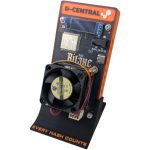
A Bitaxe running on your desk in Alberta. An Antminer S9 space heater warming your basement in Ontario. A NerdAxe sitting on a shelf in your garage in British Columbia. Each one of these devices adds hashrate to the network in a way that is geographically distributed, politically resilient, and individually sovereign. No single government, corporation, or catastrophe can take them all offline simultaneously.
This is the core thesis of decentralized mining, and it is the reason D-Central exists.
The Economics: Industrial vs. Home Mining
Let us be honest about the numbers. Industrial miners like SATO have advantages that home miners do not:
- Bulk hardware pricing — buying thousands of ASICs at once gets you better per-unit costs
- Negotiated power rates — industrial tariffs can be significantly lower than residential rates
- Dedicated infrastructure — purpose-built facilities optimized for airflow, power distribution, and uptime
- 24/7 maintenance staff — downtime is minimized with on-site technicians
But home miners have advantages that industrial operations never will:
| Advantage | Why It Matters |
|---|---|
| Dual-purpose heat recovery | Every watt consumed by your miner becomes heat for your home. In Canadian winters, this effectively subsidizes your mining operation by displacing electric heating costs. |
| Zero counterparty risk | Your hardware. Your keys. Your hashrate. No hosting contract, no corporate board, no shareholders making decisions about your mining operation. |
| Geographic distribution | Each home miner is a node of resilience in the Bitcoin network. No single point of failure can compromise thousands of independent operators. |
| Non-KYC Bitcoin acquisition | Mining is one of the few remaining ways to acquire Bitcoin without submitting to identity verification. Your miner, your sats, your sovereignty. |
| Solo mining lottery | A solo miner can hit a block worth 3.125 BTC. The odds are long, but the possibility is real — and it is entirely trustless. |
The industrial miners optimize for profit. Home miners optimize for sovereignty. Both are valid. But only one of them actually fulfills Bitcoin’s promise of decentralization.
The AI and HPC Narrative: A Bitcoiner’s Perspective
SATO Technologies, like many publicly traded mining companies, has leaned into the “convergence of Bitcoin mining, AI, and HPC” narrative. Let us be direct about what this means.
The core argument is that mining facilities — with their robust power infrastructure, cooling systems, and data center expertise — can pivot to serve AI and HPC workloads alongside Bitcoin mining. This is not wrong. The physical infrastructure overlaps are real. A facility designed to cool thousands of ASIC miners can absolutely host GPU clusters for machine learning training.
But here is the critical distinction that matters to Bitcoiners: Bitcoin mining is not a stepping stone to AI. It is a fundamental security mechanism for the most important decentralized monetary network ever created. When publicly traded companies frame Bitcoin mining as one vertical in a diversified “hashing industry,” they are often doing so to appeal to investors who find AI more palatable than Bitcoin’s cypherpunk ethos.
The technical reality is straightforward. An Antminer S21 computes SHA-256 hashes and nothing else — you cannot repurpose it for AI training. When these companies talk about “convergence,” they mean sharing the same power contracts, cooling infrastructure, and facility space between different hardware types. ASIC miners for Bitcoin. GPU clusters for AI. Same building, completely different machines.
| Aspect | Bitcoin Mining (ASICs) | AI/HPC (GPUs) |
|---|---|---|
| Hardware | SHA-256 ASICs (Antminer, Whatsminer) | NVIDIA H100/H200 GPUs, custom TPUs |
| Power Density | High (~3-3.5 kW per unit) | Very high (~5-10 kW per GPU server) |
| Cooling Requirements | Air or immersion cooling | Liquid cooling increasingly mandatory |
| Revenue Model | Block rewards (3.125 BTC) + transaction fees | Service contracts, cloud compute rentals |
| Revenue Predictability | Variable (difficulty, price, halving cycles) | More predictable (contracts, SLAs) |
| What They Share | Power delivery, cooling systems, physical security, network backbone, facility operations staff | |
As home miners and Bitcoin maximalists, we should view this trend with clear eyes. If industrial miners pivot hashrate away from Bitcoin to chase AI margins, the network does not collapse — it adjusts difficulty downward. But the narrative matters because it reflects where institutional capital prioritizes its attention. And that is precisely why grassroots, sovereign mining matters more than ever.
Quebec’s Regulatory Landscape for Miners
Quebec has had a complicated relationship with Bitcoin mining. In 2018, Hydro-Quebec imposed a moratorium on new mining operations, concerned about the surge in electricity demand. That moratorium has since been lifted, and the province has developed a more nuanced framework for allocating power to mining operations.
For industrial operators like SATO, this means navigating tariff structures, power allocation processes, and municipal regulations. For home miners in Quebec, the situation is simpler: residential electricity rates apply, and running a miner at home is no different from running any other electrical appliance. There are no permits required to plug in a Bitaxe or an Antminer in your basement.
That said, Quebec’s residential electricity rates — while higher than industrial rates — are still among the lowest in North America. At roughly 7-8 cents CAD per kWh for most residential consumers, Quebec remains an excellent location for home mining, particularly when you factor in heat recovery during the province’s brutal winters.
D-Central operates its hosting facility in Quebec for exactly these reasons. The combination of cheap, clean hydroelectric power and cold climate creates an environment where Bitcoin mining is not just viable — it is optimal.
Lessons for Home Miners
What can you take away from SATO’s story and the broader Quebec mining ecosystem? Here are the practical lessons:
1. Location matters, but it is not everything. Quebec’s advantages are real, but home miners everywhere can compete by leveraging heat recovery, off-peak rates, and renewable energy sources like solar.
2. Self-mining is sovereignty. SATO’s plan to move from hosted mining to self-mining at their own facility mirrors what home miners already do by default. You own the hardware, you control the hashrate. That is the model.
3. The halving cycle rewards efficiency. With the block reward now at 3.125 BTC, only the most efficient operations survive. For home miners, efficiency means dual-purpose heat recovery, low-cost power, and hardware that is properly maintained. This is why ASIC repair skills and access to repair services matter — keeping older hardware running at peak efficiency extends its profitable life.
4. Every hash counts. Whether you are running 0.53 EH/s at an industrial facility or 500 GH/s on a Bitaxe at your kitchen table, you are contributing to Bitcoin’s security. The network does not care about your scale. It cares that you showed up.
5. Diversification is not decentralization. When companies diversify into AI and HPC, they are hedging their bets. When you run a miner at home, you are making a statement about what you believe in. That is a fundamentally different posture.
The Bigger Picture: Why Canada Needs More Home Miners
Canada has every natural advantage for Bitcoin mining: abundant renewable energy, cold climate, stable political system, and strong property rights. But the Canadian mining scene is still dominated by industrial operations. The home mining community, while growing, is small relative to the opportunity.
This needs to change. Every home miner in Canada is a vote for decentralization. Every Bitaxe plugged into a wall outlet in Montreal, every space heater warming a living room in Calgary, every NerdAxe running in a condo in Vancouver — these are the building blocks of a truly distributed Bitcoin mining network.
D-Central has been building tools and infrastructure for this community since 2016. From open-source solo miners like the Bitaxe to Bitcoin space heaters that turn mining waste heat into home comfort, to professional ASIC repair services that keep older hardware running — the mission has always been the same: decentralize every layer of Bitcoin mining and put the power back in the hands of individuals.
The industrial miners will build their facilities and chase their margins. That is fine. But the soul of Bitcoin mining lives in the homes, garages, and basements of sovereign individuals who understand that securing the network is not just a business — it is a responsibility.
FAQ
What is SATO Technologies and what do they do?
SATO Technologies Corp. is a publicly traded, Quebec-based company that operates Bitcoin mining infrastructure. They run ASIC mining hardware at their Center One facility in Joliette, Quebec, leveraging the province’s hydroelectric power. They have also expressed interest in expanding into AI and HPC workloads using their existing data center infrastructure.
Why is Quebec a good location for Bitcoin mining?
Quebec generates over 95% of its electricity from hydropower, making it one of the cleanest energy grids in the world. The province offers low electricity rates, cold winters that reduce cooling costs, a stable political environment, and strong infrastructure. These factors combine to make Quebec one of the most competitive Bitcoin mining jurisdictions globally.
Can I mine Bitcoin at home in Quebec?
Yes. Home mining in Quebec is straightforward — there are no special permits required to run a Bitcoin miner in your residence. You pay standard residential electricity rates, which in Quebec are among the lowest in North America at roughly 7-8 cents CAD per kWh. Combined with heat recovery during winter months, home mining in Quebec can be highly effective.
Does industrial mining threaten home miners?
No. Industrial mining and home mining serve different purposes. Industrial operations optimize for profit margins and scale. Home mining optimizes for sovereignty, decentralization, and dual-purpose heat recovery. The Bitcoin network benefits from both, but home mining provides geographic distribution and censorship resistance that industrial facilities cannot.
What is the current Bitcoin block reward?
As of the most recent halving in April 2024, the Bitcoin block reward is 3.125 BTC per block. This reward is halved approximately every four years (every 210,000 blocks), making mining efficiency increasingly important over time.
What hardware do I need to start mining Bitcoin at home?
The entry point depends on your goals. For solo mining with minimal investment, a Bitaxe (powered via a 5V barrel jack PSU — not USB-C, which is for firmware flashing only) offers a compact, open-source option. For dual-purpose heat recovery, a Bitcoin space heater built from an Antminer S9 or S19 can heat a room while mining. For more serious hashrate, newer-generation ASICs like the Antminer S21 deliver the best efficiency per watt.
How does D-Central support home miners in Canada?
D-Central Technologies has been serving the home mining community since 2016. The company offers a full catalog of open-source miners (Bitaxe, NerdAxe, NerdQAxe), Bitcoin space heaters for dual-purpose heating and mining, professional ASIC repair services for all major manufacturers, mining consulting, and hosting services in Quebec. D-Central is a pioneer in the Bitaxe ecosystem, having created the original Bitaxe Mesh Stand and developed leading Bitaxe accessories including heatsinks and custom cases.