The Hashrate Map Is Shifting — And That Should Concern Every Bitcoiner
The United Arab Emirates has positioned itself as one of the fastest-growing Bitcoin mining jurisdictions on the planet. Massive state-backed facilities, sovereign wealth fund partnerships, and hundreds of megawatts of dedicated mining capacity have made the UAE a significant node in the global hashrate map.
On the surface, this looks like progress. More hashrate, more security, more adoption. But peel back a layer and the picture gets more complicated. When you analyze where hashrate concentrates and who controls it, the UAE’s mining surge raises questions that every Bitcoiner — especially those of us who care about decentralization — needs to confront.
At D-Central Technologies, we have been building Bitcoin mining infrastructure since 2016. We repair ASICs, manufacture open-source miners, and operate hosting out of Quebec. Our perspective on global hashrate distribution is shaped by one principle: decentralization is not optional — it is the entire point.
UAE Mining by the Numbers: Scale and Ambition
The numbers coming out of the UAE are hard to ignore. Marathon Digital’s partnership with Zero Two — the digital asset arm of an Abu Dhabi sovereign wealth fund — produced a 250 MW mining campus. Phoenix Group’s IPO on the Abu Dhabi Stock Exchange was oversubscribed, pulling in $370 million in capital. The country’s operational capacity is estimated at roughly 3-4% of the global Bitcoin hashrate.
For context, the Bitcoin network currently operates at approximately 800+ EH/s, with block rewards at 3.125 BTC following the April 2024 halving. Network difficulty sits above 110 trillion. At these levels, every percentage point of global hashrate represents enormous capital expenditure, energy consumption, and strategic intent.
| Metric | Value (2026 est.) |
|---|---|
| Global Bitcoin Hashrate | ~800+ EH/s |
| Block Reward | 3.125 BTC |
| Network Difficulty | 110T+ |
| UAE Estimated Hashrate Share | ~3-4% |
| UAE Mining Capacity (Marathon + Phoenix) | 250+ MW |
| Phoenix Group IPO Capital Raised | $370M |
These are not hobbyist numbers. This is nation-state-scale mining infrastructure, bankrolled by some of the wealthiest sovereign entities on Earth.
The Decentralization Problem With Geographic Concentration
Bitcoin’s security model depends on hashrate being distributed across jurisdictions, operators, and energy sources. When mining concentrates in any single region — whether it was China pre-2021, the United States post-2021, or now the Middle East — the network’s censorship resistance weakens.
The UAE’s mining growth illustrates a pattern we have seen before: capital-rich, regulation-light jurisdictions attract industrial miners who optimize for cost, not for network health. Free trade zones with zero corporate tax. Sovereign wealth fund backing that eliminates financing risk. Abundant energy from nuclear and solar megaprojects. It is a rational economic play. But rational economics and decentralization often pull in opposite directions.
Consider the risks:
- Regulatory capture: When a sovereign wealth fund finances your mining operation, you mine at the pleasure of that government. Hashrate funded by state capital is hashrate that can be redirected, throttled, or seized by political decree.
- Geographic single points of failure: A 250 MW campus in Abu Dhabi is an impressive engineering achievement — and a single point of failure. Regional instability, energy policy changes, or sanctions could take that hashrate offline overnight.
- Transaction censorship potential: Concentrated hashrate in jurisdictions with opaque governance structures creates the conditions for transaction-level censorship, even if no such censorship exists today.
This is not theoretical paranoia. China controlled over 65% of Bitcoin’s hashrate before the 2021 mining ban. That ban proved both the risk of concentration and Bitcoin’s resilience — hashrate migrated, the network survived, and difficulty adjusted. But it also proved that geographic diversification of mining is a national security issue for Bitcoin itself.
Why Canada Keeps Winning the Long Game
While the UAE builds mega-facilities in the desert, Canada quietly holds some of the strongest structural advantages for Bitcoin mining on the planet. At D-Central, we are obviously biased — but the data backs it up.
| Factor | UAE | Canada |
|---|---|---|
| Climate | Extreme heat (40-50°C summers) | Cold climate = free cooling 6-8 months/year |
| Cooling Costs | Immersion cooling required ($$$) | Ambient air cooling most of the year |
| Primary Energy | Solar + nuclear (growing) | Hydroelectric (established, cheap, green) |
| Energy Cost | Competitive but variable | Quebec hydro: among lowest in North America |
| Political Stability | Stable but autocratic governance | Democratic, rule of law, property rights |
| Regulatory Framework | Free zones with incentives | Clear legal framework, no mining bans |
| Dual-Purpose Mining | Heat is a liability | Heat is an asset (space heating 6+ months) |
| Home Mining Viability | Not practical (heat, cost, regulations) | Ideal conditions for pleb miners |
The Canadian advantage is not just about cheap hydro — though Quebec’s hydroelectric rates are among the lowest in North America. It is about thermodynamic efficiency. In the UAE, every watt of mining generates waste heat that must be actively removed at additional energy cost. In Canada, that same waste heat replaces your furnace for half the year. A Bitcoin space heater does not just mine — it heats your home, turning an operating cost into a dual-purpose investment.
This is why Canadian mining has structural advantages that no amount of sovereign wealth fund capital can replicate. You cannot buy cold weather. You cannot subsidize thermodynamics.
The Home Mining Counterweight
The UAE’s mining story is an institutional story — sovereign funds, publicly traded mining companies, hundred-megawatt campuses. There is nothing inherently wrong with institutional mining. But if institutional mining is the only mining, Bitcoin has a problem.
The antidote to geographic and institutional concentration is home mining. Tens of thousands of individual operators running miners in their basements, garages, and spare rooms. Each one a tiny, uncensorable node of hashrate that no government can seize and no corporation can shut down.
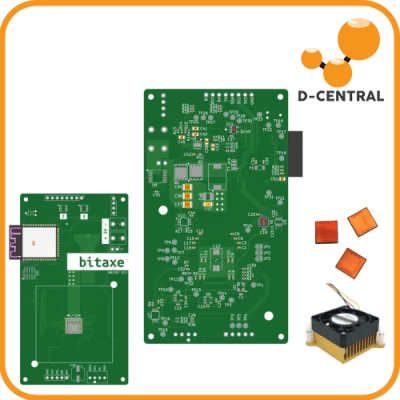
This is why we build what we build at D-Central. Open-source miners like the Bitaxe put hashrate in the hands of individuals. Every hash counts — not because a single Bitaxe will out-compete a 250 MW facility, but because distributed hashrate is resilient hashrate. A million home miners running at 500 GH/s each represent more censorship resistance than a single facility running at 500 PH/s.
Solo mining is not about profit optimization. It is about participating in the network’s security model directly. It is about the non-zero probability that your miner finds a block and you earn that 3.125 BTC reward without any intermediary taking a cut. And more importantly, it is about ensuring that no single jurisdiction — whether the UAE, the United States, or anywhere else — can claim a monopoly on Bitcoin’s consensus mechanism.
Energy Narratives: Solar Deserts vs. Hydro Rivers
The UAE makes a compelling energy argument: massive solar installations in one of the sunniest places on Earth, supplemented by the 5.4 GW Barakah Nuclear Power Plant. On paper, this is clean, abundant energy.
But the reality is more nuanced. Solar energy in the desert faces dust degradation, extreme heat derating (solar panels lose efficiency as temperatures rise), and intermittency that requires either battery storage or gas backup — both of which add cost and complexity. Nuclear is baseload and reliable but carries its own political and operational risks.
Compare this to Quebec’s hydroelectric grid: 99% renewable, baseload-reliable, and operating at some of the lowest electricity rates in the industrialized world. Hydro does not derate in summer heat. It does not require dust cleaning. It does not need battery storage for baseload operation. It has been running for decades and will keep running for decades more.
For home miners, Canada’s energy story gets even better. Rooftop solar combined with home mining creates a micro-grid where excess solar production gets converted directly into Bitcoin — no grid export, no net metering bureaucracy, just photons to satoshis. In winter, the miner’s heat output supplements your home heating system, and grid hydro power keeps the miner running at rock-bottom rates.
Lessons From the UAE’s Mining Boom
Credit where it is due: the UAE has executed well on its Bitcoin mining strategy. The regulatory clarity within free trade zones, the willingness to deploy sovereign capital, and the infrastructure buildout have been impressive. Other nations should take note — if you create favorable conditions for Bitcoin mining, miners will come.
But there are lessons for the Bitcoin community as well:
- Hashrate follows incentives, not ideology. Miners go where electricity is cheap and regulation is friendly. If we want hashrate to be distributed, we need favorable mining conditions in many jurisdictions, not just a handful.
- State-backed mining is a double-edged sword. Government support makes mining economically attractive. Government control makes it politically vulnerable. The two are inseparable.
- Cooling is the hidden variable. The UAE spends heavily on immersion cooling to manage desert heat. Canada spends nothing on cooling for most of the year. Over the lifetime of mining hardware, this cost differential compounds significantly.
- The decentralization mission requires individual participation. Institutional mining will always exist, and it serves a purpose. But the censorship resistance that makes Bitcoin valuable depends on hashrate that no single entity controls. Choosing the right mining pool and running your own hardware matters.
Where D-Central Fits In This Picture
We are not competing with 250 MW sovereign-funded mining campuses. That is not our game. Our game is decentralization at the individual level — putting mining capability into the hands of Canadians and Bitcoiners worldwide who believe that hashrate should be distributed, not concentrated.
We do this by:
- Manufacturing and stocking open-source miners — Bitaxe, NerdAxe, NerdQAxe, and the entire ecosystem of solo mining hardware
- Repairing ASICs — extending the life of mining hardware through expert repair services, keeping more hashrate online and out of landfills
- Building Bitcoin space heaters — dual-purpose mining that turns waste heat into home heating, making mining economically viable even at home electricity rates
- Operating hosting in Quebec — for miners who want institutional-grade uptime powered by some of the cleanest, cheapest electricity on Earth
The UAE’s mining growth is a data point in a larger story. That story is about who controls Bitcoin’s hashrate, where it lives, and whether the network remains truly decentralized. We know which side of that story we are on.
FAQ
How much of Bitcoin’s hashrate does the UAE control?
Current estimates place the UAE’s share of global Bitcoin hashrate at approximately 3-4%. This is primarily driven by large-scale operations backed by sovereign wealth funds and publicly traded mining companies like Phoenix Group, operating facilities with 250+ MW of combined capacity.
Why is geographic concentration of hashrate a problem for Bitcoin?
Bitcoin’s censorship resistance depends on hashrate being distributed across multiple jurisdictions, operators, and energy sources. When mining concentrates in any single region, it creates vulnerability to regulatory action, political instability, or coordinated censorship. The 2021 China mining ban demonstrated both the risk and Bitcoin’s resilience through hashrate migration.
What advantages does Canada have over the UAE for Bitcoin mining?
Canada offers cold climate (free cooling 6-8 months per year), cheap and abundant hydroelectric power (Quebec rates are among the lowest in North America), political stability with strong property rights, a clear legal framework, and the unique dual-purpose mining opportunity where ASIC waste heat replaces home heating costs during winter months.
Can home miners actually make a difference against industrial-scale operations?
Individual home miners contribute modest hashrate compared to industrial facilities. However, the value of home mining lies in decentralization, not raw hashrate competition. Thousands of independent operators distributed across many jurisdictions create censorship-resistant hashrate that no single entity can control or shut down. Every hash genuinely counts toward network security.
What is dual-purpose mining and why does it matter?
Dual-purpose mining uses the waste heat from ASIC miners to heat living or commercial spaces. In cold climates like Canada, this effectively turns the energy cost of mining into a heating expense you would have paid anyway, dramatically improving mining economics. Bitcoin space heaters are purpose-built for this application, making home mining viable even at residential electricity rates.
How does the UAE cool its mining operations in desert heat?
UAE mining operations rely heavily on immersion cooling, where mining hardware is submerged in thermally conductive, electrically insulating fluid. Some operations also use strategic underclocking during peak heat periods. These cooling requirements add significant capital and operational expense compared to air-cooled operations in cold climates.
Is solo mining still worthwhile in 2026 with difficulty above 110 trillion?
Solo mining with small devices like the Bitaxe is not primarily about expected profit — it is about direct participation in Bitcoin’s consensus mechanism with a non-zero chance of earning the full 3.125 BTC block reward. For many Bitcoiners, the sovereignty of mining without intermediaries and contributing to hashrate decentralization is the point. Every hash you produce is a hash that no institution controls.