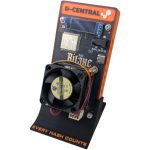
Somewhere in a basement, a garage, or a spare bedroom, a small device hums quietly. It draws less power than a lightbulb. Its hashrate is a rounding error compared to the industrial mining farms that dominate the Bitcoin network. And yet — against odds that would make any statistician wince — that tiny machine finds a valid Bitcoin block. The miner wakes up to 3.125 BTC in their wallet. At current prices, that is over $200,000. This is not fantasy. It has happened. Multiple times. And it keeps happening.
This is the compilation of real solo mining success stories — documented, verified, and celebrated by the Bitcoin community. These are the Davids who toppled Goliaths, the lottery winners who bought the right ticket, the home miners who proved that in Bitcoin, every hash truly counts.
The Dream of Solo Mining
In Bitcoin mining, there is pool mining and there is solo mining. Pool mining is the sensible path: you combine your hashrate with thousands of other miners, find blocks together, and split the rewards proportionally. You earn small, steady sats. It is the paycheck model — reliable, predictable, rational.
Solo mining is the other path. The one less traveled. The one that makes no financial sense on paper. You point your miner at the network alone, submit hashes by yourself, and wait. You earn nothing — absolutely zero — until you find a block. When you do, you keep the entire reward: the 3.125 BTC block subsidy plus all the transaction fees bundled in that block. At today’s prices, a single block is worth roughly $200,000 to $220,000, sometimes more depending on fees.
The lottery analogy is inevitable and accurate. Solo mining with a small device is like buying a lottery ticket every ten minutes. The odds of winning on any given draw are astronomically small. But unlike a government lottery, the Bitcoin lottery is provably fair. Nobody rigs it. No house edge slowly drains your bankroll. The math is transparent, and the randomness is real. Every single hash has the same infinitesimal chance of being the one — the hash that falls below the target difficulty and earns the right to write the next page in Bitcoin’s immutable ledger.
For many Bitcoiners, solo mining is not really about the money. It is about sovereignty. It is about the principle that any individual, anywhere, with any amount of hashrate, can participate directly in securing the Bitcoin network. It is about the dream of finding a block — the ultimate achievement in Bitcoin mining. And for a growing number of home miners, that dream has become reality.
To understand your own odds and what it takes, check out our Solo Mining Probability Calculator — it puts the math into perspective better than any analogy ever could.
Notable Bitaxe Block Finds: Open-Source Hardware Makes History
The Bitaxe is an open-source, single-chip Bitcoin miner. It is small enough to fit in your palm, draws around 15 to 25 watts, and hashes at roughly 500 GH/s to 1.2 TH/s depending on the model. For context, the total Bitcoin network hashrate in early 2026 exceeds 1,000 EH/s — that is over one billion times more powerful than a single Bitaxe. A Bitaxe competing against the global network is like a rowboat racing an aircraft carrier fleet across the Pacific.
And yet, Bitaxe miners have found blocks. Multiple blocks. Verified on-chain, celebrated worldwide, and permanently etched into Bitcoin’s blockchain.
Block #853,742 — The One That Started It All (July 24, 2024)
On July 24, 2024, the Bitcoin mining world was stunned. A Bitaxe Supra — running at approximately 500 GH/s — found Bitcoin block #853,742 through Solo CKPool. The miner earned approximately 3.15 BTC, worth around $200,000 at the time.
Let that sink in. A device consuming less power than a desk lamp, costing a couple hundred dollars, competing against billions of dollars worth of industrial mining hardware spread across massive data centers worldwide — and it won. It found a valid block before every Antminer S21, every Whatsminer M60, every rack of machines in every mining warehouse on the planet.
The news exploded across Bitcoin Twitter (now X), Reddit, and every mining community forum. This was not just a lucky break — it was a statement. Open-source hardware, built by the community for the community, had just earned a full block reward. The cypherpunk dream was alive and hashing.
Block #887,212 — The Cluster Strike (March 10, 2025)
On March 10, 2025, it happened again. This time, a miner running a small cluster of six Bitaxe Ultra units — combining for approximately 3.3 TH/s of hashrate — found block #887,212 via Solo CKPool. The reward: approximately 3.15 BTC, worth around $250,000 at the time.
What made this find remarkable was the setup. Six small open-source miners, probably arranged on a desk or shelf, running 24/7 with a combined power draw of maybe 90 watts. Less electricity than a gaming console. This was not a mining farm — it was a home mining project, a hobby setup that paid off in spectacular fashion.
The community reaction was electric. If one Bitaxe finding a block was an anomaly, two was a trend. Solo mining with open-source hardware was not a joke. It was a legitimate, if improbable, path to a full block reward.
Block #889,975 — The Stock Gamma Win (March 2025)
Later in March 2025, a solo miner running a stock Bitaxe Gamma — producing approximately 1.2 TH/s at just 18 watts — captured block #889,975, earning 3.149 BTC including transaction fees. This was the third confirmed Bitaxe block, and it came less than three weeks after the second.
The Gamma find was particularly meaningful to the community because it was a single, unmodified, off-the-shelf Bitaxe. No cluster. No overclocking. Just one small device, plugged in, pointed at Solo CKPool, and left to do its thing. It demonstrated that you did not need a sophisticated setup or technical wizardry — just patience and a willingness to roll the cosmic dice.
Block #924,569 — Six Gammas, One Dream (November 21, 2025)
On November 21, 2025, another cluster of Bitaxe Gamma 602 miners — six units hashing at approximately 1.0 to 1.2 TH/s each, for a combined ~5.4 TH/s — solved block #924,569 through Solo CKPool. The reward: 3.08 BTC, approximately $266,000.
By this point, the interval between open-source block finds was accelerating. What started as a once-in-a-lifetime miracle was beginning to look like something more: a movement. More Bitaxe devices were running on Solo CKPool, more home miners were participating in the lottery, and the law of large numbers was starting to work in the community’s favor.
The NerdQAxe Joins the Party
Bitaxe was not the only open-source hardware making waves. On September 5, 2025, a NerdQAxe++ submitted the winning hash for block #913,272 — though this one came through Ocean Mining‘s pool, so the reward was distributed among all pool participants rather than kept by the solo miner. Still, it marked the first confirmed block contribution by a NerdQAxe device.
Then, on October 27, 2025, a NerdQAxe++ Rev 6 cluster — running approximately 130 TH/s through a self-hosted Public Pool instance — found block #920,440, earning approximately 3.15 BTC worth roughly $342,000. This was the largest confirmed payout to a home miner using open-source hardware.
Across all confirmed open-source block finds, the combined payouts have exceeded $1 million in BTC rewards. Open-source mining hardware has proven that it belongs on the network — not just as a statement piece or educational toy, but as a legitimate participant in Bitcoin’s block production.
Notable Small Miner Block Finds: The CKPool Solo Chronicles
Open-source miners like Bitaxe grab the headlines because of their impossibly small hashrates, but they are far from the only solo miners winning blocks. Across Solo CKPool — the anonymous solo mining pool created by legendary Bitcoin developer Con Kolivas — individual miners with traditional ASIC hardware have been finding blocks at a remarkable pace.
In a rolling 12-month period through early 2026, solo miners through CKPool found approximately 22 verified blocks — an average of roughly one solo block every 15 to 16 days. The total rewards distributed exceeded 69 BTC. These were not mining farms. These were individuals, many running a single ASIC miner at home, who decided to try their luck.
The 6 TH/s Wonder (November 23, 2025)
On November 23, 2025, a solo miner contributing just 6 TH/s through CKPool found a block. To put that hashrate in context: 6 TH/s is roughly what an aging Antminer S9 produces. CKPool creator Con Kolivas noted that a miner of this size had approximately a 1 in 170 million chance of finding a block on any given day. The miner beat those odds and claimed the full reward.
This is the kind of story that keeps the solo mining dream alive. An S9-class miner — hardware that many consider obsolete, that large farms have decommissioned or sold for scrap — finding a full Bitcoin block worth hundreds of thousands of dollars.
The 1-in-180-Million Shot
In another remarkable instance reported by CKPool, a solo miner contributing approximately 0.0000007% of the total Bitcoin network hashpower discovered a block. Con Kolivas himself highlighted the achievement, noting the miner had roughly a “1 in 180 million chance of solving a block each day.” The miner collected the full block reward — subsidy plus transaction fees — minus CKPool’s modest 2% service fee.
The FutureBit Apollo Win (January 30, 2025)
On January 30, 2025, a lone FutureBit Apollo rig — a compact, quiet, desktop Bitcoin miner — processed block #881,423 at 01:01 UTC, securing 3.15 BTC worth approximately $326,000. The FutureBit Apollo is another small-form-factor miner popular with home miners, and its block find added to the growing evidence that small miners are a legitimate force on the network.
Block #932,129 — Into 2026 (January 13, 2026)
The solo mining streak continued into 2026. On January 13, a solo miner solved block #932,129, delivering 3.155 BTC — approximately $291,555 — to an unknown miner. The identity remains anonymous, as is tradition in solo mining. What we know is this: against a network difficulty exceeding 100 trillion and a total hashrate above 1,000 EH/s, a single miner found the needle in the haystack.
These stories are not isolated anomalies. They represent a consistent pattern: given enough time and enough participants, solo mining produces winners. The question is not if someone will find a block solo mining — it is when and who.
The Mathematics of Hope: Why Improbable Does Not Mean Impossible
Every solo mining success story prompts the same question: what are the actual odds? The math is straightforward but humbling. Your probability of finding a block in any given time period is simply your hashrate divided by the total network hashrate, multiplied by the number of blocks produced in that period (approximately 144 per day).
Here is what the math looks like for different hardware, assuming a network hashrate of approximately 1,000 EH/s (1 ZH/s) as of early 2026:
Bitaxe (~800 GH/s to 1.2 TH/s)
At 1 TH/s against a 1,000 EH/s network, your share of the network hashrate is 0.0000001%. The expected time to find a block: approximately 19,000 years. Yes, nineteen thousand years. On any given day, your probability of finding a block is roughly 1 in 7 million. On any given hour, it drops to about 1 in 168 million.
And yet — as documented above — Bitaxe miners have found blocks. Because probability is not destiny. Every hash is an independent event. Your millionth hash has the same chance of being valid as your first. The universe does not keep a tally of how long you have been waiting.
NerdQAxe++ (~2 to 5 TH/s)
At 3 TH/s, the expected time drops to roughly 6,300 years. Still comically long in human terms. But with thousands of these devices running simultaneously across the community, the collective expected time between finds shrinks dramatically — which is exactly why we have seen multiple open-source block finds in recent months.
Antminer S19 (~100 TH/s)
With 100 TH/s, the expected time to find a block is approximately 190 years. Still a long shot for any individual miner, but the odds start to feel more tangible. Run ten S19s and you are looking at ~19 years expected time. Run a hundred and it is roughly two years. This is the range where solo mining transitions from “cosmic miracle” to “improbable but plausible within a lifetime.”
Antminer S21 (~200 TH/s)
At 200 TH/s, a single S21 has an expected time of approximately 95 years. A pair of S21s brings it to ~48 years. With the latest generation hardware, the expected time to solo mine a block as a home miner — while still measured in decades — enters the realm of “within a human lifetime.”
Why Variance Is Everything
Here is the critical insight that makes solo mining stories possible: the expected time is an average. It is not a guarantee. It is not a countdown timer. Mining follows a Poisson distribution, which means there is enormous variance around the expected value.
A miner with a 19,000-year expected time could find a block in the first hour. Statistically improbable? Absolutely. Impossible? No. And when millions of hashes are being computed every second by thousands of solo miners around the world, improbable events happen. They happen regularly. They are, in fact, expected to happen — just not to any specific individual.
This is the mathematics of hope. Not blind optimism, but clear-eyed understanding that in a system governed by randomness, every participant has a chance. For a deep dive into the numbers specific to your setup, use our Solo Mining Probability Calculator.
How They Did It: The Common Setup Behind Solo Block Finds
Every solo mining success story shares a few common elements. There is no secret sauce, no exploit, no trick. The recipe is disarmingly simple.
Solo CKPool: The Home of Solo Mining
The vast majority of documented solo block finds have come through Solo CKPool (solo.ckpool.org), created and maintained by Con Kolivas — a name well known in the Linux kernel and Bitcoin mining communities. Solo CKPool works differently from traditional mining pools:
- You connect your miner to Solo CKPool just like any pool
- Your miner submits work (hashes) to the pool
- If your miner finds a valid block, the coinbase transaction pays your Bitcoin address directly
- Solo CKPool takes a 2% fee from the block reward
- If you do not find a block, you earn nothing — there is no reward sharing
It is as close to “solo mining” as you can get without running your own Bitcoin node and block template construction. CKPool handles the infrastructure; you provide the hashrate and the luck.
Some miners have also used Public Pool (a self-hosted stratum server) and Ocean Mining for similar purposes, though the mechanics and fee structures vary. For a full comparison of your options, see our guide on Pool Mining vs Solo Mining.
Running 24/7: Patience as Strategy
Every solo miner who found a block had one thing in common: their machine was running. That sounds obvious, but it is the most important factor. Solo mining is a volume game — every hash counts, and every hour your machine is off is an hour where it cannot get lucky.
The Bitaxe miners that found blocks were not overclocked to dangerous levels or modified with exotic cooling. They were stock or near-stock devices, plugged in, connected to WiFi, pointed at Solo CKPool, and left to run. Day after day. Week after week. Month after month. Until one day, the cosmic dice landed right.
The Setup Is Simple
The typical solo mining setup that has produced block finds looks like this:
- Hardware: A Bitaxe (any variant), NerdQAxe++, FutureBit Apollo, or traditional ASIC like an Antminer S9/S19
- Pool: Solo CKPool (solo.ckpool.org) — enter your Bitcoin address and the pool URL in your miner’s configuration
- Power: A reliable power source and stable internet connection
- Wallet: A Bitcoin wallet you control (not an exchange) to receive the block reward
- Patience: Set it and forget it. Check occasionally. Do not watch the dashboard expecting it to happen tomorrow. But know that every second, your miner is buying another lottery ticket.
That is it. No complex software. No special configurations. No need to run a full node (though doing so is great for Bitcoin). The barrier to entry for solo mining is remarkably low.
Community Reactions: When Lightning Strikes, Everyone Celebrates
What makes solo mining success stories special is not just the financial windfall — it is the community response. When a Bitaxe finds a block, the Bitcoin community does not react with jealousy or resentment. It reacts with pure, unbridled joy.
The First Bitaxe Block: A Watershed Moment
When block #853,742 was confirmed as a Bitaxe find in July 2024, the reaction was seismic. Posts celebrating the find went viral on X (Twitter), with prominent Bitcoiners, mining pool operators, and even competing hardware manufacturers congratulating the anonymous miner. The open-source hardware community saw it as vindication — proof that their vision of decentralized, accessible mining hardware was not just idealistic but functional.
Skot, the creator of the Bitaxe project, saw his creation validated in the most dramatic way possible. The community celebrated not just the winner but the entire ecosystem: the open-source hardware movement, the solo mining pool operators, and everyone running a Bitaxe at home “just because.”
The Acceleration Effect
Each subsequent block find amplified the effect. After the second find, Bitaxe sales surged. After the third, mining forums were flooded with “I just ordered my first Bitaxe” posts. The success stories created a virtuous cycle: more devices online meant more total community hashrate on Solo CKPool, which meant more frequent block finds, which meant more publicity, which meant more devices online.
The interval between confirmed open-source block finds has been compressing. The gap between the first and second finds was approximately 229 days. Between the fourth and fifth, just 25 days. This is not because individual odds have improved — the network has gotten harder, making individual odds worse — but because the number of participants has exploded. The community is winning more often because more people are playing.
The Solidarity Factor
There is a beautiful solidarity in the solo mining community. When someone running a single Bitaxe at home finds a block, it feels like everyone who runs a Bitaxe found that block. It reinforces the collective effort. It validates everyone’s participation. “If it happened to them, it could happen to me” is not just wishful thinking — it is mathematically accurate.
The community celebrates together because they understand something fundamental about Bitcoin: hash rate is not just about profit. It is about security, decentralization, and sovereignty. Every miner running — whether it finds a block or not — strengthens the network. The block finds are just the most visible, most dramatic expression of that collective contribution.
Your Turn: How to Start Solo Mining
Reading about other people’s success is inspiring. But the real question is: how do you start? The answer depends on your goals, your budget, and your understanding of the odds.
Choose Your Hardware
For solo mining, there are broadly three tiers:
Tier 1: The Lottery Ticket ($50-$300)
Devices like the Bitaxe (any variant), Nerdminer, or NerdAxe. These hash at 500 GH/s to 5 TH/s. Your odds of finding a block with a single device are extremely small — expected time measured in thousands of years. But the cost is low, the power consumption is negligible (15-25W), and the device doubles as an educational tool, a conversation piece, and a contribution to network decentralization. If you find a block, it is a life-changing windfall. If you do not, you spent less per month than a Netflix subscription on electricity.
Tier 2: The Serious Hobby ($500-$3,000)
A small ASIC miner like an Antminer S9 (~14 TH/s) or a cluster of Bitaxe/NerdQAxe units. Your odds are still long but measurably better. An S9 has an expected time of roughly 1,300 years solo, but many block finds on CKPool have come from miners in this hashrate range. These setups draw more power (1,300W for an S9) and produce heat, making them ideal candidates for dual-purpose heating setups — mine bitcoin and heat your home simultaneously.
Tier 3: The Committed Solo Miner ($3,000-$15,000+)
A modern ASIC like an Antminer S19 (~100 TH/s) or S21 (~200 TH/s). At this level, your expected time drops to decades rather than millennia. Still a long shot, but these miners have realistic potential to find blocks within years rather than lifetimes. The commitment is real — higher power bills, noise management, and heat to deal with — but so are the potential rewards.
Set Up Solo CKPool
Regardless of hardware, the setup process is nearly identical:
- Get a Bitcoin wallet — use a self-custody wallet where you control the private keys. Hardware wallets (Trezor, Coldcard, Foundation Passport) are ideal. Never solo mine to an exchange address.
- Navigate to Solo CKPool — go to solo.ckpool.org
- Configure your miner — set the pool URL to
stratum+tcp://solo.ckpool.org:3333and set your Bitcoin address as the username. The password can be anything (typically “x”). - Start mining — power on your device and verify it is submitting shares on the Solo CKPool dashboard
- Wait — this is the hard part
For detailed setup instructions specific to each device, check our comprehensive Solo Bitcoin Mining Guide.
Set Realistic Expectations
This is where honesty matters. Solo mining with a Bitaxe or small ASIC is not a reliable income strategy. The expected value of solo mining with a single Bitaxe is essentially zero over any reasonable time horizon. You will almost certainly never find a block. The electricity cost, while small, is money spent on a probabilistic outcome that overwhelmingly favors “nothing.”
But “almost certainly never” is not “never.” And the cost of participation is low enough that many miners find it worthwhile — not as an investment, but as a contribution. A contribution to network decentralization. A contribution to the hashrate that secures your Bitcoin. A contribution to the open-source mining movement. And yes, a lottery ticket for the most satisfying jackpot imaginable.
If you want steady, predictable returns, mine in a pool. If you want to support the network, own a piece of Bitcoin’s infrastructure, and keep a small flame of hope alive — solo mine. Many serious miners do both: pool mine with their main hardware for consistent returns, and solo mine with a Bitaxe on the side for the dream.
Every Hash Counts: The Bigger Picture
At D-Central, we have a philosophy that runs deeper than any product listing or hashrate specification: every hash counts. It is not a marketing slogan. It is a technical and philosophical truth about how Bitcoin works.
Every hash submitted to the Bitcoin network — whether from a $50 Bitaxe or a $15,000 Antminer S21 — contributes to the security of the network. Every hash makes it harder for any attacker to compromise the chain. Every hash is a vote for the continued decentralization of Bitcoin’s consensus mechanism.
When we sell a Bitaxe, we are not just selling a gadget. We are selling participation in the most important monetary network ever created. When a customer sets up their first solo miner, they become part of Bitcoin’s security infrastructure. Their 500 GH/s or 1 TH/s might be a drop in the ocean, but the ocean is made of drops.
Decentralization Is the Mission
The concentration of Bitcoin hashrate in large industrial facilities is a real concern. When mining is centralized in a few jurisdictions, in a few companies, using a few pools, it creates vulnerabilities. Regulatory risk. Single points of failure. Opportunities for censorship.
Home mining — whether solo or pool — directly counteracts this trend. Every home miner is a node of decentralization. Every Bitaxe running in a bedroom in Canada, a garage in Texas, or an apartment in Germany is a statement: this network belongs to its users, not its landlords.
D-Central was founded on this principle. Since 2016, we have been dedicated to the decentralization of every layer of Bitcoin mining. We are Mining Hackers — we take institutional-grade technology and hack it into accessible solutions for the individual. The solo mining success stories documented in this article are the most dramatic expression of that mission. But the real story is not the handful of miners who found blocks. It is the thousands who are hashing right now, contributing to Bitcoin’s security, whether they ever find a block or not.
The Solo Mining Community Is Growing
As of early 2026, Solo CKPool serves over 20,000 users contributing approximately 188 petahashes of combined hashrate. That number has been growing steadily, driven by the Bitaxe block finds, the increasing availability of affordable open-source mining hardware, and a growing awareness that home mining is not just possible — it matters.
Every new miner that comes online makes the next block find more likely. Not for any specific individual — the odds for each person remain long — but for the community. The more of us there are, the more often one of us wins. And when one of us wins, we all celebrate. Because that block was found by open-source hardware, running in someone’s home, contributing to decentralization. That is a win for all of us.
The Next Block Is Being Mined Right Now
Somewhere, at this very moment, a Bitaxe is hashing. A NerdQAxe++ is crunching numbers. An Antminer S9, repurposed as a space heater, is warming a room and securing the network. A home miner is glancing at their Solo CKPool dashboard, seeing “Best Share” tick upward, and feeling that small, irrational, beautiful spark of hope.
The next solo block find could come from any of them. It could come from you.
The odds say it probably will not. The math says the expected time is absurdly long. But Bitcoin was built by people who defied expectations. People who believed that a decentralized, censorship-resistant, trustless monetary system was not just possible but necessary. People who saw “improbable” and heard “try harder.”
Every hash counts. Every miner matters. Every block found by a home miner is a victory for the entire Bitcoin network.
The lottery is always running. The tickets are cheap. And the jackpot is 3.125 BTC, plus fees, paid directly to your wallet, verified by every node on the network, and recorded forever in the blockchain.
Ready to start your solo mining journey? Visit our Bitaxe Hub to explore every model, read setup guides, and find the hardware that fits your goals. Check your odds with our Solo Mining Probability Calculator. And remember — every hash you submit makes Bitcoin stronger, whether you find a block or not.
Because in solo mining, the only guaranteed way to lose is to never start hashing.