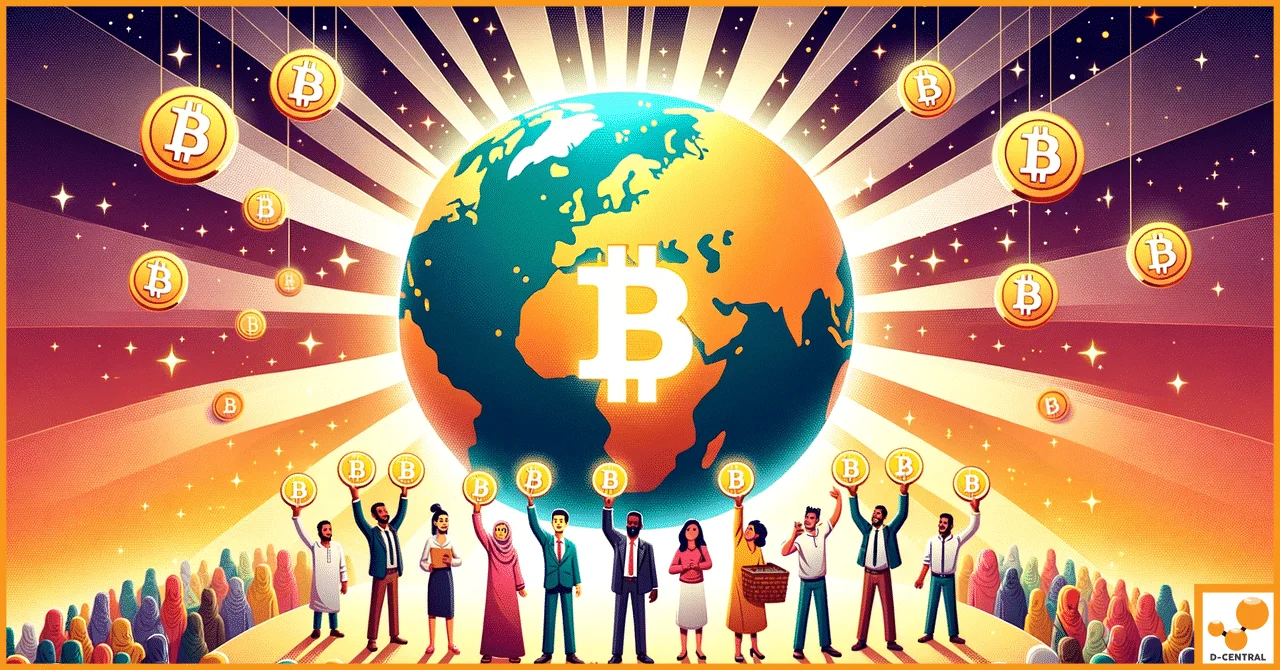
The global banking system was not built for everyone. It was built for those who already had access. Across the planet, billions of people exist outside the walls of traditional finance — no bank accounts, no credit history, no access to the tools that the developed world takes for granted. The numbers are staggering: Morocco at 71% unbanked, Vietnam at 69%, Egypt at 67%, the Philippines at 66%, Mexico at 63%, Nigeria at 60%. These are not edge cases. This is the norm for a massive portion of humanity.
Bitcoin does not ask for your credit score. It does not require a government-issued ID to receive value. It does not care where you were born or what currency your nation prints. Bitcoin is an open, permissionless, censorship-resistant monetary network — and for the unbanked, it represents something the traditional system never offered: a seat at the table.
At D-Central Technologies, we see this through the lens of what we do every day — building, repairing, and deploying Bitcoin mining hardware that puts hash power directly in the hands of individuals. The same technology that heats Canadian homes and earns sats in a Quebec basement can be the foundation for sovereign financial infrastructure anywhere on Earth. This is not theoretical. This is what decentralization looks like when it actually works.
Why the Unbanked Need Bitcoin — Not “Fintech”
The fintech industry loves to talk about “banking the unbanked.” Mobile payment apps, digital wallets tied to fiat currencies, microfinance platforms — all of these still operate within the permission structure of the legacy system. They require intermediaries. They can be frozen, censored, or inflated away by the same institutions that excluded these populations in the first place.
Bitcoin is fundamentally different because it removes the need for trust in third parties. The Bitcoin network runs on proof-of-work — a system where miners around the world expend real energy to secure transactions and maintain consensus. No central bank, no board of directors, no single point of failure.
| Feature | Traditional Banking | Fintech / Mobile Money | Bitcoin |
|---|---|---|---|
| Permission Required | Yes (ID, credit check, residency) | Yes (phone number, KYC) | No |
| Can Be Censored | Yes | Yes | No (with proper self-custody) |
| Subject to Inflation | Yes (fiat denominated) | Yes (fiat denominated) | No (21 million hard cap) |
| Cross-Border Transfers | Slow, expensive | Moderate fees, limited corridors | Instant (Lightning), low fees |
| Operates 24/7 | No | Mostly | Yes, always |
| Requires Infrastructure | Bank branches, ATMs | Cell towers, agent networks | Internet connection + a device |
The comparison is not even close. Bitcoin is the only system that does not require asking permission from anyone. For people living under regimes that weaponize financial access — or simply in regions where banks do not bother to set up shop — this is not an incremental improvement. It is a paradigm shift.
The Unbanked World: A Country-by-Country Reality Check
Understanding the scale of financial exclusion requires looking at specific nations where the majority of citizens operate entirely outside formal banking. Each of these countries represents a population that Bitcoin can reach right now, today, without waiting for any government to build infrastructure.
| Country | Unbanked Population | Key Economic Challenge | Bitcoin Opportunity |
|---|---|---|---|
| Morocco | 71% | Limited rural banking access | Peer-to-peer commerce, remittances |
| Vietnam | 69% | Young population, cash-heavy economy | Digital-native adoption, Lightning payments |
| Egypt | 67% | Currency devaluation, capital controls | Wealth preservation, inflation hedge |
| Philippines | 66% | Remittance dependency (10%+ of GDP) | Low-cost remittances via Lightning Network |
| Mexico | 63% | Banking deserts in rural regions | Cross-border payments, savings in BTC |
| Nigeria | 60% | Naira devaluation, eNaira distrust | Already #2 globally in P2P Bitcoin volume |
| Peru | 57% | Economic instability, sol volatility | Store of value, merchant adoption |
| Colombia | 54% | Informal economy dominance | Formalization through Bitcoin rails |
| Indonesia | 51% | Island geography limits bank access | Mobile Bitcoin wallets, microfinance |
| Argentina | 51% | Chronic hyperinflation, peso collapse | Leading Bitcoin adoption in LATAM |
Nigeria deserves special attention. Despite the Central Bank of Nigeria attempting to ban cryptocurrency transactions in 2021, Nigerians responded by increasing their peer-to-peer Bitcoin trading volume to second highest in the world. The government’s own digital currency, the eNaira, launched to near-universal indifference. The lesson is clear: you cannot stop people from choosing sound money when the alternative is a currency that loses purchasing power by the month. Bitcoin adoption is not a top-down policy decision — it is a bottom-up survival mechanism.
Argentina tells a similar story. When your currency inflates at over 100% annually, holding pesos is not savings — it is a slow-motion wealth destruction. Argentines have been early and aggressive adopters of Bitcoin precisely because they understand what inflation does to families. They are not speculating. They are surviving.
Mining as the Foundation of Financial Sovereignty
Here is where most articles about Bitcoin and the unbanked stop. They talk about wallets, payments, and Lightning Network adoption — all important pieces. But they miss the deeper point: true financial sovereignty requires participation in securing the network itself.
Bitcoin mining is not just a way to earn sats. It is the mechanism that makes the entire network trustless. Every miner running proof-of-work contributes to the security and decentralization of Bitcoin. When mining is concentrated in a handful of large facilities controlled by a few corporations, the network becomes more vulnerable. When mining is distributed across thousands of homes, basements, garages, and small operations worldwide, Bitcoin becomes unstoppable.
This is the mission that drives everything we do at D-Central Technologies. We are Bitcoin Mining Hackers — we take institutional-grade mining technology and make it accessible to individuals. We believe that every home miner running a Bitaxe on their desk, every family heating their house with a Bitcoin Space Heater, and every small operator running a repaired Antminer contributes to the decentralization that makes Bitcoin’s promise to the unbanked actually credible.
Without decentralized mining, Bitcoin’s censorship resistance is theoretical. With it, Bitcoin’s censorship resistance is physical, thermodynamic, and distributed across the globe.
How Home Mining Bridges the Gap
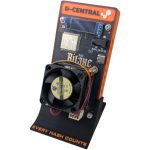
The Bitaxe is a perfect example of how mining technology is becoming radically accessible. These open-source solo miners run on a 5V barrel jack power supply (5.5×2.1mm DC connector — not USB-C, which is for firmware flashing only), consume minimal power, and give anyone on Earth the ability to participate in securing the Bitcoin network. D-Central is a pioneer in the Bitaxe ecosystem, having created the original Bitaxe Mesh Stand and developed leading heatsink and case solutions for the entire Bitaxe family.
For someone in Lagos, Manila, or Lima, a Bitaxe represents something profound: direct, permissionless participation in the Bitcoin network. No exchange account needed. No bank account needed. No government approval needed. Plug it in, point it at a mining pool or run it solo, and you are part of the most secure computational network humanity has ever built.
The economics of mining scale in interesting ways for developing nations:
| Mining Approach | Entry Cost | Power Draw | Use Case for Unbanked Regions |
|---|---|---|---|
| Bitaxe (Solo Miner) | Low | ~15W | Education, network participation, lottery mining for 3.125 BTC block reward |
| NerdAxe / Nerdminer | Very Low | ~1-5W | Entry-level participation, educational tool, solo mining |
| Refurbished Antminer (S9/S17) | Moderate | ~1,000-2,500W | Dual-purpose heating + mining, pool mining for consistent sats |
| Bitcoin Space Heater | Moderate | ~1,000-3,000W | Home heating with mining revenue offset, especially in cooler climates |
In regions with cheap or subsidized electricity — common in many developing nations due to hydroelectric dams, solar potential, or state energy programs — even small-scale mining operations can generate meaningful income. But the real value is not just the sats earned. It is the knowledge, the sovereignty, and the direct connection to the Bitcoin network that mining provides.
El Salvador: The Test Case That Changed Everything
El Salvador made history by becoming the first nation to adopt Bitcoin as legal tender. The move was controversial, criticized by the IMF and traditional financial institutions, and praised by Bitcoiners worldwide. Regardless of where you stand on the specific implementation, El Salvador demonstrated something critical: a sovereign nation can choose Bitcoin.
The country installed Bitcoin ATMs, launched the Chivo wallet, and began purchasing BTC for its national treasury. Remittances — which account for over 20% of El Salvador’s GDP — saw a new channel that bypassed Western Union’s predatory fees. A worker in Los Angeles could send Bitcoin to their family in San Salvador instantly, for fractions of a cent on Lightning.
El Salvador also invested in geothermal Bitcoin mining, using volcanic energy to mine BTC. This is exactly the kind of sovereign, energy-based approach that aligns with what we advocate at D-Central: use the energy resources you have, convert them to hash power, and stack sats. Whether that energy comes from a volcano in Central America or from Quebec’s abundant hydroelectric grid, the principle is identical.
The Environmental Truth About Bitcoin Mining
Every article about Bitcoin eventually confronts the “energy consumption” criticism. Here is the reality that most critics ignore: Bitcoin mining is the most location-flexible industry on Earth. Miners can set up wherever energy is cheapest, which overwhelmingly means wherever there is stranded, surplus, or renewable energy that would otherwise go to waste.
The Bitcoin network’s total hash rate now exceeds 800 EH/s, secured by miners operating across every continent. A significant and growing portion of this hash rate runs on renewable energy — hydroelectric, solar, wind, geothermal, and increasingly, waste methane capture.
At D-Central, we operate our mining hosting facility in Quebec, powered by the province’s massive hydroelectric infrastructure. Quebec generates some of the cleanest and cheapest electricity in the world. When we host miners for our clients, those machines are running on energy that produces virtually zero carbon emissions.
For unbanked nations, many of which sit on untapped renewable energy resources — hydroelectric potential in sub-Saharan Africa, geothermal in East Africa, solar across the Sahel — Bitcoin mining represents a way to monetize energy that currently has no buyer. Build a small solar array, connect a few miners, and suddenly you have a revenue stream denominated in the hardest money ever created.
Challenges Are Real — But Solvable
We are not naive about the obstacles. Deploying Bitcoin infrastructure in regions with limited internet connectivity, unstable power grids, and hostile regulatory environments is genuinely difficult. Here are the real challenges and how they are being addressed:
Internet connectivity: Bitcoin transactions can be broadcast via satellite (Blockstream Satellite covers most of the globe), mesh networks, or even SMS-based systems. You do not need broadband to use Bitcoin.
Volatility: Bitcoin’s purchasing power fluctuates, which is challenging for daily transactions. The Lightning Network and stablecoin conversions at the edges provide practical solutions. More fundamentally, volatility against the dollar matters less when your local currency is inflating faster than Bitcoin fluctuates.
Regulatory hostility: Some governments actively suppress Bitcoin adoption. Nigeria banned bank-crypto transactions — and adoption increased. China banned mining — and the hash rate recovered within months, now more geographically distributed than ever. Bitcoin was designed to be resistant to exactly this kind of pressure.
Technical literacy: This is the most legitimate concern. Bitcoin wallets have become dramatically more user-friendly, but there is still work to do. Community-driven education, simplified interfaces, and the emergence of Lightning-based apps designed for developing markets (like Machankura in Africa, which works without internet via USSD codes) are closing this gap rapidly.
Hardware access: Getting mining hardware to developing regions is a logistics challenge. This is one reason why open-source designs like the Bitaxe matter so much — local manufacturers can produce them, reducing dependency on international supply chains.
What D-Central Is Building for This Future
D-Central Technologies exists at the intersection of Bitcoin ideology and practical hardware. We are Canada’s largest ASIC repair center, a pioneer manufacturer in the Bitaxe ecosystem, and a team of builders who believe that decentralizing every layer of Bitcoin mining is not just good for Bitcoin — it is good for humanity.
Here is how our work connects to the financial sovereignty of the unbanked:
ASIC Repair Services: We extend the life of mining hardware that would otherwise be scrapped. A refurbished Antminer S9 that gets a second life in a home mining setup is one more machine contributing to network decentralization. Our repair expertise covers 38+ ASIC models across Bitmain, MicroBT, Innosilicon, and Canaan.
Open-Source Mining Hardware: We stock the full range of Bitaxe variants (Supra, Ultra, Hex, Gamma, GT), NerdAxe, NerdNOS, Nerdminer, NerdQAxe, and all associated accessories. These devices represent the most accessible entry point into Bitcoin mining ever created.
Bitcoin Space Heaters: Our dual-purpose Bitcoin Space Heaters turn mining waste heat into productive home heating. In cold climates — including our home base in Canada — this makes mining effectively free during winter months, because the energy is doing double duty.
Mining Consulting: We help individuals and small operations design mining setups that make sense for their specific situation — energy costs, climate, goals, and budget.
We are not building for institutions. We are building for individuals. The home miner in Quebec, the Bitcoiner in Lagos, the cypherpunk in Buenos Aires — they are all part of the same decentralized network, and they all deserve access to the tools that make it work.
Frequently Asked Questions
How does Bitcoin help unbanked populations specifically?
Bitcoin provides a permissionless financial system that anyone with an internet connection can access. Unlike traditional banking, it requires no credit history, government ID, or minimum balance. Users can receive, store, and send value globally using just a smartphone. For the 1.4+ billion people worldwide without bank accounts, Bitcoin offers the first truly accessible financial network.
Can someone in a developing country realistically mine Bitcoin?
Yes. Open-source miners like the Bitaxe consume as little as 15 watts and run on a standard 5V barrel jack power supply. The Nerdminer uses even less power. These devices allow anyone to participate in securing the Bitcoin network and potentially earn sats through solo mining (with a chance at the full 3.125 BTC block reward) or pool mining. The hardware is increasingly affordable and can be manufactured locally using open-source designs.
Is Bitcoin mining environmentally destructive?
Bitcoin mining is the most energy-flexible industry on Earth. Miners gravitate toward the cheapest energy, which is overwhelmingly stranded, surplus, or renewable. The network’s hash rate now exceeds 800 EH/s, with a growing share running on hydroelectric, solar, wind, and geothermal energy. In Canada, D-Central’s hosting facility in Quebec runs entirely on hydroelectric power. For developing nations with untapped renewable resources, mining is a way to monetize energy that currently has no market.
What happened when El Salvador adopted Bitcoin as legal tender?
El Salvador became the first nation to adopt Bitcoin as legal tender in 2021. The country deployed Bitcoin ATMs, launched a national wallet (Chivo), and began purchasing BTC for its treasury. Remittances — over 20% of GDP — gained a new Lightning-based channel that dramatically cut fees compared to services like Western Union. The country also invested in geothermal Bitcoin mining using volcanic energy.
What is the cheapest way to start mining Bitcoin at home?
The most accessible entry point is a Nerdminer or Bitaxe solo miner, available through D-Central’s shop. These open-source devices consume minimal power, connect via WiFi, and let you participate in solo mining for the chance at a full block reward. For those wanting to combine mining with home heating, D-Central’s Bitcoin Space Heaters turn ASIC waste heat into productive warmth — effectively making mining free during cold months.
Does D-Central ship mining hardware internationally?
Yes. D-Central Technologies ships worldwide from our base in Canada. We stock the full range of Bitaxe variants, NerdAxe, Nerdminer, NerdQAxe, replacement parts, power supplies, accessories, and Bitcoin Space Heaters. We also provide ASIC repair services — we are the largest ASIC repair center in Canada, covering 38+ miner models.
The Bigger Picture: Every Hash Counts
The conversation about Bitcoin and the unbanked is not really about fintech innovation or mobile payments. It is about power — who has it, who does not, and whether technology can redistribute it more fairly.
Traditional financial systems are permissioned. Someone decides whether you get an account. Someone decides whether your transaction goes through. Someone decides what your currency is worth by printing more of it whenever it is politically convenient. For billions of people, that “someone” has either excluded them entirely or debased their savings into nothing.
Bitcoin inverts this. No permission required. No one can freeze your wallet. No one can inflate away your savings. And when you run a miner — whether it is a Bitaxe on your desk or an Antminer in your garage — you are not just earning sats. You are casting a vote for a financial system that answers to mathematics, not politics.
Every hash counts. Every miner matters. Every individual who takes custody of their own Bitcoin and contributes even a fraction of a terahash to the network is making Bitcoin stronger, more decentralized, and more resilient against the forces that would seek to control it.
That is what D-Central Technologies is building toward. Not just selling hardware — building the infrastructure for a world where financial sovereignty is not a privilege reserved for those born in the right country or the right tax bracket. It is a right. And Bitcoin is how we enforce it.