The Bitcoin network now exceeds 1,000 EH/s of total hashrate. Every one of those exahashes requires electricity. The question is no longer whether Bitcoin mining consumes energy — it is what kind of energy, and who controls the narrative around it.
Sustainable Bitcoin mining is not a marketing slogan. It is an engineering challenge with real constraints: grid interconnection, power purchase agreements, cooling infrastructure, and the physics of thermodynamics. Some operations get it right. Others wrap fossil-fuel consumption in green branding and hope nobody checks.
This article examines how zero-carbon energy sources — nuclear, hydroelectric, and hybrid approaches — are reshaping industrial Bitcoin mining, what the pitfalls of “green” marketing look like when the claims don’t hold up, and why Quebec’s hydroelectric grid remains one of the most credible sustainable mining environments on the planet.
The Case for Zero-Carbon Bitcoin Mining
Bitcoin’s proof-of-work consensus mechanism is energy-intensive by design. That is not a bug — it is the security model. The SHA-256 algorithm ensures that no entity can rewrite the blockchain without expending an impractical amount of computational work. Energy consumption is the cost of trustless, censorship-resistant money.
The environmental criticism of Bitcoin mining is therefore a sourcing problem, not a consumption problem. A mining operation running on 100% hydroelectric power has a fundamentally different environmental profile than one drawing from a coal-heavy grid — even if they consume identical wattage.
The three primary zero-carbon energy sources for mining are:
| Energy Source | Advantages | Challenges |
|---|---|---|
| Hydroelectric | Lowest cost per kWh, massive baseload capacity, proven at scale, truly renewable | Geographically limited, seasonal variation, grid interconnection politics |
| Nuclear | Zero operational carbon, extremely high energy density, 24/7 baseload | Regulatory complexity, high capital cost, public perception issues, REC complications |
| Solar/Wind | Declining cost curves, growing availability, can utilize stranded/curtailed power | Intermittent, requires battery storage or grid backup, capacity factor limitations |
For large-scale mining operations, hydroelectric and nuclear offer the most reliable baseload power. Solar and wind play a supplementary role but cannot alone support the 24/7 uptime that mining economics demand.
TeraWulf: A Case Study in Nuclear-Powered Mining
TeraWulf (NASDAQ: WULF) became one of the most visible advocates for zero-carbon Bitcoin mining when it launched operations in 2022. The company operated two primary facilities:
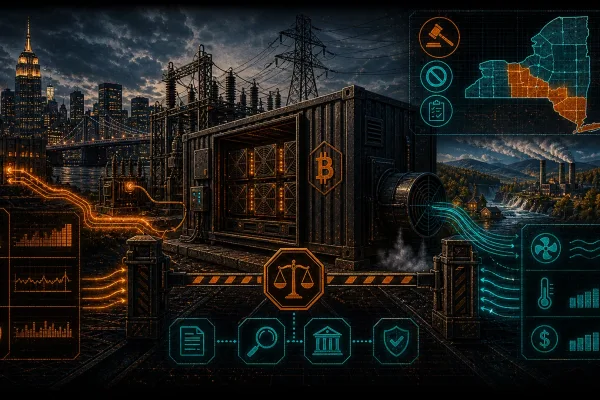
Lake Mariner — Located in Somerset, New York, this facility scaled to approximately 245 MW of energized Bitcoin mining capacity. It draws power from the New York grid, which includes a mix of hydro, nuclear, natural gas, and other sources.
Nautilus Cryptomine — A joint venture with Talen Energy Corporation in Berwick, Pennsylvania. This 200 MW facility was directly connected to the Susquehanna nuclear power station, making it the first nuclear-powered Bitcoin mining facility in the United States. TeraWulf held a 25% equity stake with a power purchase agreement at approximately $0.02/kWh.
By mid-2023, TeraWulf reported 5.5 EH/s of mining capacity. By Q2 2025, that number had grown to approximately 12.8 EH/s — a 45% year-over-year increase.
The Sustainability Claims and Their Unraveling
TeraWulf marketed itself as running on “91% zero-carbon energy” and positioned its brand around environmental responsibility. However, investigative reporting in 2024 revealed significant problems with these claims:
- The New York Power Authority (NYPA), which supplies approximately 45% of the energy used at Lake Mariner, confirmed that none of the power it provides can be legally claimed as renewable.
- TeraWulf had not purchased Renewable Energy Credits (RECs) — the standard mechanism for legally substantiating zero-carbon claims under New York and federal regulations.
- Following the investigation, TeraWulf quietly revised its SEC filings, changing “fueled by clean, low cost and reliable power sources” to “fueled by predominantly clean, low cost and reliable power sources.”
In October 2024, TeraWulf sold its 25% stake in the Nautilus nuclear facility to Talen Energy for approximately $92 million. The company is now pivoting significant resources toward AI/HPC data center hosting at Lake Mariner — a strategic shift that further distances it from its original “sustainable Bitcoin mining” identity.
Lessons for the Industry
TeraWulf’s trajectory illustrates a critical point: sustainable mining claims must be verifiable, not aspirational. The difference between “our grid includes nuclear and hydro” and “we have purchased RECs or have direct interconnection to zero-carbon generation” is the difference between marketing and engineering.
For miners evaluating hosting locations, this distinction matters. The energy source must be documented, the claims must be auditable, and the facility operator must be transparent about exactly what percentage of consumed power comes from zero-carbon generation — not what the regional grid’s average mix looks like.
Quebec Hydroelectric: The Gold Standard for Sustainable Mining
While TeraWulf’s nuclear experiment generated headlines and controversy, Quebec has been quietly operating one of the world’s most credible sustainable mining environments for years.
Why Quebec’s Grid Is Different
Hydro-Quebec operates one of the largest hydroelectric systems on Earth. Over 99% of Quebec’s electricity generation comes from renewable sources — predominantly hydroelectric dams. This is not a marketing claim backed by RECs. It is the physical reality of the grid infrastructure.
| Factor | Quebec Hydro | Typical U.S. Grid Mix |
|---|---|---|
| Zero-Carbon % | 99%+ (hydroelectric) | ~40% (varies by state) |
| Industrial Power Cost | Under $0.04/kWh | $0.06–$0.12/kWh |
| Baseload Reliability | 24/7, reservoir-backed | Variable (weather, demand) |
| Climate Advantage | Cold climate = reduced cooling costs | Many regions require heavy cooling infrastructure |
| REC Requirement | Not needed — grid is inherently clean | Required to claim zero-carbon status |
The key advantage is structural, not contractual. When your grid is 99%+ hydroelectric, you do not need to buy carbon offsets or renewable energy credits to make sustainability claims. The electrons flowing into your facility are already clean. This eliminates the entire category of greenwashing risk that plagued TeraWulf.
Canada’s Cold Climate Advantage
Beyond the grid itself, Canada’s northern climate provides a thermodynamic advantage that cannot be replicated in warmer regions. ASIC miners generate enormous heat — a single Antminer S21 pulls approximately 3,500 watts and converts nearly all of it to thermal energy. In Texas or Georgia, that heat must be removed with industrial cooling systems that consume additional electricity. In Quebec, ambient air temperatures handle much of the cooling load naturally, especially during the long Canadian winters.
This is why D-Central Technologies operates its mining hosting facility in Quebec — combining Hydro-Quebec’s clean baseload power with natural cooling to deliver one of the most energy-efficient and genuinely sustainable hosting environments available to miners anywhere. If you are evaluating where to host your miners, the physics and the power grid both favor Quebec.
Home Mining: Sustainability at the Individual Level
Industrial-scale sustainable mining is one piece of the puzzle. But the decentralization ethos that underpins Bitcoin demands that sustainability extend to individual miners as well.
Home miners have a unique advantage: they can capture waste heat. A Bitcoin miner converts electricity to heat with near-perfect efficiency. Instead of venting that thermal energy into the atmosphere (as industrial facilities must), home miners can use it.
Bitcoin space heaters are the most practical expression of this concept. A modified Antminer S9 or S19 Space Heater Edition replaces a conventional electric heater in your home. The electricity cost is identical — 1,500 watts of mining heat is thermodynamically equivalent to 1,500 watts from a ceramic heater — but the miner produces Bitcoin as a byproduct. You are not “spending” electricity on mining; you are mining with electricity you would have consumed for heating anyway.
This dual-purpose approach makes home mining in cold climates effectively carbon-neutral in terms of marginal energy consumption. The mining does not increase your total household energy usage during heating season — it simply redirects existing consumption through a SHA-256 ASIC instead of a resistive heating element.
Open-Source Mining and Decentralization
Sustainable mining is not only about energy sources — it is also about the architecture of the network itself. If a small number of large, publicly traded companies control the majority of hashrate, Bitcoin’s censorship resistance weakens regardless of how clean their energy is.
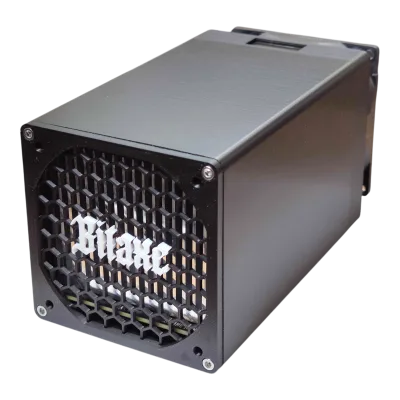
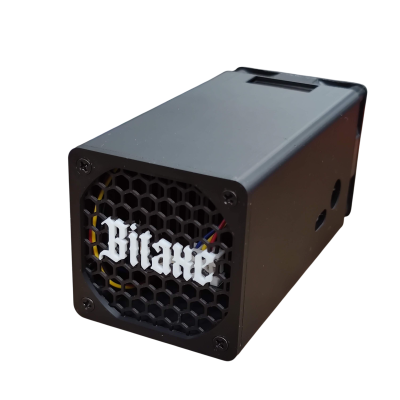
This is why open-source mining hardware matters. Projects like the Bitaxe put SHA-256 hashing into the hands of individuals. A Bitaxe Supra running off a 5V/6A power supply via its 5.5×2.1mm DC barrel jack consumes approximately 15 watts — roughly the same as a light bulb. It will likely never solo-mine a block (though some have, and the 3.125 BTC reward makes it worth the shot). But every hash it produces contributes to the geographic and political decentralization of Bitcoin’s security model.
D-Central has been a pioneer in the Bitaxe ecosystem since its inception — creating the original Bitaxe Mesh Stand, developing heatsinks for Bitaxe and Bitaxe Hex units, and stocking every variant from Supra to GT. The full lineup represents accessible, sovereignty-preserving mining hardware that anyone can run from home.
The Real Metrics of Sustainable Mining
When evaluating any mining operation’s sustainability claims — whether a publicly traded company or a hosting provider — these are the metrics that matter:
| Metric | What to Verify | Red Flags |
|---|---|---|
| Energy Source | Direct interconnection or grid composition documentation | Vague claims like “powered by clean energy” without documentation |
| REC Status | Has the operator purchased RECs or is the grid inherently clean? | Claiming regional grid average without RECs |
| PUE (Power Usage Effectiveness) | Ratio of total facility power to computing power (closer to 1.0 = better) | No PUE disclosure or claims below 1.05 without immersion cooling |
| Heat Recovery | Is waste heat captured for productive use (heating, agriculture)? | 100% of thermal energy vented to atmosphere |
| Grid Impact | Does the operation provide demand response / curtailment services? | No curtailment capability, fixed load regardless of grid stress |
| Transparency | Public reporting of energy mix, costs, and carbon intensity | Sustainability claims disappear from filings when scrutinized |
If a mining company or hosting provider cannot provide clear, auditable answers to these questions, treat their sustainability claims with skepticism. The Bitcoin mining industry has a transparency problem, and the only solution is demanding verifiable data rather than accepting marketing at face value.
Where This All Leads
The sustainable mining conversation is not going away. As Bitcoin’s hashrate continues to climb past 1,000 EH/s and beyond, the total energy consumption of the network will grow. The response to this reality must be engineering-driven, not PR-driven.
For industrial miners, that means siting operations in jurisdictions with genuinely clean grids — Quebec, Iceland, Norway, parts of Scandinavia — and being transparent about the actual energy mix when the grid is less clean.
For home miners, it means embracing dual-purpose designs that eliminate marginal energy waste. A Bitcoin space heater in a Canadian home during winter is one of the most energy-efficient mining configurations possible.
For the network as a whole, it means supporting decentralization through open-source hardware, solo mining, and geographic distribution of hashrate. Sustainability is not just about carbon — it is about the resilience and censorship resistance of the network itself.
If you need help selecting the right hardware, optimizing your setup, or diagnosing issues with existing equipment, D-Central’s ASIC repair and mining consulting teams have been in the trenches since 2016. We are the Bitcoin Mining Hackers — and we are here to help you mine responsibly, sovereignly, and sustainably.
FAQ
What makes hydroelectric power ideal for Bitcoin mining?
Hydroelectric power provides consistent, 24/7 baseload generation at some of the lowest costs per kilowatt-hour available anywhere. Unlike solar or wind, it does not depend on weather conditions. In Quebec, where over 99% of the grid is hydroelectric, miners benefit from inherently clean energy without needing to purchase Renewable Energy Credits (RECs) to substantiate zero-carbon claims. Combined with cold climate cooling advantages, hydro-powered mining in Canada delivers both economic and environmental efficiency.
Is nuclear-powered Bitcoin mining truly zero-carbon?
Nuclear power generation itself produces zero operational carbon emissions. However, claiming zero-carbon status for a mining facility depends on how the power is delivered. A facility with direct interconnection to a nuclear plant (like the former Nautilus Cryptomine) can make strong zero-carbon claims. A facility drawing from a mixed grid that happens to include nuclear must purchase RECs to legally claim renewable status. The distinction between grid-mix proximity and direct sourcing is critical — and has tripped up companies that made sustainability claims without the documentation to back them up.
How do Bitcoin space heaters make mining more sustainable?
Bitcoin space heaters replace conventional electric heaters in your home. Since both devices convert electricity to heat with near-identical efficiency, the total energy consumption does not increase. The difference is that a Bitcoin miner produces SHA-256 hashes — and potentially earns Bitcoin — while generating the same thermal output. During heating season in cold climates like Canada, this makes the marginal energy cost of mining effectively zero.
What happened with TeraWulf’s sustainability claims?
TeraWulf marketed its operations as running on 91% zero-carbon energy. In 2024, investigative reporting revealed that the New York Power Authority confirmed none of the power supplied to TeraWulf’s Lake Mariner facility could legally be claimed as renewable, and that TeraWulf had not purchased RECs. The company subsequently revised its SEC filings and sold its stake in the nuclear-powered Nautilus facility. This case underscores the importance of verifiable sustainability claims backed by documentation rather than aspirational marketing.
Why does mining decentralization matter for sustainability?
If a handful of large companies in a few jurisdictions control the majority of Bitcoin’s hashrate, the network becomes vulnerable to regulatory capture, censorship, and single points of failure — regardless of how cleanly those facilities are powered. True sustainability includes the resilience of the network itself. Distributing hashrate across home miners, open-source hardware like the Bitaxe, and geographically diverse hosting operations strengthens Bitcoin’s core value proposition as censorship-resistant money.
What should I look for when choosing a mining hosting provider?
Verify the energy source documentation — not marketing claims, but actual grid composition or direct interconnection agreements. Ask about REC purchases, PUE ratios, cooling infrastructure, and demand response capabilities. A provider in a jurisdiction with an inherently clean grid (like Quebec) eliminates many greenwashing risks. Also evaluate uptime guarantees, physical security, and whether the provider offers repair and maintenance support for your hardware.
How much hashrate does the Bitcoin network currently have?
As of early 2026, the Bitcoin network operates at over 1,000 EH/s (exahashes per second), or approximately 1 ZH/s (zettahash per second). This represents the cumulative computational power of all miners worldwide securing the network. The current block reward is 3.125 BTC per block, issued approximately every 10 minutes.