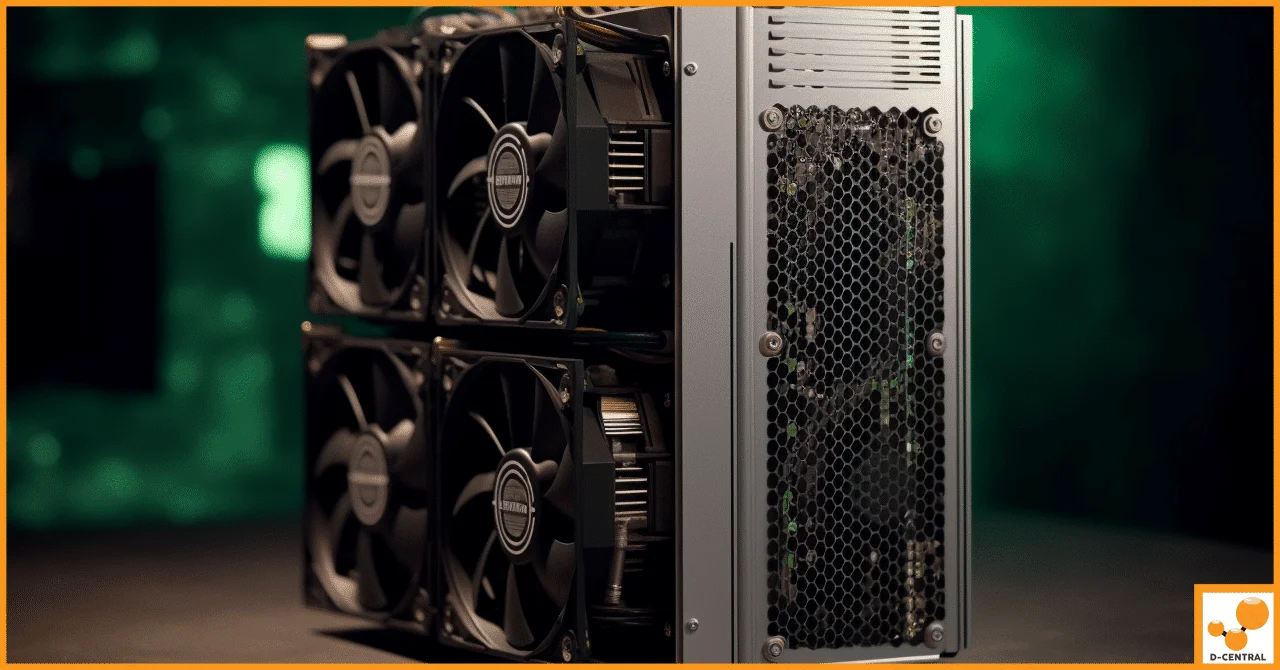
The Bitmain Antminer S9 launched in 2016 — the same year D-Central Technologies was founded. Nearly a decade later, this machine refuses to die. While newer ASIC miners chase ever-higher hashrates with bleeding-edge chip fabrication, the S9 has carved out a permanent role in the Bitcoin mining ecosystem that no amount of next-gen hardware can displace.
This is not a nostalgia piece. The S9 remains one of the most widely deployed Bitcoin miners on the planet, and for home miners especially, it represents something the industry desperately needs: accessible, hackable, sovereignty-enabling hardware. Here at D-Central, we have repaired thousands of S9 units, converted them into Bitcoin Space Heaters, and helped countless home miners squeeze every last hash out of these resilient machines.
Let us break down exactly why the S9 continues to matter — and how you can put one to work today.
A Brief History: How the S9 Changed Bitcoin Mining
Before the S9, Bitcoin mining was rapidly consolidating into the hands of large-scale industrial operations. The S7 delivered around 4.73 TH/s. Then Bitmain released the S9 in mid-2016 with a staggering 13.5 TH/s — nearly triple the performance — built on 16nm FinFET chip technology from TSMC. It was a quantum leap.
The S9 quickly became the most-produced ASIC miner in history. Millions of units were manufactured across multiple revisions (S9, S9i, S9j, S9k, S9 SE), creating an enormous install base. This mass production had a profound side effect: it created the largest secondary market for any single mining device, making used S9 units extremely affordable and widely available.
By the time newer models like the S17 and S19 series arrived, the S9 had already cemented its legacy. But rather than becoming obsolete, it evolved into something different — a tool for home miners, heat recyclers, and decentralization advocates.
Antminer S9 Technical Specifications
| Specification | Details |
|---|---|
| Algorithm | SHA-256 (Bitcoin) |
| Hashrate | 13.5 TH/s (stock) — up to ~16 TH/s overclocked with custom firmware |
| Power Consumption | ~1,350 W at wall (stock) |
| Efficiency | ~0.098 J/GH (stock) |
| Chip Technology | BM1387 — 16nm FinFET (TSMC) |
| Chips per Hashboard | 63 (189 total across 3 hashboards) |
| Cooling | Dual 12038 fans (extremely loud at stock — ~75 dB) |
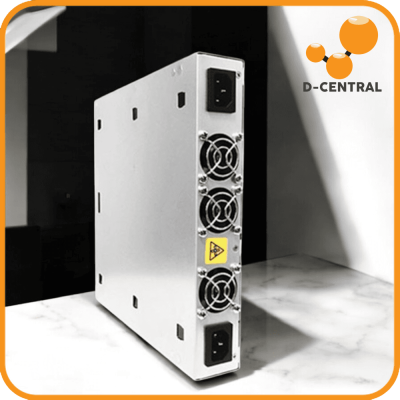
| PSU Connector | 6-pin PCIe (requires APW3++ or equivalent — NOT included) |
| Network | Ethernet (RJ45) |
| Dimensions | 350 mm × 135 mm × 158 mm |
| Weight | ~4.2 kg |
| Operating Temperature | 0°C to 40°C |
Why the S9 Still Matters for Home Mining
The Bitcoin network hashrate now exceeds 800 EH/s. An S9 at 13.5 TH/s is a rounding error in that calculation. So why does it still matter? Because raw hashrate was never the only point.
1. The Price-to-Hash Ratio is Unbeatable
You can acquire a working Antminer S9 for a fraction of what a modern miner costs. For someone entering home mining, the barrier to entry matters. The S9 lets you learn the mechanics of Bitcoin mining — pool configuration, heat management, network monitoring, power budgeting — without risking thousands of dollars on a new-generation machine. It is the mining equivalent of learning to drive in a used car before buying new.
2. Dual-Purpose Mining: Heat + Hashrate
This is where the S9 truly shines in 2026. An S9 draws roughly 1,350 watts and converts virtually all of that energy into heat. In colder climates — like here in Canada — that heat is not waste. It is your heating bill, paid in sats.
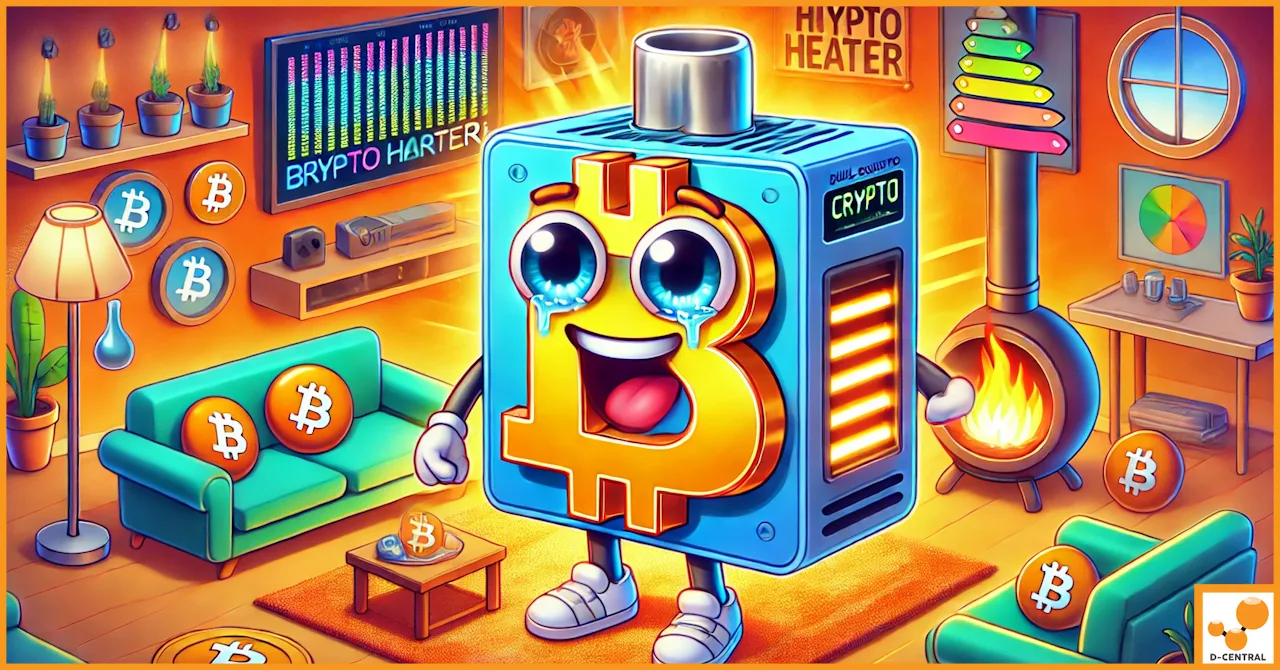
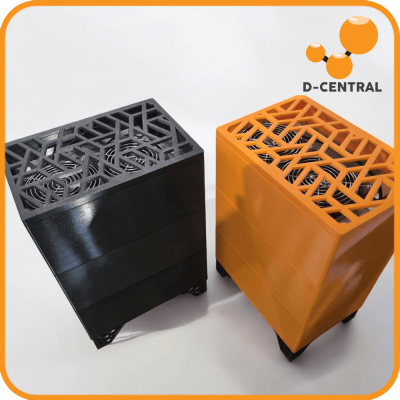
D-Central’s Bitcoin Space Heater editions take standard S9 units and rebuild them into quiet, home-friendly heating appliances. We replace the stock fans with quieter alternatives, add duct adapters for directing warm air, and configure custom firmware for optimal noise-to-heat ratios. The result: a space heater that also mines Bitcoin. Your electricity bill stays the same, but now part of that spend is accumulating sats.
In a Canadian winter where heating is non-optional, this is not just clever — it is economically rational.
3. Network Decentralization
Every S9 running in a basement, garage, or spare room is a node of hashrate that does not belong to a mega-farm. The entire point of Bitcoin mining is that it should be distributed. When mining concentrates into a handful of industrial facilities, the network becomes vulnerable to regulatory pressure, geographic risk, and centralized decision-making.
The S9’s affordability and simplicity make it the most accessible tool for distributing hashrate globally. Every home miner running an S9 is a vote for decentralization. That is the mission D-Central was built around — decentralization of every layer of Bitcoin mining.
S9 vs. Modern ASIC Miners: Where It Fits
| Factor | Antminer S9 | Antminer S19j Pro | Antminer S21 |
|---|---|---|---|
| Hashrate | 13.5 TH/s | 104 TH/s | 200 TH/s |
| Power Draw | ~1,350 W | ~3,068 W | ~3,500 W |
| Efficiency (J/TH) | ~98 J/TH | ~29.5 J/TH | ~17.5 J/TH |
| Acquisition Cost | Very Low | Moderate | High |
| Noise (Stock) | ~75 dB | ~75 dB | ~75 dB |
| Home Mining Friendly | Yes (with mods) | Possible (with mods) | Difficult |
| Best Use Case | Heat mining, learning, decentralization | Profitable home mining | Industrial / hosted mining |
| Repairability | Excellent (parts widely available) | Good | Good |
The takeaway is clear: the S9 is not competing with modern miners on efficiency. It competes on accessibility, repairability, and utility as a dual-purpose device. If your electricity is effectively free — because you are offsetting heating costs — the efficiency gap shrinks dramatically.
Hacking the S9: Custom Firmware and Modifications
The S9’s longevity is partly due to its vibrant modding community. Several custom firmware options exist that unlock capabilities far beyond what Bitmain’s stock firmware provides:
- Braiins OS+ — Autotuning firmware that optimizes individual chip performance. Can underclock for efficiency or overclock for maximum hashrate. Built-in Stratum V2 support for better pool communication.
- VNish — Performance-focused firmware with granular voltage and frequency controls per hashboard.
- LuxOS — Another alternative with fleet management features for running multiple units.
With custom firmware, you can underclock an S9 to ~8 TH/s at around 700W — cutting power consumption nearly in half while still mining and heating. For a space heater application, this is ideal: less noise, less power draw, still generating heat and sats.
Hardware modifications are equally well-supported. The S9’s straightforward design — three hashboards, a control board, and two fans — makes it one of the most serviceable ASIC miners ever built. Fan replacements, immersion cooling conversions, duct adapters, and custom enclosures are all common modifications that D-Central has performed on thousands of units.
Setting Up Your Antminer S9: Step-by-Step
If you have an S9 and want to get it running, here is what you need:
Hardware Requirements
- Antminer S9 (any revision: S9, S9i, S9j, S9k)
- PSU: APW3++ (or equivalent 12V PSU rated for 1,600W+). The S9 uses 6-pin PCIe power connectors — you need 10 connectors total (9 for hashboards + 1 for the control board).
- Ethernet cable (Cat5e or better)
- Router with DHCP
Setup Process
- Connect power: Plug all 10 PCIe connectors into the S9. Each hashboard takes 3 connectors, and the control board takes 1. Do not power on with missing connections — this can damage hashboards.
- Connect Ethernet: Plug the S9 into your router via Ethernet cable.
- Power on: The S9 will boot and acquire an IP address via DHCP. Check your router’s admin panel for the assigned IP.
- Access the web interface: Navigate to the S9’s IP address in your browser. Default login is root/root.
- Configure your pool: Enter your mining pool URL, port, and worker name. For solo mining, point it at a solo mining pool or run your own node with ckpool.
- Monitor: The dashboard shows per-hashboard hashrate, chip temperatures, and fan speeds. All three boards should report approximately 4.5 TH/s each.
If a hashboard is missing or showing significantly reduced hashrate, that is a sign of a hardware issue — failed ASIC chips, broken solder joints, or a faulty voltage regulator. D-Central’s ASIC repair service handles exactly these problems. We diagnose at the chip level and repair individual hashboards, which is far more economical than replacing the entire unit.
The S9 as a Bitcoin Space Heater
The dual-purpose mining concept is simple but powerful: every watt consumed by a miner becomes heat. A 1,350W S9 produces the same thermal output as a 1,350W electric space heater. The difference is that the space heater only heats your room. The S9 heats your room AND mines Bitcoin.
For Canadian home miners, this changes the math outright. Our heating season runs 6-8 months depending on the province. During those months, mining with an S9 is essentially free — you were going to spend that electricity on heating anyway. The Bitcoin you mine is pure bonus.
D-Central’s Space Heater editions address the two main obstacles to running a stock S9 in a living space:
- Noise: Stock S9 fans run at 75+ dB — louder than a vacuum cleaner. Our Space Heater builds replace stock fans with quieter alternatives and use custom shrouds and ducting to manage airflow at lower noise levels.
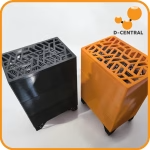
- Aesthetics: A bare S9 looks like industrial equipment. Space Heater editions are housed in purpose-built enclosures that blend into a home environment.
Profitability Reality Check
Let us be honest about the numbers. At current network conditions — hashrate above 800 EH/s and the block reward at 3.125 BTC after the April 2024 halving — an S9 at 13.5 TH/s mining on a pool will earn a modest amount of satoshis daily. At typical North American electricity rates, the S9 does not generate positive cash flow from mining alone.
But that analysis misses the point for most S9 operators:
- Heat offset miners are not paying extra for electricity — they are redirecting existing heating spend. Their effective electricity cost for mining is zero.
- Renewable energy operators with excess solar, wind, or hydro capacity have stranded energy that would otherwise be wasted.
- Long-term stackers are accumulating sats regardless of current fiat exchange rates, betting on Bitcoin’s long-term value proposition as sound money.
- Decentralization advocates value network security contribution over immediate fiat returns.
D-Central has always been about the technology, not the price speculation. We are builders, tinkerers, and cypherpunks. The S9 fits that ethos perfectly — it is a tool for participating in Bitcoin’s security model, not a get-rich-quick machine.
Maintenance and Repair
One of the S9’s greatest strengths is its repairability. After nearly a decade on the market, replacement parts are abundant and well-documented:
- BM1387 ASIC chips — individual chips can be reballed and replaced
- Hashboard components — voltage regulators, capacitors, temperature sensors
- Control boards — the Beaglebone-based controller is interchangeable across S9 variants
- Fans — standard 120mm × 38mm form factor, easily sourced
- PSU connectors — standard 6-pin PCIe
Common failure modes include dead ASIC chips (individual chips on a hashboard stop hashing), failed voltage domains (a section of chips goes offline), and corroded connectors (especially in humid environments). All of these are repairable at D-Central’s facility in Montreal, Quebec. We do board-level diagnostics and component-level repair — not just swapping boards.
If you want to learn more about maintaining your mining hardware or need professional repair, our consulting team can help you plan your setup for long-term reliability.
The S9 and Solo Mining
For the adventurous home miner, solo mining with an S9 is the ultimate lottery ticket. At 13.5 TH/s against an 800+ EH/s network, the odds of finding a block are astronomically low. But the block reward is 3.125 BTC — and every hash has the same probability of finding the next block as any other hash.
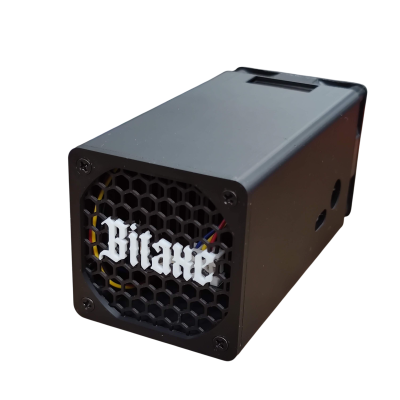
Solo mining is not rational from a pure expected-value standpoint with a single S9. But Bitcoin mining was never about cold financial optimization alone — it is about participating in the network, learning the protocol, and exercising your right to mine. If you want to explore solo mining with better odds, check out our Bitaxe Hub for open-source solo mining devices, or scale up your S9 fleet.
Where to Go From Here
The Antminer S9 is not the most powerful miner you can buy today. It is not the most efficient. But it is arguably the most important Bitcoin miner ever produced — the machine that democratized mining hardware, created a massive secondary market, and now serves as the backbone of the home mining and heat mining movements.
If you are ready to put an S9 to work:
- Browse our shop for S9 units, Space Heater editions, and accessories
- ASIC Repair — if your S9 needs professional diagnostics or hashboard repair
- Bitcoin Space Heaters — S9 units rebuilt for quiet, home-friendly operation
- Mining Hosting — if you want to run miners at scale in our Quebec facility
We are D-Central Technologies — Canada’s Bitcoin Mining Hackers. We have been repairing, modifying, and deploying S9 units since 2016. Every hash counts.
Is the Antminer S9 still profitable for Bitcoin mining in 2026?
Pure mining profitability depends on your electricity cost. At typical retail electricity rates, the S9 does not generate positive cash flow from mining alone. However, when used as a dual-purpose space heater in cold climates, the electricity cost is effectively offset by heating savings, making the mined Bitcoin a net gain. Operators with access to cheap or stranded renewable energy can also run S9 units profitably.
What power supply does the Antminer S9 need?
The S9 requires a 12V power supply capable of delivering at least 1,600W. The most common choice is Bitmain’s APW3++ PSU. The S9 uses 6-pin PCIe power connectors — 10 total (3 per hashboard plus 1 for the control board). Using an underpowered PSU can cause instability, hashrate drops, or hardware damage.
How loud is the Antminer S9 and can it be quieted?
Stock S9 fans produce approximately 75 dB — comparable to a vacuum cleaner running constantly. This is not suitable for living spaces without modification. Options for noise reduction include replacing stock fans with quieter aftermarket fans, using immersion cooling, adding duct shrouds to direct airflow outside the living space, or purchasing a D-Central Bitcoin Space Heater edition that comes pre-modified for quiet home operation.
Can I use custom firmware on the Antminer S9?
Yes. Several custom firmware options are available for the S9, including Braiins OS+ and VNish (LuxOS lists the 19- and 21-series only). These allow you to overclock for maximum hashrate, underclock for reduced power consumption and noise, autotune individual chips, and access features like Stratum V2 support. Custom firmware can reduce power consumption to around 700W at ~8 TH/s, which is ideal for space heater applications.
What should I do if my S9 hashboard is not working?
Common S9 hashboard failures include dead ASIC chips, failed voltage domains, corroded connectors, and damaged temperature sensors. If a hashboard shows zero or significantly reduced hashrate in the web interface, first check all PCIe power connections and reseat the hashboard ribbon cable. If the problem persists, the board likely needs component-level repair. D-Central Technologies offers professional ASIC repair services with board-level diagnostics at our facility in Montreal, Quebec.
Is the Antminer S9 good for solo mining Bitcoin?
Solo mining with a single S9 at 13.5 TH/s against a network of 800+ EH/s gives extremely low odds of finding a block. However, the block reward of 3.125 BTC makes it an appealing lottery for those who value participating directly in Bitcoin’s consensus mechanism. For better solo mining odds with a small form factor, consider open-source solo miners like the Bitaxe, which are purpose-built for the solo mining experience.
How does the S9 compare to open-source miners like the Bitaxe?
The S9 and Bitaxe serve different purposes. The S9 is an industrial-grade SHA-256 miner producing 13.5 TH/s at ~1,350W — ideal for heat mining and pool mining. The Bitaxe is a compact, open-source solo miner that uses far less power (powered via a 5V barrel jack, not USB-C) and is designed specifically for solo mining and education. Many home miners run both: a Bitaxe for the solo mining lottery and an S9 for heat generation and pool rewards.