The mainstream media loves to frame Bitcoin mining as an environmental villain. It makes for convenient headlines and lazy narratives. But those of us who actually build, operate, and repair mining hardware know a different truth: Bitcoin mining is rapidly becoming the single most powerful economic incentive for renewable energy deployment on the planet.
This is not wishful thinking. It is engineering reality. Bitcoin miners are uniquely positioned to solve the hardest problem in the energy transition: how to make intermittent renewable energy economically viable in locations where no other buyer exists. The relationship between sustainable energy and Bitcoin mining is not just compatible — it is elegantly symbiotic.
Why Bitcoin Mining Is the Ideal Load for Renewable Energy
To understand why Bitcoin mining and renewable energy form such a natural partnership, you need to understand what makes mining fundamentally different from every other industrial electricity consumer.
Bitcoin mining has four properties that make it the perfect complement to renewable energy sources:
| Property | What It Means | Why Renewables Benefit |
|---|---|---|
| Location-agnostic | Miners need only electricity and internet — no supply chains, no customers nearby, no shipping infrastructure | Can co-locate at remote wind farms, solar arrays, hydro dams, and geothermal wells where no other buyer exists |
| Instantly interruptible | ASIC miners can power down in seconds with zero damage, zero product loss, zero restart penalty | Provides demand response that stabilizes grids during peak events — miners curtail, residents keep power |
| Time-insensitive | SHA-256 computation produces identical economic output at 2 AM or 2 PM — no production schedules to meet | Can consume energy exclusively when renewables overproduce, avoiding curtailment waste |
| Scalable demand | Operations can scale from a single Bitaxe to megawatt-scale facilities | Provides guaranteed revenue at any project scale, from micro-hydro to industrial solar farms |
No other industrial process on Earth combines all four of these properties. A data centre cannot shut down mid-computation without corrupting workloads. A smelter cannot relocate to a remote wind farm. A manufacturing plant cannot operate profitably on intermittent power. Bitcoin mining can do all of these things simultaneously.
The Stranded Energy Problem — and How Mining Solves It
The single biggest obstacle to renewable energy expansion is not technology. Solar panels and wind turbines are cheaper than ever. The problem is economics: renewable energy is often generated in locations where there is insufficient demand to justify the infrastructure investment.
Consider the numbers. In 2024, the United States alone curtailed over 10 TWh of renewable energy — electricity that was generated but thrown away because there was nowhere to send it. Globally, curtailment rates on wind and solar projects routinely exceed 5-10% of total generation. In some regions, particularly remote areas with excellent renewable resources, curtailment can reach 20-30%.
This is energy that has already been produced. The capital has already been spent on turbines and panels. The environmental benefit has already been lost. And the revenue that could have funded further renewable deployment has evaporated.
Bitcoin mining converts this stranded energy into economic value. A mining operation co-located at a wind farm purchases the electricity that would otherwise be curtailed, providing the project developer with additional revenue that improves the financial viability of the entire installation. This is not theoretical — it is happening at scale right now across North America, Scandinavia, and beyond.
Methane Flaring: The Most Misunderstood Opportunity
Perhaps the most striking example of Bitcoin mining’s environmental benefit is in methane mitigation. Oil wells produce associated natural gas as a byproduct. In remote locations without pipeline infrastructure, this gas is either vented directly into the atmosphere (methane is 80 times more potent than CO2 as a greenhouse gas over a 20-year period) or flared, which is inefficient and still produces significant emissions.
Bitcoin miners deployed at wellheads capture this waste gas and convert it into electricity through generators, then use that electricity to mine Bitcoin. The combustion in a generator is far more complete than an open flare, reducing methane emissions by over 90% compared to venting and significantly compared to flaring. The result: the atmosphere gets cleaner, the oil producer gets paid for waste gas, and the miner earns bitcoin. Three-way symbiosis.
By 2025, companies operating in this space have deployed hundreds of megawatts of gas-to-bitcoin capacity across the Permian Basin, Bakken Formation, and Western Canadian Sedimentary Basin. This is not fringe activity — it represents one of the most effective methane reduction strategies currently deployed at scale.
Grid Stabilization: Miners as the Shock Absorber
Modern electrical grids face an increasingly difficult balancing act. As intermittent renewables (solar and wind) grow as a percentage of the generation mix, grid operators must manage larger and more frequent mismatches between supply and demand. Traditional solutions — natural gas peaker plants, battery storage — are expensive and have their own environmental footprints.
Bitcoin miners offer a complementary solution: controllable load. Rather than adding more generation capacity to meet peak demand, grid operators can reduce demand by signalling miners to curtail. This is already formalized in programs like ERCOT’s demand response in Texas, where Bitcoin miners have provided over 1,000 MW of curtailable load during extreme weather events.
During Winter Storm Elliott in December 2022 and subsequent grid stress events, Bitcoin miners in Texas voluntarily curtailed nearly their entire load within minutes, freeing gigawatts of capacity for residential heating. No other industrial consumer responded as quickly or as completely. The miners earned nothing during those hours — but the grid held, and the relationship between mining operations and grid operators strengthened.
This model is expanding globally. In Canada, where D-Central operates mining hosting facilities in Quebec, hydroelectric power provides abundant clean energy. Quebec’s Hydro-Quebec system occasionally produces surplus electricity, particularly during spring snowmelt when reservoir levels peak and demand is low. Mining operations that can absorb this surplus — and curtail during winter demand peaks — provide genuine grid value.
The Energy Mix: How Clean Is Bitcoin Mining Really?
The data has shifted dramatically in favour of Bitcoin mining’s sustainability credentials. Multiple independent studies now converge on a clear picture:
| Metric | Bitcoin Mining (2025 estimates) | Context |
|---|---|---|
| Sustainable energy share | Over 56% (Cambridge estimate); industry groups claim higher | Higher than the global average for any industrial sector |
| Global electricity consumption | ~150 TWh/year (~0.6% of global production) | Less than residential clothes dryers in the US alone; fraction of gold mining, banking, or data centres |
| Efficiency improvement | ~50x more efficient per hash than 2016 hardware | ASIC technology continues to improve J/TH ratios with each generation |
| Methane mitigation | Hundreds of MW deployed at gas flare sites | One of the fastest-growing methane abatement strategies globally |
| Heat recovery | Growing adoption of dual-purpose mining (heating + hashing) | 100% of mining electricity becomes heat — capture it, and energy waste approaches zero |
The narrative that Bitcoin mining is environmentally destructive is not supported by the data. The Bitcoin network’s sustainable energy percentage exceeds that of virtually every other major industry, and the trend line is accelerating toward renewables as miners are economically incentivized to seek the cheapest power — which is increasingly renewable.
Heat Recovery: The Final Piece of the Puzzle
Every watt consumed by a Bitcoin miner is converted into heat. This is not a bug — it is a feature, if you capture it. Bitcoin space heaters represent one of the purest expressions of the symbiosis between mining and energy efficiency: a machine that secures the Bitcoin network, earns sats, and heats your home simultaneously.
At D-Central, we have been building dual-purpose mining solutions since long before the concept became trendy. Our Bitcoin Space Heater line — built from repurposed Antminer S9, S17, and S19 hardware — transforms ASIC miners into functional space heaters that provide genuine BTU output while hashing. In a Canadian winter, where heating is not optional, this means your electricity bill does double duty: warming your home and mining bitcoin.
The math is elegant. A 1,500W space heater and a 1,500W Bitcoin miner both produce exactly 1,500W of heat (thermodynamics guarantees it — all electricity becomes heat eventually). But the miner also produces bitcoin. The effective cost of heating drops by whatever the miner earns. In some configurations, particularly with low electricity rates, the miner can offset its own power cost entirely — meaning free heat.
This concept scales from a single home miner to commercial installations. District heating systems in Scandinavia are already experimenting with Bitcoin mining as a heat source. MintGreen in Vancouver operated a project heating commercial buildings with mining waste heat. The technology is proven — it simply needs adoption.
Home Mining: Sovereignty Meets Sustainability
Home mining sits at the intersection of energy efficiency and individual sovereignty. When you mine bitcoin at home, you are not just earning sats — you are directly contributing to Bitcoin’s decentralization by adding hashrate outside of large industrial operations. You are participating in the most important monetary network in human history.
Open-source miners like the Bitaxe make this accessible at any scale. A Bitaxe consumes roughly 15W — less than a light bulb — and gives you a direct, sovereign connection to the Bitcoin network. Power it with a small solar panel, and you have a fully renewable, fully sovereign mining operation that costs essentially nothing to run.
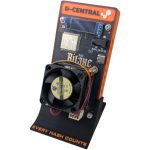
D-Central has been a pioneer in the Bitaxe ecosystem since the beginning, manufacturing the original Bitaxe Mesh Stand and developing heatsinks, cases, and accessories across the entire Bitaxe lineup. We stock every variant — Supra, Ultra, Hex, Gamma, GT — because we believe every Bitcoiner should have the ability to mine, regardless of scale.
The Canadian Advantage
Canada occupies a unique position in the global mining landscape. With some of the cheapest and cleanest electricity on Earth — Quebec’s hydroelectric grid is over 95% renewable — Canada offers miners access to abundant green energy at competitive rates.
| Factor | Canadian Advantage |
|---|---|
| Energy source | Primarily hydroelectric (60%+ nationally, 95%+ in Quebec) — lowest carbon intensity in North America |
| Climate | Cold ambient temperatures reduce cooling costs for 6-8 months of the year — free cooling from the atmosphere |
| Dual-purpose mining | Long heating season (Oct-Apr) makes heat recovery from miners genuinely useful, not just a gimmick |
| Regulatory stability | Generally favourable regulatory environment for Bitcoin mining operations |
| Surplus energy | Quebec regularly produces surplus hydro, especially during spring snowmelt — ideal for flexible mining loads |
D-Central has operated in this environment since 2016, and our hosting facility in Montreal, Quebec runs on Quebec’s hydroelectric grid. When we say our hosted miners run on clean energy, it is not marketing — it is geography.
Decentralization of Energy Matches Decentralization of Money
There is a deeper philosophical alignment between Bitcoin and sustainable energy that deserves attention. Both movements are fundamentally about decentralization.
The legacy energy system is centralized: massive generation plants, long transmission lines, top-down control. This model is fragile, expensive, and environmentally costly. The transition to renewables is inherently decentralizing — rooftop solar, community wind, micro-hydro, distributed batteries. Energy production is moving closer to the point of consumption.
Bitcoin mining accelerates this transition. By providing an economic buyer for energy at any location and any scale, mining makes it viable to deploy renewable generation in places where the traditional grid cannot reach or justify the investment. A small solar array in a remote community that could never justify grid connection becomes economically viable when paired with a few ASIC miners or a rack of Bitaxe units.
This is the vision that drives D-Central’s mission: the decentralization of every layer of Bitcoin mining. From open-source hardware that anyone can build and repair, to home mining solutions that heat your house while securing the network, to hosting services powered by clean Canadian hydroelectricity. Every layer, decentralized.
Addressing the Critics: Common Objections Debunked
No honest discussion of Bitcoin mining and energy would be complete without addressing the most common objections head-on.
“Bitcoin mining wastes energy.” Energy that secures a global, censorship-resistant monetary network used by hundreds of millions of people is not wasted. By this logic, the energy used to power the global banking system — estimated at 2-3x Bitcoin’s consumption — is also “wasted.” The value judgment depends entirely on whether you consider sound, decentralized money important. We do.
“Mining competes with residential electricity use.” Miners are economically incentivized to seek the cheapest power, which is almost never residential grid power at retail rates. They gravitate toward surplus, stranded, and curtailed energy precisely because it is cheaper. When grid stress occurs, miners are the first to curtail — they are the most flexible load on the system.
“Proof-of-work is inherently wasteful — just switch to proof-of-stake.” Proof-of-work is not a bug to be fixed. It is the fundamental mechanism that gives Bitcoin its security, immutability, and resistance to capture. The energy expenditure is the cost of a monetary system that cannot be inflated, censored, or seized. Proof-of-stake secures networks by giving control to the largest holders — that is not decentralization, that is plutocracy with extra steps.
“The energy could be used for something else.” Much of the energy consumed by miners literally has no other buyer. Curtailed wind, flared gas, stranded hydro — these energy sources exist because the market has failed to provide a consumer. Bitcoin mining creates that consumer. It does not displace existing demand; it monetizes energy that would otherwise go to waste.
The Path Forward: Mining in 2026 and Beyond
As we move through 2026, following the April 2024 halving that reduced the block subsidy to 3.125 BTC, the economic pressure on miners to find cheap, efficient energy has never been greater. This pressure is a feature, not a bug — it drives the industry relentlessly toward the most economically efficient energy sources, which increasingly means renewables.
Several trends will accelerate the symbiosis:
- Next-generation ASICs continue to improve energy efficiency. Sub-15 J/TH machines from Bitmain and MicroBT are pushing the envelope, meaning more hashrate per watt consumed.
- Heat recovery integration is becoming standard practice, not an afterthought. Expect more purpose-built mining heaters and commercial heat recovery installations.
- Behind-the-meter deployments — miners co-located directly at generation sites — will grow as renewable developers recognize mining as a reliable revenue supplement.
- Home mining is expanding rapidly thanks to open-source hardware like the Bitaxe and NerdAxe families, which give individuals direct, sovereign participation in the network at minimal energy cost.
- Regulatory frameworks are beginning to formalize the grid services that miners provide, potentially creating additional revenue streams for demand response participation.
Why D-Central Champions Sustainable Mining
D-Central Technologies was founded in 2016 with a simple conviction: Bitcoin mining should be accessible to everyone, not just industrial operators with megawatt-scale facilities. Since then, we have repaired thousands of ASIC miners through our ASIC repair service, extended the operational life of hardware that would otherwise end up in landfills, and built solutions that make mining work in harmony with daily life.
Our Bitcoin Space Heaters turn mining waste heat into home comfort. Our Bitaxe ecosystem gives solo miners a sovereign, low-power entry point. Our Quebec hosting runs on some of the cleanest electricity available anywhere. And our repair operations keep hardware running longer, reducing electronic waste and maximizing the return on the energy already embodied in manufacturing.
This is what the Mining Hackers ethos is about. Taking institutional-grade technology and making it work for individuals. Making mining cleaner, more accessible, and more aligned with the sustainable energy future that Bitcoin — as a technology — is uniquely positioned to accelerate.
The relationship between sustainable energy and Bitcoin mining is not a contradiction to be resolved. It is a convergence to be embraced. Every hash counts — and every hash mined on clean energy brings us closer to the future that both movements are building.
Frequently Asked Questions
Why is Bitcoin mining considered compatible with renewable energy?
Bitcoin mining is uniquely compatible with renewable energy because it is location-agnostic, instantly interruptible, time-insensitive, and infinitely scalable. These four properties allow miners to consume energy that would otherwise be curtailed or wasted — stranded wind, surplus hydro, flared methane — providing renewable energy projects with additional revenue that improves their financial viability. No other industrial process combines all four of these properties.
How much of Bitcoin mining uses renewable energy?
According to the Cambridge Centre for Alternative Finance and multiple industry studies, over 56% of Bitcoin’s global hashrate is powered by sustainable energy sources as of 2025. This percentage exceeds that of virtually every other major industry and continues to trend upward as miners are economically incentivized to seek the cheapest electricity, which is increasingly renewable. In regions like Quebec, Canada, where D-Central operates, the grid is over 95% hydroelectric.
What is stranded energy and how does Bitcoin mining use it?
Stranded energy is electricity generated in locations where there is insufficient demand or transmission infrastructure to deliver it to consumers. Examples include remote wind farms, isolated hydroelectric dams, and natural gas flared at oil wells. Bitcoin miners can set up operations at these locations because they need only electricity and internet to function. By purchasing this otherwise-wasted energy, miners convert stranded resources into economic value while reducing waste.
Can Bitcoin mining actually help reduce methane emissions?
Yes. Bitcoin miners deployed at oil well sites capture natural gas that would otherwise be flared or vented into the atmosphere. The gas is used to generate electricity for mining, and the controlled combustion in generators is far more efficient than open flaring, reducing methane emissions by over 90% compared to venting. Hundreds of megawatts of gas-to-bitcoin capacity have been deployed across North America, making this one of the fastest-growing methane abatement strategies.
How do Bitcoin space heaters work and are they energy-efficient?
A Bitcoin space heater is an ASIC miner enclosed in a housing designed for residential use. Since all electricity consumed by any device ultimately becomes heat (per the laws of thermodynamics), a 1,500W Bitcoin miner produces exactly the same heat output as a 1,500W electric space heater. The difference is that the miner also earns bitcoin while heating. This means your heating electricity does double duty, and the bitcoin earned effectively reduces your net heating cost — potentially to zero with low electricity rates.
How does Bitcoin mining help stabilize electrical grids?
Bitcoin miners provide what grid operators call “controllable load” or demand response capacity. During peak demand events or grid emergencies, miners can shut down within seconds, freeing up electricity for residential and critical uses. In Texas, miners have provided over 1,000 MW of curtailable load through formal demand response programs with ERCOT. Unlike factories or data centres, miners can power down with zero product loss or service disruption, making them the most flexible large-scale electricity consumer available.
What makes Canada a good location for sustainable Bitcoin mining?
Canada — particularly Quebec — offers some of the cleanest and cheapest electricity in the world. Quebec’s grid is over 95% hydroelectric, providing near-zero-carbon energy at competitive industrial rates. Canada’s cold climate also provides free ambient cooling for mining hardware for 6-8 months of the year, reducing energy overhead. The long heating season (October through April) makes heat recovery from miners practical and economically meaningful, not just a theoretical benefit.
Is it possible to mine Bitcoin at home using solar power?
Absolutely. Open-source miners like the Bitaxe consume as little as 15W — less than a standard light bulb. A small solar panel can power a Bitaxe with energy to spare. While the hashrate of a single Bitaxe is modest compared to industrial ASICs, it gives you a direct, sovereign connection to the Bitcoin network running entirely on renewable energy. For larger home setups, solar arrays paired with ASIC miners and battery storage can create partially or fully off-grid mining operations that produce bitcoin while powering your household.