The word “illusion” gets thrown at Bitcoin more than any other financial instrument in history. Central bankers call it a mirage. Legacy media calls it a bubble. Traditional economists call it tulips. They are projecting. The real illusion is the monetary system they are defending — a system where value is conjured from nothing by committee decree, backed by nothing more than the threat of state violence and the inertia of habit.
Bitcoin is the opposite of an illusion. It is the most transparent, auditable, and thermodynamically grounded monetary system ever created. Every satoshi in existence can be traced back to a specific block, mined by a specific machine, consuming a specific amount of energy. There is no hidden ledger, no backroom printing, no “quantitative easing” that silently dilutes your savings while you sleep.
This article dismantles the fiat illusion and examines why Bitcoin — anchored in proof of work, physics, and mathematics — represents the most honest form of money humanity has ever produced.
The Fiat Illusion: Money From Nothing
How Fiat Currency Actually Works
Every fiat currency in circulation today shares a common origin story: a government declared it to be money, and people accepted it because they had no alternative. The US dollar abandoned its gold backing in 1971 under Nixon. The Canadian dollar followed suit. Since then, every dollar, euro, yen, and pound has been backed by exactly one thing — the promise of the issuing government.
That promise has a track record, and it is not encouraging.
Since 1971, the US dollar has lost over 87% of its purchasing power. The Canadian dollar has fared no better. The average fiat currency has a lifespan of about 35 years before hyperinflation, regime change, or restructuring renders it worthless. The British pound, the oldest surviving fiat currency, has lost over 99.5% of its value since the Bank of England was founded in 1694.
This is not an accident. It is a feature. Fiat currencies are designed to be inflated. Central banks target 2% annual inflation as a matter of policy — meaning they actively plan to make your money worth less every single year. Over a 30-year mortgage, that “modest” 2% target compounds to a 45% loss in purchasing power. Your money is melting by design.
The Cantillon Effect: Who Benefits From Money Printing
When central banks create new money — whether through quantitative easing, bond purchases, or direct fiscal stimulus — that money does not enter the economy uniformly. It flows first to banks, financial institutions, and government-connected entities. By the time it reaches ordinary people, prices have already risen to absorb the new supply.
This is the Cantillon Effect, named after 18th-century economist Richard Cantillon: those closest to the money printer benefit at the expense of everyone else. It is a hidden tax on savings, wages, and purchasing power that disproportionately punishes the working and middle classes.
Between 2020 and 2023, central banks globally printed trillions of dollars in response to pandemic shutdowns. The result was predictable — asset prices skyrocketed for those who already held assets, while grocery bills, rent, and energy costs crushed everyone else. The money was not created from economic production. It was created from keystrokes.
That is the real illusion: the belief that something created from nothing, by decree, distributed unequally, and designed to depreciate, qualifies as sound money.
Bitcoin: Value Forged in Energy
Proof of Work Is Not a Bug — It Is the Point
Bitcoin’s critics love to attack its energy consumption as wasteful. They miss the fundamental insight: proof of work orders valid candidate histories, while fully validating nodes enforce transaction and issuance rules. Proof of work is the mechanism that converts real-world energy into digital scarcity. It is the bridge between the physical and digital worlds that no other monetary system has ever achieved.
Mining hardware expends electrical energy while searching for block headers that meet the proof-of-work target. Bitcoin Core estimates network hashrate from accumulated work and elapsed block time over a selected window. Nodes compare valid competing histories by accumulated work; a hashrate estimate neither measures electricity use nor proves an attack impossible.
This energy expenditure is not waste. It is the cost of producing unforgeable costliness — a concept first articulated by Nick Szabo. Gold is valuable in part because it is expensive to mine from the earth. Bitcoin is valuable in part because it is expensive to mine from the network. The difference is that Bitcoin’s issuance is constrained by consensus rules that fully validating nodes independently enforce, while gold’s supply depends on geology and extraction.
The Halvings: Programmatic Scarcity
Every 210,000 blocks — approximately every four years — the Bitcoin block reward is cut in half. This halvening schedule is hard-coded into the protocol and cannot be changed by any committee, politician, or central bank.
- 2009: Block reward of 50 BTC
- 2012: First halvening — reward drops to 25 BTC
- 2016: Second halvening — reward drops to 12.5 BTC
- 2020: Third halvening — reward drops to 6.25 BTC
- 2024: Fourth halvening — reward drops to 3.125 BTC
- ~2028: Fifth halvening — reward will drop to 1.5625 BTC
As of 2026, miners earn 3.125 BTC per block. Over 19.8 million of the 21 million total Bitcoin have already been mined. The remaining supply will be distributed over the next century, with the final satoshi expected around 2140. No human intervention can accelerate, delay, or alter this schedule.
Compare this to fiat: in March 2020 alone, the US Federal Reserve created over $3 trillion in new dollars. Bitcoin’s entire supply schedule for the next 114 years was determined in 2009 and has never changed.
Thermodynamic Security
Bitcoin’s security model is rooted in thermodynamics, not trust. The energy expended to mine a block cannot be faked, reversed, or counterfeited. Once a block is confirmed by the network, reversing it requires re-doing all the computational work that followed it — an exponentially increasing cost with each subsequent block.
After six confirmations (roughly one hour), a Bitcoin transaction is more final than any bank transfer, wire payment, or credit card charge. There is no chargeback mechanism, no fraud department that can freeze your funds, no compliance officer who can decide your money is not really yours. Settlement is final because physics makes it final.
This is fundamentally different from fiat settlement, where a bank transfer can be reversed days or weeks later, credit card charges can be disputed for months, and governments can freeze accounts on suspicion alone. Bitcoin does not rely on human judgment for finality. It relies on energy.
The 21 Million Cap: Absolute Digital Scarcity
Why Fixed Supply Matters
In the entire history of human civilization, there has never been an asset with a truly fixed, verifiable supply. Gold comes close, but new deposits are still discovered and new extraction technologies increase the flow. Bitcoin is the first asset where every participant can independently verify the total supply at any time, on any node, with zero trust required.
Run a Bitcoin full node and you can verify, down to the satoshi, exactly how many Bitcoin exist right now, how many will ever exist, and when each one was created. This level of transparency is impossible in the fiat system, where M1, M2, and M3 money supply figures are estimates published weeks after the fact by the very institutions that control the supply.
Stock-to-Flow and Increasing Hardness
Bitcoin’s stock-to-flow ratio — the existing supply divided by the annual new production — increases with every halvening. After the 2024 halvening, Bitcoin’s stock-to-flow ratio exceeds that of gold, making it the “hardest” money ever created by this metric. Unlike gold, where a price increase incentivizes more mining (and thus more supply), Bitcoin’s difficulty adjustment ensures that increased mining effort does not produce more Bitcoin — it only makes the network more secure.
This is a crucial distinction. In every other commodity market, higher prices lead to higher production, which eventually brings prices back down. Bitcoin breaks this feedback loop. More miners means more security, not more supply. The supply curve is immutable.
Bitcoin Mining: Participating in the Network
Why Mining Matters for Decentralization
Mining is not just a mechanism for distributing new Bitcoin — it is the backbone of the network’s security and censorship resistance. Every miner that joins the network adds hash power, making attacks more expensive and the network more resilient. When mining is concentrated in a few large operations, the network becomes more vulnerable to coercion and censorship. When mining is distributed across thousands of homes, garages, and small operations worldwide, Bitcoin becomes unstoppable.
This is why home mining matters. This is why D-Central Technologies exists. Since 2016, D-Central has been hacking institutional-grade mining technology into accessible solutions for home miners. We are not decorating a corporate mining story — we are the Bitcoin Mining Hackers, and our mission is the decentralization of every layer of Bitcoin mining.
Solo Mining: Every Hash Counts
Solo mining — where an individual miner attempts to find a block independently — embodies the original vision of Bitcoin mining. While the probability of a solo miner finding a block is low relative to a pool, the reward is the full 3.125 BTC block reward plus transaction fees. It is lottery mining, and the Bitaxe family of open-source solo miners has made it accessible to anyone.
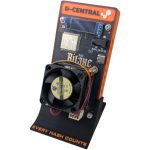
The Bitaxe is the purest expression of decentralized mining. Open-source hardware, running open-source firmware, pointed at the Bitcoin network. No pool, no middleman, no permission required. D-Central was a pioneer in the Bitaxe ecosystem from the beginning — we created the original Bitaxe Mesh Stand and developed leading Bitaxe accessories including heatsinks, custom cases, and more. We stock every Bitaxe variant: Supra, Ultra, Hex, Gamma, and GT.
Every hash you produce with a Bitaxe contributes to the decentralization of Bitcoin’s hash rate. The chances of hitting a block may be small, but the contribution to network health is real. And when solo miners do hit blocks — which happens regularly — the payoff is life-changing.
Dual-Purpose Mining: Heat Your Home With Hashrate
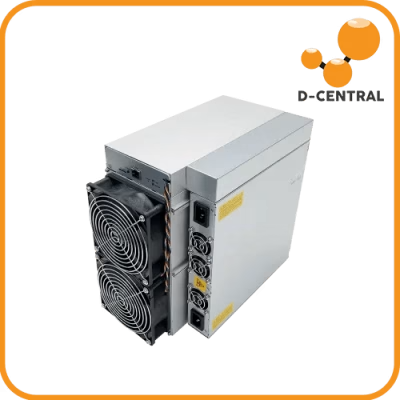
One of the most elegant applications of proof-of-work mining is heat recovery. Every watt consumed by an ASIC miner is converted to heat with near-perfect efficiency. This is not a side effect — it is physics. A 3,000-watt Antminer produces 3,000 watts of heat, the same as a 3,000-watt space heater, except the miner is also producing Bitcoin while it heats your space.
D-Central’s Bitcoin Space Heater line takes this concept and makes it plug-and-play. We offer space heater editions based on Antminer S9, S17, and S19 platforms, enclosed in custom cases designed for home use. In Canadian winters, where heating costs are a major household expense, a Bitcoin space heater does not just offset your heating bill — it turns it into a revenue-generating asset.
This dual-purpose model flips the energy consumption narrative on its head. You are not “wasting” energy on mining — you are monetizing the energy you were already going to spend on heat. In cold climates like Canada, mining is arguably the most efficient use of residential electricity.
Fiat vs. Bitcoin: A Direct Comparison
| Property | Fiat Currency | Bitcoin |
|---|---|---|
| Supply | Unlimited, controlled by central banks | Capped at 21 million, enforced by code |
| Creation | Created from nothing by decree | Created through energy expenditure (proof of work) |
| Auditability | Opaque; supply data delayed and estimated | Fully transparent; anyone can run a node |
| Inflation Policy | Targeted at ~2% annually (often higher) | Disinflationary; halvening every ~4 years |
| Settlement | Days to weeks; reversible | ~60 minutes for 6 confirmations; irreversible |
| Seizure Risk | Accounts can be frozen by banks or governments | Self-custody makes seizure effectively impossible |
| Counterparty Risk | Dependent on banks, payment processors | Peer-to-peer; no intermediaries required |
| Censorship Resistance | Transactions can be blocked or reversed | Uncensorable once confirmed |
| Security Model | Trust in institutions | Thermodynamic proof; trust in mathematics |
| Track Record | Average lifespan ~35 years; 100% eventual failure rate | 17 years of unbroken operation; 99.99%+ uptime |
The comparison is not subtle. Fiat currency is a system built on trust in fallible human institutions. Bitcoin is a system built on verifiable mathematics and physical energy expenditure. One requires you to believe; the other invites you to verify.
The “Bitcoin Is an Illusion” Argument, Dismantled
Objection: “Bitcoin Has No Intrinsic Value”
Neither does the dollar. Nor the euro. Nor any fiat currency since 1971. The difference is that Bitcoin has unforgeable costliness — every coin represents real energy expenditure that cannot be replicated or faked. A dollar bill costs approximately 12 cents to print. A Bitcoin costs thousands of dollars in electricity to mine. Which one has a more credible claim to “intrinsic” value?
Objection: “Bitcoin Is Too Volatile”
Volatility is a feature of price discovery in a new asset class. The US dollar also experienced extreme volatility during its early decades. Bitcoin’s volatility has been declining consistently over time as the market matures and liquidity deepens. Moreover, volatility over short timeframes does not negate the long-term trend: Bitcoin has outperformed every other asset class over any 4+ year holding period in its history.
Objection: “Bitcoin Wastes Energy”
This framing assumes Bitcoin mining creates no value, which is demonstrably false. Bitcoin mining secures a monetary network that processes hundreds of billions of dollars in transactions annually. It provides a buyer of last resort for stranded energy, incentivizes renewable energy development, and — as Bitcoin space heaters demonstrate — can directly replace traditional heating systems.
The global banking system, with its offices, data centers, ATMs, armored vehicles, and millions of employees, consumes far more energy than Bitcoin mining. Nobody calls that “wasteful” because they understand the value the system provides. Bitcoin provides equal or greater value with a fraction of the infrastructure.
Objection: “Governments Will Ban It”
Governments have been “banning” Bitcoin since 2013. China banned it multiple times. The network did not notice. Bitcoin is a protocol running on a global mesh network. Banning it is like banning mathematics or banning the number seven. You can criminalize its use in a jurisdiction, but you cannot stop the protocol from operating. Bitcoin has no central protocol operator or global kill switch. Aggregate hashrate does not reveal geographic or operational distribution, and governments can disrupt mining, connectivity, custody, exchanges, or local use even though no single authority can switch off every peer worldwide.
What Bitcoin Means for Individual Sovereignty
The deeper significance of Bitcoin extends beyond monetary policy and into the realm of individual sovereignty. Self-custody can remove a central account freeze switch, but funds can still be lost or compelled through custodians, legal process, device compromise, coercion, key disclosure, or transfer. A twelve-word seed phrase, memorized, carries across borders without detection. No central Bitcoin operator can freeze a valid self-custodied output, while real-world custody, coercion, seizure, and software risks remain.
This is not a theoretical capability — it is being used today by people living under authoritarian regimes, capital controls, and monetary collapse. From Venezuela to Lebanon to Nigeria, Bitcoin is functioning as the escape hatch from broken monetary systems. It is not a speculative toy for traders; it is a survival tool for millions.
For those of us in Canada and other stable democracies, Bitcoin serves a different but equally important purpose: it is a guarantee against future policy failures. We may trust our current institutions, but Bitcoin does not require us to. It offers a parallel system that operates regardless of who is in power, what policies they enact, or how much money they decide to print.
Join the Decentralization of Bitcoin Mining
The monetary illusion is not Bitcoin — it is the system Bitcoin was designed to replace. Fiat currency is money by decree. Bitcoin is money by proof. One is created from nothing and distributed to the privileged. The other is forged in energy and available to anyone willing to run the math.
At D-Central Technologies, we believe that every individual who runs a miner — whether it is a Bitaxe solo miner on a desk or an Antminer space heater in a basement — is contributing to something larger than personal profit. You are contributing to the most important monetary revolution since the invention of coinage. You are decentralizing hash rate. You are strengthening censorship resistance. You are voting for a financial system where the rules cannot be changed by the people who benefit from changing them.
Browse our full catalog of mining hardware, from open-source Bitaxe solo miners to industrial-grade ASICs. Explore the Bitaxe Hub for everything you need to start solo mining. Check out our Bitcoin Space Heater line to turn your heating bill into hash rate.
Every hash counts. Join us.
Frequently Asked Questions
What makes Bitcoin fundamentally different from fiat currency?
Bitcoin’s issuance is constrained by consensus rules independently enforced by fully validating nodes. The maximum block subsidy is 3.125 BTC from heights 840,000 through 1,049,999 and halves on a 210,000-block schedule; transaction fees do not halve. If every permitted subsidy were fully claimed, nominal issuance would sum to 20,999,999.9769 BTC, while actual issuance is lower because some rewards have been underclaimed or left unclaimed.
Why does Bitcoin use so much energy, and is it wasteful?
Mining expends electricity to search for valid proof-of-work headers. Nodes use accumulated work to order valid competing histories. Hashrate is estimated rather than directly measured, does not reveal electrical consumption, and does not alone guarantee censorship resistance, decentralization, or finality. Energy sources and useful-heat recovery depend on the specific site, generation mix, controls, and displaced heating system.
What is proof of work and why does it matter?
Miners search for block headers meeting the proof-of-work target, while fully validating nodes reject blocks and transactions that violate consensus rules. A valid candidate enters the accepted history only if its chain is selected by accumulated work. Replacing a confirmed transaction requires a competing valid history with sufficient work; reversal probability depends on attacker share and confirmation depth and never becomes zero.
What is the Bitcoin halvening and when is the next one?
The halvening is a programmed event where the Bitcoin block reward is cut in half every 210,000 blocks (approximately every four years). The most recent halvening occurred in April 2024, reducing the reward from 6.25 BTC to 3.125 BTC. The next halvening is expected around 2028, when the reward will drop to 1.5625 BTC. This schedule continues until approximately 2140, when the last satoshi will be mined and miners will be compensated entirely through transaction fees.
Can governments shut down Bitcoin?
Bitcoin has no central server, CEO, or global protocol kill switch. Public node counts are incomplete, and aggregate hashrate does not prove geographic or operational distribution. Authorities can restrict mining, connectivity, custody, exchanges, banking access, or local use even though no single authority can switch off every peer worldwide.
What is solo mining and can I do it at home?
Solo mining means mining Bitcoin independently without joining a mining pool. While the probability of finding a block is lower, the reward is the full 3.125 BTC block reward plus transaction fees. Open-source miners like the Bitaxe have made solo mining accessible to anyone. D-Central stocks every Bitaxe variant — Supra, Ultra, Hex, Gamma, and GT — along with all necessary accessories, heatsinks, and power supplies.
How do Bitcoin space heaters work?
Every watt consumed by a Bitcoin ASIC miner is converted to heat with near-perfect efficiency. A Bitcoin space heater is simply an ASIC miner enclosed in a case designed for home use, with proper ducting and noise management. D-Central’s space heater line includes models based on Antminer S9, S17, and S19 platforms. In cold climates like Canada, these devices replace traditional electric heaters while simultaneously mining Bitcoin — turning a heating expense into potential revenue.
Who is D-Central Technologies?
D-Central Technologies is Canada’s premier Bitcoin mining company, founded in 2016 in Montreal, Quebec. Known as the “Bitcoin Mining Hackers,” D-Central takes institutional-grade mining technology and makes it accessible for home miners. We offer a full ecosystem including open-source miners (Bitaxe, NerdAxe, NerdQAxe), ASIC miners, Bitcoin space heaters, ASIC repair services, mining hosting, and consulting. We are pioneers in the Bitaxe ecosystem, having created the original Bitaxe Mesh Stand and developed leading accessories.