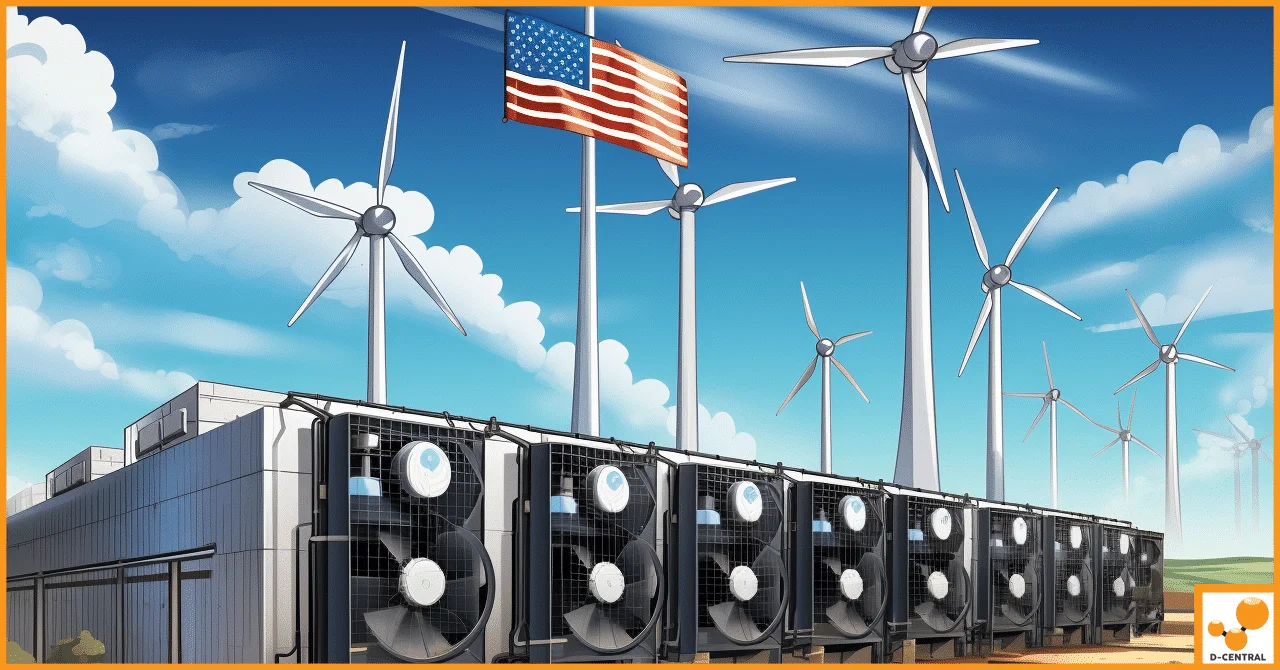
Texas has become the loudest name in North American Bitcoin mining. And for good reason: deregulated energy markets, grid incentive programs through ERCOT, and a state government that at least pretends to understand what decentralization means. Miners have poured billions into the Lone Star State, building warehouse-scale operations powered by cheap natural gas and surplus wind energy.
But here is the thing nobody talks about at the conferences: Texas is a brutal environment for ASIC hardware. The heat destroys machines. The grid is unreliable. And when your operation goes down in a state where summer ambient temperatures exceed 40 degrees Celsius, you are not just losing hashrate — you are burning capital.
D-Central Technologies has been in the Bitcoin mining trenches since 2016. We are Canada’s Bitcoin Mining Hackers — we take institutional-grade mining technology and make it work for the individual miner. We have sent technicians to Texas operations, repaired thousands of machines damaged by heat stress, and built solutions specifically for miners who refuse to let hostile environments stop them from securing the Bitcoin network.
This is the real story of Bitcoin mining in Texas: the opportunities, the brutal challenges, and the solutions that actually work.
Why Texas Became a Bitcoin Mining Magnet
The math behind Texas’s appeal is straightforward. The state operates a deregulated energy market, meaning miners can negotiate power purchase agreements (PPAs) directly with generators. Unlike regulated markets where a single utility dictates pricing, Texas lets you shop for the cheapest electrons available.
The Electric Reliability Council of Texas (ERCOT) manages roughly 90% of the state’s electrical load. ERCOT runs demand response programs that effectively pay large consumers — including Bitcoin miners — to curtail their power usage during peak demand. A mining operation running at 100 MW can earn significant revenue simply by shutting down when the grid needs relief. This is not charity; it is a market mechanism, and Bitcoin miners are uniquely positioned to capitalize on it because ASICs can be powered down and back up in seconds.
Texas also sits on massive renewable energy infrastructure. West Texas wind farms produce surplus power at night when demand is low, creating negative pricing events where generators literally pay consumers to take electricity off their hands. For a Bitcoin miner, negative-price energy is essentially free hashrate.
| Factor | Texas Advantage | Reality Check |
|---|---|---|
| Energy Cost | $0.02-0.05/kWh via PPAs | Spot prices spike to $9/kWh during grid emergencies |
| Grid Incentives | ERCOT demand response revenue | Requires sophisticated curtailment infrastructure |
| Renewable Surplus | Negative pricing from wind oversupply | Available primarily at night, seasonal variability |
| Regulatory Climate | Pro-business, minimal mining restrictions | Political winds can shift; zoning battles increasing |
| Ambient Temperature | Mild winters reduce cooling costs Oct-Mar | Summer heat (35-45°C) destroys hardware |
The combination of cheap power, grid revenue, and a permissive regulatory environment has attracted major operations. But the same factors that make Texas attractive also create conditions that chew through ASIC hardware at alarming rates.
The Heat Problem: Texas’s Silent Hardware Killer
Every ASIC miner generates tremendous heat during operation. An Antminer S21, for example, consumes roughly 3,500 watts and converts nearly all of that into thermal energy. In a climate-controlled data center in Quebec, where ambient temperatures hover around -10 to -20 degrees Celsius in winter, this heat is manageable — even useful. In Texas, where summer temperatures routinely exceed 40 degrees Celsius, it becomes a crisis.
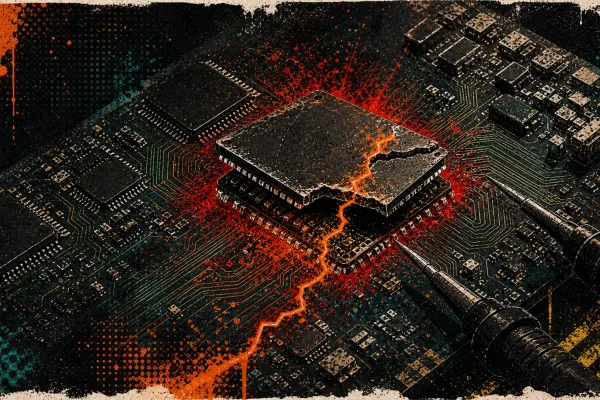
Air-cooled mining facilities in Texas face a fundamental thermodynamic problem: when your intake air is already at 40 degrees, your exhaust temperatures climb dangerously high. ASIC chips operating above their thermal design limits experience accelerated electromigration, solder joint fatigue, and capacitor degradation. The result is not a gradual decline in performance — it is sudden, catastrophic failure of hashboards, power supplies, and control boards.
The numbers are stark. Mining operations in hot climates report hardware failure rates two to five times higher than operations in cold climates. A facility running 10,000 Antminer S19-series units in central Texas might see 50 to 100 machines go down per week during peak summer, compared to 10 to 20 per week for an equivalent operation in Quebec or Scandinavia.
This is not a theoretical problem. It is the primary reason that D-Central has received thousands of ASIC units from Texas operations for repair and refurbishment. Burned-out hashboards, failed power supplies, corroded connectors — the damage patterns are consistent and predictable when hardware runs in sustained high-heat environments.
Cooling Solutions: What Works and What Does Not
Texas operations have experimented with multiple cooling strategies:
Immersion Cooling: Submerging ASIC miners in dielectric fluid eliminates air cooling entirely. The fluid absorbs and transfers heat far more efficiently than air, keeping chip temperatures stable regardless of ambient conditions. The technology works, but the capital expenditure is significant — immersion infrastructure can cost $500 to $1,000 per machine in additional buildout costs, plus the ongoing cost of dielectric fluid maintenance.
Evaporative Cooling: Using water evaporation to drop intake air temperatures. Effective in dry West Texas but less so in humid East Texas. Adds water consumption as an operational cost and introduces corrosion risks if water quality is not carefully managed.
Curtailment Strategy: Simply shutting down during the hottest hours of the day. This protects hardware but reduces total hashrate output. Some operators combine curtailment with ERCOT demand response, turning a cooling limitation into a revenue opportunity.
The Canadian Alternative: Moving operations to cold climates entirely. Canada offers hydroelectric power in Quebec at competitive rates, combined with natural cooling for roughly eight months of the year. D-Central operates hosting facilities in Quebec where miners benefit from cold air intake, stable grid infrastructure, and energy costs that compete with the best Texas PPAs — without the hardware destruction.
Grid Reliability: The ERCOT Wild Card
The Texas power grid operates as an island, largely disconnected from the two major North American interconnections. This isolation is by design — it keeps Texas outside federal regulation — but it also means there is no cavalry coming when the grid is stressed.
The February 2021 winter storm (Uri) demonstrated this vulnerability in catastrophic fashion. The grid came within minutes of total collapse, and millions of Texans lost power for days. Mining operations went offline entirely, and the thermal cycling from rapid cooldown and reheating caused additional hardware damage.
ERCOT has made improvements since then, but the fundamental architecture remains. Texas miners must build their operations with grid instability as a baseline assumption, not an edge case. This means:
- Investing in on-site backup power or islanding capability
- Building curtailment automation that responds to real-time pricing signals
- Maintaining relationships with ASIC repair services that can handle surge demand after grid events
- Keeping spare hardware inventory for rapid replacement
For home miners and smaller operations, the grid reliability question is even more pressing. You cannot negotiate a PPA for a single Antminer in your garage. You are exposed to retail electricity rates, which in Texas can spike from $0.10/kWh to $9.00/kWh in a matter of minutes during grid emergencies.
ASIC Repair: The Lifeline Texas Miners Cannot Ignore
When hardware fails at scale, the difference between a profitable operation and a money pit often comes down to repair capability. Shipping failed ASICs to overseas repair centers means weeks of downtime and uncertain quality. Building in-house repair teams requires significant investment in training, equipment, and parts inventory.
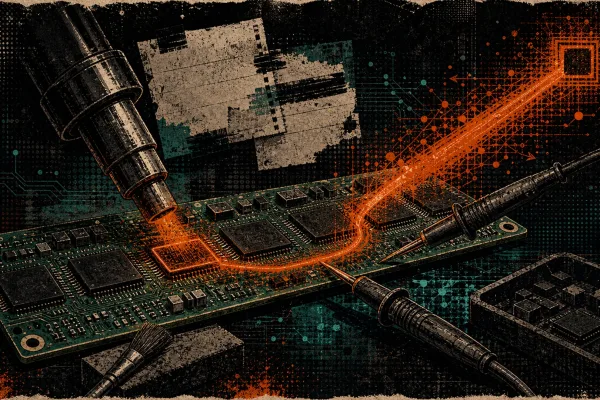
D-Central has built one of North America’s most comprehensive ASIC repair operations, with experience across every major manufacturer and model line. We have repaired machines from Bitmain (Antminer S9 through S21 series), MicroBT (Whatsminer M30S through M60S), Canaan (Avalon series), and Innosilicon units. Our technicians diagnose failures at the component level — individual ASIC chips, voltage regulators, temperature sensors, and communication pathways.
For Texas miners specifically, we see consistent failure patterns:
| Failure Type | Root Cause | Frequency (Texas vs. Cold Climate) |
|---|---|---|
| Hashboard ASIC chip failure | Sustained overtemperature operation | 3-5x higher |
| Power supply failure | Thermal cycling + dust accumulation | 2-3x higher |
| Fan motor burnout | Running at max RPM continuously | 4-6x higher |
| Solder joint cracking | Thermal expansion/contraction cycles | 2-4x higher |
| Connector corrosion | Humidity + heat accelerating oxidation | 3x higher |
Every machine sitting idle waiting for repair is hashrate not contributing to network security and not earning sats. This is why rapid, competent repair service is not a luxury — it is an operational necessity.
The Home Mining Angle: What Texas Plebs Should Consider
Not every miner in Texas is running a warehouse full of S21s. The home mining community is growing, and Texas plebs face their own set of considerations.
Dual-purpose mining — using ASIC heat for home heating — makes less sense in Texas than it does in Canada, for obvious reasons. In Quebec, a Bitcoin space heater running an Antminer S9 can heat a room while mining sats for eight months of the year. In Texas, you might get three to four months of useful heating before the same machine becomes a liability that heats your house when you are already running the air conditioning.
That said, Texas home miners have advantages in other areas:
- Solar integration: Texas receives abundant sunshine, and home solar installations can power small mining operations during peak production hours at near-zero marginal cost
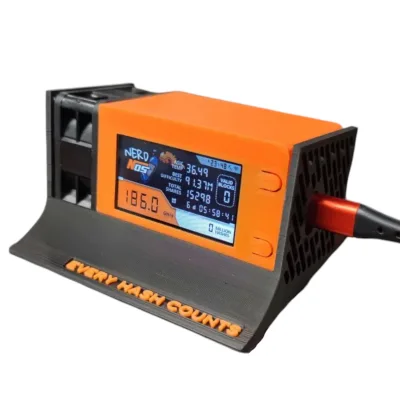
- Open-source miners: Devices like the Bitaxe consume minimal power (10-25 watts) and generate negligible heat, making them viable for solo mining in any climate. The Bitaxe Supra, Ultra, and Gamma models run on a 5V barrel jack power supply — perfect for solar-powered setups
- Garage and outbuilding setups: Texas properties tend to have more space than urban Canadian homes, allowing for dedicated mining areas with ventilation
For Texas home miners interested in solo mining, the Bitaxe line represents the most practical entry point. Solo mining with a Bitaxe is a low-power way to contribute to network decentralization while taking a shot at a full 3.125 BTC block reward. The odds are long — the Bitcoin network exceeds 800 EH/s — but every hash counts, and every solo miner strengthens the network against centralization.
Texas vs. Canada: An Honest Comparison for Miners
We are a Canadian company, so take this comparison with appropriate context. But the data speaks for itself:
| Factor | Texas | Quebec, Canada |
|---|---|---|
| Energy Source | Natural gas, wind, solar | 99%+ hydroelectric (renewable) |
| Energy Cost Range | $0.02-0.05/kWh (PPA), volatile spot | $0.04-0.06/kWh (stable hydro rates) |
| Grid Reliability | ERCOT island, proven vulnerability | Interconnected, Hydro-Quebec backbone |
| Natural Cooling | 3-4 months/year | 8-9 months/year |
| Hardware Lifespan | Reduced by heat stress | Extended by cold climate operation |
| Demand Response Revenue | ERCOT programs available | Limited, but stable baseline rates |
| Repair Access | Limited local options | D-Central HQ in Montreal, QC |
Texas wins on energy cost floor and demand response opportunities. Canada wins on grid reliability, hardware longevity, natural cooling, and renewable energy credentials. For miners who care about long-term total cost of ownership — not just the electricity line item — Canada deserves serious consideration.
D-Central offers mining hosting in Quebec for operators who want Canadian advantages without relocating their entire lives. Ship your machines north, and let physics work in your favor.
What D-Central Brings to the Table
Whether you are mining in Texas, Canada, or anywhere else, D-Central exists to serve the individual miner. We are not an institutional mining company — we are Bitcoin Mining Hackers. Our services are built for the pleb miner, the home miner, the operator running 10 machines or 10,000.
ASIC Repair: Component-level diagnostics and repair for all major manufacturers. We do not just swap boards — we identify failed chips, replace them, and verify hashrate before shipping back. Our repair pages cover 38+ specific ASIC models with detailed information on common failure modes and repair processes.
Mining Hardware: From open-source Bitaxe solo miners to full-scale Antminer S21 units, our shop stocks the hardware you need. Every product is tested and verified before it ships from our facility in Montreal, Quebec.
Mining Consulting: Need help designing your operation, selecting hardware, or optimizing your power infrastructure? Our consulting services are built on nearly a decade of hands-on mining experience.
Hosting: Our Quebec hosting facility offers cold-climate advantages with professional management. Located at our Montreal facility, we provide monitoring, maintenance, and repair services for hosted machines.
We have been doing this since 2016. We have repaired thousands of machines, built custom mining solutions, and helped miners across North America keep their hashrate online. Bitcoin mining is not just our business — it is our mission. Every hash that comes from a home miner, a small operator, or a sovereign individual strengthens the decentralization that makes Bitcoin worth mining in the first place.
Frequently Asked Questions
Why is Texas popular for Bitcoin mining?
Texas offers a deregulated energy market with some of the lowest power costs in North America, ERCOT demand response programs that pay miners to curtail during peak demand, abundant wind and solar energy that creates negative pricing events, and a regulatory environment that has been broadly supportive of mining operations. These factors combined have attracted billions in mining infrastructure investment.
What is the biggest risk of mining Bitcoin in Texas?
Hardware degradation from sustained high temperatures. Texas summer heat (35-45 degrees Celsius ambient) pushes air-cooled ASIC miners beyond their thermal design limits, causing accelerated chip failure, solder joint cracking, fan burnout, and power supply degradation. Mining operations in Texas report hardware failure rates two to five times higher than equivalent operations in cold climates like Canada.
How does ERCOT demand response work for Bitcoin miners?
ERCOT operates programs that compensate large electricity consumers for reducing their load during periods of high grid stress. Bitcoin miners are ideal participants because ASIC hardware can be powered down and restarted within seconds. Miners effectively get paid to stop mining when electricity is most expensive, then resume when prices normalize. This creates a secondary revenue stream beyond block rewards and transaction fees.
Can D-Central repair ASIC miners damaged by Texas heat?
Yes. D-Central has repaired thousands of ASIC units from Texas operations. We perform component-level diagnostics and repair on all major manufacturers including Bitmain Antminer (S9 through S21 series), MicroBT Whatsminer, Canaan Avalon, and Innosilicon units. Heat damage typically manifests as failed ASIC chips on hashboards, blown power supply capacitors, and burned fan motors — all of which we repair at our facility in Montreal, Quebec.
Is it better to mine Bitcoin in Texas or Canada?
It depends on your priorities. Texas offers lower energy cost floors and demand response revenue opportunities. Canada — specifically Quebec — offers superior grid reliability, 99%+ renewable hydroelectric power, natural cooling for eight to nine months per year, and significantly longer hardware lifespans due to cold climate operation. For miners focused on total cost of ownership including hardware replacement, Canada often comes out ahead despite slightly higher electricity rates.
What open-source mining options work well in hot climates like Texas?
Low-power open-source miners like the Bitaxe (Supra, Ultra, Gamma models consuming 10-25 watts via 5V barrel jack) generate minimal heat and work well in any climate, including Texas. They are ideal for solo mining — taking a shot at the full 3.125 BTC block reward while contributing to network decentralization. Pair one with a home solar setup for near-zero marginal operating cost.
Does D-Central offer mining hosting as an alternative to Texas?
Yes. D-Central operates a hosting facility in Quebec, Canada, where miners benefit from cold climate cooling, stable hydroelectric power, and on-site repair services. Hosting in Quebec eliminates the heat-related hardware damage that plagues Texas operations while maintaining competitive energy costs. Contact us to learn about current hosting availability and pricing.