Every few years, Bitcoin’s price goes parabolic. The charts go vertical, mainstream media loses its collective mind, and suddenly everyone from your neighbor to your taxi driver has opinions about “crypto.” Then, just as quickly, the music stops. Price crashes. Panic spreads. And the tourists leave.
This pattern — the blow-off top — is one of the most misunderstood phenomena in Bitcoin. Most analysis treats it as a trading event, something for speculators to navigate with stop-loss orders and portfolio rebalancing. That perspective misses the point entirely.
For miners, blow-off tops are not about price charts. They are about hash price cycles, difficulty adjustments, hardware market dynamics, and the fundamental thermodynamic relationship between energy expenditure and block production. If you mine Bitcoin — whether you are running a Bitaxe on your desk or a fleet of S21s in a facility — understanding blow-off tops from a mining perspective is essential to making sound decisions about hardware, timing, and strategy.
This is the miner’s guide to blow-off tops. No financial advice. No portfolio allocation tips. Just the raw mechanics of what these events mean for the people actually securing the Bitcoin network.
What Is a Blow-Off Top?
A blow-off top is a chart pattern where an asset’s price accelerates exponentially over a compressed timeframe, reaches an unsustainable peak, and then reverses sharply. The pattern is characterized by three distinct phases:
- Parabolic acceleration — Price moves from a steady uptrend into a near-vertical climb. Each day or week produces gains that previously took months. Volume surges as new market participants rush in.
- The blow-off peak — Price reaches a point where buying exhaustion meets reality. The final buyers are the most euphoric and the least informed. The peak often coincides with maximum media saturation and cultural penetration.
- The capitulation — Price drops rapidly, often retracing 50-80% of the parabolic move within weeks or months. Leveraged positions get liquidated in cascades. The tourists leave, declaring Bitcoin “dead” for the hundredth time.
What makes blow-off tops different from ordinary corrections is the speed and magnitude on both sides. A normal correction might see a 20-30% drawdown over several weeks. A blow-off top reversal can erase months of gains in days.
Bitcoin’s History of Blow-Off Tops
Bitcoin has experienced several distinct blow-off top events, each occurring within the broader context of its four-year halving cycle. Understanding these historical patterns is crucial for miners because each cycle has directly shaped the mining industry’s evolution.
2011: The First Parabolic Run
Bitcoin surged from under $1 to $31 in June 2011, then crashed to $2 by November. This blow-off top was driven almost entirely by early adopter speculation and the novelty factor. Mining at this point was still done on CPUs and GPUs. The crash had minimal impact on network hashrate because mining costs were negligible — electricity was the only real expense, and most miners were hobbyists running hardware they already owned.
2013: The Double Bubble
Bitcoin produced two blow-off tops in 2013. The first ran from $13 to $266 in April, crashed to $50, then recovered and surged to $1,242 by December before crashing to under $200 by early 2015. This cycle marked the transition from GPU mining to purpose-built ASIC hardware. The crash devastated early ASIC companies — several went bankrupt, and miners who bought hardware at peak prices found themselves underwater as difficulty continued climbing even as price collapsed.
This was the first cycle where the blow-off top had real consequences for mining hardware economics.
2017: The ICO Mania Peak
Bitcoin climbed from $1,000 in January to nearly $20,000 by mid-December 2017, then crashed below $3,200 by December 2018. This blow-off top was amplified by the ICO craze, Bitcoin futures launches, and unprecedented mainstream media coverage. For miners, the aftermath was brutal. Antminer S9s that sold for $2,500+ at peak dropped to under $200. Hash price collapsed. Marginal miners were forced offline. The network hashrate actually declined for the first time in Bitcoin’s modern history as unprofitable operators capitulated.
But here is the critical lesson: the miners who survived — those running efficient operations with low energy costs — accumulated Bitcoin at depressed prices and dominated when the next cycle arrived.
2021: The Institutional Cycle
Bitcoin reached approximately $69,000 in November 2021, following a run that began below $10,000 in late 2020. The subsequent crash took price below $16,000 by November 2022. This cycle was characterized by institutional adoption, corporate treasury allocations, and the expansion of Bitcoin financial products. For miners, the aftermath included the FTX collapse, multiple mining company bankruptcies, and a severe hash price compression that forced the industry to professionalize or die.
The Post-2024 Halving Cycle
With the April 2024 halving reducing the block subsidy to 3.125 BTC, Bitcoin entered a new cycle. The network hashrate now exceeds 800 EH/s, difficulty sits above 110 trillion, and the mining landscape has fundamentally transformed. The spot Bitcoin ETF approvals in January 2024 introduced a new class of demand that did not exist in previous cycles. Whether the current cycle produces a classic blow-off top or a more sustained bull market remains to be seen — but miners need to be prepared for both scenarios.
Why Miners Should Think Differently About Blow-Off Tops
The standard financial analysis of blow-off tops focuses on trading strategies: when to sell, where to set stops, how to hedge. That framework is designed for speculators. Miners operate in a fundamentally different paradigm.
Here is why:
Hash Price Is What Matters, Not Spot Price
Hash price — the daily revenue per terahash per second — is the metric that determines mining profitability. Hash price is a function of Bitcoin’s spot price, network difficulty, transaction fees, and the block subsidy. During a blow-off top, hash price spikes as price rises faster than difficulty can adjust (difficulty retargets every 2,016 blocks, roughly every two weeks). This creates a temporary window of extraordinary profitability.
After the blow-off top reverses, price drops immediately but difficulty takes weeks or months to adjust downward. This creates a period of compressed margins where only the most efficient miners survive. Understanding this lag between price action and difficulty adjustment is the single most important concept for miners navigating blow-off tops.
Hardware Markets Are Reflexive
ASIC miner prices are highly correlated with Bitcoin price, but with amplified volatility. When Bitcoin doubles, ASIC prices might triple or quadruple. When Bitcoin drops 50%, ASICs can lose 70-80% of their value. This reflexivity means that buying hardware during a blow-off top is almost always a losing proposition. The best time to acquire mining hardware is during the capitulation phase when prices are depressed, miners are selling, and sentiment is at its lowest.
This is exactly why D-Central has always emphasized the importance of ASIC repair services. Instead of buying new hardware at inflated peak-cycle prices, smart miners extend the life of existing equipment through professional repair and maintenance, then deploy that capital toward new hardware acquisitions when the market bottoms.
Difficulty Adjustments Are Your Autopilot
Bitcoin’s difficulty adjustment mechanism is one of the most elegant engineering solutions in the protocol. When miners leave the network after a price crash, difficulty drops, making it more profitable for remaining miners. This self-correcting mechanism means that Bitcoin mining always trends toward equilibrium. Miners who can survive the post-blow-off-top capitulation period are rewarded with lower difficulty and higher per-hash revenue as competitors exit.
The Miner’s Playbook for Blow-Off Top Cycles
Based on four complete halving cycles and multiple blow-off top events, here is the strategic framework that separates miners who build generational operations from those who get wrecked:
Phase 1: The Accumulation Phase (Post-Crash)
This is where the real work happens. After a blow-off top crashes, the market enters a prolonged bear phase. Hardware prices collapse. Mining companies go bankrupt and liquidate equipment. Hash price is low, but so are operational costs for those positioned correctly.
What smart miners do:
- Acquire discounted hardware from distressed sellers
- Invest in mining consulting to optimize existing operations for efficiency
- Repair and refurbish existing equipment rather than replacing it
- Negotiate long-term energy contracts at favorable rates
- Build out infrastructure (electrical, cooling, networking) when contractors are not in high demand
- Focus on efficiency: joules per terahash, not total hashrate
Phase 2: The Recovery and Expansion
As price begins recovering and hash price improves, the early accumulators benefit first. New hardware generations launch. The market begins to heat up.
What smart miners do:
- Deploy the hardware accumulated during the bear market
- Evaluate new-generation ASICs carefully — buy based on efficiency (J/TH), not peak hashrate numbers
- Consider dual-purpose mining setups like Bitcoin space heaters that offset energy costs by replacing conventional heating
- Begin taking some profits in Bitcoin to build an operational reserve
- Scale cautiously — do not over-leverage based on current hash price
Phase 3: The Parabolic Phase
This is the blow-off top itself. Price is going vertical. Hash price is at cycle highs. Everyone wants to mine. ASIC prices are through the roof. New mining companies are launching daily. The temptation to expand aggressively is overwhelming.
What smart miners do:
- Resist the urge to buy hardware at peak prices — the math almost never works out
- Sell older-generation hardware while demand is high (an S19 worth $200 in a bear market might sell for $1,500+ during euphoria)
- Increase operational efficiency rather than total capacity
- Build cash and Bitcoin reserves for the inevitable correction
- Lock in favorable hosting rates if applicable through Canadian hosting services
- If you must expand, focus on open-source miners like the Bitaxe that maintain their value through community demand and do not suffer the same price collapse as industrial ASICs
Phase 4: The Capitulation
Price crashes. Media declares Bitcoin dead. Mining profitability compresses. Overleveraged operations fail. Hardware floods the secondary market.
What smart miners do:
- Keep mining. If your operation was profitable before the blow-off top, it will likely return to profitability after difficulty adjusts downward
- Start accumulating hardware again from distressed sellers
- Invest in mining training and education to sharpen skills during the downtime
- Maintain and repair equipment to be ready for the next cycle
- Remember: every previous “death” of Bitcoin was a buying opportunity for both Bitcoin and mining hardware
Blow-Off Tops and the Case for Home Mining
One of the most powerful arguments for home mining — the kind of decentralized, pleb-scale mining that D-Central was built to enable — is its resilience to blow-off top cycles.
Industrial mining operations carry enormous fixed costs: facility leases, staff, cooling infrastructure, debt service on equipment loans. When hash price drops post-blow-off-top, these fixed costs become crushing. This is why mining company bankruptcies are a feature of every cycle.
Home miners operate with a fundamentally different cost structure:
- No facility lease — you already pay for your home
- Dual-purpose energy use — Bitcoin space heaters mean your mining energy expenditure is also your heating bill. In Canadian winters, this dual-use can make mining effectively free from an energy cost perspective
- No debt service — most home miners buy equipment outright
- No staff costs — you are the operator
- Flexible operation — you can throttle down, switch pools, or pause without contractual obligations
This cost structure means home miners can survive hash price compressions that bankrupt industrial operations. When the blow-off top crashes and difficulty eventually adjusts downward, home miners with low effective energy costs can continue accumulating sats while institutional miners are liquidating equipment.
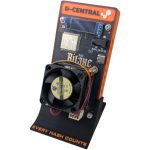
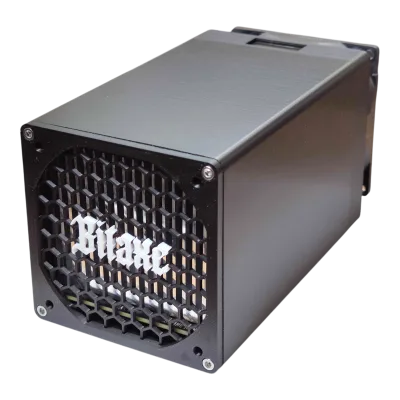
The Bitaxe ecosystem represents the ultimate expression of this philosophy. A solo miner running on a 5V barrel jack, consuming under 25 watts, connected to your home network. No hosting contracts. No debt. No counterparty risk. Just you, your hardware, and the Bitcoin network. Every hash counts.
Technical Indicators Miners Should Watch
While traders watch RSI and MACD, miners should focus on indicators that directly affect mining economics:
| Indicator | What It Tells Miners | Blow-Off Top Signal |
|---|---|---|
| Hash Price (USD/TH/day) | Daily revenue per terahash | Spikes to 2-3x the 200-day average |
| Hash Ribbons | Miner capitulation and recovery signals | 30-day hashrate MA crosses far above 60-day MA |
| Puell Multiple | Daily coin issuance value vs. 365-day MA | Enters red zone (above 4.0) |
| ASIC Price Index | Hardware market sentiment | New-gen ASICs trading at 3-5x manufacturing cost |
| Difficulty Ribbon | Rate of new hashrate coming online | Rapid expansion with short-period MAs far above long-period |
| Mempool Size | Transaction fee revenue potential | Sustained high mempool with elevated fee rates |
| Miner Reserve Outflows | Whether miners are selling or holding | Large outflows from known miner wallets to exchanges |
The most important of these for miners is the relationship between hash price and the difficulty adjustment. When hash price is elevated but difficulty has not yet caught up, you are in the golden window. When price crashes but difficulty remains high, you are in the squeeze. Understanding where you sit in this cycle determines your operational strategy.
The 2026 Mining Landscape and Cycle Positioning
As of early 2026, the Bitcoin mining industry sits in a unique position. The April 2024 halving reduced the block subsidy to 3.125 BTC — meaning miners now compete for roughly 450 BTC per day in block rewards, plus transaction fees. Network hashrate has pushed past 800 EH/s, and difficulty exceeds 110 trillion.
Several factors make this cycle different from previous ones:
- Spot Bitcoin ETFs — Approved in January 2024, these products have introduced persistent institutional demand that did not exist in prior cycles. This new demand layer could extend bull phases and dampen the severity of blow-off top reversals.
- Transaction fee dynamics — Ordinals, BRC-20 tokens, and other on-chain activity have created periods of elevated transaction fees, adding a meaningful revenue component beyond the block subsidy. Fee revenue partially decouples miner economics from spot price alone.
- Energy market evolution — The narrative around Bitcoin mining and energy has shifted. Miners are increasingly co-locating with renewable energy sources, participating in demand response programs, and monetizing stranded energy. This trend reduces miners’ exposure to energy price volatility during cycle downturns.
- ASIC efficiency plateau — The gap between current-generation and next-generation ASIC efficiency is narrowing. This means older hardware stays competitive longer, reducing the obsolescence risk that devastated miners in earlier cycles.
- Open-source hardware — The Bitaxe ecosystem and other open-source mining projects have created a parallel hardware market that operates on different economics than industrial ASICs. This diversification benefits the network’s decentralization and gives home miners options that did not previously exist.
Whether the current cycle produces a classic blow-off top with an 80% drawdown, a more moderate correction, or a prolonged bull run, the miners who survive and thrive will be those who understand the cyclical nature of Bitcoin mining economics and position their operations accordingly.
What D-Central Learned from Four Cycles
D-Central has operated through multiple Bitcoin market cycles since 2016. The founder of D-Central built the company with a conviction that was forged during the 2017 blow-off top and the brutal bear market that followed. The lessons from that experience — and every cycle since — are embedded in how D-Central operates today.
The core insight: mining is a long game. The operators who get wrecked are the ones who scale based on peak-cycle economics, buy hardware at euphoric prices, and assume hash price will stay elevated indefinitely. The operators who build lasting operations are the ones who plan for the worst, acquire hardware during fear, optimize for efficiency over raw hashrate, and treat mining as a multi-cycle commitment.
This is why D-Central’s business model spans the entire mining lifecycle. Hardware sales for when you are building or expanding. Repair services for when you are extending the life of existing equipment rather than buying at peak prices. Consulting for when you need expert guidance on timing, hardware selection, or operational optimization. Hosting in Quebec for when you need reliable, cold-climate infrastructure. Every service maps to a different phase of the blow-off top cycle.
The blow-off top is not something to fear. It is something to prepare for. And the preparation starts long before the charts go vertical.
Frequently Asked Questions
What is a Bitcoin blow-off top and why should miners care?
A blow-off top is a market pattern where price accelerates parabolically and then reverses sharply. Miners should care because blow-off tops directly impact hash price, hardware valuations, and difficulty adjustments — the three variables that determine mining profitability. Unlike traders who can simply exit positions, miners have physical infrastructure that cannot be liquidated instantly, making cycle awareness critical for operational planning.
When is the best time to buy mining hardware relative to blow-off tops?
The optimal time to acquire mining hardware is during the post-crash capitulation phase, when prices are at their lowest, distressed miners are liquidating equipment, and market sentiment is deeply negative. Buying hardware during or near a blow-off top peak almost always results in negative ROI because ASIC prices are inflated 3-5x above their bear market levels. If you cannot wait for a full bear market, focus on open-source miners like the Bitaxe that hold their value more consistently than industrial ASICs.
How does the difficulty adjustment protect miners during price crashes?
Bitcoin’s difficulty retargets every 2,016 blocks (approximately two weeks). When price crashes and unprofitable miners shut down, the network hashrate drops. The next difficulty adjustment reduces the mining difficulty proportionally, making it easier and more profitable for remaining miners to find blocks. This self-correcting mechanism means that mining always trends toward economic equilibrium — miners who can survive the initial squeeze after a blow-off top are rewarded with improved economics as competitors exit.
Why is home mining more resilient to blow-off top cycles than industrial mining?
Home miners operate with minimal fixed costs — no facility leases, no staff, no debt service on equipment loans. When using Bitcoin space heaters, the energy cost is partially or fully offset by replacing conventional heating. This cost structure means home miners can remain operational at hash price levels that force industrial operations into bankruptcy. The flexibility to scale up or down without contractual obligations adds another layer of resilience.
Should I stop mining during a bear market after a blow-off top?
Not necessarily. If your effective energy cost (accounting for heat offset, renewable generation, or other factors) keeps you profitable on a per-hash basis, continuing to mine during bear markets allows you to accumulate Bitcoin at depressed prices. Many successful long-term miners built the bulk of their Bitcoin holdings by mining through bear markets when others had stopped. The key metric is whether your all-in cost per Bitcoin mined is below the spot price — and with difficulty adjustments reducing mining difficulty as competitors exit, this calculation often improves over time.
What makes the current post-2024 halving cycle different for miners?
The 3.125 BTC block subsidy, combined with 800+ EH/s network hashrate and 110T+ difficulty, creates the most competitive mining environment in Bitcoin’s history. However, spot Bitcoin ETFs provide a new persistent demand layer, transaction fee revenue from Ordinals and on-chain activity adds meaningful income beyond the subsidy, and the narrowing efficiency gap between ASIC generations means older hardware stays competitive longer. These factors could produce a different cycle shape than previous blow-off tops.
How can I prepare my mining operation for the next blow-off top?
Build reserves (both cash and Bitcoin) during profitable periods. Avoid taking on debt to expand at peak-cycle economics. Invest in hardware maintenance and repair to extend equipment life rather than buying at inflated prices. Diversify your mining approach — combine industrial ASICs with open-source solo miners like the Bitaxe. Secure long-term energy contracts at favorable rates. And most importantly, plan your operation to be sustainable at hash prices 50-70% below the current level, because that is where you will need to survive when the cycle turns.