Key Takeaways
- ASIC miners are specialized hardware designed exclusively for cryptocurrency mining, offering unmatched efficiency and speed for specific hashing algorithms, particularly in Bitcoin mining.
- While ASIC miners offer high profitability and durability, they come with drawbacks such as high initial costs, inflexibility, and lack of resale value due to their specialized nature.
- The continuous innovation in ASIC technology is driving greater efficiency and sustainability in cryptocurrency mining, with a growing focus on reducing environmental impact through renewable energy sources and dual-purpose applications like home heating.
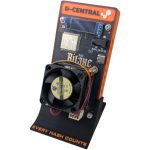
- Open-source ASIC miners like the Bitaxe are democratizing access to mining hardware, allowing anyone to participate in securing the Bitcoin network.
Understanding ASIC Miners
ASIC miners, or Application-Specific Integrated Circuits, are specialized hardware designed explicitly for the purpose of cryptocurrency mining. Unlike general-purpose hardware such as CPUs or GPUs, ASIC miner rigs are built to generate hashes efficiently, focusing on specific integrated circuit algorithms required for mining particular cryptocurrencies. This specialization allows them to perform mining tasks at speeds and efficiencies unattainable by more general-purpose hardware. Each ASIC miner is optimized for one particular coin based on its unique hashing algorithm, resulting in enhanced mining efficiency. For instance, Bitcoin ASIC miners utilize the SHA-256 hashing algorithm, which is critical for Bitcoin mining. This optimization means that ASIC miners can solve cryptographic puzzles required for transaction validation more effectively than other types of hardware. The introduction of ASIC miners in 2012 marked a significant shift in the competitive dynamics of Bitcoin mining. Their ability to handle the substantial computational power needed for solving cryptographic puzzles pushed out less efficient general-purpose hardware, making ASIC miners the go-to choice for serious miners. This evolution has driven many miners to adopt ASIC miners to remain competitive and maximize their mining rewards.The Complete Evolution of Mining Hardware
The journey of cryptocurrency mining hardware is a story of exponential improvement in efficiency and specialization. Understanding this evolution helps explain why ASIC miners dominate today’s mining landscape.| Era | Year | Hardware | Typical Hashrate | Key Innovation |
|---|---|---|---|---|
| CPU Mining | 2009-2010 | Desktop CPUs (Intel, AMD) | 1-20 MH/s | Anyone with a computer could mine |
| GPU Mining | 2010-2012 | Graphics cards (NVIDIA, AMD) | 50-800 MH/s | Parallel processing — 10-50x faster than CPUs |
| FPGA Mining | 2011-2013 | Field Programmable Gate Arrays | 100 MH/s – 1 GH/s | Better energy efficiency than GPUs |
| Early ASIC | 2013-2016 | Avalon, Antminer S1-S7 | 1-14 TH/s | Purpose-built for SHA-256, massive efficiency gains |
| Modern ASIC | 2016-2022 | Antminer S9, S17, S19 series | 14-140 TH/s | Chip shrinkage (16nm to 5nm), efficiency leaps |
| Current Gen ASIC | 2023-2026 | Antminer S21, T21 series | 200-400+ TH/s | Sub-20 J/TH efficiency, hydro cooling |
| Open-Source ASIC | 2022-present | Bitaxe, NerdAxe, NerdQAxe | 0.5-4.2 TH/s | Fully open-source hardware, home mining focus |
Types of ASIC Miners by Algorithm
Not all ASIC miners are the same. They are designed for specific hashing algorithms, which determines which cryptocurrency they can mine. Here are the major categories:| Algorithm | Primary Cryptocurrency | Example ASIC Miners | Notes |
|---|---|---|---|
| SHA-256 | Bitcoin (BTC), Bitcoin Cash (BCH) | Antminer S19, S21, Bitaxe, Whatsminer M50 | By far the largest ASIC market. Bitcoin mining dominates. |
| Scrypt | Litecoin (LTC), Dogecoin (DOGE) | Antminer L3+, L7, L9 | Merge-mined: one miner earns both LTC and DOGE. |
| X11 | Dash (DASH) | Antminer D3, D9 | Smaller market. X11 chains are less common today. |
| Blake2b / Blake3 | Siacoin, Handshake | Obelisk SC1, Goldshell HS5 | Niche market with limited hardware options. |
| Equihash | Zcash (ZEC) | Antminer Z11, Z15 | Memory-intensive algorithm, originally designed to be ASIC-resistant. |
| KHeavyHash | Kaspa (KAS) | IceRiver KS3, Bitmain KS5 | New and growing ASIC market as of 2024-2025. |
How ASIC Miners Work
ASIC miners are marvels of modern engineering, composed of several critical components that work together to achieve optimal mining performance. These components include:- ASIC chips, which are programmed to generate hashes necessary for mining.
- An integrated circuit board (hashboard), on which the ASIC chips are mounted. Most full-size miners contain 3-4 hashboards.
- A control board that manages the hashboards and distributes hashing tasks to maximize efficiency.
Hashing Algorithms
Hashing algorithms are the backbone of cryptocurrency mining, and ASIC miners are primarily built to execute a limited number of these algorithms for optimal performance. For instance, Bitcoin ASIC miners utilize the SHA-256 hashing algorithm, which converts input data into a long hexadecimal number. The goal of hashing in mining is to reach a number less than the target hash, a task that requires immense computational power. The most powerful Bitcoin ASIC miners can achieve hashing power exceeding 400 terahashes per second, showcasing their capability to process vast amounts of computing power quickly. This incredible performance is what makes ASIC miners so effective and sought after in the world of cryptocurrency mining.Cooling Systems
Cooling systems are vital for the efficient operation of ASIC miners. These systems prevent overheating, which can damage the hardware and reduce mining efficiency. Various cooling methods include:- Air cooling: Fans push air over heatsinks attached to ASIC chips. This is the most common method used in miners like the Antminer S19 and S21 series.
- Liquid cooling (hydro): Water or coolant circulates through a closed loop, absorbing heat from the chips. The Antminer S21 Hyd. uses this method for higher efficiency and lower noise.
- Immersion cooling: The entire miner is submerged in non-conductive oil or dielectric fluid. This provides the most effective cooling and is used in large-scale operations.
Mining Pools
Mining pools play a crucial role in the world of cryptocurrency mining. Mining pools boost the chances of earning block rewards by pooling the hashing power of multiple miners. This collective approach allows miners to achieve more consistent payouts compared to solo mining, where the probability of solving a block is much lower. When miners join a mining pool, they contribute their computational power to the pool’s efforts, sharing in the rewards based on their contribution and adhering to the payment rules. This system ensures that even individual miners with less powerful hardware can still participate and earn rewards, making the mining process more inclusive and accessible. For a detailed comparison of the best mining pools for home miners, see our Bitcoin Mining Pool Comparison 2026.ASIC Miner Specifications Compared: Popular Models
To understand the range of ASIC miners available, here is a comparison of popular models spanning different generations and use cases:| Model | Algorithm | Hashrate | Power | Efficiency | Year |
|---|---|---|---|---|---|
| Antminer S9 | SHA-256 | 14 TH/s | 1,323W | 94.5 J/TH | 2016 |
| Antminer S17 Pro | SHA-256 | 53 TH/s | 2,094W | 39.5 J/TH | 2019 |
| Antminer S19 Pro | SHA-256 | 110 TH/s | 3,250W | 29.5 J/TH | 2020 |
| Antminer S21 | SHA-256 | 200 TH/s | 3,500W | 17.5 J/TH | 2024 |
| Antminer S21 XP Hyd. | SHA-256 | 473 TH/s | 5,676W | 12 J/TH | 2024 |
| Antminer L3+ | Scrypt | 504 MH/s | 800W | 1.6 J/MH | 2017 |
| Antminer L7 | Scrypt | 9,500 MH/s | 3,425W | 0.36 J/MH | 2022 |
| Bitaxe Gamma | SHA-256 | 1.2 TH/s | 17W | ~15 J/TH | 2024 |
| Bitaxe Supra Hex | SHA-256 | 4.2 TH/s | 90W | ~21.4 J/TH | 2024 |
How to Choose Your First ASIC Miner
Choosing your first ASIC miner depends on several key factors. Here is a decision framework based on your situation:| Your Situation | Recommended Approach | Suggested Miners |
|---|---|---|
| Budget under $200, learning | Start with an open-source miner. Low power, low noise, low risk. | Bitaxe Gamma, NerdAxe |
| Budget $200-$500, solo mining enthusiast | Maximize hashrate from open-source hardware. Still quiet and home-friendly. | Bitaxe Supra Hex, Bitaxe Ultra Hex |
| Budget $500-$2,000, home miner with cheap power | Full-size ASIC miner for serious hashrate. Requires noise management and 220V power. | Antminer S19 (used), S21 |
| Want heating + mining (dual purpose) | Turn your miner into a space heater. Mine Bitcoin while heating your home. | Bitcoin Space Heaters |
| Commercial/hosted operation | Latest-generation hardware in a hosting facility with cheap power. | Antminer S21 XP, S21 Hyd. |
- Available power: Full-size ASIC miners draw 1,500-5,700W. Can your electrical panel handle it? Most home circuits max out at 1,500W (15A @ 120V) or 3,600W (20A @ 240V).
- Electricity cost: This is the single biggest factor in mining profitability. Under $0.08/kWh is ideal. Over $0.15/kWh makes full-size mining challenging.
- Noise tolerance: Full-size ASICs produce 70-80 dB (vacuum cleaner level). Open-source miners like Bitaxe produce 20-35 dB (whisper to quiet library).
- Goals: Are you mining for education, for decentralization, for home heating, or for maximum hashrate? Each goal leads to different hardware.
Open-Source ASIC Miners: The Bitaxe Revolution
For decades, ASIC miner hardware was a closed ecosystem controlled by a handful of manufacturers — primarily Bitmain, MicroBT, and Canaan. Miners had no visibility into hardware design, no ability to modify firmware, and no alternative to proprietary systems. The Bitaxe project changed everything. Created by Skot and maintained by the Open Source Miners United (OSMU) community, Bitaxe is the first fully open-source hardware Bitcoin ASIC miner. Every schematic, every PCB layout, and the entire AxeOS firmware is publicly available. Anyone can build, modify, or improve upon the design. Why open-source ASIC miners matter:- Decentralization: When mining hardware is controlled by a few manufacturers, it creates a centralization risk. Open-source hardware distributes manufacturing capability across the world.
- Transparency: No hidden backdoors, no proprietary lockdowns. Users can verify exactly what their hardware is doing.
- Accessibility: Bitaxe miners are designed for home use — low power (17-90W), low noise (20-35 dB), USB-C or 12V power. Anyone can participate in Bitcoin mining.
- Community innovation: The open-source model enables rapid iteration. The community has already produced multiple generations of improvements, from the original BM1397-based design to the latest BM1370-based Gamma.
- Proven results: Bitaxe miners have found multiple solo Bitcoin blocks, proving that even tiny miners can win the full 3.125 BTC block reward.
Benefits of Using ASIC Miners
ASIC miners offer several key advantages for cryptocurrency mining:- Their specialized design allows them to generate hashes more efficiently, solving cryptographic puzzles required for transaction validation.
- This efficiency translates into higher profitability.
- They offer greater durability.
Higher Efficiency
ASIC miners are specifically designed to compute complex mathematical algorithms at speeds that outperform traditional mining hardware. The evolution from CPUs and GPUs to ASIC devices has significantly increased mining speed and efficiency. ASIC miners excel at generating cryptographic hashes efficiently due to their specialization in specific algorithms, leading to lower power consumption and higher output. This high efficiency allows miners to earn rewards faster and more reliably, making ASIC miners a valuable investment. Innovations in ASIC technology continue to propel the mining industry forward, enhancing both efficiency and performance metrics.Increased Profitability
Utilizing ASIC miners can significantly reduce electricity costs associated with mining, thereby increasing overall profitability. Their high efficiency and optimized power consumption mean that miners can achieve higher returns on their investment, making ASIC miners a financially sound choice for those looking to maximize their mining rewards.Durability and Reliability
ASIC miners are designed with durability in mind, ensuring they can withstand the rigors of continuous operation. Their robust construction reduces the risk of failure, providing a reliable solution for ongoing mining operations. Many ASIC miners are built to last several years, with a typical lifespan ranging from five to seven years under optimal usage and maintenance conditions, offering a long-term solution for cryptocurrency mining. When selecting an ASIC miner, prioritize models known for their durability and long-term reliability. If you need repairs on any ASIC miner model, D-Central’s ASIC Repair center services all major brands with nearly a decade of experience in Bitcoin mining (since 2016) and 38+ model-specific repair pages.Drawbacks of ASIC Miners
ASIC miners provide considerable benefits. However, they also have some disadvantages. One of the primary challenges is their high cost, which can pose financial hurdles for many potential users. ASIC miners require substantial initial investments, often costing thousands of dollars depending on the model. Additionally, ASIC miners are inflexible; once they are designed for a specific hashing algorithm, their functionality cannot be altered. This inflexibility means that if there are changes in mining algorithms, ASIC miners may become obsolete, leaving miners with hardware that can no longer be used for its intended purpose. Furthermore, ASIC miners lack resale value since they are specialized for mining a specific cryptocurrency, making them less versatile compared to other types of mining hardware. The open-source alternative: Open-source miners like the Bitaxe address some of these drawbacks. They cost $100-500 instead of $2,000-15,000, use 17-90W instead of 1,500-5,700W, and can be modified and upgraded as the community improves the firmware. They won’t match the hashrate of a full-size ASIC, but they make mining accessible to everyone.Choosing the Right ASIC Miner
Selecting the right ASIC miner requires careful consideration of several factors. The recommended minimum hash rate for a profitable full-size ASIC miner is 130+ TH/s as of early 2026, indicating its capability to process cryptographic calculations efficiently enough to cover electricity costs. Other factors to consider include energy consumption efficiency, the manufacturer’s reputation for support, and the initial cost of the miner.Evaluating Hash Rate
A miner’s hash rate, expressed in terahashes per second (TH/s), is a critical factor in determining its efficiency and profitability. The hash rate indicates how quickly the miner can perform the cryptographic calculations necessary for mining. A higher hash rate generally means that the miner can solve more cryptographic puzzles in a given time, increasing the chances of earning mining rewards. When choosing an ASIC miner, it’s essential to select a model with a hash rate that aligns with your mining goals and the current difficulty of the cryptocurrency network.Assessing Energy Efficiency
Energy efficiency is a key factor that significantly affects the profitability of cryptocurrency mining. High power consumption can lead to exorbitant electricity costs, which can eat into mining profits. Therefore, it’s crucial to choose an ASIC miner that offers high power efficiency. Energy efficiency is measured in joules per terahash (J/TH) — lower is better. For example, the Antminer S21 XP Hyd. offers 12 J/TH, while the older S9 operates at 94.5 J/TH — a 7.8x improvement in efficiency. ASIC miners generally consume far less power per hash compared to GPUs and CPUs, making them a more cost-effective option for mining operations. Efficient miners enable scaling operations without significant increases in energy consumption, thereby improving overall profitability and sustainability.Considering Cost and ROI
The initial purchase price of an ASIC miner is often higher compared to other types of mining hardware, but this upfront cost should be evaluated against potential long-term earnings and operational costs. Evaluating the profitability of an ASIC miner involves considering the high cost of the hardware, potential electricity costs, and the anticipated mining rewards. A steep upfront investment can be a deterrent for small-scale miners, making it essential to carefully assess the cost-to-reward ratio. Before investing in an ASIC mining rig, various investment factors must be considered to ensure a wise financial decision. Miners should evaluate the potential long-term profitability of the hardware, factoring in the risks and challenges associated with cryptocurrency mining, such as changes in mining difficulty and cryptocurrency prices.Setting Up Your ASIC Miner
Setting up your ASIC miner involves several crucial steps to ensure a smooth and efficient mining operation:- Assess your available power capacity and electricity costs
- Choose your mining strategy (solo vs. pool, which pool)
- Ensure adequate cooling and ventilation for your space
- Consider noise management for home setups
The Impact of Cryptocurrency Volatility
Cryptocurrency price fluctuations significantly affect profitability of ASIC mining operations. When cryptocurrency prices are unstable, it directly affects miners’ earnings, highlighting the risks associated with mining. Higher mining difficulty reduces the likelihood of mining rewards, further complicating profitability. Price volatility can lead to periods of high profitability, but it can also result in substantial losses, making it a double-edged sword for miners. During volatile periods, there may be opportunities for higher returns, but miners must be prepared for the possibility of price drops that could make mining unprofitable. Several factors influence mining profitability, including power expenses, cryptocurrency costs, and network difficulty, all of which need to be considered when planning a mining operation.ASIC Mining vs. GPU Mining
ASIC mining and GPU mining each have their own advantages and disadvantages. ASIC miners are purpose-built for cryptocurrency mining, designed to achieve superior hash rates compared to GPUs and CPUs. Their advantages include:- Ability to process millions of hashes per second, significantly faster than GPUs
- High efficiency for mining specific cryptocurrencies
- Specialization that allows them to excel in efficiency and performance
Innovations in ASIC Technology
Recent advancements in ASIC technology are transforming the cryptocurrency mining landscape by enhancing efficiency and performance. Innovations in power consumption and processing speed are critical for maximizing mining profitability. These improvements allow miners to achieve higher hash rates with lower energy consumption, making mining operations more sustainable and cost-effective. One of the most exciting developments is the rise of open-source ASIC miners like the Bitaxe. These devices take the same ASIC chips used in industrial miners (BM1366, BM1368, BM1370) and place them on open-source circuit boards with Wi-Fi connectivity, making Bitcoin mining accessible to anyone with a power adapter and a Wi-Fi connection. The continuous evolution of ASIC technology is expected to drive further sustainability and efficiency in the cryptocurrency industry, shaping its future market dynamics. As ASIC technology advances, miners can look forward to more powerful and energy-efficient devices, ensuring that cryptocurrency mining remains a viable and accessible endeavor.Environmental Considerations
High energy consumption and ecological impact are significant environmental concerns associated with ASIC mining. Non-renewable energy sources like coal or natural gas contribute to the environmental degradation caused by large-scale mining operations. Bitcoin mining alone consumes between 110 to 140 terawatt-hours annually, highlighting the immense scale of energy consumption. The environmental footprint of mining varies greatly depending on the energy sources used. Renewable energy sources, such as hydroelectric and geothermal power, lead to lower emissions compared to fossil fuels. Some mining operations have started using stranded energy resources, such as excess natural gas, to power their activities in response to environmental concerns. D-Central’s Bitcoin Space Heater Editions utilize waste heat generation from mining to provide home heating, effectively merging energy efficiency with cryptocurrency mining. When your ASIC miner heats your home, the effective energy cost of mining approaches zero — because you were going to pay for heating anyway. These innovative solutions help reduce the environmental impact of mining while promoting energy-efficient practices.D-Central Technologies: Leading the Way
D-Central Technologies is at the forefront of innovation in the ASIC mining industry. With over 8 years of industry experience since 2016, D-Central specializes in local manufacturing, expert refurbishing, and precision tuning of ASIC hardware, ensuring the longevity and efficiency of their products. As Canada’s premier source for ASIC miners, D-Central offers a range of solutions tailored to both large-scale farms and DIY home miners. D-Central Technologies is recognized as a leading ASIC repair center in Canada, with 38+ model-specific repair pages covering every major manufacturer. Their Bitcoin Space Heater Editions turn mining into a dual-purpose energy efficiency tool, providing home heating while mining cryptocurrencies. This innovative approach addresses both the practical and environmental challenges of cryptocurrency mining. D-Central is also a pioneer in the open-source mining movement, manufacturing the Bitaxe Hex line, creating the original Bitaxe Mesh Stand, and stocking the complete Bitaxe ecosystem. Visit the Bitaxe Hub to explore the full range of open-source miners. With a focus on sustainability, decentralization, and accessibility, D-Central Technologies continues to lead the way in the cryptocurrency mining industry. Every hash counts.Summary
In summary, ASIC miners have revolutionized the cryptocurrency mining landscape, offering unmatched efficiency and performance. From their specialized design to their ability to handle the immense computational power required for mining, ASIC miners are the go-to choice for serious miners looking to maximize their rewards. Understanding the evolution of mining hardware, how ASIC miners work, the different types by algorithm, and the factors to consider when choosing and setting up an ASIC miner is crucial for achieving success in the mining industry. The emergence of open-source ASIC miners like the Bitaxe represents the next frontier — democratizing access to mining hardware and strengthening the decentralization of the Bitcoin network. Whether you choose a full-size industrial ASIC miner or a compact open-source Bitaxe for your desk, you are contributing to the security and resilience of Bitcoin. While ASIC miners offer significant advantages, it’s essential to be aware of their drawbacks and the environmental impact of mining. Innovations in ASIC technology, dual-purpose mining (space heaters), and efforts to use renewable energy sources are paving the way for a more sustainable future. D-Central Technologies stands at the forefront of these advancements, providing innovative solutions that make mining smarter, cleaner, and more accessible. With the right knowledge and tools, anyone can navigate the ever-evolving world of cryptocurrency mining and achieve their mining goals.Frequently Asked Questions
What is an ASIC miner?
An ASIC miner (Application-Specific Integrated Circuit miner) is a specialized device designed exclusively for cryptocurrency mining. Unlike general-purpose CPUs or GPUs, ASIC miners are built to execute one specific hashing algorithm (such as SHA-256 for Bitcoin) with maximum efficiency. This specialization makes them far faster and more power-efficient than any other mining hardware.
Last updated: February 2026
How do ASIC miners differ from GPU miners?
ASIC miners are specifically designed for one cryptocurrency algorithm, delivering superior efficiency and hash rates for that algorithm. GPU miners are more versatile and can mine various cryptocurrencies by switching between algorithms. ASICs win on efficiency and raw performance; GPUs win on flexibility.
What are the main benefits of using ASIC miners?
The main benefits are: (1) far higher efficiency than CPUs or GPUs for their target algorithm, (2) higher profitability due to lower electricity costs per hash, (3) durability — most ASIC miners last 5-7 years with proper maintenance, and (4) reliability for 24/7 continuous operation.
How much electricity does an ASIC miner use?
It varies enormously. A full-size Antminer S21 uses about 3,500W — similar to a large electric heater running 24/7. A Bitaxe Gamma uses only 17W — less than a light bulb. Your electricity bill impact depends on which miner you choose and your local power rate.
Can I mine Bitcoin at home with an ASIC miner?
Yes, but the approach depends on your setup. For quiet, low-power home mining, open-source miners like the Bitaxe are ideal (17-90W, whisper-quiet). For maximum hashrate at home, full-size ASICs work but require noise management (70-80 dB), dedicated circuits (220V recommended), and adequate ventilation. See our How to Mine Bitcoin at Home guide.
What is an open-source ASIC miner?
An open-source ASIC miner, like the Bitaxe, has its complete hardware design (schematics, PCB layouts) and firmware source code publicly available. Anyone can build, modify, or improve upon the design. This contrasts with proprietary miners from Bitmain or MicroBT where the designs are closed. Visit the Bitaxe Hub for the complete open-source mining ecosystem.
What are the environmental concerns related to ASIC mining?
The primary concern is energy consumption — Bitcoin mining uses 110-140 TWh annually. However, the environmental impact depends on the energy source. Mining with renewables (hydro, solar, wind) has minimal environmental impact. D-Central’s Bitcoin Space Heaters address this by using mining heat for home heating, making the energy dual-purpose.
How long do ASIC miners last?
With proper maintenance, most ASIC miners last 5-7 years. The main factors affecting lifespan are cooling (overheating degrades chips), dust (clogs heatsinks), and power quality (voltage surges damage components). D-Central’s ASIC Repair center can extend the life of miners through professional maintenance and repair.
What is J/TH and why does it matter?
J/TH (joules per terahash) is the standard measure of ASIC miner efficiency. Lower J/TH means better efficiency and lower electricity costs per unit of hashrate. For example, a miner at 13.5 J/TH uses 23% less electricity per hash than one at 17.5 J/TH. When comparing ASIC miners, efficiency is one of the most important specs to evaluate.
What is the best ASIC miner for beginners in 2026?
For absolute beginners, the Bitaxe Gamma is the best starting point: $100-150 CAD, USB-C powered (17W), near-silent, and plug-and-play. It teaches you the fundamentals of mining with zero risk of a massive electricity bill. See our Getting Started page for a complete beginner’s pathway.
How can D-Central Technologies help with ASIC mining?
D-Central offers a complete mining ecosystem: hardware sales (Bitaxe, full-size ASICs, Space Heaters), ASIC repair services for all major brands with 38+ model-specific pages, mining consulting, hosting in Quebec, and training. As Canada’s premier Bitcoin mining company since 2016, we serve home miners and commercial operations alike.
What is an ASIC miner?
An ASIC miner (Application-Specific Integrated Circuit miner) is a specialized device designed exclusively for cryptocurrency mining. Unlike general-purpose CPUs or GPUs, ASIC miners are built to execute one specific hashing algorithm (such as SHA-256 for Bitcoin) with maximum efficiency. This specialization makes them far faster and more power-efficient than any other mining hardware.
How do ASIC miners differ from GPU miners?
ASIC miners are specifically designed for one cryptocurrency algorithm, delivering superior efficiency and hash rates for that algorithm. GPU miners are more versatile and can mine various cryptocurrencies by switching between algorithms. ASICs win on efficiency and raw performance; GPUs win on flexibility.
What are the main benefits of using ASIC miners?
The main benefits are: (1) far higher efficiency than CPUs or GPUs for their target algorithm, (2) higher profitability due to lower electricity costs per hash, (3) durability — most ASIC miners last 5-7 years with proper maintenance, and (4) reliability for 24/7 continuous operation.
How much electricity does an ASIC miner use?
It varies enormously. A full-size Antminer S21 uses about 3,500W — similar to a large electric heater running 24/7. A Bitaxe Gamma uses only 17W — less than a light bulb. Your electricity bill impact depends on which miner you choose and your local power rate.
Can I mine Bitcoin at home with an ASIC miner?
Yes, but the approach depends on your setup. For quiet, low-power home mining, open-source miners like the Bitaxe are ideal (17-90W, whisper-quiet). For maximum hashrate at home, full-size ASICs work but require noise management (70-80 dB), dedicated circuits (220V recommended), and adequate ventilation. See our How to Mine Bitcoin at Home guide.
What is an open-source ASIC miner?
An open-source ASIC miner, like the Bitaxe, has its complete hardware design (schematics, PCB layouts) and firmware source code publicly available. Anyone can build, modify, or improve upon the design. This contrasts with proprietary miners from Bitmain or MicroBT where the designs are closed. Visit the Bitaxe Hub for the complete open-source mining ecosystem.
What are the environmental concerns related to ASIC mining?
The primary concern is energy consumption — Bitcoin mining uses 110-140 TWh annually. However, the environmental impact depends on the energy source. Mining with renewables (hydro, solar, wind) has minimal environmental impact. D-Central’s Bitcoin Space Heaters address this by using mining heat for home heating, making the energy dual-purpose.
How long do ASIC miners last?
With proper maintenance, most ASIC miners last 5-7 years. The main factors affecting lifespan are cooling (overheating degrades chips), dust (clogs heatsinks), and power quality (voltage surges damage components). D-Central’s ASIC Repair center can extend the life of miners through professional maintenance and repair.
What is J/TH and why does it matter?
J/TH (joules per terahash) is the standard measure of ASIC miner efficiency. Lower J/TH means better efficiency and lower electricity costs per unit of hashrate. For example, a miner at 13.5 J/TH uses 23% less electricity per hash than one at 17.5 J/TH. When comparing ASIC miners, efficiency is one of the most important specs to evaluate.
What is the best ASIC miner for beginners in 2026?
For absolute beginners, the Bitaxe Gamma is the best starting point: $100-150 CAD, USB-C powered (17W), near-silent, and plug-and-play. It teaches you the fundamentals of mining with zero risk of a massive electricity bill. See our Getting Started page for a complete beginner’s pathway.
How can D-Central Technologies help with ASIC mining?
D-Central offers a complete mining ecosystem: hardware sales (Bitaxe, full-size ASICs, Space Heaters), ASIC repair services for all major brands with 38+ model-specific pages, mining consulting, hosting in Quebec, and training. As Canada’s premier Bitcoin mining company since 2016, we serve home miners and commercial operations alike.