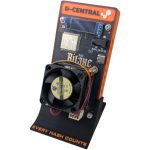
A Bitaxe is an open-source Bitcoin ASIC solo miner designed for home use. Created by engineer Skot9000, it uses a single Bitmain ASIC chip to mine Bitcoin independently, giving every hash a chance at the full 3.125 BTC block reward — worth approximately $214,000 at current prices. Since July 2024, Bitaxe devices have successfully mined at least three confirmed Bitcoin blocks, with combined payouts exceeding $750,000. Models range from roughly $150 to $600+ depending on the variant and accessories, connect over WiFi, and consume just 11-43 watts — less than a standard light bulb. Fully open-source from the schematics to the firmware, Bitaxe represents a fundamental shift in who gets to participate in Bitcoin mining.
How Does a Bitaxe Work?
At its core, a Bitaxe is elegantly simple. Take a single ASIC chip — the exact same silicon that powers industrial mining rigs like the Antminer S19 or S21 Pro — put it on a compact circuit board with a WiFi-capable ESP32-S3 microcontroller, add a small fan, and you have a fully functional Bitcoin miner that fits in your palm.
Here is what happens when you plug one in:
The Hardware
Every Bitaxe contains a Bitmain ASIC chip. These are Application-Specific Integrated Circuits — custom silicon designed to do exactly one thing: compute SHA-256 hashes as fast as possible. The same BM1370 chip in a Bitaxe Gamma is the same chip used in the Antminer S21 Pro, a machine that costs thousands of dollars and requires 220V power and industrial cooling. The Bitaxe just uses one chip instead of hundreds.
The ESP32-S3 microcontroller acts as the brain. It handles WiFi connectivity, runs the mining firmware (AxeOS), manages the ASIC chip’s frequency and voltage, and serves a web-based dashboard you can access from any browser on your network.
Solo Mining: Every Hash Counts
This is where Bitaxe fundamentally differs from traditional mining setups. Most miners join pools — groups of thousands of miners who combine their hashrate and split rewards proportionally. A Bitaxe mines solo. Every single hash it generates is an independent attempt to solve the next Bitcoin block.
Think of it like a lottery. Each hash is a ticket. An industrial mining farm generates trillions of tickets per second. Your Bitaxe generates around 500 billion to 2 trillion tickets per second, depending on the model. The odds of any single ticket winning are astronomically small — but they are never zero. And when a solo miner wins, they claim the entire 3.125 BTC block reward plus transaction fees. No splits, no pool fees, no middlemen.
The Setup Process
Setting up a Bitaxe takes about five minutes:
- Power it on — Plug in the barrel jack (5V) or USB-C power supply, depending on your model.
- Connect to its WiFi — The Bitaxe broadcasts its own WiFi network (AP mode). Connect to it from your phone or laptop.
- Configure via browser — Navigate to the AxeOS web interface. Enter your home WiFi credentials, your Bitcoin wallet address, and choose a solo mining pool.
- Start mining — The Bitaxe connects to your network, reaches out to the pool, and begins hashing. You can monitor hashrate, temperature, shares, and best difficulty right from the dashboard.
That is it. No command line, no Linux, no special networking. A Bitaxe is genuinely plug-and-play.
Power and Noise
Depending on the model, a Bitaxe draws between 11 watts and 43 watts. For context, a standard LED light bulb uses 10 watts. A laptop charger uses 45-65 watts. Your Bitaxe will cost you pennies per day in electricity — roughly $1 to $4 per month depending on your local rates and model.
Noise is minimal. The small 40mm fan produces a quiet hum that most people describe as less noticeable than a desktop computer. Many Bitaxe owners run them 24/7 on their desk, bookshelf, or nightstand without any disturbance.
Why Does Bitaxe Matter?
Bitaxe is not just another gadget. It represents one of the most important developments in Bitcoin mining since the introduction of ASIC chips themselves. Here is why.
The First Fully Open-Source Bitcoin ASIC Miner
Before Bitaxe, every ASIC miner on the market was a black box. Bitmain, MicroBT, Canaan — they all sell miners with proprietary firmware, closed schematics, and locked-down software. You buy their hardware, you run their code, you trust their chips. You have no ability to verify what the machine is actually doing.
Skot9000 changed that. As an electrical engineer and Bitcoin enthusiast, he spent two years reverse-engineering Bitmain’s ASIC chips, understanding the pinouts, voltages, and communication protocols. The result was Bitaxe — the first Bitcoin ASIC miner where everything is public: the PCB schematics, the board layout files, the firmware source code, even the bill of materials. Anyone can audit it. Anyone can build it. Anyone can modify it.
This is open-source hardware in its purest form.
Decentralization of Mining Hardware
Bitcoin’s security depends on mining being distributed across as many independent participants as possible. Yet for years, the mining hardware supply chain has been a bottleneck controlled by a handful of Chinese manufacturers. They decide who gets chips, when, and at what price.
Bitaxe breaks that control. Because the design is open-source, dozens of manufacturers around the world now produce Bitaxe units. D-Central Technologies in Canada, Solo Satoshi, Power Mining, and many others all build and sell Bitaxes. No single company controls the supply. This is what decentralization looks like in practice.
Solo Mining and Network Health
When you solo mine with a Bitaxe, your hashrate goes directly to the Bitcoin network without being aggregated through a mining pool. This contributes to geographical and operational diversity of the network. Tens of thousands of Bitaxes scattered across homes worldwide create a resilient base layer of hashrate that cannot be shut down by targeting a single facility or pool.
The Sovereignty Argument
There is a philosophical dimension that matters deeply to the Bitcoin community. Running a Bitaxe is the physical expression of “not your miner, not your hashes.” You are participating directly in Bitcoin’s consensus mechanism. You are verifying transactions. You are contributing to the security of a network that stores billions of dollars in value. And you are doing it from your own home, with hardware you can fully audit, running firmware you can read.
In a world of increasing centralization and surveillance, that is a radical act.
Education Through Participation
Nothing teaches you how Bitcoin mining works like watching a Bitaxe run. The AxeOS dashboard shows you real-time data: hashes per second, shares submitted, best difficulty achieved, temperature, voltage, frequency. You start to understand what difficulty adjustment means, why blocks take approximately ten minutes, how transaction fees work, and what the mempool actually is.
For students, educators, developers, and curious Bitcoiners, a Bitaxe is the single best educational tool for understanding proof-of-work from the inside.
All Bitaxe Models Compared
The Bitaxe family has grown significantly since Skot’s original design. Each model is named after its Bitmain ASIC chip variant and brings different performance characteristics. Here is a complete breakdown of every current Bitaxe model.
| Model | Series | ASIC Chip | Chip Source | Hashrate | Power | Efficiency | Price Range | Best For |
|---|---|---|---|---|---|---|---|---|
| Bitaxe Max | 100 | BM1397 | Antminer S17 | 400 GH/s | 15W | ~38 J/TH | $99-$150 | Beginners, DIY kits, education |
| Bitaxe Ultra | 200 | BM1366 | Antminer S19XP | 425-500 GH/s | 11-14W | ~26 J/TH | $150-$220 | Efficient entry-level solo mining |
| Bitaxe Hex | 300 | 6x BM1366 | Antminer S19XP | 3-3.3 TH/s | 60-90W | ~22 J/TH | $295-$400 | Higher hashrate, serious solo mining |
| Bitaxe Supra | 400 | BM1368 | Antminer S19k Pro | 580-700 GH/s | 12-15W | ~22 J/TH | $170-$250 | Best value single-chip miner |
| Bitaxe Gamma | 601/602 | BM1370 | Antminer S21 Pro | 1.0-1.2 TH/s | 15-18W | ~15 J/TH | $190-$300 | Most popular, best efficiency, recommended starter |
| Bitaxe Gamma Duo | 650 | 2x BM1370 | Antminer S21 Pro | 1.6 TH/s | ~26W | ~15 J/TH | $280-$380 | Sweet spot between Gamma and GT |
| Bitaxe GT (Gamma Turbo) | 801 | 2x BM1370 | Antminer S21 Pro | 2.15 TH/s | ~43W | ~18 J/TH | $350-$500 | Maximum single-board Bitaxe performance |
Which Model Should You Choose?
First-time miner on a budget: The Bitaxe Gamma (601/602) is the most recommended starting point in 2026. It delivers over 1 TH/s at just 15 watts using the latest BM1370 chip, and it is the sweet spot of price, performance, and efficiency. It is the model that has put more people into solo mining than any other.
Maximum hashrate in a Bitaxe form factor: The Bitaxe GT (Gamma Turbo) doubles down with two BM1370 chips, pushing past 2 TH/s. It requires a 12V power supply with an XT30 connector instead of the standard 5V barrel jack, but it roughly doubles your odds of finding a block compared to a single Gamma.
Multi-chip performance: The Bitaxe Hex packs six BM1366 chips onto a single board for 3+ TH/s. It uses more power but gives you the highest hashrate in the Bitaxe ecosystem.
Budget or DIY entry: The Bitaxe Max uses the older BM1397 chip and is available as a DIY kit. It has the lowest hashrate but it is the cheapest way to start solo mining and learn about ASIC hardware hands-on.
Note on overclocking: All Bitaxe models can be overclocked through the AxeOS settings. A Bitaxe Gamma at stock settings runs at 1.2 TH/s, but with proper cooling upgrades (like an Ice Tower heatsink or Argon THRML cooler), experienced users push them to 1.8-2.0+ TH/s. D-Central publishes a comprehensive overclocking guide covering every model.
Bitaxe Block Wins: Proof That Solo Mining Works
The most thrilling aspect of Bitaxe ownership is the possibility — however slim — of finding a full Bitcoin block. And it is not just theoretical. It has happened multiple times.
Confirmed Bitaxe Block Wins
Block #853,742 — July 24, 2024
The first confirmed solo block ever mined by a Bitaxe. A single Bitaxe Ultra running at approximately 500 GH/s found this block, earning the full 3.125 BTC block reward. The Bitcoin community erupted. It was proof that David could still slay Goliath.
Block #887,212 — March 10, 2025
A miner running a cluster of six Bitaxe devices with a combined hashrate of 3.3 TH/s found this block and earned 3.15 BTC (block reward plus transaction fees), worth roughly $250,000 at the time. This win demonstrated that even a small stack of Bitaxes can deliver life-changing results.
Beyond these headline wins, additional Bitaxe-powered blocks have been confirmed throughout 2025 and into 2026 on solo mining pools like Solo CKPool and Public Pool. As of late 2025, open-source home mining hardware (including Bitaxe and NerdQaxe++ devices) has mined at least five confirmed Bitcoin blocks with combined payouts exceeding $1 million.
Understanding the Odds
Let us be direct about the mathematics. With the Bitcoin network’s total hashrate exceeding 800 EH/s (exahashes per second) in 2026, a single Bitaxe Gamma at 1.2 TH/s represents approximately 0.00000000015% of the total network hashrate. At that rate, the expected time to find a block is measured in thousands of years.
But probability does not work on schedules. Every ten minutes, a new block needs to be found. Every hash your Bitaxe generates is an independent random trial with a chance — however small — of being the winning hash. It is the same mathematics behind a lottery: unlikely for any individual ticket, but someone always wins.
The key psychological shift: you are not paying for expected returns. You are paying for the chance at asymmetric upside, combined with all the other benefits (education, sovereignty, decentralization support) that make mining worthwhile regardless of whether you ever find a block.
Improving Your Odds
While solo mining with a single Bitaxe is the purist approach, there are ways to meaningfully increase your chances:
- Run multiple Bitaxes — Six Bitaxe Gammas give you about 7 TH/s combined, cutting your expected time by 6x.
- Overclock — Pushing a Gamma from 1.2 TH/s to 2.0 TH/s nearly doubles your odds.
- Choose higher-hashrate models — A Bitaxe GT at 2.15 TH/s has roughly twice the chance of a standard Gamma.
- Use a solo mining pool — Pools like public-pool.io, Solo CKPool, and OCEAN handle the Stratum connection and template building so your Bitaxe can focus on hashing.
How to Set Up a Bitaxe
Getting your Bitaxe up and running is one of the simplest processes in all of Bitcoin. Here is a high-level overview. For detailed step-by-step instructions with screenshots, visit the D-Central Bitaxe Hub.
Step 1: Unbox and Inspect
Your Bitaxe should arrive with the miner board, a heatsink (pre-installed or included), a small fan, and possibly an OLED display. Some kits include a power supply; others sell it separately. Inspect the board for any shipping damage — check that the ASIC chip, fan connector, and power connector are all intact.
Step 2: Power Up
Connect the appropriate power supply. Single-chip models (Max, Ultra, Supra, Gamma) use a 5V DC barrel jack (2.1mm). Multi-chip models (Hex, GT) use a 12V supply with an XT30 connector. When powered on, the fan will spin and the OLED display (if equipped) will show boot information.
Step 3: Connect to WiFi
On first boot, the Bitaxe creates its own WiFi access point. Connect to it from your phone or laptop, then open a web browser and navigate to the AxeOS setup page (typically 192.168.4.1). Enter your home WiFi network name and password. The Bitaxe will reboot and connect to your network.
Step 4: Configure Mining Settings
Once connected, find the Bitaxe’s IP address on your network (check your router’s connected devices list, or use the OLED display). Navigate to that IP address in your browser to access the AxeOS dashboard. Here you will configure:
- Your Bitcoin address — This is where block rewards would be sent if you find a block.
- Solo mining pool — Enter the Stratum URL for your chosen solo pool (e.g.,
public-pool.io:21496or Solo CKPool). - Worker name — An identifier for your miner.
Step 5: Mine
Click save, and your Bitaxe begins mining. The dashboard shows real-time hashrate, temperature, shares submitted, best difficulty, and uptime. You can monitor it from any device on your network. That is all there is to it.
For the complete setup walkthrough including overclocking, troubleshooting, and firmware updates, see the D-Central Bitaxe Hub.
What You Need to Buy
Here is your complete shopping list for getting started with Bitaxe mining.
Required
- A Bitaxe miner — Choose your model based on the comparison table above. The Bitaxe Gamma is the most popular choice in 2026. D-Central stocks all variants.
- Power supply — A 5V 4A+ DC power supply with a 2.1mm barrel jack for single-chip models. Multi-chip models need a 12V supply with XT30 connector. D-Central sells matched power supplies to eliminate guesswork.
- A Bitcoin wallet — You need a Bitcoin address to configure as your reward destination. Any wallet works — hardware wallets like Coldcard or Trezor are recommended for serious amounts.
- WiFi network — 2.4 GHz WiFi (the Bitaxe’s ESP32-S3 does not support 5 GHz).
Recommended Accessories
- Upgraded heatsink — While a basic heatsink comes with most Bitaxes, upgrading to a premium heatsink improves thermal performance and enables higher overclocking. D-Central developed custom heatsinks optimized specifically for both the standard Bitaxe and the Bitaxe Hex.
- Stand or case — The D-Central Bitaxe Mesh Stand was the first commercially manufactured Bitaxe accessory ever made. It provides proper airflow and a clean display orientation for your desk.
- External fan — For aggressive overclocking, a small USB-powered desk fan pointed at the heatsink can drop temperatures by 5-10 degrees Celsius.
Total Cost Breakdown
| Setup Level | Components | Approximate Cost |
|---|---|---|
| Budget Entry | Bitaxe Max + basic PSU | $110-$170 |
| Recommended Starter | Bitaxe Gamma + PSU + stand | $220-$350 |
| Enthusiast | Bitaxe GT + PSU + premium heatsink + stand | $400-$600 |
| Multi-Miner Stack | 3-6x Bitaxe Gamma + PSUs + heatsinks + rack | $700-$2,000 |
Browse the complete Bitaxe collection and Bitaxe accessories at D-Central.
Bitaxe vs Other Open-Source Miners
Bitaxe is not the only open-source miner on the market. Here is how it compares to the alternatives.
Bitaxe vs NerdAxe
NerdAxe is a fork of the Bitaxe project that uses a TTGO T-Display-S3 board with a full-color LCD display (versus the Bitaxe’s monochrome OLED). It started as an upgrade path for NerdMiner users who wanted real ASIC hashing power. Performance is comparable to a single-chip Bitaxe at the same chip tier. The main difference is the display and community — NerdAxe leans more toward the maker/NerdMiner community, while Bitaxe has a larger ecosystem of accessories and manufacturers. D-Central carries both lines.
Bitaxe vs NerdQAxe++
The NerdQAxe++ is a multi-chip board that packs four BM1368 ASICs (and newer revisions use BM1370 chips), delivering 4.8-6.5 TH/s at around 80-100 watts. It is significantly more powerful than any single Bitaxe and has found at least two confirmed blocks. Think of it as the “big brother” — more hashrate, more power consumption, more cost, but still open-source and home-friendly. If maximum solo mining probability is your goal and you do not mind the higher power draw, the NerdQAxe++ is worth considering alongside a Bitaxe stack.
Bitaxe vs NerdMiner
NerdMiner is in a different category entirely. It uses an ESP32 microcontroller to mine Bitcoin in software — no ASIC chip at all. Its hashrate is measured in kilohashes per second (not gigahashes or terahashes), making it roughly a million times slower than a Bitaxe. The NerdMiner is best understood as a novelty and educational device, not a serious mining tool. A Bitaxe is the real step up when you want actual ASIC-level hashing.
Quick Comparison Table
| Device | Hashrate | Power | ASIC? | Price Range | Block Chance |
|---|---|---|---|---|---|
| NerdMiner | ~50 KH/s | 1-2W | No (ESP32) | $30-$60 | Essentially zero |
| NerdAxe | 500 GH/s-1.2 TH/s | 12-18W | Yes | $150-$300 | Very low (same as comparable Bitaxe) |
| Bitaxe Gamma | 1.0-1.2 TH/s | 15-18W | Yes (BM1370) | $190-$300 | Very low but proven |
| Bitaxe GT | 2.15 TH/s | ~43W | Yes (2x BM1370) | $350-$500 | Low but proven |
| NerdQAxe++ | 4.8-6.5 TH/s | 80-100W | Yes (4x BM1368/BM1370) | $400-$700 | Low, two blocks found |
For detailed head-to-head comparisons, see Bitaxe vs NerdAxe on D-Central.
D-Central and the Bitaxe Ecosystem
D-Central Technologies has been embedded in the Bitaxe ecosystem since its earliest days. As one of the pioneer manufacturers and accessory developers, D-Central’s involvement goes beyond simply reselling miners.
Pioneer Manufacturer
D-Central was among the first companies to manufacture and sell Bitaxe units, building a production pipeline in Canada when few others saw the potential of open-source ASIC mining. They have been manufacturing, testing, and shipping Bitaxes from Quebec since the project’s early stages.
Original Bitaxe Mesh Stand
D-Central created the original Bitaxe Mesh Stand — the very first commercially manufactured accessory for the Bitaxe ecosystem. This 3D-printed stand with mesh ventilation became the standard for displaying and cooling Bitaxe miners. Its open-source design has since been adapted by the broader community, but D-Central was first.
Custom Heatsink Development
Recognizing that thermal management is critical for both longevity and overclocking performance, D-Central developed custom heatsinks optimized specifically for the Bitaxe and Bitaxe Hex form factors. These are not generic aftermarket coolers — they are purpose-designed for the Bitaxe PCB layout and ASIC chip placement.
Full Ecosystem Coverage
D-Central stocks every Bitaxe variant currently in production: Max, Ultra, Supra, Hex, Gamma, Gamma Duo, and GT. They also carry the full open-source mining lineup including NerdMiner, NerdAxe, NerdNOS, and NerdQAxe. Whether you want a single Gamma as your first miner or a stack of GTs for maximum hashrate, D-Central is a single source for everything in the open-source mining world.
Expertise and Support
With a team that has been repairing and hacking ASIC miners since 2016, D-Central brings deep hardware expertise to the Bitaxe community. They provide setup support, troubleshooting guides, overclocking manuals, and in-house repair for miners that need attention. Their Bitaxe Hub serves as a comprehensive resource center for the community.
Is a Bitaxe Worth It?
This is the most frequently asked question about Bitaxe, and the honest answer requires reframing the question itself.
If You Define “Worth It” as Profitable Mining…
A Bitaxe is not a profit machine. At 1.2 TH/s, a Bitaxe Gamma represents roughly 0.00000000015% of the Bitcoin network hashrate. If you joined a mining pool with a Bitaxe, you would earn fractions of a cent per day. The electricity cost would exceed the mining revenue. From a pure ROI calculation based on expected returns, a Bitaxe does not make financial sense.
But that analysis misses the entire point.
What You Are Actually Buying
A lottery ticket that never expires. Every second your Bitaxe runs, it generates hashes that each have a chance at the full 3.125 BTC block reward. Multiple Bitaxes have already won. The expected value may be low, but the potential payout is enormous — and unlike a lottery ticket, your Bitaxe keeps playing 24/7/365.
A sovereignty statement. You are participating directly in Bitcoin’s consensus mechanism. Your hashes, however modest, contribute to the network’s security and decentralization. In a world where three mining pools control over 50% of Bitcoin’s hashrate, every independent miner matters.
An educational platform. There is no better way to understand Bitcoin mining than watching it happen in real-time on your desk. The AxeOS dashboard teaches more about proof-of-work in an hour than a hundred articles can.
A conversation starter. A glowing Bitaxe on your desk is an invitation for questions. It is Bitcoin’s best physical ambassador — tangible proof that mining is not just for corporations with warehouses full of machines.
A piece of open-source history. Bitaxe is the first fully open-source ASIC miner. Owning one is participating in a movement that could reshape how mining hardware is designed, manufactured, and distributed for decades to come.
The Real Question
The question is not “Will a Bitaxe pay for itself?” The question is: “For the cost of a nice dinner out, am I willing to run an always-on lottery ticket that also supports Bitcoin’s decentralization, teaches me how mining works, and connects me to a global community of open-source mining enthusiasts?”
For most Bitcoiners, the answer is an easy yes.
As the community says: every hash counts. Whether it is your hash or a mining farm’s hash, each one has exactly the same chance of finding the next block. The math does not care about the size of your operation.
Frequently Asked Questions
How much does a Bitaxe cost?
Bitaxe prices range from approximately $99 for a Bitaxe Max DIY kit to over $500 for a Bitaxe GT (Gamma Turbo). The most popular model, the Bitaxe Gamma, typically costs between $190 and $300 depending on the seller and included accessories. D-Central offers all models with options for bundled power supplies and heatsinks. Prices fluctuate based on component availability, particularly ASIC chip supply.
Can a Bitaxe actually find a Bitcoin block?
Yes, and it has happened multiple times. The first confirmed Bitaxe block was found on July 24, 2024 (block #853,742). Additional blocks have been found in 2025 and 2026. While the probability of any single Bitaxe finding a block is extremely low, it is mathematically possible with every hash generated. Multiple Bitaxes running continuously improve the odds proportionally.
How much Bitcoin can a Bitaxe mine?
In solo mining mode, a Bitaxe either finds a full block (3.125 BTC, currently worth approximately $214,000) or earns nothing. There is no gradual accumulation like pool mining. Some Bitaxe owners point their miners at small pools or use pool-compatible settings to earn tiny fractions of Bitcoin as proof of work, but the primary design intent is solo mining for the full block reward.
What is the best Bitaxe model in 2026?
The Bitaxe Gamma (model 601/602) is widely considered the best all-around choice in 2026. It uses the BM1370 chip from the Antminer S21 Pro, delivering 1.0-1.2 TH/s at just 15-18 watts with industry-leading 15 J/TH efficiency. For those wanting more hashrate, the Bitaxe GT (model 801) with two BM1370 chips pushes 2.15 TH/s. For maximum hashrate in the Bitaxe form factor, the Bitaxe Hex offers 3+ TH/s with six chips.
Is Bitaxe legal?
Yes. Bitcoin mining is legal in most countries, including the United States and Canada. A Bitaxe is simply a small computer that performs SHA-256 calculations — there is nothing illegal about owning or operating one. Some jurisdictions have specific regulations around cryptocurrency mining (particularly regarding electricity usage or noise in residential areas), but a 15-watt Bitaxe is quieter than a desk fan and uses less power than a light bulb, so residential regulations are rarely a concern.
Does a Bitaxe use a lot of electricity?
No. A Bitaxe Gamma uses approximately 15-18 watts — comparable to a LED light bulb. Running one 24/7 costs roughly $1.50 to $4.00 per month depending on your local electricity rate. Even the most powerful Bitaxe GT uses only about 43 watts. For comparison, a gaming PC uses 300-500 watts, and a traditional ASIC miner like the Antminer S21 uses over 3,500 watts.
What is AxeOS?
AxeOS is the open-source firmware that runs on all Bitaxe devices. It is built on the ESP32-S3 microcontroller platform and provides a web-based user interface accessible from any browser on your local network. AxeOS handles WiFi connectivity, ASIC chip management (frequency, voltage, temperature monitoring), Stratum pool communication, and real-time mining statistics display. The firmware is actively developed on GitHub by the open-source community and receives regular updates with new features and improvements.
Can I build my own Bitaxe?
Yes, and that is one of the most powerful aspects of the project. Every Bitaxe design is fully open-source — PCB schematics, board layout files, bill of materials, and firmware are all publicly available on GitHub. If you have soldering experience and access to the components (including the Bitmain ASIC chip), you can build a Bitaxe from scratch. D-Central also sells Bitaxe DIY kits with all components included for those who want the build experience without sourcing individual parts.
Where can I buy a Bitaxe in Canada?
D-Central Technologies is a leading Canadian source for all Bitaxe models and accessories, shipping from Quebec. As a pioneer manufacturer in the Bitaxe ecosystem, D-Central offers the full lineup (Max, Ultra, Supra, Hex, Gamma, GT), accessories (heatsinks, stands, cases, power supplies), and expert support from a team that has been building and repairing ASIC mining hardware since 2016. Canadian buyers benefit from domestic shipping, no customs complications, and local warranty support.
Bitaxe vs buying Bitcoin — which is better?
From a pure financial perspective, buying Bitcoin directly gives you a guaranteed amount of BTC for your money. A $250 Bitaxe Gamma might never find a block. However, the comparison is not that simple. A Bitaxe gives you a perpetual lottery ticket for the full 3.125 BTC block reward, a hands-on education in how Bitcoin works, a contribution to network decentralization, and a piece of open-source hardware that holds resale value. Many Bitcoiners do both — they stack sats by buying Bitcoin regularly and run a Bitaxe for the experience, the lottery upside, and the philosophical alignment with decentralization. The two are complementary, not competitive.
The Bigger Picture
Bitaxe represents something larger than a small mining device. It is the materialization of an idea that has been central to Bitcoin since the beginning: that mining should be accessible to everyone, not just corporations with cheap electricity contracts and warehouse leases.
When Satoshi Nakamoto described Bitcoin mining in the whitepaper, the vision was of ordinary people running miners on their computers. For years, that vision faded as mining became an industrial arms race. ASICs replaced GPUs. Megawatt facilities replaced home offices. The average person was priced out.
Skot9000 and the open-source mining community brought that vision back. By reverse-engineering Bitmain’s ASIC chips and publishing everything openly, they created a path for anyone to mine Bitcoin from home — not just theoretically, but practically, affordably, and with real hardware running real ASIC chips.
D-Central Technologies saw this potential early. As a company that has been hacking, repairing, and reimagining mining hardware since 2016, they recognized the Bitaxe as the embodiment of their own mission: the decentralization of every layer of Bitcoin mining. From creating the first Bitaxe Mesh Stand to developing custom heatsinks to stocking every variant, D-Central has been building the infrastructure that makes open-source mining accessible to Canadian and global miners alike.
The Bitaxe is not going to replace industrial mining farms. It does not need to. What it does is ensure that mining is never fully captured by a handful of entities. Every Bitaxe running in a home somewhere in the world is a node of resistance against centralization. Every hash is a vote for open hardware, transparent software, and individual sovereignty.
Whether you buy a Bitaxe for the lottery thrill, the education, the decentralization mission, or simply because it looks cool on your desk — you are participating in something that matters. You are a miner. Your hashes count.
Ready to start? Browse the full Bitaxe collection at D-Central or visit the Bitaxe Hub for setup guides, overclocking manuals, and troubleshooting resources.
How much does a Bitaxe cost?
Bitaxe prices range from approximately $99 for a Bitaxe Max DIY kit to over $500 for a Bitaxe GT (Gamma Turbo). The most popular model, the Bitaxe Gamma, typically costs between $190 and $300 depending on the seller and included accessories. D-Central offers all models with options for bundled power supplies and heatsinks. Prices fluctuate based on component availability, particularly ASIC chip supply.
Can a Bitaxe actually find a Bitcoin block?
Yes, and it has happened multiple times. The first confirmed Bitaxe block was found on July 24, 2024 (block #853,742). Additional blocks have been found in 2025 and 2026. While the probability of any single Bitaxe finding a block is extremely low, it is mathematically possible with every hash generated. Multiple Bitaxes running continuously improve the odds proportionally.
How much Bitcoin can a Bitaxe mine?
In solo mining mode, a Bitaxe either finds a full block (3.125 BTC, currently worth approximately $214,000) or earns nothing. There is no gradual accumulation like pool mining. Some Bitaxe owners point their miners at small pools or use pool-compatible settings to earn tiny fractions of Bitcoin as proof of work, but the primary design intent is solo mining for the full block reward.
What is the best Bitaxe model in 2026?
The Bitaxe Gamma (model 601/602) is widely considered the best all-around choice in 2026. It uses the BM1370 chip from the Antminer S21 Pro, delivering 1.0-1.2 TH/s at just 15-18 watts with industry-leading 15 J/TH efficiency. For those wanting more hashrate, the Bitaxe GT (model 801) with two BM1370 chips pushes 2.15 TH/s. For maximum hashrate in the Bitaxe form factor, the Bitaxe Hex offers 3+ TH/s with six chips.
Is Bitaxe legal?
Yes. Bitcoin mining is legal in most countries, including the United States and Canada. A Bitaxe is simply a small computer that performs SHA-256 calculations — there is nothing illegal about owning or operating one. Some jurisdictions have specific regulations around cryptocurrency mining (particularly regarding electricity usage or noise in residential areas), but a 15-watt Bitaxe is quieter than a desk fan and uses less power than a light bulb, so residential regulations are rarely a…
Does a Bitaxe use a lot of electricity?
No. A Bitaxe Gamma uses approximately 15-18 watts — comparable to a LED light bulb. Running one 24/7 costs roughly $1.50 to $4.00 per month depending on your local electricity rate. Even the most powerful Bitaxe GT uses only about 43 watts. For comparison, a gaming PC uses 300-500 watts, and a traditional ASIC miner like the Antminer S21 uses over 3,500 watts.
What is AxeOS?
AxeOS is the open-source firmware that runs on all Bitaxe devices. It is built on the ESP32-S3 microcontroller platform and provides a web-based user interface accessible from any browser on your local network. AxeOS handles WiFi connectivity, ASIC chip management (frequency, voltage, temperature monitoring), Stratum pool communication, and real-time mining statistics display. The firmware is actively developed on GitHub by the open-source community and receives regular updates with new…
Can I build my own Bitaxe?
Yes, and that is one of the most powerful aspects of the project. Every Bitaxe design is fully open-source — PCB schematics, board layout files, bill of materials, and firmware are all publicly available on GitHub. If you have soldering experience and access to the components (including the Bitmain ASIC chip), you can build a Bitaxe from scratch. D-Central also sells Bitaxe DIY kits with all components included for those who want the build experience without sourcing individual parts.
Where can I buy a Bitaxe in Canada?
D-Central Technologies is a leading Canadian source for all Bitaxe models and accessories, shipping from Quebec. As a pioneer manufacturer in the Bitaxe ecosystem, D-Central offers the full lineup (Max, Ultra, Supra, Hex, Gamma, GT), accessories (heatsinks, stands, cases, power supplies), and expert support from a team that has been building and repairing ASIC mining hardware since 2016. Canadian buyers benefit from domestic shipping, no customs complications, and local warranty support.
Bitaxe vs buying Bitcoin — which is better?
From a pure financial perspective, buying Bitcoin directly gives you a guaranteed amount of BTC for your money. A $250 Bitaxe Gamma might never find a block. However, the comparison is not that simple. A Bitaxe gives you a perpetual lottery ticket for the full 3.125 BTC block reward, a hands-on education in how Bitcoin works, a contribution to network decentralization, and a piece of open-source hardware that holds resale value. Many Bitcoiners do both — they stack sats by buying Bitcoin…