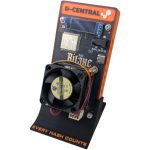
In a world where Bitcoin mining has become increasingly centralized in massive warehouse operations, a quiet revolution is brewing in basements, home offices, and workshops across the globe. The Bitaxe represents something rare in modern Bitcoin mining: a genuine tool for decentralization, built by hackers for hackers, designed to put sovereignty back in the hands of individual miners.
This is not about getting rich. This is about participating in the Bitcoin network at the most fundamental level—contributing hashrate, supporting decentralization, and rolling the dice for that once-in-a-lifetime solo block discovery. Every hash counts.
What Is Bitaxe?
Bitaxe is an open-source, standalone Bitcoin mining device designed specifically for solo mining. Unlike traditional ASIC miners that dominate warehouse operations, Bitaxe is engineered for the home miner who values network participation over guaranteed profitability.
At its core, Bitaxe is a compact printed circuit board featuring a single ASIC chip—the same chips found in industrial mining rigs—repurposed for individual use. It connects to your WiFi network, runs specialized firmware called AxeOS, and mines Bitcoin directly to your wallet address. No pool intermediaries, no trusted third parties. Just you, your Bitaxe, and the Bitcoin network.
The device measures roughly the size of a credit card, consumes between 10-15 watts of power depending on the variant, and operates quietly enough to sit on your desk. It’s a testament to what happens when institutional-grade mining technology gets hacked down to its essence and rebuilt for sovereignty-focused individuals.
What makes Bitaxe revolutionary isn’t its hashrate—it produces between 500 GH/s to 3+ TH/s depending on the model, a fraction of what industrial miners achieve. What makes it revolutionary is its philosophy: mining should be accessible, transparent, and decentralized. The hardware is open-source, the firmware is open-source, and the community around it thrives on knowledge sharing and continuous improvement.
The History of Bitaxe: From Concept to Community Movement
The Bitaxe story begins with Skot, a hardware hacker who asked a simple question: What if we took a single ASIC chip and made it accessible to anyone?
In the early 2020s, Bitcoin mining had effectively become a game for well-capitalized operations. The latest-generation ASIC miners cost thousands of dollars, consumed kilowatts of power, and sounded like jet engines. Home mining was effectively dead for anyone who didn’t have access to cheap electricity and high noise tolerance.
Skot’s vision was different. He designed a board around a single BM1397 chip—the same chip Bitmain used in the Antminer S17 series—and made the entire project open-source. The first Bitaxe devices were hand-assembled by enthusiasts who ordered PCBs from China and soldered components themselves. Early adopters weren’t mining for profit; they were mining to prove a point.
The project exploded. Hardware hackers began submitting improvements, creating variants with different chips, and building an entire ecosystem of accessories. What started as one person’s experiment became a global movement. Forums filled with modification guides, efficiency tweaks, and block discovery celebrations. The Bitaxe wasn’t just a device—it became a symbol of what Bitcoin mining could be when freed from industrial constraints.
D-Central Technologies recognized the potential early. As Bitcoin Mining Hackers ourselves, we saw kindred spirits in the Bitaxe community. We became pioneer manufacturers, developing the original Bitaxe Mesh Stand and creating custom heatsinks that pushed thermal performance beyond the reference design. We didn’t just stock Bitaxe—we became part of its evolution.
Bitaxe Variants Explained: Finding Your Perfect Model
The Bitaxe ecosystem has evolved to include multiple variants, each using different ASIC chips with distinct performance characteristics. Understanding these differences is critical for choosing the right device for your setup.
Bitaxe Supra (BM1366 Chip)
The Bitaxe Supra is built around the BM1366 chip, the same chip powering Bitmain’s Antminer S19 XP series. This is currently the most popular variant among home miners, offering an excellent balance of hashrate, power consumption, and heat output.
Key specifications:
- Hashrate: ~500 GH/s (configurable via frequency tuning)
- Power consumption: 10-15W depending on overclock settings
- Power input: 5V barrel jack (5.5mm x 2.1mm DC)
- Required PSU: 5V/6A power supply
- Chip generation: BM1366 (Antminer S19 XP era)
Important: The Bitaxe Supra does NOT use USB-C for power. The USB-C port on the board is exclusively for firmware flashing and serial communication. Always use the 5V barrel jack with an appropriate 5V/6A power supply.
The Supra excels in home environments where noise and heat are concerns. It runs cool enough that passive cooling with a quality heatsink is often sufficient, though active cooling (small fan) can extend the chip’s lifespan and allow for higher frequency operation.
Bitaxe Ultra (BM1397 Chip)
The original Bitaxe design used the BM1397 chip from the Antminer S17 generation. While this variant laid the foundation for the entire ecosystem, it’s now largely discontinued in favor of newer chip generations.
Key specifications:
- Hashrate: ~400 GH/s
- Power consumption: 10-12W
- Power input: 5V barrel jack (5.5mm x 2.1mm DC)
- Chip generation: BM1397 (Antminer S17 era)
The Ultra holds historical significance as the device that proved the Bitaxe concept, but most manufacturers have shifted production to the more efficient Supra and Gamma variants. If you find an Ultra available, it’s perfectly functional for solo mining—just know that you’re getting previous-generation silicon.
Bitaxe Gamma (BM1370 Chip)
The Bitaxe Gamma represents the cutting edge of single-chip mining, using the BM1370 chip from Bitmain’s latest Antminer S21 series. This is the most efficient ASIC chip currently available in the Bitaxe ecosystem.
Key specifications:
- Hashrate: ~600 GH/s
- Power consumption: 12-18W depending on configuration
- Power input: 5V barrel jack (5.5mm x 2.1mm DC)
- Required PSU: 5V/6A power supply (minimum)
- Chip generation: BM1370 (Antminer S21, latest generation)
The Gamma delivers the best efficiency (hashrate per watt) of any single-chip Bitaxe variant. If you’re building a fleet of solo miners or want maximum performance from a 5V-powered device, the Gamma is the current king.
Bitaxe GT (12V High-Power Variant)
The Bitaxe GT breaks from the 5V standard, using a 12V DC XT30 connector to deliver higher power to a single chip. This allows for more aggressive overclocking and higher sustained hashrates.
Key specifications:
- Hashrate: ~700+ GH/s (highly configurable)
- Power consumption: 20-30W
- Power input: 12V DC XT30 connector
- Chip configuration: Single chip, higher power delivery
The GT is for enthusiasts who want to push a single chip to its absolute limits. The 12V input allows for voltage headroom that 5V designs can’t match, enabling frequency tuning that would thermally throttle on lower-voltage variants. Expect more heat, more noise (active cooling required), and more hashrate.
Bitaxe Hex (Multi-Chip Beast)
The Bitaxe Hex is the flagship multi-chip board, featuring six ASIC chips operating in parallel. This is as close as the Bitaxe ecosystem gets to a “real” ASIC miner, delivering hashrates that approach entry-level industrial machines.
Key specifications:
- Hashrate: 3+ TH/s (configuration dependent)
- Power consumption: 200-300W
- Power input: 12V DC XT30 connector
- Chip configuration: 6 chips on a single board
- Variants: Hex Ultra (BM1397 chips), Hex Supra (BM1366 chips)
The Hex demands respect. With 3+ terahashes, you’re no longer in “lottery ticket” territory—you’re generating meaningful contributions to solo mining pools and increasing your block discovery odds to the realm of “unlikely but conceivable.” Power requirements jump dramatically, and cooling becomes critical. This is not a desktop device; this is a serious piece of mining hardware that happens to be open-source.
How Solo Mining Works: Embracing the Lottery
Solo mining is fundamentally different from pool mining. When you point your Bitaxe at a solo mining pool (or run your own Bitcoin node), you’re competing to find the next valid block entirely on your own. If your device finds the winning nonce, you receive the full block reward of 3.125 BTC (current post-2024 halving reward) plus transaction fees—all sent directly to your wallet.
The catch? The odds are astronomical.
Bitcoin’s network difficulty adjusts every 2016 blocks to maintain a 10-minute average block time. With total network hashrate exceeding 600 exahashes per second (600,000,000 TH/s), a 500 GH/s Bitaxe Supra represents roughly 0.0000008% of the global hashrate. Statistically, you’d expect to find a block once every several thousand years.
So why solo mine?
Because every hash counts. Every single SHA-256 computation your Bitaxe performs is a legitimate attempt to find the next block. You’re not contributing hashrate to a pool operator who then distributes rewards. You’re directly participating in Bitcoin’s consensus mechanism, adding your computational vote to the network’s collective security. You’re running the same lottery ticket algorithm that industrial miners run—you just have fewer tickets.
And sometimes, against all odds, solo miners win. Block discovery stories from home miners running single devices are legendary in Bitcoin circles. The probability is low, but it’s never zero.
Solo mining is an act of sovereignty. It’s a middle finger to the notion that Bitcoin mining belongs exclusively to institutional players. It’s a declaration that you control your own hashrate, your own node, and your own participation in the network.
For a deeper analysis of your actual odds, use D-Central’s Solo Mining Calculator to see the statistical probability of finding a block with your specific hashrate.
Setting Up Your Bitaxe: From Unboxing to Mining
Getting a Bitaxe operational is refreshingly straightforward compared to traditional ASIC miners that require dedicated circuits and industrial networking equipment. Here’s the complete setup process.
Step 1: Power Connection
Identify your Bitaxe variant and connect the appropriate power supply:
- Bitaxe Supra, Ultra, Gamma: Use a 5V/6A power supply with a 5.5mm x 2.1mm barrel jack connector. Do NOT use the USB-C port for power—it’s for firmware flashing only.
- Bitaxe GT, Hex: Use a 12V DC power supply with an XT30 connector. The Hex requires significantly higher amperage (check your specific model’s requirements, typically 18-20A).
Verify polarity before connecting. While most Bitaxe boards include reverse polarity protection, it’s better not to test it.
Step 2: WiFi Configuration
On first boot, the Bitaxe creates a WiFi access point named “Bitaxe_XXXXXX” (where XXXXXX is a unique identifier). Connect to this network from your phone or laptop.
Open a web browser and navigate to the default IP address (typically 192.168.4.1). This loads the AxeOS web interface, where you’ll configure your home WiFi credentials. Enter your SSID and password, then save and reboot.
After rebooting, the Bitaxe will connect to your home network and the temporary access point will disappear. Check your router’s DHCP client list to find the Bitaxe’s new IP address, or use network scanning tools like Angry IP Scanner.
Step 3: Mining Configuration
Access the AxeOS web interface using the Bitaxe’s IP address. Navigate to the mining settings page and configure:
- Pool URL: For solo mining, use a solo pool like solo.ckpool.org:3333 or public-pool.io (solo mode). Alternatively, run your own Bitcoin Core node with solo mining enabled.
- Wallet address: Enter your Bitcoin wallet address. If you find a block, the reward goes directly here. Use a wallet you control completely—never an exchange address.
- Frequency settings: Start with default frequencies and monitor temperature. Aggressive overclocking increases hashrate but generates more heat and reduces chip lifespan.
Save settings and reboot. Within seconds, your Bitaxe should start hashing. The web interface displays real-time hashrate, temperature, accepted shares, and power consumption.
Step 4: Monitoring and Optimization
The AxeOS interface provides comprehensive monitoring:
- Hashrate: Real-time computational output, typically displayed in GH/s or TH/s
- Temperature: ASIC chip temperature in Celsius—keep this under 70°C for longevity
- Power consumption: Current draw in watts
- Efficiency: Joules per terahash (J/TH), lower is better
- Uptime and shares: How long the device has been running and how many valid shares submitted
For optimal performance, consider adding active cooling (40mm fan pointed at the heatsink) and monitoring long-term stability before attempting overclocking. The goal isn’t just maximum hashrate—it’s sustainable operation over months or years.
Want to calculate whether your power consumption makes economic sense? Use D-Central’s Mining Profitability Calculator to run the numbers based on your local electricity costs.
D-Central and the Bitaxe Ecosystem: Pioneer Manufacturers
D-Central Technologies didn’t just join the Bitaxe movement—we helped build it from the ground up. As Bitcoin Mining Hackers, we recognized immediately that Bitaxe represented something revolutionary: institutional-grade mining technology hacked down to its essence and made accessible to individuals who value sovereignty over scale.
We were among the first manufacturers to produce the Bitaxe Mesh Stand, the original stand design that became the community standard for displaying and cooling Bitaxe devices. That mesh stand—now copied by dozens of manufacturers—originated in our Canadian workshop, designed by miners who understood that good airflow matters as much as good silicon.
Our involvement didn’t stop at stands. We developed custom heatsinks for both single-chip Bitaxe devices and the Bitaxe Hex, pushing thermal performance beyond reference designs. When you’re running ASICs at the edge of their thermal limits, every degree Celsius matters. Our heatsinks are engineered for maximum surface area and optimal fin spacing, designed specifically for the low-airflow environments where Bitaxe devices typically operate.
Today, D-Central stocks the complete Bitaxe lineup—Supra, Gamma, GT, Hex—alongside every variant and accessory a home miner could need. We carry power supplies matched precisely to each variant’s requirements (no more guessing if your random 5V adapter will work), mounting solutions, cooling upgrades, and diagnostic tools.
We also maintain comprehensive inventory of the broader open-source mining ecosystem: NerdAxe, NerdNOS, Nerdminer, NerdQAxe, PiAxe, and every evolution that emerges from the community. As open-source hardware, anyone can manufacture these devices—we compete on expertise, quality control, and genuine participation in the ecosystem we help build.
Explore our full selection at the Bitaxe Hub, where we maintain updated specifications, setup guides, and community resources for every variant. Or browse the shop to see our complete open-source mining catalog.
Bitaxe vs Traditional ASIC Miners: Understanding the Differences
Bitaxe and traditional ASIC miners serve fundamentally different purposes, despite both performing SHA-256 computations. Understanding these differences prevents unrealistic expectations and helps you choose the right tool for your goals.
Size and Form Factor
Traditional ASIC miners like the Antminer S19 or S21 are industrial devices measuring roughly 12″ x 6″ x 13″ and weighing 15+ pounds. They’re designed for rack mounting in warehouse environments.
Bitaxe devices (excluding the Hex) are credit-card sized PCBs that fit in the palm of your hand. The Hex is larger but still compact compared to industrial miners. This size difference matters if you’re mining in a home office, bedroom, or anywhere space is constrained.
Power Consumption
Industrial ASIC miners consume between 1500W (older S9 models) to 3500W+ (latest S21 models). This requires 240V circuits and dedicated electrical infrastructure. Most homes can’t run multiple units without electrical upgrades.
Bitaxe devices consume 10-15W (single-chip variants) to 200-300W (Hex). A Bitaxe Supra draws less power than a laptop. You can run a dozen of them on a standard 15A household circuit with power to spare.
For detailed analysis of power costs and mining economics, check our Power Cost Calculator.
Noise Levels
Industrial ASIC miners generate 70-80 dB of noise—equivalent to a vacuum cleaner or loud restaurant. They require sound dampening enclosures or isolated spaces to avoid driving household members insane.
Bitaxe devices with passive cooling are silent. With active cooling (small 40mm fan), they produce barely noticeable white noise comparable to a desktop computer. You can run them on your desk while working.
Hashrate and Block Discovery Odds
This is where reality hits. An Antminer S21 produces ~200 TH/s. A Bitaxe Supra produces ~0.5 TH/s. The S21 delivers 400x more hashrate, which translates directly to 400x better odds of finding a solo block.
Neither device is “profitable” for solo mining in the traditional sense—the odds of finding a block are low for both. But the S21 has meaningfully better odds while the Bitaxe is running a longer-shot lottery.
The Bitaxe’s advantage isn’t hashrate—it’s accessibility. You can own, operate, and understand a Bitaxe without specialized knowledge, electrical infrastructure, or noise tolerance. It’s a tool for participation, not profit.
Compare specific models using our ASIC Miner Database, which includes efficiency ratings, power requirements, and real-world operational data for 500+ mining devices.
Repairability and Customization
Industrial ASIC miners are proprietary black boxes. When a hashboard fails, you’re either buying expensive replacement parts or shipping the entire unit for professional repair. Firmware is locked down, overclocking voids warranties, and manufacturers actively prevent user modifications.
Bitaxe is open-source hardware. Schematics are public. Firmware is forkable. You can replace components, modify boards, and hack frequency settings without voiding anything because there’s no warranty to void—you’re part of the community that builds and improves these devices.
This repairability matters. When your Bitaxe develops issues, you can diagnose problems using multimeters and oscilloscopes, order replacement components from electronics suppliers, and learn from community troubleshooting guides. You own the device in the fullest sense—including the right to repair, modify, and improve it.
Purpose and Philosophy
Traditional ASIC miners are built for profit maximization. Manufacturers optimize for hashrate per dollar, efficiency per watt, and density per rack unit. They serve industrial operations where mining is a business.
Bitaxe is built for decentralization. It’s an educational tool, a statement of sovereignty, and a way to participate in Bitcoin mining without surrendering to industrial scale. It’s the difference between running a node because you’re a Bitcoiner and running a data center because you’re an investor.
Neither approach is wrong. They serve different goals. But if you’re reading this article, you’re probably more interested in the philosophy than the profit margin.
Frequently Asked Questions
What power supply does Bitaxe need?
This depends on your Bitaxe variant. The Bitaxe Supra, Ultra, and Gamma require a 5V/6A power supply with a 5.5mm x 2.1mm barrel jack connector. The Bitaxe GT and Hex require a 12V DC power supply with an XT30 connector—the Hex specifically needs high amperage (18-20A minimum). Critically, the USB-C port is NOT for power—it’s exclusively for firmware flashing and serial communication. Always use the designated power input for your model.
How much electricity does a Bitaxe use?
Single-chip Bitaxe variants (Supra, Ultra, Gamma, GT) consume between 10-30W depending on the model and frequency settings. The Bitaxe Hex consumes 200-300W due to its six-chip configuration. At typical North American electricity rates ($0.10-0.15/kWh), a Bitaxe Supra costs roughly $1-2 per month to operate continuously. Use our Power Cost Calculator to calculate exact costs based on your local electricity rates.
What are my chances of finding a block with a Bitaxe?
The odds are extremely low but never zero. With Bitcoin’s network difficulty exceeding 600 EH/s, a 500 GH/s Bitaxe Supra represents roughly 0.0000008% of global hashrate. Statistically, you’d expect to find a block once every several thousand years. However, solo mining is probabilistic—you could find a block tomorrow, or never. The appeal isn’t guaranteed returns; it’s the sovereignty of direct network participation and the remote possibility of winning the full 3.125 BTC block reward. Use our Solo Mining Calculator to see exact probability calculations for your hashrate.
Can I use Bitaxe for pool mining instead of solo mining?
Yes, absolutely. While Bitaxe is designed and marketed for solo mining, the AxeOS firmware supports standard mining pool protocols. You can point your Bitaxe at any SHA-256 pool (Slush Pool, F2Pool, etc.) and receive proportional payouts based on submitted shares. Pool mining provides regular, predictable income instead of lottery-style solo mining. However, most Bitaxe owners choose solo mining specifically because they value sovereignty and decentralization over guaranteed returns. The choice is yours—the hardware supports both approaches.
Is Bitaxe profitable?
In the traditional sense of “profitable,” no. A Bitaxe Supra generating ~500 GH/s will mine approximately $0.01-0.02 worth of Bitcoin per month through pool mining (at current difficulty and BTC prices), while consuming $1-2 in electricity. You’re operating at a net loss unless you find a solo block, which is statistically unlikely. However, “profitability” isn’t why most people run Bitaxe devices. The value proposition is network participation, learning, sovereignty, and the remote chance of a life-changing block discovery. If your goal is profit maximization, buy Bitcoin directly. If your goal is decentralization and education, Bitaxe delivers immense value. Use our Mining Profitability Calculator to run exact numbers for your situation.
Do I need to run my own Bitcoin node to solo mine with Bitaxe?
No, you don’t need to run your own node, though it’s the most sovereign option. You can point your Bitaxe at public solo mining pools like solo.ckpool.org or public-pool.io, which handle the block template construction and blockchain validation. If you find a block, these pools broadcast it to the network and send the reward to your configured wallet address. However, running your own Bitcoin Core node and solo mining directly to it eliminates all third-party trust. You validate your own blocks and broadcast your own discoveries. For educational resources on running a node, check our Mining Glossary for technical terminology and concepts.
What’s the difference between Bitaxe and other open-source miners like NerdAxe?
Bitaxe and NerdAxe are both open-source Bitcoin miners, but they have different design philosophies and chip selections. Bitaxe typically uses Bitmain chips (BM1366, BM1370, etc.), while NerdAxe uses chips from various manufacturers. Both serve the same fundamental purpose—accessible, hackable, sovereignty-focused mining—and both have thriving communities. D-Central stocks the complete lineup of both ecosystems because we believe in supporting all open-source mining projects. The “best” choice depends on chip availability, your preferred form factor, and which community’s development roadmap excites you. Many home miners run both.
Every Hash Counts: Why Bitaxe Matters
Bitaxe isn’t going to make you rich. It won’t compete with industrial mining farms. It won’t deliver ROI in any traditional financial sense. And that’s precisely why it matters.
In a Bitcoin ecosystem increasingly dominated by institutional players, publicly traded mining companies, and massive operations optimizing for quarterly earnings, Bitaxe represents something radical: mining for sovereignty instead of profit. It’s a rejection of the notion that participation in Bitcoin’s consensus mechanism requires millions in capital and warehouse-scale infrastructure.
Every Bitaxe humming away in a home office is a vote for decentralization. Every block template it processes is validation that Bitcoin mining can exist outside corporate control. Every hash it computes is a middle finger to the idea that ordinary people should just buy coins and leave the “real work” to professionals.
The Bitaxe ecosystem proves that when you combine open-source hardware, passionate communities, and alignment around decentralization principles, you can build something that institutional money can’t replicate. You can hack industrial technology down to human scale. You can make mining accessible again.
At D-Central Technologies, we’ve been Bitcoin Mining Hackers since 2016. We’ve repaired thousands of ASICs, built custom mining solutions, and served the home mining community when larger companies ignored it. Bitaxe is everything we believe in, distilled into a credit-card-sized PCB.
So run your Bitaxe. Join the solo mining lottery. Learn how SHA-256 works at the silicon level. Contribute your hashrate to network decentralization. Celebrate when someone in the community finds a block. And remember: in Bitcoin, every hash counts—not because of the expected value, but because of what it represents.
Ready to start your solo mining journey? Explore our complete selection at the Bitaxe Hub, or visit our shop to see the full catalog of open-source mining devices and accessories. The revolution won’t be centralized—it’ll be running quietly on desks around the world, one hash at a time.