What Is Solo Bitcoin Mining?
Every ten minutes, the Bitcoin network creates a new block. Inside that block: a batch of pending transactions, a reference to the previous block, and a puzzle — a cryptographic target that must be met before the block is valid. Miners around the world race to solve that puzzle by generating billions of SHA-256 hashes per second, each one a random shot at finding a number that, when hashed, falls below the target. The miner who gets there first wins the right to publish the block and collect the full reward: 3.125 BTC plus all transaction fees.
In pool mining, you combine your hashrate with thousands of other miners. The pool finds blocks frequently because of its collective power, then splits the reward proportionally among contributors. You earn small, predictable payouts — fractions of pennies trickling in throughout the day. It is the mining equivalent of a salaried job.
Solo mining is the opposite. You point your hardware at the network — directly or through a solo pool that handles the Stratum protocol for you — and every hash your machine computes is your ticket, and yours alone. If your device finds a valid block, you keep the entire reward. No splitting. No pool fees. No third party between your hardware and the Bitcoin network. The block reward lands in your wallet, and your miner’s identity is stamped into Bitcoin’s permanent ledger.
The catch is probability. The Bitcoin network currently produces roughly 800 exahashes per second (EH/s) of total mining power. A single Bitaxe Supra running at 500 GH/s represents approximately 0.0000000006% of that total hashrate. Your odds of finding any given block are vanishingly small. But they are never zero. And over time, hashes compound — every second your device runs is another lottery ticket entered.
This is why the community calls it lottery mining. The expected payout is tiny on any given day, but the potential payout for a single win is life-changing. And unlike an actual lottery, solo mining serves a real purpose: every hash you submit strengthens the Bitcoin network’s decentralization and security.
Why Solo Mine?
The rational argument against solo mining writes itself: your expected value per day is a fraction of a fraction of a cent, your probability of ever finding a block is laughably small, and pool mining gives you steady, predictable income. So why do thousands of bitcoiners around the world keep their Bitaxe devices plugged in, day after day, watching shares tick by on their dashboards?
Because solo mining is not about expected value. It is about what Bitcoin was built for.
Decentralization in Practice
Satoshi’s whitepaper describes a system where “one CPU, one vote” determines consensus. That vision has been under pressure since mining moved from CPUs to GPUs to FPGAs to ASICs, and from garages to megawatt-scale data centers. Today, a handful of mining pools control the majority of Bitcoin’s hashrate. Not because they own the hardware — the miners in those pools do — but because miners voluntarily delegate their hashrate to pools for the convenience of predictable payouts.
Solo mining breaks that pattern. Every hash produced by a solo miner is independent. It does not contribute to any pool’s block template. It does not follow any pool operator’s transaction selection policy. It does not amplify any single entity’s influence over which transactions get confirmed. Solo mining is hashrate in its purest, most decentralized form.
Non-KYC Bitcoin
When your solo miner finds a block, 3.125 BTC appears in your wallet with no counterparty, no exchange, no identity verification, and no paper trail linking your name to the coins. This is Bitcoin as it was designed — permissionless value creation through proof of work. For bitcoiners who care about financial privacy and sovereignty, freshly mined non-KYC sats are the gold standard.
The Lottery Thrill
There is something deeply satisfying about watching your Bitaxe tick away shares, knowing that any one of them could be the one. The community tracks Bitaxe block wins with the excitement of sports fans following a championship game. Every confirmed solo block found by a small miner sends a wave of enthusiasm through Twitter, Discord, and Telegram — proof that the system works exactly as designed. Proof that the little guy can win.
Supporting the Network
Every hash submitted to the Bitcoin network, regardless of whether it finds a block, contributes to the difficulty adjustment algorithm. More hashrate means higher difficulty, which means more security. When you run a solo miner, you are directly strengthening Bitcoin’s resistance to 51% attacks, censorship, and manipulation. Your 500 GH/s or 3 TH/s may be a drop in the ocean, but oceans are made of drops.
Skin in the Game
Running your own mining hardware creates a visceral connection to the Bitcoin network that no amount of chart-watching or newsletter-reading can replicate. You understand difficulty adjustments because you feel them. You understand energy markets because you pay the electricity bill. You understand consensus because your device participates in it. Solo mining makes you a first-class participant in the Bitcoin network — not a spectator.
The Mathematics of Solo Mining
Let’s be honest about the numbers. Solo mining math is not complicated, but the results are humbling. Understanding the probability model helps you set realistic expectations — and appreciate why every Bitaxe block win is a genuine event worth celebrating.
How the Probability Works
The Bitcoin network adjusts its difficulty so that, on average, one block is found every 10 minutes across all miners combined. Your probability of finding any given block is simply your hashrate divided by the total network hashrate:
P(block) = Your Hashrate / Network Hashrate

Example (Bitaxe Supra):
P(block) = 500 GH/s / 800,000,000,000 GH/s
P(block) = 0.000000000625 per block (6.25 × 10⁻¹⁰)

Blocks per day: 144
P(at least one block per day) = 1 - (1 - P)^144
P(at least one block per day) ≈ 0.000000090 = 0.0000090%
The expected time to find a block is the inverse: how many blocks need to be mined (on average) before you statistically expect to find one. Multiply by 10 minutes per block and you get the expected wait time.
Expected Blocks = Network Hashrate / Your Hashrate
Expected Time   = Expected Blocks × 10 minutes

Example (Bitaxe Supra at 500 GH/s):
Expected Blocks = 800,000,000 TH/s / 0.0005 TH/s
                = 1,600,000,000,000 blocks
Expected Time   = ~30,400,000 years

Don't panic — read the next section.
Yes, the expected time for a single Bitaxe Supra to find a block is measured in millions of years. This is why we call it lottery mining. You are not expected to win — but the cost of playing is almost nothing, the prize is enormous, and somebody does win. Regularly.
Expected Time to Block by Hardware
The following table shows the estimated expected time to find a solo block at various hashrates, assuming a network hashrate of approximately 800 EH/s. These are statistical averages — actual results are purely random. You could find a block on day one or never.
| Hardware | Hashrate | Power | Expected Time to Block | Daily Electricity Cost* |
|---|---|---|---|---|
| Nerdminer | ~78 KH/s | ~1.5W | ~195 billion years | < $0.01 |
| Bitaxe Supra | ~500 GH/s | ~15W | ~30.4 million years | ~$0.04 |
| Bitaxe Gamma | ~1.2 TH/s | ~20W | ~12.7 million years | ~$0.06 |
| NerdQAxe | ~2 TH/s | ~40W | ~7.6 million years | ~$0.12 |
| Bitaxe Hex | ~3.6 TH/s | ~90W | ~4.2 million years | ~$0.26 |
| S9 Space Heater | ~13.5 TH/s | ~1,350W | ~1.1 million years | ~$3.89 |
| Antminer S19 XP | 140 TH/s | ~3,010W | ~108,000 years | ~$8.67 |
| Antminer S21 | 200 TH/s | ~3,500W | ~76,000 years | ~$10.08 |
| Antminer S21 Pro | 234 TH/s | ~3,510W | ~65,000 years | ~$10.11 |
| 10x Antminer S21 | 2,000 TH/s | ~35,000W | ~7,600 years | ~$100.80 |
* Electricity cost estimated at $0.12/kWh CAD. Your actual cost varies by province and rate plan.
Common Probability Misconceptions
“I’ve been mining for six months without finding a block — I must be due.” This is the gambler’s fallacy. Each hash is an independent random event. Your history has no effect on your future probability. If you’ve mined for six months, your odds on the next hash are exactly the same as they were on your first hash.
“More efficient hardware gives better solo mining odds.” Not exactly. Solo mining probability depends on hashrate, not efficiency. Efficiency determines how much electricity you spend while generating that hashrate. A 500 GH/s Bitaxe and a hypothetical 500 GH/s device with twice the power consumption have identical odds — the second one just costs more to run.
“The expected time is millions of years, so it’s impossible.” Expected time is an average across an infinite number of trials. On any given day, someone with a Bitaxe has a small but nonzero probability of finding a block. With thousands of Bitaxe devices running worldwide, the collective probability of some Bitaxe finding a block is much higher than any individual device’s odds — and it has happened multiple times.
Hardware for Solo Mining
Solo mining hardware falls into four distinct tiers. Each serves a different purpose, carries different costs, and appeals to a different kind of miner. The right choice depends on your goals, your budget, and how deep you want to go down the mining rabbit hole.
Tier 1: Bitaxe and Open-Source Miners
This is where most solo miners start — and where many stay happily forever. Open-source miners like the Bitaxe family are purpose-built for solo lottery mining. They draw minimal power (10-90W), run silently or near-silently, plug into a standard 5V barrel jack power supply, and look good on a desk or shelf. They are not going to make you money in expected value terms, and nobody pretends otherwise. They are lottery tickets that also happen to support Bitcoin’s decentralization.
| Device | Chip | Hashrate | Power | Best For |
|---|---|---|---|---|
| Nerdminer | ESP32 (software SHA-256) | ~78 KH/s | ~1.5W | Education, desk display, pure lottery fun |
| NerdAxe | BM1397 | ~500 GH/s | ~15W | DIY builders, display miner with real hashrate |
| Bitaxe Supra | BM1368 | ~500 GH/s | ~15W | The classic solo miner — quiet, efficient, iconic |
| Bitaxe Gamma | BM1370 | ~1.2 TH/s | ~15-25W | More hashrate, latest-gen chip efficiency |
| NerdQAxe | 4x BM1368 | ~2 TH/s | ~40W | Quad-chip power in a compact form factor |
| NerdNOS | BM1397 | ~500 GH/s | ~15W | Open-source firmware variant, community-developed |
| Bitaxe Hex | 6x BM1366/BM1368 | ~3.6 TH/s | ~90W | Maximum open-source hashrate, serious solo mining |
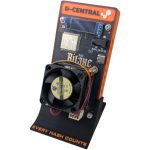
D-Central Technologies has been a pioneer in the Bitaxe ecosystem since day one. We created the original Bitaxe Mesh Stand — the first commercially manufactured stand for these devices — and have developed leading accessories including custom heatsinks for both the standard Bitaxe and the Bitaxe Hex, protective cases, and complete power solutions. We stock every Bitaxe variant (Supra, Ultra, Gamma, Hex, GT, and more) alongside the full Nerdminer/NerdAxe/NerdQAxe/NerdNOS lineup. When you buy from D-Central, you are buying from a team that helped shape this ecosystem.
Pioneer Bitaxe manufacturer and creator of the original Mesh Stand. We stock every Bitaxe variant — Supra, Ultra, Gamma, Hex, GT — plus NerdAxe, NerdQAxe, NerdNOS, Nerdminer, and all accessories. 2,500+ miners repaired. The team that knows this hardware because we helped build it.
Browse Open-Source Miners →Tier 2: Bitcoin Space Heater Miners
This is the Mining Hacker’s secret weapon — and it completely changes the economics of solo mining.
A Bitcoin space heater is an ASIC miner enclosed in a sound-dampened housing designed to distribute heat into your living space. The physics are simple: every watt consumed by an electric device becomes heat. A 1,500W electric space heater from the hardware store converts 1,500W into 1,500W of heat and zero Bitcoin. A 1,350W Antminer S9 Space Heater Edition converts 1,350W into 1,350W of heat and mines Bitcoin 24/7. Same heat, free sats.
When you are heating your home anyway — and if you live in Canada, you are heating your home for six to eight months of the year — the electricity cost of running a space heater miner is not an “extra” expense. It is a substituted expense. You were going to spend that money on heat regardless. The Bitcoin it mines is effectively free.
Now apply that logic to solo mining. An S9 Space Heater at 13.5 TH/s running as your winter heat source gives you roughly 27x the hashrate of a Bitaxe Supra, at zero marginal electricity cost during heating season. Your expected time to find a block drops from 30 million years to about 1.1 million years. Still astronomical for a single unit — but pair two or three space heaters across your home and you are multiplying your lottery tickets at no additional energy cost.
Mine Bitcoin while heating your home. Sound-dampened ASIC miners in space heater enclosures — S9, S17, and S19 editions available. Every watt becomes heat AND hashrate. The ultimate dual-purpose mining solution for Canadian winters.
Browse Space Heaters →Tier 3: Full ASIC Miners
For miners who want serious solo hashrate, current-generation ASIC miners offer 100-234 TH/s per unit. These are the same machines used in industrial mining facilities — but there is nothing stopping you from running one (or several) at home if you have the electrical capacity and a suitable location.
Solo mining probability calculator with a full ASIC is a different game than Bitaxe lottery mining. At 200 TH/s, an Antminer S21’s expected time to find a block is roughly 76,000 years. Still long — but if you are running the miner anyway for pool mining income, you could allocate some of your hashrate to solo mining, or alternate between solo and pool modes. Some miners run solo during off-peak electricity hours when costs are lowest, then switch to pool mining during peak rates to ensure steady income.
Tier 4: Hashrate Pooling (Multiple Small Devices)
The community approach to solo mining: run multiple small devices pointed at the same wallet address. Five Bitaxe Gammas give you 6 TH/s. Add a NerdQAxe and a Bitaxe Hex and you are at ~11.6 TH/s — approaching S9 territory but spread across quiet, desk-friendly devices running on standard outlets.
Some solo miners build “Bitaxe walls” — arrays of open-source miners on mesh stands, all pointed at the same solo pool and wallet address. The hashrates stack. The probability improves with each device. And the visual display of a wall of blinking miners is, frankly, impressive. More practically, if one device fails, the others keep hashing. No single point of failure.
This is the Mining Hacker approach: instead of one expensive, loud, power-hungry machine, deploy a distributed fleet of cheap, quiet, low-power devices that collectively accumulate meaningful hashrate over time.
Solo Mining Pools
The term “solo mining pool” sounds like a contradiction, but it makes perfect sense once you understand the architecture. A solo pool provides the infrastructure — Stratum server, block template construction, share validation — without the reward splitting. Think of it as a solo mining relay service. Your miner connects to the pool’s Stratum endpoint, receives work, and submits shares. If one of your shares meets the full network difficulty target and finds a valid block, the entire block reward goes to your wallet address. The pool takes no cut (or a minimal fee).
Without a solo pool, you would need to run your own Bitcoin full node and mining software to construct block templates and validate shares yourself. That is technically possible and maximally sovereign, but it requires a dedicated machine running Bitcoin Core, additional software like ckpool or Stratum V2, and ongoing maintenance. Solo pools abstract all of that away while preserving the fundamental solo mining mechanic: your hashrate, your block, your reward.
Solo Mining Pool Comparison
| Pool | Fee | Stratum URL | Port | Features |
|---|---|---|---|---|
| public-pool.io | 0% (free) | public-pool.io | 21496 | Free, open-source, community-run. Dashboard shows hashrate, shares, best difficulty. Most popular for Bitaxe. No account required — just your BTC address. |
| CKPool Solo | 2% | solo.ckpool.org | 3333 | Run by Con Kolivas (ckpool author). Battle-tested infrastructure. Supports all ASIC miners. 2% fee only charged if you find a block. |
| Ocean (TIDES) | ~0% (TIDES) | mine.ocean.xyz | 3334 | Transparent pool with non-custodial payouts. TIDES payout model proportionally distributes rewards. Not strictly “solo” — more of a transparent, decentralized pool. Backed by Jack Dorsey. |
A Note on Ocean
Ocean deserves special mention because it occupies an interesting space between pool mining and solo mining. Its TIDES (Transparent Index of Distinct Extended Shares) payout model distributes rewards proportionally to contributors, but does so in a non-custodial, transparent way that aligns with decentralization principles. Ocean does not hold your coins — payouts go directly to your wallet. While it is technically a pool (rewards are shared), its transparency and non-custodial approach make it attractive to miners who want pool-like income with solo-like sovereignty. It is worth exploring if you want something between pure solo mining and traditional pool mining.
Setting Up Solo Mining
The setup process differs depending on your hardware. Bitaxe and open-source miners use AxeOS with a web-based interface. Full ASIC miners use their own firmware with Stratum configuration fields. Both connect to a solo pool the same way — the difference is in how you access the settings.
Setting Up a Bitaxe for Solo Mining
Every Bitaxe device runs AxeOS, an open-source firmware with a web-based dashboard accessible from your browser. Here is how to configure it for solo mining on public-pool.io:
Step 1 — Connect to AxeOS. Power on your Bitaxe and connect to its WiFi access point (it broadcasts an SSID like Bitaxe_XXXX on first boot). Navigate to http://192.168.4.1 in your browser to access the AxeOS dashboard. Configure your home WiFi credentials so the Bitaxe connects to your network. Once connected, find its IP address on your router’s device list and access the dashboard at that IP.
Step 2 — Configure Mining Settings. In the AxeOS dashboard, navigate to the mining configuration section and enter the following:
Stratum URL:  public-pool.io
Stratum Port: 21496
Stratum User: YOUR_BITCOIN_ADDRESS
Password:     x
Step 3 — Set your Bitcoin address. The “Stratum User” field is your Bitcoin wallet address. This is where the block reward will be sent if your Bitaxe finds a block. Use an address you fully control — a hardware wallet (Coldcard, Trezor, Blockstream Jade) or a self-custody software wallet (Sparrow, Electrum, BlueWallet). Do NOT use an exchange deposit address.
Step 4 — Save and restart. Save the configuration and let the Bitaxe restart. Within a few minutes, you should see your hashrate appear on the AxeOS dashboard and on the public-pool.io website (search for your Bitcoin address).
Setting Up a Full ASIC Miner for Solo Mining
Full ASIC miners (Antminer, Whatsminer, Avalon) have their own web-based control panels. The process is the same conceptually — you enter a Stratum URL, port, and your Bitcoin address — but the interface differs by manufacturer.
For Antminer (Bitmain):
- Connect to your miner’s web interface (usually at its local IP, accessible via browser).
- Navigate to Miner Configuration (or Pool Settings).
- Enter the pool details in Pool 1:
URL:      stratum+tcp://solo.ckpool.org:3333
Worker:   YOUR_BITCOIN_ADDRESS.worker1
Password: x
For Whatsminer (MicroBT):
- Access the Whatsminer web panel at its local IP address.
- Navigate to Configuration > Miner Configuration.
- Enter the same pool details — URL, worker (your BTC address), and password.
Monitoring Your Solo Mining Operation
Once your miner is hashing, the next question is: how do I know it is working, and what am I looking at?
The Public Pool Dashboard
If you are mining on public-pool.io, navigate to the website and enter your Bitcoin address. You will see a dashboard showing:
- Hashrate: Your current average hashrate as measured by the pool. This may differ slightly from what your device reports locally due to share variance — that is normal.
- Shares submitted: The total number of valid shares your miner has sent to the pool. Each share represents a hash that met a minimum difficulty threshold (much lower than the actual network difficulty).
- Best difficulty: The highest difficulty share your miner has ever submitted. This is the closest you have come to finding a block. The higher this number, the closer that share was to meeting the full network difficulty target. Miners track this number like a high score.
- Workers: Each device connected with your Bitcoin address is listed separately, so you can monitor multiple Bitaxe units from a single dashboard.
Understanding “Best Difficulty”
This metric deserves explanation because it is a source of both excitement and confusion. When your miner submits a share, that share has a difficulty value — essentially how “good” the hash was. The pool requires shares above a minimum difficulty (low, so you submit frequently and the pool can verify you are working). But occasionally, your miner will find a hash that far exceeds the minimum — a share with very high difficulty.
For context, the Bitcoin network difficulty as of early 2026 is in the trillions. If your best difficulty share is in the billions, you were within a factor of 1,000 of finding a block. If it is in the trillions — you were genuinely close. When a share’s difficulty exceeds the current network difficulty, it IS a valid block.
Many Bitaxe miners post screenshots of their “best difficulty” values, celebrating when they hit new personal records. It is a way of tracking progress and maintaining excitement in a game where the ultimate prize is rare but theoretically possible at any moment.
Local Device Monitoring
The AxeOS dashboard on your Bitaxe shows real-time data including:
- Current hashrate — instantaneous and rolling average
- ASIC temperature — keep this below 70°C for longevity
- Fan speed — RPM and percentage
- Shares accepted/rejected — rejected shares indicate connectivity or configuration issues
- Uptime — how long since last restart
- Best difficulty — your all-time personal record on this device
For full ASIC miners, the manufacturer web panel provides similar metrics plus additional data like individual hashboard performance, PSU voltage, and chip temperature grids.
Real Bitaxe Block Wins
This is not theory. Bitaxe miners have found full Bitcoin blocks.
The Bitaxe community tracks every solo block win with the fervor of a sports championship. When a Bitaxe device — running at 500 GH/s to 3.6 TH/s against an 800+ EH/s network — submits a share that meets the full network difficulty and produces a valid block, the announcement ripples across social media, Discord servers, and mining forums worldwide. It is proof that the system works. Proof that Satoshi’s design allows a tiny device on someone’s desk to compete with industrial mining farms and, occasionally, win.
Each Bitaxe block win is verified on the blockchain — transparent, immutable, public. You can look up the block, see the coinbase transaction paying out to the solo miner’s address, and verify that the block was indeed found by a share submitted through a solo pool. These are not myths or marketing claims. They are recorded in Bitcoin’s permanent ledger.
The community celebrates these wins not just for the lucky miner who received 3.125 BTC, but for what they represent: a small, open-source, community-built device, running on USB power from someone’s desk, successfully competing in the most compute-intensive competition on Earth. It is the ultimate underdog story, repeated at random intervals, forever.
Solo Mining Economics
Let’s talk money — honestly and without the hype that plagues most mining content.
Bitaxe and Open-Source Miners: The Cost of Playing
A Bitaxe Supra at stock settings draws approximately 15W. Running 24/7, that is 0.36 kWh per day. At a typical Canadian residential electricity rate of $0.12/kWh, you are paying about $0.04/day or roughly $15/year to run your solo miner.
The expected value of a Bitaxe Supra’s solo mining output per year, given current network difficulty, is a small fraction of a cent. In pure expected-value terms, you are spending $15 to receive approximately $0.003 in expected BTC. This is obviously “unprofitable” by any rational economic measure.
But that framing misses the point entirely. Nobody buys a lottery ticket because the expected value exceeds the price. The Bitaxe is a $15/year subscription to:
- A nonzero probability of winning 3.125 BTC (~$200,000+ at time of writing)
- Direct participation in Bitcoin’s consensus mechanism
- Contributing to network decentralization
- Earning non-KYC Bitcoin if you win
- Learning about mining at the hardware level
- Being part of an active, passionate community
Fifteen dollars a year. That is less than a streaming subscription. Less than one restaurant meal. Less than the gas to drive to a lottery retailer twelve times. And unlike all of those things, your Bitaxe strengthens Bitcoin’s security model every second it runs.
Full ASIC Solo Mining: The Opportunity Cost
For full ASIC miners, the economics are different. An Antminer S21 drawing 3,500W costs approximately $10/day in electricity at $0.12/kWh. Pool mining that same S21 would earn roughly $8-12/day (depending on difficulty, BTC price, and fees). The miner roughly breaks even or earns modestly in a pool.
Solo mining that same S21, you earn exactly $0/day — until the day you find a block and earn 3.125 BTC in a single instant. The expected time to find a block is ~76,000 years. So the “expected daily income” of solo mining is the same as pool mining (3.125 BTC / 76,000 years worth of days), but the variance is enormous: long stretches of nothing, punctuated by a life-changing payout if you are lucky.
The opportunity cost of solo mining a full ASIC is real: you forgo the steady ~$8-12/day of pool income for a lottery shot at a much larger sum. Most serious ASIC miners do not solo mine exclusively — they pool mine for income and run a Bitaxe on the side for the lottery. That is the pragmatic approach, and there is no shame in it.
Space Heater Economics: The Hidden Advantage
Space heater miners are the sweet spot for solo mining economics because the electricity cost is already being spent on heat. If you were going to run a 1,350W electric heater anyway, replacing it with an S9 Space Heater Edition means your mining electricity cost is effectively zero — the heat is the primary product, and Bitcoin is the byproduct.
During heating season (October through April in most of Canada), every sat your space heater mines is pure profit relative to the alternative of a dumb heater. Point it at a solo pool and you have a zero-marginal-cost lottery ticket running all winter.
Solo Mining and Decentralization
This is the section that matters most, even if it does not sell hardware.
Bitcoin’s security model rests on the assumption that no single entity controls a majority of the network’s hashrate. If any actor — a government, a corporation, a cartel of pool operators — controls more than 50% of hashrate, they can theoretically censor transactions, double-spend coins, or rewrite recent blocks. This is the 51% attack, and it is the existential threat that keeps Bitcoin security researchers up at night.
Today, the top three mining pools collectively control over 50% of Bitcoin’s hashrate. Not because they own the hardware — the individual miners in those pools do — but because miners delegate their hashrate to pools for the convenience of predictable payouts. This creates a dangerous centralization pressure. Pool operators select which transactions go into blocks. Pool operators decide whether to signal for protocol upgrades. Pool operators could, theoretically, coordinate to censor specific addresses or transactions.
Why Hash Rate Distribution Matters
Every miner who points their hardware at a pool is adding to that pool’s block template authority. Every miner who solo mines removes that authority from pools and exercises it independently. Solo mining is a vote for decentralization — not in the abstract sense of posting about it on social media, but in the concrete, measurable sense of reducing pool dominance over transaction selection and block construction.
When a solo miner finds a block, that block was constructed independently of any pool’s transaction selection policy. The solo miner (or their solo pool’s software) chose which transactions to include. There was no pool operator deciding to censor OFAC-sanctioned addresses, no corporate compliance department filtering transactions, no terms of service restricting what goes into the block. It is a censorship-resistant block in the truest sense.
Your Hashrate Matters
You might think that your 500 GH/s Bitaxe is too small to matter. In isolation, that is true — it is a rounding error against 800 EH/s of network hashrate. But you are not in isolation. There are thousands of Bitaxe devices running worldwide. Collectively, they represent a meaningful amount of hashrate that is not controlled by any pool, any corporation, or any government. Each new Bitaxe plugged in makes the network slightly more decentralized.
And the principle scales. If 10,000 bitcoiners each run a Bitaxe Gamma at 1.2 TH/s, that is 12 PH/s of independent hashrate — enough to find a block roughly every three days. If 100,000 home miners each run modest setups, the collective independent hashrate becomes significant enough to meaningfully reduce pool dominance.
This is what Satoshi envisioned. Not mining farms in Texas. Not pools run from Singapore. Not corporate compliance departments deciding which Bitcoin transactions are acceptable. A network of individual participants, each running their own hardware, each contributing to consensus, each exercising their right to participate in the hardest money ever created.
Getting Started: Your Solo Mining Checklist
Ready to plug in and start hashing? Here is everything you need, in order:
- Choose your hardware. For most beginners, a Bitaxe Supra or Bitaxe Gamma is the ideal starting point — silent, USB-powered, and ready to mine out of the box.
- Get a self-custody Bitcoin wallet. Hardware wallets (Coldcard, Trezor, Blockstream Jade) are ideal. Software wallets (Sparrow, Electrum, BlueWallet) work too. Generate a receiving address. Never use an exchange address.
- Choose a solo pool. We recommend public-pool.io (free, no account required) for Bitaxe miners. Use CKPool Solo for full ASIC miners.
- Configure your miner. Enter the Stratum URL, port, and your Bitcoin address in your device’s settings. See the setup sections above for device-specific instructions.
- Verify it is working. Check your pool dashboard to confirm shares are being submitted. Monitor your device temperature and hashrate.
- Let it run. Solo mining is a patience game. Set it, verify it, and let it hash. Check in periodically, but resist the urge to fiddle constantly.
- Join the community. Follow solo mining discussions on Twitter/X, Discord, and Reddit. Celebrate when someone finds a block. Your turn could be next.
D-Central stocks the complete lineup of solo mining hardware: every Bitaxe variant (Supra, Ultra, Gamma, Hex, GT), NerdAxe, NerdQAxe, Nerdminer, NerdNOS, Bitcoin Space Heaters, full ASIC miners, and all accessories. Pioneer Bitaxe manufacturer since the beginning. 2,500+ miners repaired. Based in Laval, Quebec. Call us at 1-855-753-9997.
Browse Solo Mining Hardware →Frequently Asked Questions
How long will it take my Bitaxe to find a block?
The honest answer: probably never, in the statistical sense. A single Bitaxe Supra at 500 GH/s has an expected time to block of approximately 30 million years at current network difficulty. But “expected time” is a statistical average, not a guarantee. Every hash has the same infinitesimally small probability of being the winning hash. Bitaxe devices have found blocks before — it is rare, but it happens. The cost to keep trying is about $15/year in electricity, so most solo miners view it as a perpetual lottery ticket rather than an income strategy.
Is solo mining "worth it"?
It depends what you are optimizing for. If you are optimizing for expected financial return per dollar of electricity, pool mining wins decisively. If you are optimizing for decentralization contribution, non-KYC Bitcoin potential, the lottery thrill, community participation, and learning about Bitcoin at the protocol level — solo mining is absolutely worth it. At $15/year for a Bitaxe, the question is not whether you can afford to solo mine; it is whether you can afford not to have skin in the game.
Can I switch between solo and pool mining?
Yes, instantly. Just change the Stratum URL and port in your miner’s settings to point at a different pool. Many miners run a Bitaxe on a solo pool 24/7 and point their larger ASIC miners at traditional pools for steady income. You can change pools as often as you like — there is no lockup, contract, or commitment.
Do multiple devices at the same address stack their probability?
Yes. If you run five Bitaxe Supras all pointed at the same Bitcoin address on public-pool.io, your combined hashrate is approximately 2.5 TH/s, and your probability of finding a block is five times higher than a single unit. The pool sees all devices as workers under the same address. Hashrate is additive — this is the principle behind the “Bitaxe wall” approach.
What happens to the block reward if I find a block?
On a solo pool like public-pool.io (0% fee) or CKPool Solo (2% fee), the full block reward (3.125 BTC + transaction fees, minus any pool fee) is sent to the Bitcoin address you configured in your miner. The transaction appears in the block’s coinbase output. After 100 confirmations (roughly 16.7 hours), the reward becomes spendable. On public-pool.io, there is no fee — you keep the entire amount.
Does solo mining use a lot of internet bandwidth?
No. Mining uses very little bandwidth. The Stratum protocol exchanges tiny data packets — work assignments from the pool and share submissions from your miner. A Bitaxe uses approximately 10-50 MB of data per month. Even a full ASIC miner uses negligible bandwidth compared to streaming video or browsing the web. Any standard home internet connection can handle hundreds of miners without strain.
Will my electricity company notice or care?
For a Bitaxe drawing 15W, absolutely not — it consumes less power than a light bulb. For full ASIC miners drawing 3,000-3,500W each, your electricity consumption will increase noticeably (equivalent to running an extra dryer or two). Electricity companies do not care what you use power for as long as you pay the bill and your wiring is up to code. However, if you are running multiple large miners, make sure your electrical panel and circuits are properly rated — have a licensed electrician verify your setup if you are drawing more than a few kilowatts.
Do I have to pay taxes if I find a solo block?
In Canada, mined Bitcoin is generally treated as business income or a capital gain depending on the circumstances. If you find a 3.125 BTC block, you may have a tax obligation. Consult a tax professional familiar with cryptocurrency in your jurisdiction. D-Central does not provide tax advice. What we will say: the tax treatment of solo-mined Bitcoin is one more reason to use a self-custody wallet with good record-keeping, not an exchange.
What happens to solo mining after the next halving?
The next Bitcoin halving is expected around 2028, reducing the block reward from 3.125 BTC to 1.5625 BTC. For solo miners, this cuts the prize in half — but it also historically precedes significant BTC price appreciation, which can offset or exceed the reward reduction. The probability math stays the same; only the size of the prize changes. Transaction fees, which the solo miner also collects, may increase over time to partially compensate for the reduced subsidy. Solo mining will remain viable as long as Bitcoin exists — the block reward just shrinks on a predictable schedule.
Start Hashing
Solo mining is not a business plan. It is not an investment strategy. It is not even, in the strictly rational sense, a good use of your electricity budget.
It is something better than all of those things.
Solo mining is direct participation in Bitcoin’s consensus mechanism — the purest form of engagement with the network that Satoshi built. Every hash your device computes strengthens decentralization. Every share you submit is a signal that individual sovereignty matters. Every Bitaxe plugged into a USB port and pointed at public-pool.io is a small but real act of resistance against the centralization of mining power.
The lottery aspect is the bonus. The community excitement of watching block wins is the bonus. The chance of waking up to 3.125 BTC in your wallet is the bonus. The real value is simpler: you are running your own mining hardware, on your own terms, contributing to the most important monetary network in human history.
D-Central Technologies has been building, repairing, modifying, and selling mining hardware since 2016. Visit our Bitaxe Hub for the definitive guide to every Bitaxe model, setup tutorials, overclocking tips, and community block win tracking. We created the original Bitaxe Mesh Stand. We have repaired over 2,500 miners. We stock every Bitaxe variant, every open-source miner, space heaters, full ASICs, and every accessory you could need. We are Bitcoin Mining Hackers — institutional technology, hacked for the home miner.
Plug in. Start hashing. Your block could be next.
Pioneer Bitaxe manufacturer. 2,500+ miners repaired. Complete lineup of open-source miners, Bitcoin space heaters, full ASICs, and accessories. Based in Laval, Quebec, Canada. Shipping worldwide since 2016.
Shop D-Central Mining Hardware →How long will it take my Bitaxe to find a block?
The honest answer: probably never, in the statistical sense. A single Bitaxe Supra at 500 GH/s has an expected time to block of approximately 30 million years at current network difficulty. But “expected time” is a statistical average, not a guarantee. Every hash has the same infinitesimally small probability of being the winning hash. Bitaxe devices have found blocks before — it is rare, but it happens. The cost to keep trying is about $15/year in electricity, so most solo miners view it…
Is solo mining "worth it"?
It depends what you are optimizing for. If you are optimizing for expected financial return per dollar of electricity, pool mining wins decisively. If you are optimizing for decentralization contribution, non-KYC Bitcoin potential, the lottery thrill, community participation, and learning about Bitcoin at the protocol level — solo mining is absolutely worth it. At $15/year for a Bitaxe, the question is not whether you can afford to solo mine; it is whether you can afford not to have skin…
Can I switch between solo and pool mining?
Yes, instantly. Just change the Stratum URL and port in your miner’s settings to point at a different pool. Many miners run a Bitaxe on a solo pool 24/7 and point their larger ASIC miners at traditional pools for steady income. You can change pools as often as you like — there is no lockup, contract, or commitment.
Do multiple devices at the same address stack their probability?
Yes. If you run five Bitaxe Supras all pointed at the same Bitcoin address on public-pool.io, your combined hashrate is approximately 2.5 TH/s, and your probability of finding a block is five times higher than a single unit. The pool sees all devices as workers under the same address. Hashrate is additive — this is the principle behind the “Bitaxe wall” approach.
What happens to the block reward if I find a block?
On a solo pool like public-pool.io (0% fee) or CKPool Solo (2% fee), the full block reward (3.125 BTC + transaction fees, minus any pool fee) is sent to the Bitcoin address you configured in your miner. The transaction appears in the block’s coinbase output. After 100 confirmations (roughly 16.7 hours), the reward becomes spendable. On public-pool.io, there is no fee — you keep the entire amount.
Does solo mining use a lot of internet bandwidth?
No. Mining uses very little bandwidth. The Stratum protocol exchanges tiny data packets — work assignments from the pool and share submissions from your miner. A Bitaxe uses approximately 10-50 MB of data per month. Even a full ASIC miner uses negligible bandwidth compared to streaming video or browsing the web. Any standard home internet connection can handle hundreds of miners without strain.
Will my electricity company notice or care?
For a Bitaxe drawing 15W, absolutely not — it consumes less power than a light bulb. For full ASIC miners drawing 3,000-3,500W each, your electricity consumption will increase noticeably (equivalent to running an extra dryer or two). Electricity companies do not care what you use power for as long as you pay the bill and your wiring is up to code. However, if you are running multiple large miners, make sure your electrical panel and circuits are properly rated — have a licensed…
Do I have to pay taxes if I find a solo block?
In Canada, mined Bitcoin is generally treated as business income or a capital gain depending on the circumstances. If you find a 3.125 BTC block, you may have a tax obligation. Consult a tax professional familiar with cryptocurrency in your jurisdiction. D-Central does not provide tax advice. What we will say: the tax treatment of solo-mined Bitcoin is one more reason to use a self-custody wallet with good record-keeping, not an exchange.
What happens to solo mining after the next halving?
The next Bitcoin halving is expected around 2028, reducing the block reward from 3.125 BTC to 1.5625 BTC. For solo miners, this cuts the prize in half — but it also historically precedes significant BTC price appreciation, which can offset or exceed the reward reduction. The probability math stays the same; only the size of the prize changes. Transaction fees, which the solo miner also collects, may increase over time to partially compensate for the reduced subsidy. Solo mining will remain…