Bitcoin is not an investment vehicle. It is not a speculative asset for Wall Street to package and resell. Bitcoin is a technology — a decentralized, censorship-resistant system for transferring value without permission from anyone. And at the heart of that system sits mining: the computational engine that makes the whole thing work.
If you are reading this on D-Central’s site, you likely already understand that. But understanding and doing are different things. This article is for the doers — the home miners, the tinkerers, the people who believe that running your own hardware is not just a hobby but an act of sovereignty.
We have been building mining solutions since 2016. We have repaired thousands of ASICs, shipped open-source miners across the globe, and watched the home mining movement grow from a fringe activity into a legitimate force for decentralization. Here is what we know — and what you need to know — about Bitcoin mining as a technology in 2025 and beyond.
What Bitcoin Mining Actually Does
Strip away the price charts and the speculation. At its core, Bitcoin mining is a process where specialized computers race to solve a cryptographic puzzle. The winner gets to propose the next block of transactions to the network, earning a block reward of 3.125 BTC (post-April 2024 halving) plus transaction fees.
This is not busywork. Every hash computed by every miner on the planet contributes to the security of the Bitcoin network. The global hashrate now exceeds 800 EH/s — that is 800 quintillion hashes per second — making Bitcoin the most computationally secure network ever created by humans.
| Mining Concept | What It Means |
|---|---|
| Hashrate | Computational power dedicated to mining, measured in hashes per second (H/s, TH/s, EH/s) |
| Block Reward | Currently 3.125 BTC per block, halves approximately every 4 years |
| Difficulty Adjustment | Network auto-adjusts mining difficulty every 2,016 blocks (~2 weeks) to maintain 10-minute block times |
| Proof of Work | The consensus mechanism that requires miners to expend real energy to validate transactions |
| Halving | Block reward cuts in half every 210,000 blocks — creating Bitcoin’s fixed supply schedule |
Every one of those concepts matters. The difficulty adjustment is arguably the most elegant piece of engineering in the entire protocol — it ensures that no matter how much hashrate joins or leaves the network, blocks keep coming every ten minutes on average. No central authority needed.
Why Home Mining Matters More Than Ever
Here is the uncomfortable truth that the industry does not talk about enough: Bitcoin mining is becoming dangerously centralized. Massive industrial operations, often backed by venture capital or public markets, are consolidating hashrate into fewer and fewer hands. When a small number of entities control a majority of the hashrate, the censorship-resistance that makes Bitcoin valuable starts to erode.
Home mining is the antidote.
When you run a miner in your garage, your basement, or your spare room, you are adding hashrate that no corporation controls. You are making the network harder to attack, harder to censor, and harder to co-opt. This is not a feel-good narrative — it is a technical reality. Decentralized hashrate distribution is a security feature of the Bitcoin protocol.
D-Central exists to make this accessible. We take institutional-grade mining technology and hack it into solutions that work for individual miners. That is what “Bitcoin Mining Hackers” means — we are not breaking things, we are opening them up so that everyone can participate.
The Dual-Purpose Mining Revolution
One of the most powerful arguments for home mining is energy reuse. An ASIC miner converts electricity into heat and hashrate. If you are already heating your home, why not mine Bitcoin at the same time?
Our Bitcoin Space Heaters are purpose-built for exactly this. Available in configurations based on the Antminer S9, S17, and S19 platforms, these units replace conventional electric heaters while contributing hashrate to the network. Every watt of electricity does double duty.
In Canada, where winters are long and heating costs are significant, dual-purpose mining is not a gimmick — it is an economic strategy. You are spending that energy on heat anyway. Mining just means you get sats back in the process.
The Open-Source Mining Movement
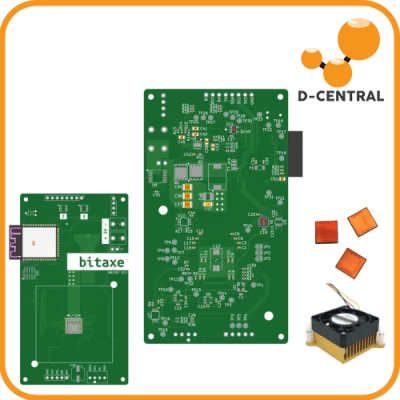
The rise of open-source mining hardware represents one of the most important developments in Bitcoin’s history. Devices like the Bitaxe, NerdAxe, and NerdQAxe put mining hardware design into the public domain, meaning anyone can manufacture, modify, and improve upon them.
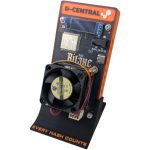
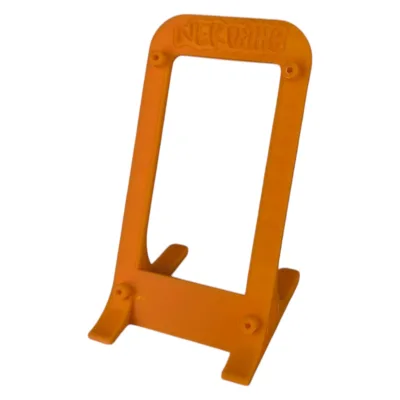
D-Central has been a pioneer in this ecosystem since the beginning. We created the original Bitaxe Mesh Stand — the first company to manufacture it — and have developed leading accessories including custom heatsinks for the Bitaxe and Bitaxe Hex. We stock every Bitaxe variant: Supra, Ultra, Hex, Gamma, and GT, along with the complete Nerd lineup.
| Device | Type | Power Input | Best For |
|---|---|---|---|
| Bitaxe Supra / Ultra / Gamma | Solo miner | 5V barrel jack (5.5×2.1mm DC) | Solo lottery mining, education, supporting decentralization |
| Bitaxe GT | Solo miner | 12V DC XT30 connector | Higher hashrate solo mining |
| Bitaxe Hex | Multi-chip solo miner | 12V DC XT30 connector | Serious solo miners wanting maximum open-source hashrate |
| NerdAxe | Open-source miner | 5V barrel jack (5.5×2.1mm DC) | DIY builders, education, low-power mining |
| NerdQAxe | Quad-chip open-source miner | 12V DC XT30 | Higher performance open-source mining |
| Nerdminer | Entry-level miner | USB | Absolute beginners, lottery mining at minimal cost |
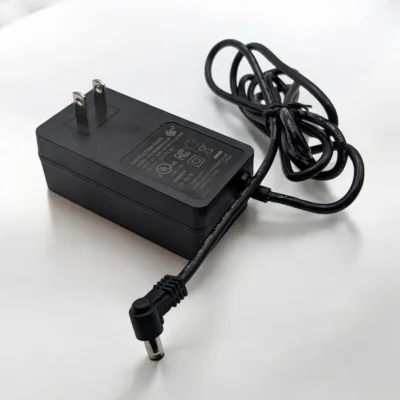
Critical hardware note: The USB-C port on Bitaxe and NerdAxe devices is for firmware flashing and serial communication only — it does not supply power. These devices require a dedicated 5V/6A power supply connected via the 5.5×2.1mm barrel jack. Using USB-C for power will not work and can damage the device.
Explore every variant, accessory, and setup guide on our Bitaxe Hub — the most comprehensive Bitaxe resource on the internet.
Solo Mining: Every Hash Counts
Solo mining with a Bitaxe or similar low-hashrate device is often called “lottery mining,” and the math is honest about it — your odds of finding a block with a single Bitaxe are astronomically small against the 800+ EH/s network. But people do win. Bitaxe solo miners have found blocks, earning the full 3.125 BTC reward.
The point is not the expected value calculation. The point is participation. Every hash your device computes is a vote for decentralization. Every solo miner running is one more independent validator that no pool operator, no government, and no corporation controls.
That philosophy — every hash counts — is the foundation of everything we do at D-Central. Whether you are running a single Bitaxe on your desk or a fleet of S19s in your garage, you are part of the network. You are Bitcoin.
ASIC Repair: Keeping Hardware in the Fight
Mining hardware takes a beating. ASICs run 24/7, pushing silicon to its thermal limits, and components fail. When an institutional mining operation loses a machine, it becomes e-waste. When a home miner loses a machine, it is a significant setback.
That is why ASIC repair is one of our core services. We have repaired thousands of miners across every major manufacturer — Bitmain, MicroBT, Innosilicon, Canaan — with model-specific expertise across 38+ devices. Our repair team diagnoses at the component level: hashboard failures, control board issues, power supply faults, and everything in between.
Repair is also an act of resistance against planned obsolescence. The industry wants you to throw away your S9 and buy an S21. We would rather help you keep that S9 running as a space heater, hashing away and contributing to network security for years beyond its “expected” lifespan.
| Repair Capability | Details |
|---|---|
| Manufacturers Supported | Bitmain (Antminer), MicroBT (Whatsminer), Innosilicon, Canaan (Avalon), Halong |
| Common Repairs | Hashboard diagnostics, ASIC chip replacement, control board repair, PSU repair, fan replacement |
| Expertise Level | Component-level board repair with BGA rework capability |
| Experience | Thousands of miners repaired since 2016 |
The Canadian Advantage
Canada is one of the best places on Earth to mine Bitcoin. Cold climate means free cooling for most of the year. Abundant hydroelectric power in Quebec and Manitoba provides clean, affordable energy. And the regulatory environment, while not perfect, is far more stable and predictable than many other jurisdictions.
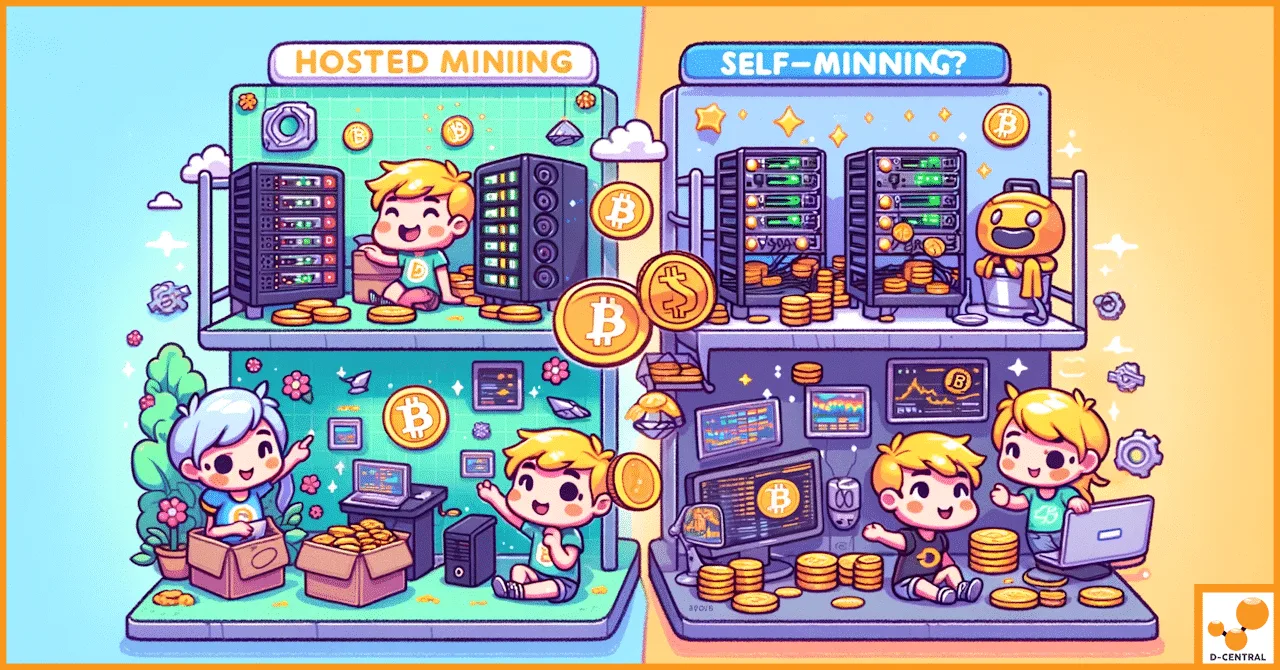
D-Central operates from Montreal, Quebec, and we offer mining hosting in Quebec for miners who want Canadian infrastructure without managing their own facility. Our hosting benefits from Quebec’s hydroelectric grid — some of the cheapest and cleanest power in North America.
For home miners, the Canadian climate is a genuine advantage. When outside temperatures drop below freezing for five months of the year, the waste heat from your mining operation is not waste at all — it is your heating system. Canadians who mine at home during winter are effectively mining at a massive discount because the heat would have been generated by another appliance anyway.
Getting Started: From Zero to Hashing
If you have never mined before, the path is simpler than you think:
1. Choose your hardware. For absolute beginners, a Bitaxe Supra or NerdAxe is the best entry point. Low power consumption, plug-and-play setup, and you are solo mining within minutes. Browse our full lineup in the D-Central shop.
2. Set up your miner. Connect the 5V/6A power supply to the barrel jack (not USB-C), connect to your WiFi network via the device’s web interface, and point it at a solo mining pool like Solo CK Pool or Public Pool.
3. Learn and optimize. Start with stock settings, then explore overclocking, custom firmware, and thermal optimization. Our Bitaxe Hub has comprehensive guides for every step.
4. Scale when ready. Once you understand the fundamentals, consider adding a full ASIC miner for pool mining, or a Space Heater edition for dual-purpose operation.
5. Get help when you need it. We offer mining consulting for miners of all sizes, from single-device home setups to multi-unit operations.
The Bigger Picture: Why This Matters
Bitcoin’s security model depends on distributed hashrate. The more miners, the more geographic distribution, the more jurisdictional diversity — the stronger Bitcoin becomes. Every centralization pressure, whether from regulatory crackdowns, energy policy changes, or corporate consolidation, is a threat to the network.
Home mining is not a nostalgic throwback to 2011. It is a forward-looking strategy for keeping Bitcoin decentralized as the network scales. The tools available today — efficient ASICs, open-source hardware, dual-purpose heating solutions — make it more viable than ever.
At D-Central, we believe in the decentralization of every layer of Bitcoin mining. Not just the protocol layer, but the hardware layer, the manufacturing layer, the repair layer, and the knowledge layer. That is why we build, repair, educate, and ship. That is why we are Bitcoin Mining Hackers.
We are the North. And every hash counts.
Frequently Asked Questions
What is Bitcoin mining and why does it matter?
Bitcoin mining is the process by which specialized computers (ASICs) compete to solve cryptographic puzzles, validating transactions and securing the Bitcoin network. It matters because mining is the mechanism that makes Bitcoin decentralized and censorship-resistant. Without miners distributed across the globe, Bitcoin would be vulnerable to attack and control by centralized entities.
Can I realistically mine Bitcoin at home in 2025?
Absolutely. Home mining is more accessible than ever thanks to devices like the Bitaxe (solo mining) and compact ASIC miners. While you will not compete with industrial operations on raw hashrate, home mining serves multiple purposes: contributing to network decentralization, earning sats through pool mining, heating your home with dual-purpose miners, and learning about Bitcoin at the deepest technical level. In cold climates like Canada, the economics improve significantly since miner heat offsets heating costs.
What is the difference between solo mining and pool mining?
Pool mining combines your hashrate with thousands of other miners, earning small but consistent payouts proportional to your contribution. Solo mining means you work alone — you earn nothing unless you find a block, at which point you receive the entire 3.125 BTC block reward. Solo mining with low-hashrate devices like the Bitaxe is often called “lottery mining” because the odds are low but the reward is massive. Pool mining is for steady returns; solo mining is for sovereignty maximalists and optimists.
Do Bitaxe miners use USB-C for power?
No. Bitaxe Supra, Ultra, and Gamma models use a 5V DC barrel jack (5.5×2.1mm) and require a 5V/6A power supply. The Bitaxe GT and Bitaxe Hex use a 12V DC XT30 connector. The USB-C port on these devices is strictly for firmware flashing and serial communication — it cannot power the miner. Using USB-C for power will not work.
How does a Bitcoin Space Heater work?
A Bitcoin Space Heater is an ASIC miner housed in an enclosure designed for residential use, with improved noise management and heat distribution. It converts electricity into heat (just like any electric heater) while simultaneously mining Bitcoin. The heat output is identical to a conventional electric heater of the same wattage — the only difference is that you also earn Bitcoin from the mining process. D-Central offers Space Heater editions based on the Antminer S9, S17, and S19 platforms.
What should I do if my ASIC miner breaks?
Contact D-Central for professional ASIC repair. We perform component-level diagnostics and repair across all major manufacturers including Bitmain, MicroBT, Innosilicon, and Canaan. Common issues include hashboard failures, ASIC chip degradation, control board faults, and power supply problems. Repairing existing hardware is more sustainable and often more economical than replacing it entirely.
Why does D-Central call itself “Bitcoin Mining Hackers”?
The “hacker” identity reflects our approach to mining technology. We take institutional-grade hardware and modify, optimize, and repurpose it for individual home miners. From custom firmware to space heater conversions to open-source mining accessories, we hack mining technology to make it accessible to everyone — not just corporations with warehouse-scale operations. It is about democratizing access to Bitcoin’s security infrastructure.