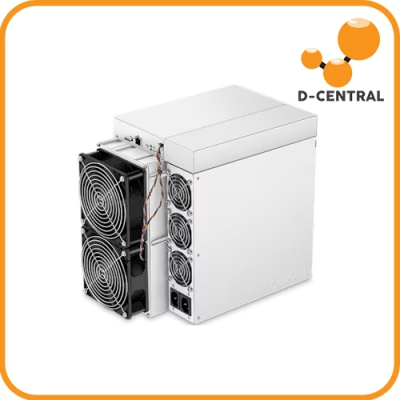
The Antminer S19 XP is not just another iteration in Bitmain’s lineup — it represents a generational leap in SHA-256 mining efficiency that changed what home miners and small operations could realistically achieve. Built on the BM1366 ASIC chip architecture, the S19 XP pushed the efficiency frontier to 21.5 J/TH while delivering 140 TH/s of raw hashpower. For the Bitcoin Mining Hacker community, this machine opened doors that were previously locked behind institutional-scale deployments.
At D-Central Technologies, we have been working with the S19 XP since its release. We have repaired them, tuned them, underclocked them for home use, and integrated them into Bitcoin space heater builds. This is not a press release rewrite — this is field-tested knowledge from our repair bench in Montreal, Quebec.
Antminer S19 XP Technical Specifications
| Specification | Antminer S19 XP |
|---|---|
| Algorithm | SHA-256 |
| Hashrate | 140 TH/s (±3%) |
| Power Consumption | 3010 W (±5%) |
| Efficiency | 21.5 J/TH |
| ASIC Chip | BM1366AL (5nm) |
| Chip Count | ~440 chips (4 hashboards) |
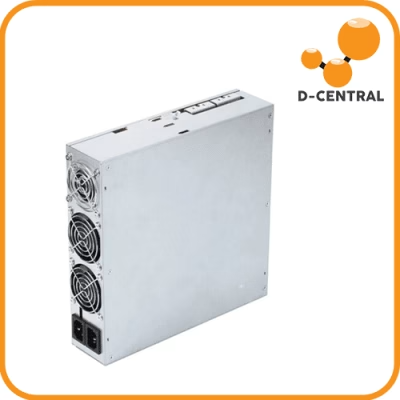
| Cooling | Dual axial fans (air-cooled) |
| Noise Level | ~75 dB |
| Operating Temperature | 5–40°C |
| Power Input | AC 200–277V (APW12 PSU) |
| Network Connection | Ethernet (RJ45) |
| Dimensions | 400 × 195.5 × 290 mm |
| Weight | ~14.4 kg |
The BM1366 Chip: Why the S19 XP Was a Generational Leap
The story of the S19 XP is really the story of the BM1366 ASIC chip. Bitmain’s 5nm process node delivered a dramatic improvement over the BM1398 chips used in the standard S19 and S19 Pro models. The jump from ~30 J/TH (S19 Pro) to 21.5 J/TH (S19 XP) represents roughly a 28% efficiency improvement — and in Bitcoin mining, efficiency is the entire game.
For context, the global Bitcoin network hashrate now exceeds 800 EH/s. Every joule per terahash matters. The S19 XP’s BM1366AL chips run cooler at higher frequencies, which translates directly to longer board life and fewer thermal failures. We have seen this firsthand on our Antminer S19 XP repair bench — the failure rate on well-maintained XP units is noticeably lower than the older S19 Pro boards running BM1398 chips under similar conditions.
The BM1366AL chip is also used in the S19k Pro, which means D-Central stocks replacement chips and hashboards for the entire 1366-generation lineup. If a board goes down, you are not scrounging eBay — you have a direct supply chain from a Canadian company that actually understands the silicon.
How the S19 XP Stacks Up: Comparison Table
| Model | Hashrate | Efficiency | Power | Chip |
|---|---|---|---|---|
| Antminer S19 Pro | 110 TH/s | 29.5 J/TH | 3250 W | BM1398 |
| Antminer S19j Pro | 104 TH/s | 30.5 J/TH | 3068 W | BM1362 |
| Antminer S19 XP | 140 TH/s | 21.5 J/TH | 3010 W | BM1366 |
| Antminer S19k Pro | 120 TH/s | 23 J/TH | 2760 W | BM1366 |
| Antminer S21 | 200 TH/s | 17.5 J/TH | 3500 W | BM1368 |
The numbers tell the story. The S19 XP delivers more hashrate than the S19 Pro while consuming less power. It sits in a sweet spot: not as cutting-edge (or expensive) as the S21 generation, but dramatically more efficient than the older S19/S19j Pro models that still make up a large percentage of the network hashrate.
For home miners running custom firmware like BraiinsOS, the S19 XP is particularly interesting because you can underclock it to around 80–100 TH/s at roughly 1500–2000W, making it viable on a standard 240V home circuit while maintaining excellent efficiency. That is the Mining Hacker approach — taking an institutional machine and bending it to work in your garage, basement, or spare room.
Setting Up the Antminer S19 XP for Home Mining
Running an S19 XP at home is not plug-and-play. At 75 dB and 3010W, this machine demands respect. Here is what you actually need to think about:
Electrical requirements. The S19 XP requires 200–277V AC input through the APW12 power supply. In Canada, most homes have 240V service available at the panel. You will need a dedicated 20A 240V circuit at minimum. A licensed electrician should install a NEMA 6-20R or L6-30R outlet depending on your PSU configuration. Do not run this on 120V — the APW12 does not support it.
Noise management. At 75 dB, the stock S19 XP is louder than a vacuum cleaner running continuously. For home use, there are two approaches: install the miner in a detached garage, shed, or basement with proper ventilation, or use an ASIC shroud to duct the hot air outside while reducing ambient noise. D-Central’s shrouds are designed specifically for the S19 series form factor.
Heat recovery. A 3010W miner produces roughly 10,200 BTU/h of heat. In Canadian winters, that is equivalent to a mid-sized space heater. This is where the dual-purpose mining concept gets real: your S19 XP can offset heating costs from October through April. D-Central builds dedicated Antminer S19 Space Heater Edition units specifically designed for this use case — purpose-built enclosures that turn your miner into a functional room heater.
Network setup. The S19 XP connects via Ethernet (RJ45). Wi-Fi is not supported natively. If your miner location does not have a wired connection, use a powerline adapter or a dedicated Wi-Fi bridge. Stable connectivity is critical — every minute of downtime is lost hashrate.
Firmware. The stock Bitmain firmware works, but for home mining scenarios, consider BraiinsOS or Vnish. These aftermarket firmware options allow underclocking, custom fan curves, and better power management — essential tools for the home miner who needs to balance hashrate with livability.
The S19 XP in the Current Mining Landscape
With the Bitcoin block reward now at 3.125 BTC following the April 2024 halving, efficiency is more important than it has ever been. The S19 XP’s 21.5 J/TH puts it in a defensible position — it is not the most efficient machine on the market (that title belongs to the S21 generation and its successors), but it is far from obsolete.
The economics depend entirely on your electricity rate. At $0.06/kWh (achievable in parts of Quebec and other Canadian provinces with hydro power), an S19 XP mining in a pool generates meaningful returns. At $0.12/kWh, margins tighten significantly. Use D-Central’s Bitcoin Mining Profitability Calculator to run the numbers with your actual power costs.
Here is the reality that most “profitability” articles ignore: if you are recovering the heat to offset your home heating bill, the effective electricity cost drops dramatically. A miner that runs at break-even on paper becomes profitable once you factor in the heating value. This is the dual-purpose mining thesis that D-Central has championed since day one.
Common Issues and Repair Considerations
We have repaired hundreds of S19 XP units at our facility in Montreal, Quebec. Here are the most common issues we see:
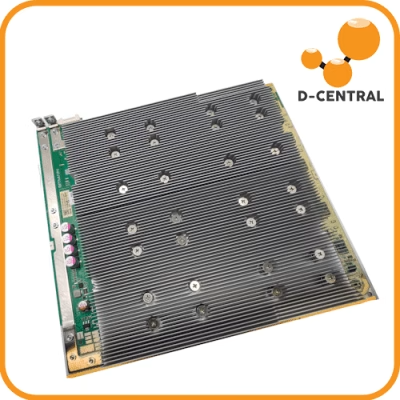
Hashboard failures. The most frequent repair. Symptoms include reduced hashrate (one or more boards reporting zero or very low TH/s), elevated chip temperatures on specific boards, or error codes in the miner’s web interface. A single dead board drops your hashrate by roughly 35 TH/s. D-Central stocks replacement hashboards for the S19 XP and performs board-level repair including chip replacement when possible.
Fan failures. Stock fans have a finite lifespan, especially in dusty environments. A seized or degraded fan triggers thermal protection and reduces hashrate. Replace fans proactively — they are inexpensive compared to the cost of thermal damage to hashboards.
Control board issues. Less common but more disruptive. Symptoms include inability to detect hashboards, network connectivity problems, or firmware corruption. D-Central carries the C52 control board with pre-installed BraiinsOS as a drop-in replacement.
PSU degradation. The APW12 power supply can degrade over time, especially in environments with inconsistent voltage or poor ventilation. A failing PSU may cause intermittent restarts, hashrate instability, or total shutdown. This is often misdiagnosed as a hashboard problem.
If your S19 XP needs professional attention, D-Central’s ASIC repair service covers the full S19 series including the XP and XP Hyd variants. We are a Canadian repair facility with retail-focused service — you do not need to be running a warehouse full of machines to get our attention.
Should You Buy an S19 XP in 2026?
The honest answer: it depends on your specific situation and goals.
The case for the S19 XP: As newer models like the S21 and S21 XP hit the market, S19 XP units are available at significantly reduced prices on the secondary market. If you have access to cheap electricity (under $0.07/kWh), the S19 XP offers excellent value. The dual-purpose mining use case (heating + hashing) makes it even more attractive in cold climates — and Canada has no shortage of cold months.
The case against: If you are in a warm climate with expensive electricity, the 21.5 J/TH efficiency may not be competitive enough post-halving. The newer S21 generation at 17.5 J/TH (or better) delivers more hashrate per watt, though at a higher upfront cost.
The Mining Hacker verdict: The S19 XP is a workhorse. It is proven, well-understood, heavily documented, and D-Central maintains full parts and repair support for it. For Canadian home miners with 240V service, reasonable power rates, and a need for winter heating, the S19 XP converted into a space heater build is one of the smartest plays in home mining today.
Frequently Asked Questions
What hashrate does the Antminer S19 XP produce?
The Antminer S19 XP produces 140 TH/s (terahashes per second) on the SHA-256 algorithm with a power consumption of 3010W, achieving an efficiency of 21.5 J/TH. With custom firmware like BraiinsOS, it can be underclocked to lower power levels while maintaining strong efficiency.
Can I run an Antminer S19 XP at home?
Yes, but it requires preparation. You need a dedicated 240V circuit (20A minimum), proper ventilation or an ASIC shroud to manage the 75 dB noise level, and Ethernet connectivity. Many Canadian home miners use the S19 XP as a dual-purpose device — mining Bitcoin while heating their home during winter months.
What power supply does the S19 XP use?
The S19 XP uses the Bitmain APW12 power supply, which requires 200–277V AC input. It cannot run on standard 120V North American outlets. You need a 240V outlet installed by a licensed electrician.
Is the Antminer S19 XP still profitable in 2026?
Profitability depends on your electricity rate. At $0.06/kWh or lower (common in Quebec and other hydro-powered regions), the S19 XP remains profitable in a mining pool. At higher rates, margins tighten post-halving. Factor in heat recovery value if you use the miner for home heating — this can shift the economics significantly in cold climates.
What is the most common S19 XP repair issue?
Hashboard failure is the most frequent issue. Symptoms include reduced hashrate, elevated chip temperatures, or boards reporting zero terahashes. D-Central provides board-level repair including BM1366 chip replacement, as well as replacement hashboards and control boards. Visit our S19 XP repair page for details.
What ASIC chip does the S19 XP use?
The S19 XP uses the Bitmain BM1366AL chip manufactured on a 5nm process node. This chip delivered a ~28% efficiency improvement over the BM1398 chips used in the standard S19 and S19 Pro. D-Central stocks replacement BM1366AL chips for board-level repairs.
Can I use the S19 XP as a space heater?
Absolutely. At 3010W, the S19 XP produces approximately 10,200 BTU/h of heat — equivalent to a mid-sized space heater. D-Central builds dedicated S19 Space Heater Edition units with purpose-designed enclosures for residential heating. This dual-purpose approach is core to our home mining philosophy.
Does D-Central repair S19 XP units?
Yes. D-Central Technologies provides full repair service for the Antminer S19 XP and S19 XP Hyd at our facility in Montreal, Quebec. We handle hashboard repair, chip replacement, control board swaps, fan replacements, and PSU diagnostics. We serve retail customers — you do not need to be a large-scale operation to use our repair services.