Every ASIC miner on the planet converts electricity into two things: SHA-256 hashes and heat. Most operations treat that thermal output as waste — something to vent, exhaust, or dump into the atmosphere. That is an engineering failure, not an inevitability. At D-Central Technologies, we have spent years proving that Bitcoin mining heat is not a byproduct to manage but a resource to deploy. We build Bitcoin Space Heaters that turn Antminers into dual-purpose machines for Canadian homes. But the residential use case is just the beginning. Aquaculture — the farming of fish, shellfish, and aquatic plants — represents one of the most compelling industrial applications for Bitcoin mining waste heat in 2026.
Aquaculture operations burn through enormous energy budgets just to keep water at the right temperature. Bitcoin miners generate enormous thermal loads that operators pay to dissipate. The math writes itself. By coupling these two systems, both industries win: fish farms cut their heating bills, and mining operations monetize their thermal output instead of wasting it. This is not theoretical. Real projects are running today, and the economics only improve as Bitcoin’s network hashrate pushes past 800 EH/s and difficulty climbs above 110 trillion.
Why Aquaculture Needs a Heating Revolution
Modern aquaculture is an energy-intensive operation. Whether you are raising Atlantic salmon in recirculating aquaculture systems (RAS), growing tilapia in inland tanks, or cultivating shrimp in temperature-controlled ponds, thermal management dominates your operating costs. Water temperature directly controls metabolic rates, feed conversion efficiency, growth speed, disease resistance, and spawning cycles. Get the temperature wrong and you lose fish — or you burn through fuel trying to keep conditions stable.
In Canada, this challenge is amplified. Our cold climate means aquaculture facilities spend six to eight months of the year actively heating water. Traditional approaches include:
- Natural gas boilers — reliable but tied to volatile fossil fuel prices and carbon taxes
- Electric immersion heaters — simple but electricity-hungry, especially at industrial scale
- Heat pumps — more efficient but expensive to install and maintain, with diminishing returns in extreme cold
- Geothermal systems — excellent where available but geographically limited and capital-intensive
Heating costs can represent 30-50% of total operating expenses for indoor aquaculture facilities in northern climates. Any technology that can meaningfully reduce that line item transforms the economics of the entire operation.
Bitcoin Mining: A 24/7 Heat Source That Pays You Back
A modern ASIC miner like the Antminer S21 consumes roughly 3,500 watts and converts nearly 100% of that into heat. A rack of 100 such machines produces 350 kW of continuous thermal output — equivalent to a medium-sized industrial boiler running at full capacity, around the clock, 365 days a year. The difference? That boiler costs you money to run. The mining rack earns bitcoin while producing the same heat.
This is the fundamental insight that drives everything we do at D-Central. Mining is not just about hashing. It is about recognizing that every joule of electricity a miner consumes becomes a joule of heat, and that heat has economic value when captured and directed intelligently. With the current block reward at 3.125 BTC (post-April 2024 halving) and Bitcoin trading well above its previous cycle highs, efficient mining operations remain profitable — and adding a heat revenue stream on top of mining revenue creates a compounding advantage.
For aquaculture operators, the proposition is straightforward: replace your boiler with Bitcoin miners. You get the same heat output, but instead of paying fuel costs, you earn bitcoin. Your heating system becomes a profit center.
The Technical Architecture: How It Works
Integrating Bitcoin mining heat into aquaculture systems requires careful engineering, but the core components are well-understood. Here is how a typical system is designed:
Immersion Cooling + Heat Exchange
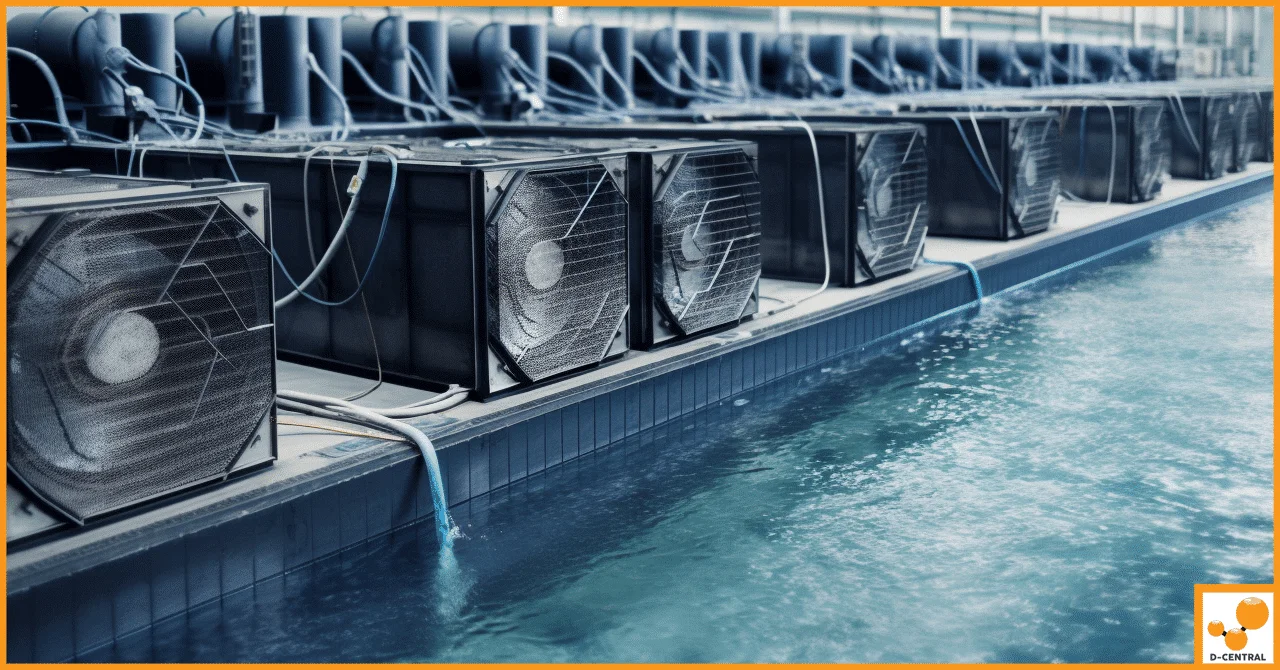
The most efficient approach uses immersion-cooled miners. ASIC machines are submerged in dielectric fluid (such as engineered coolants from companies like Engineered Fluids or BitCool). The fluid absorbs heat directly from the chips, reaching temperatures of 45-60°C. This hot fluid is then circulated through a heat exchanger, where it transfers thermal energy to the aquaculture water loop. The cooled dielectric fluid returns to the immersion tanks, creating a closed loop.
This method captures nearly 100% of the waste heat and delivers it at temperatures perfectly suited for most aquaculture species (typically 20-30°C for warm-water species like tilapia and shrimp).
Air-Cooled Systems with Liquid Secondary Loop
For operations that prefer standard air-cooled miners, a secondary capture system can be built. Hot exhaust air from the mining facility passes through air-to-water heat exchangers, transferring thermal energy to a glycol or water loop that feeds the aquaculture facility. This approach is less efficient (typical capture rates of 60-80%) but simpler to retrofit into existing mining operations.
System Sizing
Proper sizing requires matching the mining facility’s thermal output to the aquaculture facility’s heating demand. Key variables include:
| Parameter | Consideration |
|---|---|
| Water volume | Total litres in the aquaculture system (tanks, raceways, ponds) |
| Target temperature | Species-specific optimal range (e.g., 26-28°C for tilapia) |
| Ambient temperature | Seasonal variation at the facility location |
| Insulation quality | Heat loss rate from tanks and piping |
| Mining heat output | Total watts from mining fleet (e.g., 50 x S21 = ~175 kW thermal) |
| Heat exchange efficiency | Immersion: ~95-98% | Air-cooled capture: ~60-80% |
A well-designed system can be scaled modularly — add more miners to increase heat output, or throttle hashrate during warmer months when less heating is needed. This flexibility is something no traditional boiler system can match.
The Economics: Running the Numbers
Let us walk through a simplified economic model for a mid-sized aquaculture facility in Quebec.
Baseline Scenario (Traditional Heating)
| Item | Value |
|---|---|
| Facility size | 500,000 litres total water volume |
| Species | Tilapia (target 27°C) |
| Heating demand | ~200 kW continuous (winter), ~80 kW (summer) |
| Annual electricity for heating | ~1,200 MWh |
| Electricity rate (QC industrial) | $0.05-0.07/kWh |
| Annual heating cost | $60,000-$84,000 CAD |
Bitcoin Mining Heat Replacement Scenario
| Item | Value |
|---|---|
| Mining fleet | 60 x Antminer S21 (~210 kW total power draw) |
| Heat output | ~210 kW thermal (with immersion, ~95% capture) |
| Annual electricity for miners | ~1,840 MWh |
| Annual mining electricity cost | $92,000-$129,000 CAD |
| Estimated annual BTC revenue | Varies with difficulty/price — significant offset |
| Net heating cost | Near-zero or negative (heating becomes a profit center) |
The key insight: the electricity cost of running the miners is offset (partially or fully) by BTC revenue. The heat is a free byproduct. Compare this to the traditional scenario where $60,000-$84,000 per year goes up in heat with zero return. Even if mining revenue only covers 70% of electricity costs, the aquaculture operator is still ahead — they get the same heat for a fraction of the price, plus they accumulate bitcoin.
Need help sizing a system or evaluating the economics for your specific facility? Our mining consulting team works with commercial operators across Canada to design integrated heat recovery solutions.
Real-World Applications and Proven Concepts
This is not science fiction. Multiple projects around the world have demonstrated the viability of Bitcoin mining heat for aquaculture and agriculture:
- MintGreen (Vancouver, BC) — Pioneered using Bitcoin mining heat to warm a municipal seawater district heating system, demonstrating the scalability of heat recovery at the utility level
- Genesis Mining (Iceland) — Used mining heat for greenhouse operations, proving the concept in cold-climate agriculture
- Multiple small-scale operators across Canada and Scandinavia have integrated mining heat into fish farming, greenhouse, and livestock operations
- Aquaponics + mining — Several pilot projects combine mining heat with aquaponics systems, where waste heat maintains both fish tank and hydroponic grow bed temperatures simultaneously
The pattern is clear: anywhere you need sustained, predictable heat in the 30-60°C range, Bitcoin mining can deliver it while generating revenue. Aquaculture is simply one of the highest-value applications because the temperature requirements align perfectly with immersion-cooled mining output.
Canada’s Unique Advantage
Canada is uniquely positioned to lead in Bitcoin mining heat recovery for aquaculture. Here is why:
- Cheap, clean electricity — Quebec and British Columbia offer some of the lowest industrial electricity rates in the world, powered primarily by hydroelectricity. This makes mining profitable at the base layer.
- Cold climate = high heating demand — Canadian aquaculture facilities need more heating than operations in warmer countries, making the heat more valuable and the economic case stronger.
- Growing aquaculture industry — Canada’s aquaculture sector produces over $1 billion CAD annually, with significant room for inland expansion using recirculating systems.
- Regulatory clarity — Canada has a relatively clear framework for both Bitcoin mining and aquaculture operations, reducing compliance risk for integrated facilities.
- Sustainability mandates — Carbon pricing and ESG requirements push aquaculture operators toward innovative energy solutions. Mining heat recovery transforms Bitcoin’s energy narrative from “wasteful” to “circular economy.”
At D-Central, we are based in Quebec — ground zero for both cheap hydro power and a thriving aquaculture sector. We have been building dual-purpose mining solutions since our founding in 2016, and the aquaculture application is a natural extension of the Bitcoin Space Heater philosophy: every watt of mining electricity should do double duty.
Implementation Challenges and How to Solve Them
No integration project is without hurdles. Here are the primary challenges and practical solutions:
Noise and Vibration
ASIC miners are loud. Air-cooled S21s push 75+ dB. For aquaculture facilities where staff work daily and fish can be stressed by vibration, this is a real concern. Solutions include immersion cooling (which eliminates fan noise entirely), acoustic enclosures, and physical separation between mining and fish-rearing areas. At D-Central, our ASIC repair team can modify miners for quieter operation, including custom fan profiles and shroud configurations.
Heat Consistency and Redundancy
Aquaculture cannot tolerate temperature crashes. If miners go offline for maintenance or due to hardware failure, the fish still need heat. A well-designed system includes thermal buffer tanks (large insulated water reserves that store heat), backup heating elements, and redundant mining hardware. Design for N+1 redundancy at minimum.
Water Chemistry Isolation
The heat exchange loop must be completely isolated from the aquaculture water. Any contamination from dielectric fluid or mining equipment would be catastrophic for fish health. Use food-grade or aquaculture-rated heat exchangers with double-wall isolation and leak detection systems.
Regulatory and Permitting
Depending on jurisdiction, you may need electrical permits for the mining installation, environmental permits for the aquaculture operation, and potentially municipal approval for the combined facility. Work with local authorities early in the planning process.
Capital Investment
The upfront cost of miners, immersion tanks, heat exchangers, and infrastructure is significant. However, when you model the combined revenue from BTC mining plus heating cost savings, payback periods of 18-36 months are achievable depending on electricity rates and Bitcoin price. This compares favorably to most industrial heating system investments.
Getting Started: A Practical Roadmap
If you operate an aquaculture facility and want to explore Bitcoin mining heat integration, here is a step-by-step approach:
- Audit your heating demand — Document your current energy consumption for heating, temperature requirements, seasonal variation, and existing infrastructure. Calculate your annual heating cost as a baseline.
- Assess your electrical capacity — Bitcoin miners require substantial power. Determine whether your facility’s electrical service can support additional load, or whether an upgrade is needed.
- Consult with mining experts — Work with a company like D-Central that understands both the mining and heat recovery sides. We can help you size the mining fleet, select the right hardware, and design the heat exchange system.
- Start with a pilot — Begin with a small mining installation (5-10 units) and a single tank or section of your facility. Validate the heat transfer efficiency, monitor fish health metrics, and refine the system before scaling.
- Scale modularly — Once the pilot proves out, add mining capacity in increments to match your full heating demand. Each additional miner adds both heat capacity and BTC revenue.
- Monitor and optimize — Track mining profitability, heat output, electricity costs, and fish growth metrics continuously. Adjust hashrate seasonally based on heating demand.
The Bigger Picture: Bitcoin Mining as Infrastructure
This is what the mainstream critics miss when they attack Bitcoin’s energy use. They see electricity going in and “nothing” coming out except digital coins. They do not see the fish farms heated at zero marginal cost. They do not see the homes warmed by space heaters that mine bitcoin. They do not see the industrial processes subsidized by mining revenue.
Bitcoin mining is not an energy problem. It is an energy solution — a flexible, location-agnostic, interruptible load that converts electricity into heat plus digital value. When that heat is captured and used productively, the energy efficiency of Bitcoin mining approaches 100%. Every joule consumed becomes a joule of useful heat, with bitcoin as a bonus.
This is the decentralization thesis in action. Not just decentralizing money, but decentralizing energy infrastructure. Small-scale, distributed mining operations co-located with farms, greenhouses, homes, and aquaculture facilities create a resilient, efficient energy ecosystem that serves multiple purposes simultaneously.
At D-Central, we have been building toward this vision since 2016. Whether you need a Bitcoin Space Heater for your home, a custom mining solution for your farm, or expert guidance on integrating mining heat into your aquaculture operation, we are here to help. Browse our full catalog of mining hardware or get in touch with our consulting team to start the conversation.
Frequently Asked Questions
How much heat does a single Bitcoin miner produce?
A modern ASIC miner like the Antminer S21 consumes approximately 3,500 watts and converts virtually 100% of that into heat. This is equivalent to a 3.5 kW electric heater running continuously. A fleet of 60 such miners produces roughly 210 kW of thermal output — enough to heat a mid-sized aquaculture facility year-round.
What water temperature can Bitcoin mining heat achieve for aquaculture?
Immersion-cooled miners produce heated dielectric fluid at 45-60°C. After passing through a heat exchanger, this can maintain aquaculture water at 20-30°C depending on system design, ambient conditions, and insulation quality. This range is ideal for warm-water species like tilapia (26-28°C), shrimp (28-32°C), and many tropical fish species.
Is the heat from Bitcoin miners safe for fish?
Yes, when properly engineered. The heat exchange system uses a closed loop — mining coolant and aquaculture water never mix. Food-grade or aquaculture-rated heat exchangers with double-wall isolation ensure zero contamination risk. The heat itself is clean thermal energy, identical to what any electric heater would produce.
What happens if the miners go offline? Will the fish be at risk?
A well-designed system includes thermal buffer tanks (large insulated water reserves), backup electric heating elements, and redundant mining hardware. The thermal mass of the aquaculture water itself provides hours of temperature stability even during a complete mining outage. Design for N+1 redundancy and you will never risk your stock.
How much can an aquaculture facility save by using Bitcoin mining heat?
Savings depend on facility size, electricity rates, and Bitcoin market conditions. A mid-sized facility in Quebec spending $60,000-$84,000 CAD annually on heating could reduce that to near-zero or even generate a net profit when BTC mining revenue exceeds the electricity cost of running the miners. Typical payback periods for the mining hardware and heat exchange infrastructure are 18-36 months.
Can this work with small-scale or hobby aquaculture setups?
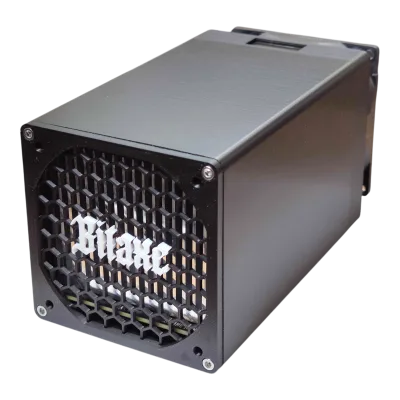
Absolutely. Even a single Bitcoin Space Heater or a small Bitaxe setup can provide supplemental heat for a home aquarium or small fish breeding operation. The economics scale in both directions — from a single miner warming a 500-litre tank to an industrial fleet heating millions of litres. Check out D-Central’s Bitcoin Space Heater lineup for residential and small-scale solutions.