Bitcoin derivatives have exploded into a multi-trillion-dollar market. Futures, options, perpetual swaps — Wall Street has built an entire casino floor on top of Bitcoin’s price action. But here is the question nobody in traditional finance wants you to ask: do any of these paper instruments actually strengthen the Bitcoin network?
The answer is no. Not a single derivatives contract adds a hash to the network. Not one options trade secures a block. The entire derivatives ecosystem is built on top of Bitcoin without contributing anything back to it. As Bitcoin mining hackers, we see this clearly — and we think every Bitcoiner should understand what derivatives actually are, how they work, where they help, and where they fall dangerously short of Bitcoin’s original promise.
This is the guide D-Central wishes existed when we started in 2016. No hype, no trading signals — just a technically honest breakdown of Bitcoin derivatives from the perspective of people who actually run mining hardware and believe in decentralizing every layer of Bitcoin mining.
What Are Bitcoin Derivatives?
A derivative is a financial contract whose value is "derived" from an underlying asset — in this case, Bitcoin. Instead of buying and holding actual BTC, derivatives let market participants take positions on Bitcoin’s future price. The key distinction: you never touch actual Bitcoin. No private keys, no UTXOs, no on-chain footprint.
There are three primary types of Bitcoin derivatives traded on major platforms today:
| Derivative Type | How It Works | Settlement | Key Platforms |
|---|---|---|---|
| Futures | Obligation to buy/sell BTC at a set price on a future date | Cash or physical | CME, Binance, Deribit |
| Options | Right (not obligation) to buy/sell BTC at a strike price before expiry | Cash or physical | Deribit, CME, LedgerX |
| Perpetual Swaps | Futures with no expiry date, using funding rates to track spot | Cash (continuous) | Binance, Bybit, OKX |
Perpetual swaps dominate crypto-native exchanges and account for the majority of daily derivatives volume. They were invented by BitMEX in 2016 and use a "funding rate" mechanism — periodic payments between longs and shorts — to keep the contract price anchored to spot price. No expiry date means positions can be held indefinitely, which makes them popular with active traders but also creates unique risks.
Why Derivatives Matter for the Bitcoin Ecosystem
Let us be honest about what derivatives do provide:
Price discovery. Futures markets, especially regulated ones like CME, contribute to transparent price formation. When institutional players commit capital in futures, it signals conviction and creates reference prices that propagate across spot markets worldwide.
Hedging for miners. This is where derivatives directly intersect with what we do at D-Central. Mining is a capital-intensive operation. You buy hardware, pay for electricity, and earn BTC — but your costs are denominated in fiat. If Bitcoin’s price drops 30% between the time you buy an ASIC miner and the time you earn enough BTC to cover costs, you are underwater. Futures and options allow miners to lock in a sale price for future BTC production, converting unpredictable revenue into something budgetable.
Liquidity. Derivatives attract capital and market makers that ultimately tighten bid-ask spreads on spot markets, benefiting everyone who buys or sells actual Bitcoin.
How Bitcoin Miners Use Derivatives
For mining operations — whether you are running a full facility or a Bitcoin space heater heating your home — the economics follow a simple equation:
Revenue = (BTC mined) x (BTC price) - Electricity cost - Hardware depreciation
The only variable a miner cannot control is BTC price. Derivatives offer tools to manage that exposure:
| Strategy | Instrument | How Miners Use It | Risk Level |
|---|---|---|---|
| Revenue lock-in | Futures (short) | Sell futures contracts matching expected BTC production to guarantee sale price | Low-Medium |
| Downside protection | Put options | Buy put options as insurance — if price crashes, options gain value to offset mining losses | Low |
| Yield on idle BTC | Covered calls | Sell call options on BTC held in treasury, collecting premiums as additional income | Medium |
| Basis trade | Spot + Futures | Buy BTC spot, short futures at a premium — captures the spread as yield | Low |
Large mining companies like Marathon, Riot, and Hut 8 routinely use these strategies. But even a home miner with a few hundred dollars of monthly BTC income can use simple put options on regulated platforms to protect their mining revenue during volatile periods. The tools exist — the question is whether the effort and counterparty risk are worth it at smaller scales.
The Cypherpunk Critique: Paper Bitcoin vs. Real Bitcoin
Here is where D-Central’s perspective diverges sharply from the derivatives cheerleaders. Derivatives create synthetic Bitcoin exposure without adding a single hash to the network. Every dollar that flows into a CME futures contract is a dollar that did not buy actual Bitcoin, did not validate a transaction, and did not contribute to decentralization.
Consider these structural problems:
Cash settlement dilutes scarcity. CME futures — the most institutional-friendly product — are cash-settled. When a futures contract expires, no Bitcoin changes hands. The settlement happens entirely in US dollars. This means Wall Street can trade "Bitcoin" exposure all day long without ever touching the 21 million supply cap. It is a parallel market that mimics Bitcoin’s price without respecting its fundamental properties.
Leverage amplifies volatility. Most crypto derivatives platforms offer 20x to 125x leverage. When cascading liquidations hit — and they do, regularly — the impact ripples back into spot markets. The May 2021 crash saw over $8 billion in liquidations within 24 hours, much of it from overleveraged derivatives positions. The derivatives tail wagged the Bitcoin dog.
Counterparty risk never sleeps. When you hold your own BTC keys, your Bitcoin is yours. When you hold a derivatives position, you are trusting an exchange, a clearinghouse, or a counterparty to honor the contract. FTX proved what happens when that trust is misplaced — billions in derivatives positions evaporated overnight.
Rehypothecation threatens the base layer. In traditional finance, the same collateral can be pledged to multiple counterparties simultaneously. This practice has crept into crypto derivatives markets. When the same BTC is used as collateral across multiple platforms and positions, the actual supply backing those positions is far less than the notional exposure suggests. This is the exact fractional-reserve system Bitcoin was designed to escape.
Derivatives vs. Mining: Where to Deploy Your Capital
If you have capital to allocate to Bitcoin, you face a choice: trade it on paper, or put it to work on the network. Here is how those options compare:
| Factor | Bitcoin Derivatives | Bitcoin Mining |
|---|---|---|
| Network contribution | Zero — no hashrate added | Direct — secures the blockchain |
| Self-custody | No — always counterparty dependent | Yes — BTC mined to your own wallet |
| Leverage risk | High — liquidation cascades common | None — you own the hardware and the output |
| Ongoing costs | Trading fees, funding rates, margin interest | Electricity (often offset by heating value) |
| BTC acquisition | Never — only fiat P&L | Yes — non-KYC virgin sats from coinbase transactions |
| Regulatory exposure | Heavy — SEC/CFTC jurisdiction, KYC/AML requirements | Lighter — energy regulation, not securities law |
| Decentralization impact | Negative — concentrates exposure in institutional hands | Positive — distributes hashrate globally |
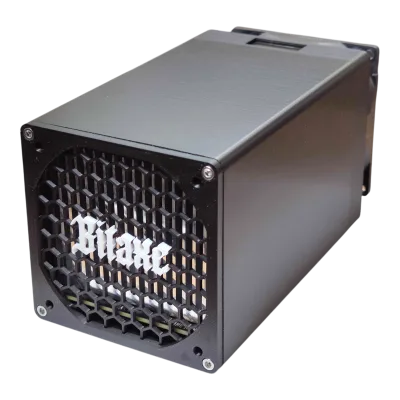
The comparison is not even close from a cypherpunk perspective. Mining produces real Bitcoin, secures the network, and can be done from your home — even with a Bitaxe solo miner sitting on your desk. Every hash you contribute to the network is a vote for decentralization. Every derivatives trade is a vote for Wall Street.
The Regulatory Landscape in 2025-2026
The regulatory picture for Bitcoin derivatives has shifted substantially:
United States: The CFTC has firm jurisdiction over Bitcoin futures and options, classifying Bitcoin as a commodity. Spot Bitcoin ETFs launched in January 2024, followed by options on those ETFs. This regulatory clarity has been a net positive for institutional access, but it also means more Bitcoin exposure is being routed through traditional intermediaries rather than on-chain.
Canada: Canadian regulators were early movers — the first Bitcoin ETFs launched here in 2021. The regulatory environment is generally supportive of Bitcoin as an asset class, though derivatives trading is primarily accessed through US-regulated platforms. For Canadian miners, this means hedging tools are accessible but add cross-border complexity.
Europe: MiCA (Markets in Crypto-Assets) regulation now governs crypto derivatives across the EU, creating a unified framework but also adding compliance overhead for platforms and traders.
The trend is unmistakable: derivatives markets are becoming more regulated, more institutional, and more integrated with traditional finance. Whether this is good for Bitcoin’s original vision of censorship-resistant, permissionless money is a question every Bitcoiner needs to answer for themselves.
A Miner’s Practical Guide to Using Derivatives Wisely
If you operate mining hardware and want to explore derivatives for hedging (not speculation), here is a practical framework:
1. Know your cost basis. Calculate your all-in cost to produce 1 BTC: electricity, hardware amortization, maintenance, hosting fees. If you are using a space heater miner, factor in the heating value offset. This number is your breakeven — below it, you are mining at a loss.
2. Hedge only a portion. Never hedge 100% of expected production. Network difficulty adjustments, hardware downtime, and pool luck introduce variance. Hedging 30-50% of expected monthly output is a reasonable starting point.
3. Use regulated platforms. CME Bitcoin futures and options on spot Bitcoin ETFs offer the strongest counterparty protections. Yes, they require KYC. For hedging purposes, the counterparty safety is worth the privacy tradeoff.
4. Prefer options over futures for insurance. Buying put options costs a premium upfront but limits your downside to that premium. Futures can work against you with unlimited downside if the market moves sharply against your position.
5. Keep it simple. A quarterly put option at 20% below current spot, covering 30-40% of your expected production, is a straightforward strategy that any miner can implement without a finance degree.
The D-Central Perspective: Mine First, Hedge Second
At D-Central Technologies, we have been in the Bitcoin mining trenches since 2016. We have seen every cycle, every halving, every market crash and recovery. Here is our honest take on derivatives:
They are tools, not solutions. Derivatives can help a mining operation survive a bear market. They cannot replace the fundamental value of running your own hardware, holding your own keys, and contributing hashrate to the network. With the current block reward at 3.125 BTC and the network hashrate exceeding 800 EH/s, mining is more competitive than ever — but the mission has never been more important.
Real sovereignty comes from the base layer. You do not achieve financial freedom by trading paper Bitcoin on centralized exchanges. You achieve it by running a node, mining your own sats, and holding your own keys. Derivatives are a concession to the fiat world — sometimes necessary, never sufficient.
Start with hardware, not leverage. If you are reading this and wondering whether to open a leveraged long on Bitcoin or buy your first mining rig, the answer is clear. A Bitaxe on your desk or a space heater in your basement does more for Bitcoin and for your sovereignty than any derivatives position ever could. Need help getting started? Our mining consulting team has helped thousands of home miners make the right hardware decisions.
And if your ASIC hardware ever needs attention, our ASIC repair service — with 60+ model-specific repair capabilities — keeps miners running instead of collecting dust.
Every hash counts. Make yours real.
Frequently Asked Questions
What are Bitcoin derivatives and how do they work?
Bitcoin derivatives are financial contracts whose value is derived from Bitcoin’s market price. The three main types are futures (obligations to buy/sell at a set price on a future date), options (the right but not obligation to buy/sell at a strike price), and perpetual swaps (futures with no expiry that use funding rates to track spot price). None of these instruments involve holding actual Bitcoin — they are purely financial bets on price movement settled in cash or, rarely, in physical BTC delivery.
Can Bitcoin miners use derivatives to protect their revenue?
Yes. Miners can use short futures or put options to lock in a minimum sale price for their future BTC production. This is called hedging and helps protect against price drops that could push mining operations below breakeven. A common approach is to hedge 30-50% of expected monthly output using quarterly put options on regulated platforms like CME. This provides downside protection while still allowing miners to benefit from upside price moves on the unhedged portion.
Why do some Bitcoiners criticize derivatives?
The core criticism is that derivatives create synthetic Bitcoin exposure without contributing to the network. Cash-settled futures, which dominate institutional trading, allow unlimited "Bitcoin" exposure without anyone buying a single sat. This effectively undermines Bitcoin’s scarcity by creating a parallel paper market. Additionally, high-leverage derivatives positions create cascading liquidations that amplify spot market volatility, and the counterparty risk inherent in all derivatives was starkly exposed by the FTX collapse in 2022.
Is it better to mine Bitcoin or trade Bitcoin derivatives?
From a sovereignty and network-contribution perspective, mining is unambiguously better. Mining produces real, non-KYC Bitcoin, secures the blockchain, and distributes hashrate — all core to Bitcoin’s mission. Derivatives produce only fiat profit-and-loss and require trusting centralized counterparties. That said, derivatives can serve as hedging tools for existing mining operations. The ideal approach for a Bitcoiner is to mine first and use derivatives only as a risk management supplement, not as a primary strategy.
What is the current state of Bitcoin derivatives regulation?
As of 2025-2026, Bitcoin derivatives are regulated as commodity derivatives by the CFTC in the United States. CME Group offers regulated futures and options, and options on spot Bitcoin ETFs are now available. Canada was an early mover with Bitcoin ETF approvals in 2021. In Europe, the MiCA framework now governs crypto-assets including derivatives. The trend is toward more institutional integration and regulatory clarity, which improves counterparty safety but also routes more Bitcoin exposure through traditional financial intermediaries.
What happened with FTX and why does it matter for derivatives traders?
FTX, once the second-largest crypto derivatives exchange, collapsed in November 2022 after it was revealed that customer funds had been misappropriated and commingled with its sister trading firm. Billions in derivatives positions — futures, options, and perpetual swaps — became worthless overnight. The collapse demonstrated the catastrophic counterparty risk inherent in centralized derivatives platforms and reinforced the Bitcoin ethos: not your keys, not your coins. For derivatives users, it underscored the importance of using regulated, audited platforms and never leaving more capital on an exchange than necessary.