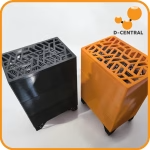
Every watt of electricity that enters a Bitcoin miner exits as heat. Not 80%. Not 95%. One hundred percent. This is not a flaw in the design — it is a fundamental law of thermodynamics. A 3,000-watt Antminer S19 produces exactly as much heat as a 3,000-watt space heater. The difference? The space heater only warms your room. The Antminer warms your room and mines Bitcoin while doing it.
For years, critics pointed to Bitcoin mining’s energy consumption as a liability. They were looking at it wrong. That energy is not consumed and destroyed — it is converted. Every joule of electrical energy becomes thermal energy, and thermal energy has value. Mining heat is not waste. It is a feature waiting to be exploited.
This guide covers 25+ real-world applications for Bitcoin mining heat recovery — from heating your living room to warming commercial greenhouses, from swimming pools to industrial grain dryers. Whether you are a home miner running a single Antminer Space Heater Edition or an entrepreneur looking to slash heating costs for your business, the physics are on your side.
The Science: Why Every Bitcoin Miner Is a Heater
Understanding why mining heat recovery works requires one simple equation:
1 watt = 3.412 BTU/hour
That is a physical constant. It applies equally to a $30 ceramic space heater and a $5,000 ASIC miner. When electricity flows through any resistive load — whether it is a heating coil or an ASIC chip solving SHA-256 hashes — 100% of the electrical energy is converted to heat. There is no exception to this rule.
Here is what that means in practice for common mining hardware:
| Miner | Power Draw | Heat Output (BTU/hr) | Equivalent Heater |
|---|---|---|---|
| Antminer S9 (Space Heater Edition) | 1,350W | 4,606 BTU/hr | Small room heater |
| Antminer S17 (Space Heater Edition) | 2,100W | 7,165 BTU/hr | Medium room heater |
| Antminer S19 (Space Heater Edition) | 3,250W | 11,089 BTU/hr | Large room heater |
| Bitaxe Supra | 15W | 51 BTU/hr | USB desk warmer |
| Bitaxe Hex | 90W | 307 BTU/hr | Small personal heater |
Here is the critical insight that most people miss: mining “efficiency” is irrelevant when you are using the heat. A less efficient miner produces more heat per terahash — but you were going to produce that heat with a conventional heater anyway. The electricity cost is a heating cost you would already be paying. The Bitcoin earned is pure bonus revenue on top of heating you needed.
This changes the entire profitability equation. When you factor in the heating value offset, even miners that appear “unprofitable” by pure hashrate economics become net positive because they replace your existing heating bill while simultaneously earning satoshis.
Residential Applications
Home Heating: Space Heaters That Pay You Back
The most accessible application of mining heat recovery is home space heating. This is exactly what D-Central’s Bitcoin Space Heater Editions are designed for: ASIC miners rebuilt into quiet, safe, ducted enclosures that replace conventional electric heaters in your home.
The concept is straightforward. Instead of plugging in a conventional 1,500W electric heater that produces 5,118 BTU/hr of heat and nothing else, you plug in an Antminer Space Heater Edition that produces the same heat output plus mines Bitcoin 24/7. During heating season (which in Canada runs 6 to 8 months), your heating bill stays the same — but you are now stacking sats on top of it.
In cold climates like Canada, northern United States, and Scandinavia, home miners report that their mining rigs completely eliminate the need for conventional heating in the rooms where they operate. Some home miners heat their entire basement, garage, or workshop exclusively with ASIC miners during winter months. The key is proper ducting to distribute the hot air where it is needed rather than concentrating it in one spot.
For a detailed comparison of operational costs between mining heaters and traditional electric heaters over 5 years, see our complete cost comparison guide.
Water Heating
Domestic hot water accounts for roughly 18-20% of a typical household’s energy consumption. Mining heat can offset a significant portion of that cost through liquid-cooled mining setups or air-to-water heat exchangers.
The approach works in two ways. Direct liquid cooling circulates a coolant through the miner and then through a heat exchanger connected to your hot water tank, transferring thermal energy directly to your water supply. Air-to-water systems capture the hot exhaust air from air-cooled miners and pass it through a heat exchanger coil submerged in or wrapped around a water storage tank.
A single Antminer S19 running a liquid cooling loop can raise the temperature of a 50-gallon water tank by 20-30 degrees Fahrenheit over several hours, significantly reducing the workload on your conventional water heater. In summer months when space heating is not needed, water heating becomes the primary value recovery method for mining heat.
Garage and Workshop Heating
Garages and workshops are ideal environments for mining heat recovery. They tend to be detached or semi-detached from the main living space, which solves the noise concern. They typically have 240V power available for tools and equipment. And they need heating during cold months but rarely have central HVAC connected to them.
Car garages and home workshops across Canada and the northern United States are increasingly using ASIC miners as their primary winter heat source. A single Antminer S19 can keep a two-car garage above freezing even in -20C weather, while two units can maintain comfortable working temperatures. The miners run on the same 240V circuits that power welders, table saws, and air compressors — infrastructure that already exists in most workshops.
For automotive enthusiasts, the added benefit is keeping the garage warm enough to prevent fluid freeze-ups, battery drain, and condensation damage to tools and vehicles during harsh winters — all while earning Bitcoin.
Greenhouse and Garden Heating
For home gardeners in cold climates, extending the growing season is a constant challenge. Bitcoin miners offer a compelling solution: continuous, reliable heat that maintains stable temperatures in small to medium greenhouses throughout the winter.
A greenhouse heated by mining hardware benefits from the constant heat output that miners provide. Unlike propane heaters that cycle on and off, a Bitcoin miner produces steady, predictable thermal energy 24/7. This consistency is actually better for plant growth than the temperature swings caused by cycling heaters. Humidity management is the main consideration — miners produce dry heat, which may require supplemental humidification for certain crops.
Projects like Bitcoin Bloem in the Netherlands have demonstrated this at commercial scale, using mining heat to grow flowers year-round. At the home scale, a single 1,350W Antminer S9 Space Heater Edition can keep a small greenhouse (8×10 feet) above freezing in moderately cold climates, while a more powerful S19 unit can maintain growing temperatures even in harsh Canadian winters.
Hot Tubs and Swimming Pools
Heating a swimming pool or hot tub is one of the most energy-intensive residential expenses. A typical backyard pool requires 50,000 to 100,000+ BTU/hr to maintain comfortable swimming temperatures, and a hot tub needs 3,000 to 6,000 BTU/hr just to stay hot.
While a single ASIC miner will not heat an Olympic pool, a bank of miners with liquid cooling or heat exchanger integration can significantly reduce pool heating costs. A hot tub is an even better match — three Antminer S9 units producing approximately 13,800 BTU/hr combined could serve as a meaningful supplemental heat source for a standard residential hot tub.
The most effective approach uses immersion cooling or liquid-cooled mining systems where the coolant loop runs through a heat exchanger connected to the pool’s circulation system. The mining heat pre-warms the pool water before it reaches the conventional heater, reducing gas or electric consumption substantially.
Commercial Applications
Hotels and Hospitality
Hotels and resorts face massive heating costs — lobbies, hallways, guest rooms, pools, spas, laundry facilities, and kitchens all require thermal energy. A mid-size hotel in a cold climate can spend $50,000 to $200,000+ per year on heating alone.
Bitcoin mining heat recovery offers hotels a way to offset a portion of these costs while generating additional revenue. The approach works best when miners are installed in mechanical rooms, basements, or dedicated server-room-style spaces, with heat captured and distributed through the building’s existing HVAC ductwork. Liquid-cooled systems can feed directly into the hotel’s hot water supply, offsetting the enormous hot water demands of guest rooms and laundry facilities.
The hotel industry is uniquely positioned to benefit because it operates 24/7 (matching the miner’s 24/7 heat output), has large and diversified heating needs, and can absorb the noise of miners in back-of-house areas where guests never go.
Restaurants and Breweries
Restaurants, breweries, and distilleries require significant thermal energy for both space heating and process heat. Breweries in particular need precise temperature control for mashing, boiling, fermentation, and conditioning — processes that consume enormous amounts of heat energy.
A craft brewery can integrate mining heat into its hot liquor tank (HLT) system, pre-warming the brewing water before it hits the main boiler. This reduces gas consumption for the brew kettle while earning Bitcoin as a side revenue stream. The consistent heat output of miners also makes them useful for maintaining fermentation chamber temperatures, where stability is critical for product quality.
For restaurants, mining heat can supplement kitchen ventilation heating, dining room climate control, and dishwashing hot water systems. The back-of-house environment in most restaurants can easily accommodate the noise levels of properly enclosed mining hardware.
Laundromats and Dry Cleaners
Laundromats are one of the most compelling commercial applications for mining heat recovery. They require large amounts of hot water, they operate long hours, they already have heavy-duty electrical infrastructure, and they have space for equipment in back rooms. The hot water demand of a commercial laundromat aligns almost perfectly with the continuous heat output of a bank of ASIC miners.
A liquid-cooled mining setup can pre-heat incoming water before it reaches the laundromat’s commercial water heaters, reducing natural gas or electricity consumption for water heating by 20-40% depending on the scale of the mining operation. The space heating produced by the miners also helps keep the facility comfortable during cold months, eliminating or reducing the need for a separate heating system.
Gyms and Fitness Centers
Gyms and fitness centers need heating for large open workout areas, locker rooms, and shower facilities. The hot water demand for showers alone can be substantial in a busy gym. Mining heat can address both needs simultaneously: space heating for the workout floor and hot water pre-heating for the shower system.
The noise profile of mining equipment is also a non-issue in most gym environments, where loud music and clanking weights already create ambient noise levels of 75-85 dB. A properly enclosed mining operation in a mechanical room would be imperceptible to members on the gym floor.
Car Washes
Automated car washes use enormous volumes of hot water — often 30 to 50 gallons per vehicle at temperatures of 120-140F. In cold climates, they also need to heat their bays and equipment rooms to prevent freeze-ups. This dual demand for hot water and space heating makes car washes an excellent match for mining heat recovery.
A bank of liquid-cooled miners with heat exchangers feeding into the car wash’s water heating system can substantially reduce operating costs. The mining operation runs 24/7, pre-heating water in storage tanks even during off-peak hours so that hot water is ready for the morning rush.
Spas and Wellness Centers
Spas require heated pools, hot tubs, saunas, steam rooms, and warm treatment rooms — all of which demand continuous thermal energy. The stable, predictable heat output of Bitcoin miners is ideal for supplementing spa heating systems, particularly for maintaining water temperatures in pools and therapeutic tubs that need to stay at precise temperatures around the clock.
Art Studios and Workshops
Artist studios, ceramics workshops, woodworking shops, and makerspaces share a common challenge: they need heated work environments but often operate in converted industrial or warehouse spaces with poor insulation and no central heating. Bitcoin miners provide consistent heat output that can keep these spaces workable during winter months, turning a creative space into a dual-revenue operation.
Printing Facilities
Commercial printing operations require temperature-controlled environments to maintain paper quality and ink performance. Mining heat can maintain the consistent ambient temperatures that printing facilities need, while the mining revenue offsets the cost of climate control that the facility would be paying regardless.
Movie Theaters and Venues
Large entertainment venues like movie theaters, concert halls, and event spaces have massive HVAC requirements. During heating season, the thermal output of a mining operation housed in the building’s mechanical area can supplement the heating system, reducing natural gas or electric heating consumption. The thick walls and soundproofing typical of theater construction also make noise isolation straightforward.
Agricultural Applications
Commercial Greenhouses
At the commercial scale, greenhouse heating is one of the most validated applications for mining heat recovery. Projects in the Netherlands, Canada, and northern Europe have demonstrated that Bitcoin mining can provide reliable, cost-effective heating for commercial growing operations.
The key advantages for commercial greenhouses are the continuous 24/7 heat output (plants do not like temperature swings), the dual revenue stream (crops + Bitcoin), and the ability to scale the mining operation to match the greenhouse’s heat demand. In regions with cold winters, the mining heat can extend the growing season by months or even enable year-round production.
Companies like MintGreen in Canada have pioneered industrial-scale approaches, capturing over 96% of mining electricity as usable heat for agricultural and district heating applications. The economics are compelling: the greenhouse operator gets below-market-rate heating while the mining operation earns Bitcoin and enjoys effectively free cooling from the greenhouse’s heat demand.
Barns and Livestock Facilities
Keeping livestock warm during cold winters is a significant expense for farmers, particularly for young animals, poultry, and dairy operations. Newborn calves, piglets, and chicks require carefully maintained temperatures for survival and healthy growth. Bitcoin miners can serve as supplemental heat sources in barns and animal housing, maintaining ambient temperatures during the coldest months.
The main consideration for livestock applications is air quality management. ASIC miners move large volumes of air and produce dry heat. Proper filtration and ventilation design is essential to ensure that the mining equipment does not adversely affect air quality for the animals or accumulate dust from bedding and feed. Enclosed, ducted systems (like D-Central’s Space Heater Editions) are preferred over open-air miners in agricultural settings.
Grain and Crop Drying
Post-harvest grain drying is a critical and energy-intensive agricultural process. Grain must be dried to specific moisture levels to prevent spoilage during storage. Traditional grain dryers use propane or natural gas to heat air that is then blown through the grain — a process that consumes enormous amounts of energy during harvest season.
Mining heat can supplement grain drying by pre-heating the intake air before it enters the dryer, reducing fuel consumption. While mining heat alone may not provide the high temperatures needed for rapid drying (typically 150-200F), it can raise the intake air temperature by 30-50F, which significantly reduces the energy needed to reach drying temperature. Even a modest reduction in fuel consumption can save thousands of dollars per harvest season for a mid-size farm.
Aquaculture and Fish Farming
Indoor aquaculture operations require precise water temperature control for fish health and growth rates. Species like tilapia, shrimp, and trout each have optimal temperature ranges that must be maintained year-round, regardless of outdoor conditions. In cold climates, maintaining these temperatures during winter is one of the largest operational expenses for fish farms.
Liquid-cooled Bitcoin mining systems are a natural fit for aquaculture. The coolant loop from the miners passes through a heat exchanger connected to the aquaculture water circulation system, transferring thermal energy directly to the fish tanks. This provides stable, predictable heating that is ideal for maintaining the consistent water temperatures that aquatic species require. The dual revenue of fish sales and Bitcoin mining creates a resilient business model that is less vulnerable to fluctuations in either market alone.
Industrial and Municipal Applications
District Heating
District heating — centralized systems that distribute heat to multiple buildings from a single source — represents one of the most ambitious and impactful applications of mining heat recovery. In this model, large-scale mining operations serve as “digital boilers” that generate heat as a byproduct of securing the Bitcoin network.
MintGreen’s partnership with the Lonsdale Energy Corporation in North Vancouver is the landmark example. Their system captures over 96% of the electricity used for Bitcoin mining as heat, which is then distributed through the district heating network to warm nearly 100 residential and commercial buildings. This approach replaces fossil fuel boilers with a digital alternative that produces revenue while it heats.
Scandinavian countries, which have extensive district heating infrastructure, are particularly well-positioned for this application. Several projects in Sweden and Norway are exploring or actively implementing mining-powered district heating systems.
Industrial Process Heat
Many industrial processes require low-to-medium grade heat (below 200F): food processing, chemical manufacturing, textile production, paper making, and pharmaceutical production all consume significant thermal energy at temperatures well within the range that mining heat can provide.
Manufacturing plants can integrate mining heat into their process heating systems as a pre-heating stage, reducing the energy needed to bring materials to their required processing temperatures. The consistent, predictable heat output of mining hardware makes it well-suited for industrial applications that require stable thermal inputs.
Food storage warehouses, chemical storage facilities, and similar environments that require temperature-controlled storage are also strong candidates. These facilities need to maintain above-freezing temperatures during cold months but do not require the high heat levels of active processing — a perfect match for mining heat output.
Construction Sites
Construction sites in cold climates face a constant challenge: keeping concrete, mortar, and work areas warm enough for materials to cure properly and workers to function safely. Temporary propane heaters are the standard solution, but they are expensive, produce harmful emissions, and require frequent refueling.
Containerized mining operations can be deployed to construction sites to provide continuous heat during the build phase. The mining containers can be positioned to direct hot exhaust into enclosed work areas, keeping them above critical curing temperatures. When the project ends, the containers move to the next site — or continue mining from any location with power and internet.
Snow and Ice Melting: The Canadian Advantage
This is where Canadian miners have a unique edge. Snow and ice management on driveways, sidewalks, parking lots, and roads is a massive expense in northern climates. Radiant heating systems embedded in concrete or asphalt can keep surfaces ice-free, but the energy cost of running them conventionally is often prohibitive.
Mining heat piped through hydronic radiant loops beneath driveways, walkways, or loading docks provides continuous ice prevention while earning Bitcoin. The heat demand is highest exactly when outdoor temperatures are lowest — which is also when mining heat is cheapest to produce (cold ambient air provides natural cooling for the miners, reducing fan power consumption and extending hardware life).
For commercial properties, mining-heated snow melting systems can eliminate plowing costs, reduce slip-and-fall liability, and maintain safe access 24/7 through the harshest Canadian winters.
Veterinary Clinics and Animal Hospitals
Veterinary clinics require warm recovery rooms for post-surgical animals, heated kennel areas, and consistent climate control throughout the facility. Mining heat provides the stable, continuous warmth that animal care facilities need, particularly in rural areas where natural gas service may be unavailable and electric heating is expensive.
Research and Development Facilities
R&D labs and testing facilities that require temperature-controlled environments can use mining heat as a baseline heating source, with conventional systems providing the fine-tuned temperature control needed for sensitive experiments. The mining revenue offsets the facility’s energy costs, effectively subsidizing the research operation.
Case Studies: Mining Heat Recovery in Practice
MintGreen — North Vancouver District Heating
MintGreen’s partnership with Lonsdale Energy Corporation in North Vancouver is the highest-profile mining heat recovery project to date. Their “digital boiler” technology captures 96%+ of the electricity used for Bitcoin mining as recoverable heat, which is distributed through the district heating network to warm approximately 100 buildings. This project demonstrates that mining heat recovery works at municipal scale and can compete economically with conventional heating sources.
Bitcoin Bloem — Netherlands Flower Growing
In North Brabant, Netherlands, the Bitcoin Bloem project uses mining heat to grow flowers in commercial greenhouses. The project has demonstrated that the dual-revenue model (flowers + Bitcoin) creates a more resilient agricultural business than either activity alone. The consistent heat output has proven superior to cycling propane heaters for maintaining optimal growing conditions.
Home Miners Across Canada
Thousands of Canadian home miners are already using their ASIC miners as primary or supplemental heat sources during the 6-8 month heating season. In provinces like Quebec, where electricity rates are among the lowest in North America, the economics are particularly compelling: the cost of running a miner is comparable to the cost of electric baseboard heating, but the miner earns Bitcoin while producing the same heat output.
D-Central’s Space Heater Editions were designed specifically for this use case — ASIC miners rebuilt into noise-reduced, ducted enclosures that integrate into home heating setups. These units are running in homes across Canada right now, simultaneously warming living spaces and mining Bitcoin.
How to Get Started with Mining Heat Recovery
Ready to turn your heating bill into a Bitcoin mining operation? Here is how to get started:
For Home Miners
- Start with a Space Heater Edition. D-Central’s Bitcoin Space Heater Editions are purpose-built for home heat recovery. Available in S9, S17, and S19 configurations, they provide different heat output levels to match your room size and electrical capacity.
- Assess your electrical capacity. The S9 Space Heater Edition runs on 120V (standard household outlet) while the S17 and S19 editions require 240V. Check our electrical requirements guide for details.
- Plan your ducting. For maximum heat recovery, duct the hot exhaust to where you need it. Our assembly and maintenance guide covers setup in detail.
- Choose your mining pool. For space heater miners running seasonally, choose a pool with low minimum payouts so you receive your earnings regularly.
- Calculate your ROI. Use our BTU calculator to estimate heat output and check out our profitability analysis to understand the economics when heat recovery is factored in.
For Commercial and Agricultural Operations
- Audit your heating costs. Identify your current heating expenditure, heat source (gas, electric, propane), and seasonal demand profile.
- Size the mining operation to your heat demand. Calculate how many miners you need based on your BTU requirements. Remember: 1W of mining power = 3.412 BTU/hr of heat.
- Choose your heat transfer method. Air-cooled systems with ducting are simplest. Liquid-cooled or immersion systems with heat exchangers are more efficient for water heating applications.
- Consider noise and placement. Miners should be located in mechanical rooms, basements, or dedicated spaces away from noise-sensitive areas.
- Contact D-Central for consultation. Our team has years of experience designing mining heat recovery systems for diverse applications. Reach out for a custom assessment of your heat recovery potential.
Choosing the Right Hardware
Not sure which miner is right for your heating application? Our complete miner selection guide breaks down the best options by room size, electrical requirements, noise level, and budget. Key considerations include:
- Room size and insulation quality determine how many BTUs you need
- Electrical capacity determines whether you need 120V or 240V miners
- Noise tolerance determines whether you need an enclosed Space Heater Edition or can run a standard ASIC
- Budget ranges from sub-$100 Bitaxe units for desk warming to $2,000+ full ASIC Space Heater Editions for whole-room heating
Frequently Asked Questions
Does a Bitcoin miner really produce as much heat as a regular space heater?
Yes — this is physics, not marketing. A device that draws 1,500 watts from the wall produces 1,500 watts of heat, period. It does not matter whether that device is a ceramic space heater, a hair dryer, or an ASIC miner. The difference is that the miner also mines Bitcoin while producing that heat. One watt always equals 3.412 BTU/hr of thermal output.
Is mining heat recovery only useful in winter?
Space heating is seasonal, but heat recovery has year-round applications. Water heating, pool heating, and industrial process heating are needed regardless of the season. Some miners also redirect summer heat to outdoor applications like driveway snow-melting system thermal storage, greenhouses, or simply vent it outside while continuing to mine. In cold climates like Canada, the heating season is long enough (6-8 months) that the heat offset value is significant over the full year.
How loud are Bitcoin mining heaters?
Standard ASIC miners are loud — 75 to 85 dB, comparable to a vacuum cleaner or loud lawn mower. D-Central’s Space Heater Editions are specifically designed to reduce noise through enclosures, fan replacements, and ducting. Enclosed units typically operate at 50-65 dB, comparable to a conversation or moderate rainfall. Proper placement in a basement, utility room, or garage further reduces perceived noise in living areas.
Can mining heat replace my furnace entirely?
It depends on your home size, insulation quality, climate, and how many miners you run. A single Antminer S19 Space Heater Edition (approximately 11,000 BTU/hr) can serve as the primary heat source for a well-insulated room or small apartment. Heating an entire large home would require multiple units and proper ducting. Most home miners use mining heat as a supplemental source that reduces furnace runtime rather than replacing it entirely.
What happens to profitability when I factor in heat recovery?
It transforms the equation. If you would have spent $200/month on electric heating anyway, and your miner uses $200/month in electricity while earning $120 in Bitcoin, a pure mining calculation shows a -$80 loss. But since the miner replaced your heater, the $200 electricity cost is your heating budget — the $120 in Bitcoin is pure profit on top of heating you were going to pay for regardless. Your effective mining cost drops to zero.
Do I need special electrical work to run a mining heater?
The Antminer S9 Space Heater Edition runs on a standard 120V/15A household outlet — no electrical work needed. The S17 and S19 editions require a 240V outlet, similar to what a clothes dryer or electric range uses. If you already have an unused 240V outlet, you can plug in directly. If not, an electrician can install one for typically $200-$500. See our electrical requirements guide for complete details.
Is it safe to run a Bitcoin miner as a heater in my home?
D-Central’s Space Heater Editions are designed with residential safety in mind. They include proper enclosures, managed airflow, and appropriate electrical connections. Like any high-wattage electrical appliance, they should be connected to properly rated circuits, kept clear of flammable materials, and operated on stable, level surfaces. They are no more dangerous than a conventional electric space heater of equivalent wattage — and in some ways safer, because they distribute heat through directed airflow rather than exposed heating elements.
What is the best climate for mining heat recovery?
Cold climates with long heating seasons benefit the most. Canada, northern United States, Scandinavia, and northern Europe are ideal because the heating season is 6-8+ months long, maximizing the value recovered from mining heat. Additionally, cold ambient temperatures improve miner efficiency and longevity by providing natural cooling. This is why D-Central, based in Canada, has been a pioneer in mining heat recovery solutions — the Canadian climate makes the dual-purpose mining economics exceptionally compelling.
Mining Heat Is Not Waste. It Is the Future of Heating.
The narrative that Bitcoin mining “wastes” energy has always been wrong. Every watt of electricity consumed by a miner is converted to heat with 100% efficiency. The only question is whether that heat is captured and used — or vented into the atmosphere.
As energy costs rise and the world looks for more efficient ways to heat buildings, grow food, and manage cold-climate infrastructure, Bitcoin mining heat recovery is emerging as one of the most elegant solutions available. You are not choosing between heating and mining. You are doing both, simultaneously, with the same electricity.
From a single Bitaxe warming your desk to a district heating system warming an entire neighborhood, the applications are limited only by imagination and engineering. The physics will always be on your side: 1 watt in, 3.412 BTU out, plus Bitcoin.
D-Central Technologies has been building mining heat recovery solutions since our earliest days. Our Bitcoin Space Heater Editions, BitChimney, and custom mining configurations are designed from the ground up to make heat recovery practical, accessible, and profitable for home miners and businesses alike. We are the Mining Hackers, and we believe every miner should be a heater.
Browse D-Central’s complete Space Heater lineup | Contact us for a custom heat recovery consultation