Bitcoin ASIC miners are loud. A stock Antminer S19 runs at approximately 75 dB — comparable to a vacuum cleaner running continuously. The newer S21 series can hit 80-90 dB at full speed, approaching the volume of a lawn mower. For anyone mining at home, noise is the number one obstacle to a livable setup.
The good news: there are proven solutions at every budget level, from simple fan replacements to firmware-level tuning to full immersion cooling. This guide covers every practical approach to reducing Bitcoin miner noise, with real dB reduction numbers and cost estimates.
Why Are ASIC Miners So Loud?
Understanding the noise sources helps you choose the right solution.
The Fans
ASIC miners use high-RPM industrial fans — typically two intake and two exhaust — spinning at 4,000 to 6,000+ RPM. These fans are designed for server rooms where noise is irrelevant, not for living spaces. They are the primary noise source, responsible for 90%+ of the sound a miner produces.
The noise from fans has two components:
- Aerodynamic noise: Air being pushed through the narrow heat sink channels at high velocity creates turbulence.
- Motor noise: The fan motors themselves produce a high-pitched whine at high RPM that is particularly annoying in residential settings.
The Power Supply
The PSU (power supply unit) has its own fan and can produce additional electrical buzzing or coil whine under heavy load. This is typically 10-15 dB quieter than the main fans but can become noticeable once you address the primary fan noise.
Vibration
Fan vibration transmitted through the miner’s metal chassis can amplify noise, especially if the miner is placed on a hard surface like a shelf or table. This is a secondary noise source but easy to mitigate with rubber mounting pads.
Noise Levels by Miner Model
Here is what you are working with at stock settings:
| Miner Model | Stock Noise (dB) | Fan Count | Power Draw | Equivalent Sound |
|---|---|---|---|---|
| Antminer S9 | ~76 dB | 2 | 1,320W | Vacuum cleaner |
| Antminer S19 | ~75 dB | 4 | 3,250W | Vacuum cleaner |
| Antminer S19 XP | ~75 dB | 4 | 3,010W | Vacuum cleaner |
| Antminer S21 | ~80 dB | 4 | 3,500W | Garbage disposal |
| Antminer S21 XP | ~82 dB | 4 | 3,150W | Blender |
| Whatsminer M50S | ~75 dB | 4 | 3,276W | Vacuum cleaner |
For reference, normal conversation is about 60 dB, and 85 dB is the threshold where prolonged exposure can cause hearing damage. Most stock miners are uncomfortably loud for any shared living space.
Solution 1: Firmware Underclocking and Fan Curves
Cost: Free (with custom firmware)
Noise reduction: 10-20 dB
Difficulty: Easy
The single most effective noise reduction step requires no hardware changes at all. Custom mining firmware (BraiinsOS+, VNish, LuxOS, or DCENT_OS) allows you to:
Reduce Power and Frequency
By underclocking your miner — reducing chip frequency and voltage — you lower heat output, which means fans can spin slower. A miner running at 50% power might only need fans at 40% speed, which can drop noise by 15+ dB.
The trade-off is reduced hashrate, but the relationship is not linear. Thanks to per-chip tuning, a 50% power reduction typically only costs you 35-40% of hashrate. The efficiency (J/TH) actually improves because chips run more efficiently at lower frequencies.
Custom Fan Curves
Custom firmware lets you define the relationship between temperature and fan speed. Instead of stock firmware’s aggressive curve (which spins fans to maximum at relatively low temperatures), you can set:
- Higher temperature targets: Allow chips to run at 70-80 degrees C instead of the stock 60-65 degrees C target. Modern ASIC chips are rated to 90+ degrees C, so there is significant headroom.
- Lower minimum fan speed: Set the minimum fan RPM to 20-30% instead of the stock 40-50%.
- Slower ramp rate: Gradual fan speed increases instead of sudden jumps that produce startling noise changes.
Scheduled Quiet Mode
Firmware with scheduling capability can automatically switch between power profiles based on time of day:
- Daytime: Full power, higher fan speeds (when household members are at work/school).
- Evening: Reduced power, moderate fan speeds.
- Night (10pm-7am): Minimum power, lowest fan speeds — targeting under 55 dB.
D-Central’s DCENT_OS is designed with a built-in “Night Mode” that includes scheduled quiet hours, automatic fan curve adjustment, and power profile switching — all configurable from the web UI without external scripts.
Solution 2: Fan Replacement
Cost: $50-150
Noise reduction: 15-25 dB
Difficulty: Moderate (requires basic tools)
Replacing the stock industrial fans with quiet computer fans like the Noctua NF-A12x25 is one of the most popular home mining modifications.
What You Need
- Replacement fans: Noctua NF-A12x25 or similar high-quality 120mm fans. You need 2-4 depending on your miner model.
- Fan adapter shroud: A 3D-printed or purchased adapter that connects the standard 120mm fans to the miner’s fan opening. D-Central sells purpose-built shroud adapters for various Antminer models.
- Fan speed controller or custom firmware: The Noctua fans use a standard 4-pin PWM connector. Custom firmware can drive them directly, or you can use a standalone PWM controller.
Important Considerations
Quiet fans move significantly less air than stock fans. A Noctua NF-A12x25 moves about 60 CFM at full speed, while a stock Antminer fan moves 200+ CFM. This means:
- You must underclock. Running at full power with quiet fans will overheat the miner. Plan to run at 40-60% power.
- Ambient temperature matters. In a hot room (above 30 degrees C), even underclocked operation with quiet fans may push thermal limits.
- More fans can compensate. Using a shroud that accommodates 4 Noctua fans instead of 2 increases total airflow while keeping noise low.
The Shroud Approach
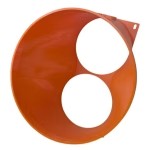
A fan shroud is an enclosure that sits over the miner’s fan opening and adapts it to accept standard 120mm fans. Shrouds serve several purposes:
- Air channeling: Direct all airflow through the heatsink, preventing air from bypassing around the edges.
- Fan mounting: Provide a secure mount point for the replacement fans.
- Noise dampening: Some shroud designs include noise-absorbing material on the interior surfaces.
D-Central offers pre-built shroud kits for popular Antminer models, eliminating the need for 3D printing or custom fabrication.
Solution 3: Sound-Dampened Enclosures
Cost: $100-500 (DIY) or $300-1,500 (commercial)
Noise reduction: 20-35 dB
Difficulty: Moderate to advanced
Enclosing the miner in a sound-dampened box is one of the most effective noise reduction approaches. The key challenge is maintaining adequate airflow while containing the sound.
DIY Mining Closet
Many home miners dedicate a closet, utility room, or garage corner to their mining setup:
- Insulation: Line the walls with acoustic foam or mass-loaded vinyl (MLV). Standard fiberglass insulation helps with both sound and heat.
- Ducting: Run insulated flexible ductwork from the miner’s exhaust to an exterior vent. The ductwork length and bends absorb sound energy.
- Intake: Provide a separate ducted air intake, ideally from a cooler area (basement, exterior). Use a sound-dampened intake baffle.
- Monitoring: Install a temperature sensor inside the enclosure. Custom firmware with Home Assistant integration can automatically throttle the miner if the enclosure temperature gets too high.
Bitcoin Space Heater Enclosures
D-Central pioneered the concept of Bitcoin space heater enclosures — purpose-built housings that convert an ASIC miner into a functional home heater. These enclosures are designed from the ground up to:
- Reduce noise to livable levels (target under 55 dB).
- Direct hot air exhaust into the living space (in winter) or through ductwork to the exterior (in summer).
- Look aesthetically acceptable in a home environment.
- Maintain safe operating temperatures with proper airflow design.
The space heater approach reframes the noise and heat “problems” as features — the miner is not a loud, hot machine in the corner; it is a heater that happens to mine Bitcoin.
Solution 4: Immersion Cooling
Cost: $500-3,000+
Noise reduction: 35-50+ dB (near-silent)
Difficulty: Advanced
Immersion cooling eliminates fan noise entirely by submerging the miner’s hash boards in a non-conductive dielectric fluid. This is the ultimate noise reduction solution, but it is also the most complex and expensive.
How It Works
The miner’s fans and shrouds are removed entirely. The hash boards (and sometimes the entire unit minus the control board) are submerged in a tank of dielectric fluid — typically a mineral oil, engineered fluid, or synthetic coolant. Heat transfers from the chips to the fluid, which is then circulated through a radiator or heat exchanger.
Single-Phase vs. Two-Phase Immersion
- Single-phase: The fluid stays liquid throughout the cooling process. Heat is removed via a pump circulating the fluid through an external radiator. This is simpler and cheaper but requires more fluid volume and a pump (which has some noise, though far less than ASIC fans).
- Two-phase: The fluid boils at a low temperature (around 49 degrees C for some engineered fluids). The vapor rises, condenses on a cold surface at the top of the tank, and drips back down. This is extremely efficient and requires no pump, but the fluids are expensive and the tanks must be sealed.
Firmware Requirements for Immersion
Immersion cooling requires firmware support:
- Fan disable: The firmware must allow fans to be turned off without triggering a fault shutdown. Some firmwares (like VNish) accomplish this through “fan spoofing” — reporting fake fan speeds to bypass the safety check. Better firmware (like BraiinsOS+ immersion mode or DCENT_OS native immersion mode) properly disables the fan monitoring subsystem.
- Higher temperature limits: Immersion-cooled chips can safely run hotter because the fluid provides much more uniform cooling than air. Firmware must allow raising the thermal shutdown threshold.
- Different thermal profiles: The PID fan control loop is meaningless in immersion. Firmware should switch to a cooling-pump-aware thermal management profile or simply remove thermal throttling in favor of fixed power limits.
DCENT_OS includes a native immersion mode with proper fan disable (not spoofing), configurable thermal profiles for both single-phase and two-phase systems, and no fan-failure alarms when immersion mode is active.
Solution 5: Location-Based Approaches
Cost: Varies
Noise reduction: Depends on distance
Difficulty: Low
Sometimes the simplest solution is putting distance between the miner and your living space:
- Garage: Uninsulated garages work well in temperate climates. Run an Ethernet cable and a dedicated electrical circuit. The garage door provides natural ventilation.
- Basement: Basements offer natural sound isolation (concrete and earth). Watch for humidity — basements can be damp, and moisture is bad for electronics.
- Outdoor shed: A dedicated shed with ventilation can house miners year-round. Ensure the electrical supply is properly rated and the shed has adequate airflow for summer cooling.
- Attic: Good for winter (heat rises anyway), but can be dangerously hot in summer without active ventilation. Not recommended unless you can exhaust the heat externally.
Combining Approaches for Maximum Effect
The best results come from layering multiple noise reduction strategies:
| Approach Combination | Estimated Final dB | Total Cost |
|---|---|---|
| Firmware underclocking only | 55-65 dB | Free |
| Firmware + Noctua fan swap | 45-55 dB | $50-150 |
| Firmware + Noctua + closet enclosure | 35-45 dB | $150-500 |
| Firmware + space heater enclosure | 40-50 dB | $300-800 |
| Immersion cooling | 20-30 dB (near-silent) | $500-3,000+ |
For most home miners, the sweet spot is firmware underclocking combined with a Noctua fan swap and some form of enclosure. This gets you to the 40-50 dB range — comparable to a quiet refrigerator — at a cost of $200-500.
The Firmware Factor: Why Software Matters Most
Every hardware noise reduction approach works better with the right firmware. Custom firmware gives you:
- Fan curve control: Set exactly how fast the fans spin at each temperature point.
- Power targeting: Set a maximum wattage that keeps noise within your tolerance.
- Scheduled profiles: Automatically reduce noise at night, when you are working from home, or any time you define.
- Temperature monitoring: Verify that your noise reduction modifications maintain safe operating temperatures.
- Alerts: Get notified if temperatures exceed safe limits in your enclosure or immersion setup.
This is why firmware like DCENT_OS, which is designed specifically for home mining, treats noise management as a first-class feature rather than an afterthought. Built-in Night Mode, scheduled quiet hours, a visual fan curve editor, and a target dB mode (where you set your desired noise level and the firmware adjusts power to meet it) are all part of making Bitcoin mining compatible with daily life.
Frequently Asked Questions
Stock Bitcoin ASIC miners typically produce 75-82 dB of noise, comparable to a vacuum cleaner or garbage disposal running continuously. The Antminer S19 series runs at approximately 75 dB, while the newer S21 series can reach 80-82 dB at full fan speed. This is uncomfortably loud for any shared living space and can cause hearing damage with prolonged exposure above 85 dB. Custom firmware underclocking can reduce noise to 55-65 dB, and combined hardware and software modifications can achieve 40-50 dB (comparable to a quiet refrigerator).
Yes, replacing stock industrial fans with Noctua fans (such as the NF-A12x25) is one of the most popular home mining modifications. You will need a fan adapter shroud (available from D-Central or 3D-printable) to connect standard 120mm fans to the miner’s fan opening. However, Noctua fans move significantly less air than stock fans (60 CFM vs 200+ CFM), so you must run the miner at reduced power (40-60%) using custom firmware to prevent overheating. The result is a 15-25 dB noise reduction.
The quietest option is immersion cooling, which eliminates fans entirely and can achieve 20-30 dB (near-silent operation). However, immersion setups cost $500-3,000+. For most home miners, the practical sweet spot is combining custom firmware underclocking, Noctua fan replacement, and a basic sound-dampened enclosure — achieving 40-50 dB at a cost of $200-500. D-Central’s Bitcoin space heater enclosures are purpose-built for this use case, converting the miner’s heat output into useful home heating while keeping noise to livable levels.
Yes, significantly. Underclocking reduces chip frequency and voltage, which lowers heat output, which allows fans to spin slower. A miner running at 50% power typically drops noise by 15-20 dB. The hashrate loss is not proportional — thanks to per-chip tuning, a 50% power reduction usually costs only 35-40% of hashrate, and efficiency (J/TH) actually improves. Custom firmware like BraiinsOS+, VNish, LuxOS, or DCENT_OS is required for underclocking, as stock Bitmain firmware does not support power or frequency adjustment.