The arms race in Bitcoin mining has always boiled down to one thing: efficiency. You can throw all the hash power in the world at the network — currently surging past 800 EH/s — but if your hardware is throttling itself because it is drowning in its own heat, you are leaving sats on the table. Every watt that goes into heat instead of hashing is a watt wasted. And in a world where the block reward sits at 3.125 BTC, wasted watts are unacceptable.
Water-cooled ASIC miners represent the most significant thermal engineering leap in Bitcoin mining hardware since the ASIC itself. This is not some incremental improvement. It is a fundamental rethinking of how we keep the silicon alive while pushing it to its limits. If you are serious about mining — whether you are running a rack in your garage or scaling an operation in Quebec — you need to understand what liquid cooling brings to the table and why it matters for the future of decentralized hash power.
Why Heat Is the Enemy of Hash Rate
Every ASIC chip is a miniature furnace. The BM1397 chips in an Antminer S19 series push temperatures past 80°C under load. The newer BM1370 chips in the S21 line are more efficient per terahash, but they still generate enormous thermal output when you are pushing 200+ TH/s through a single unit. Heat does three things that miners hate:
| Problem | What Happens | Impact on Your Operation |
|---|---|---|
| Thermal Throttling | Firmware reduces clock speed to prevent chip damage | Lower hash rate, fewer sats earned per kWh |
| Accelerated Degradation | Silicon junction temperatures shorten chip lifespan | Hashboards fail earlier, repair costs increase |
| Fan Power Overhead | Air-cooled units run dual fans at 6000+ RPM | 200-400W consumed just moving air, not hashing |
In an air-cooled Antminer, those dual fans spinning at full tilt consume a non-trivial portion of total power draw. That energy does zero hashing. It is pure overhead. Water cooling eliminates the bulk of that parasitic load and keeps chip junction temperatures significantly lower, which means the firmware lets the chips run harder for longer.
This is not theoretical. This is thermodynamics. And thermodynamics does not care about your feelings — it cares about delta-T, thermal conductivity, and heat transfer coefficients. Water conducts heat roughly 25 times more effectively than air. That is the entire argument in one number.
How Water-Cooled ASIC Miners Work
The basic architecture of a hydro-cooled ASIC miner replaces the traditional heatsink-and-fan assembly with a cold plate that makes direct contact with the ASIC chips. Coolant — typically a glycol-water mix or specialized dielectric fluid — circulates through channels in the cold plate, absorbing heat directly from the chips. The heated coolant then flows to an external heat exchanger (radiator or dry cooler) where it dumps the thermal energy before cycling back.
The key components of any water-cooled mining setup include:
| Component | Function | Key Specs to Watch |
|---|---|---|
| Cold Plate | Direct contact heat absorption from ASIC chips | Copper vs aluminum, channel density, contact pressure |
| Coolant Distribution Unit (CDU) | Pumps and distributes coolant through the loop | Flow rate (L/min), pump redundancy, filtration |
| Heat Exchanger | Rejects heat to ambient environment | kW capacity, fan noise, outdoor rating |
| Coolant | Heat transfer medium | Thermal conductivity, corrosion inhibitors, freezing point |
| Monitoring / PLC | Real-time temperature and flow monitoring | Alert thresholds, remote access, data logging |
The Lian Li Hydro series and similar coolant distribution units from manufacturers like Bitmain (built into the Antminer Hydro line) use PLC-controlled systems that adjust pump speed and flow rates based on real-time thermal data. This is not your PC gaming AIO cooler — these are industrial-grade thermal management systems designed for 24/7 operation under brutal heat loads.
Water-Cooled vs Air-Cooled: The Numbers That Matter
Let us cut through the marketing and look at what actually changes when you move from air cooling to water cooling on the same ASIC platform.
| Metric | Air-Cooled (e.g., S19 XP) | Water-Cooled (e.g., S19 XP Hydro) |
|---|---|---|
| Hash Rate | 140 TH/s | 255 TH/s |
| Power Consumption | ~3,010W | ~5,304W |
| Efficiency (J/TH) | ~21.5 J/TH | ~20.8 J/TH |
| Noise Level | 75+ dB (jet engine territory) | ~35-50 dB (depending on external radiator) |
| Chip Temperature | 75-85 degrees C typical | 45-65 degrees C typical |
| Deployment Flexibility | Requires ventilated space, noise isolation | Can operate in sealed rooms, offices, basements |
The efficiency gain per terahash might look marginal — roughly 3% — but that is not the full story. The real win is density and noise. You can pack water-cooled units into spaces where air-cooled rigs would cook themselves. And the noise reduction? That is what makes hydro cooling a serious upgrade for home mining and dual-purpose heating setups where you cannot have 75 dB of fan roar shaking the walls.
The Canadian Advantage: Cold Climate + Water Cooling
Here is where it gets interesting for us in the North. Canada’s cold climate is a natural advantage for water-cooled mining. In Quebec, where D-Central operates its hosting facility, winter ambient temperatures regularly drop below -20 degrees C. That means your dry cooler or outdoor heat exchanger is rejecting heat into frigid air — massively boosting the efficiency of the entire cooling loop.
During winter months, a water-cooled mining operation in Quebec can achieve near-free cooling. The delta-T between your coolant temperature (say 40 degrees C return) and ambient (-15 degrees C) is enormous, meaning smaller, slower, quieter fans on the heat exchanger can handle the load. Some operations even eliminate active cooling entirely during the coldest months, using passive radiators.
This is why mining in Canada is not just viable — it is strategically superior. The combination of competitive hydro-electric power rates, cold ambient temperatures, and stable regulatory environment makes Quebec one of the best places on the planet to run water-cooled ASIC operations. Decentralizing hash rate away from single jurisdictions is not just good for Bitcoin — it is essential for the network’s censorship resistance.
Hydro Cooling for Home Miners: Is It Worth It?
Now here is the honest truth that the “hydro cooling solves everything” crowd does not always tell you: for most home miners, full hydro cooling infrastructure is overkill.
If you are running a single Antminer at home, the cost of a CDU, plumbing, heat exchanger, and coolant system can easily exceed the cost of the miner itself. For home mining setups, there are more practical approaches to noise and heat management:
Practical home mining cooling options:
- Bitcoin Space Heaters — D-Central’s space heater editions turn the “waste heat problem” into the entire point. Your miner heats your home while earning sats. No complex plumbing required.
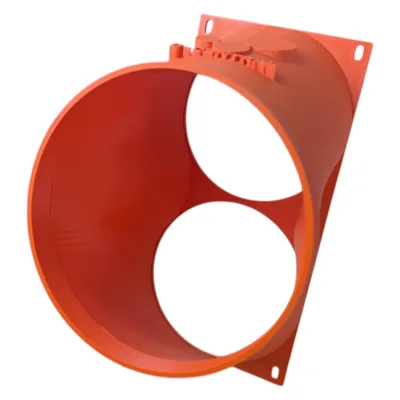
- Shroud and duct setups — Channel the hot exhaust air out a window or into your HVAC system. Low cost, high impact.
- Immersion cooling (single-unit) — Dielectric fluid immersion for a single unit is more practical at home scale than traditional water cooling loops.
- Open-source solo miners — Devices like the Bitaxe generate minimal heat and noise while letting you participate in solo mining. No cooling infrastructure needed whatsoever.
Water cooling makes economic sense when you are scaling beyond 5-10 units, operating in a space where noise is a hard constraint, or running a dedicated facility. For the home miner running one to three ASICs, the smarter play is often a well-designed exhaust system or a space heater conversion.
Maintaining Water-Cooled Mining Hardware
Water-cooled systems are not set-and-forget. They introduce maintenance requirements that air-cooled systems do not have. Here is what you need to stay on top of:
| Maintenance Task | Frequency | Why It Matters |
|---|---|---|
| Coolant level check | Weekly | Low coolant = air pockets = hot spots = dead chips |
| Coolant replacement | Every 6-12 months | Corrosion inhibitors degrade, thermal performance drops |
| Leak inspection | Monthly | Water + electronics = catastrophic failure |
| Filter cleaning | Monthly | Clogged filters restrict flow and reduce cooling capacity |
| Pump inspection | Quarterly | Pump failure means zero cooling — have redundancy or spares |
| Heat exchanger cleaning | Seasonal | Dust and debris on radiator fins reduce heat rejection |
When a water-cooled unit develops issues — and they will eventually — you need access to qualified repair services. ASIC chips damaged by thermal events from cooling failures require board-level diagnostics and rework. This is exactly the kind of work D-Central’s ASIC repair team handles daily, with model-specific expertise across the Antminer, Whatsminer, and Avalon product lines.
The Future of Water-Cooled Bitcoin Mining
The trajectory is clear. As ASIC chips become more power-dense — packing more terahashes into smaller die areas — the thermal challenge only intensifies. The next generation of miners will push beyond 300 TH/s per unit, and managing that heat with air alone will become increasingly impractical.
We are already seeing the trend:
- Bitmain’s Antminer S21 Hydro pushes 335 TH/s at roughly 16 J/TH — numbers that are only achievable with liquid cooling.
- MicroBT’s Whatsminer M56S series offers hydro variants for high-density deployments.
- Two-phase immersion cooling is emerging as the next evolution, where the coolant actually boils on the chip surface for even more efficient heat transfer.
For the Bitcoin network, this matters. More efficient cooling means more hash rate per watt, which means mining operations can stay profitable at lower BTC prices and higher difficulty adjustments. That economic resilience translates directly into network security. A more efficient mining ecosystem is a more decentralized one, because the barriers to profitable operation are lower.
Getting Started: Choosing Your Cooling Strategy
Before you invest in water cooling infrastructure, ask yourself these questions:
1. How many units are you running? If it is fewer than five, the infrastructure cost of water cooling probably does not pencil out. Look at space heater conversions, shroud systems, or open-source solo miners like the Bitaxe instead.
2. What is your noise constraint? If noise is your primary problem, water cooling is the nuclear option. But for single-unit deployments, a well-built shroud exhausting outside might solve 80% of the problem at 10% of the cost.
3. What is your ambient temperature? If you are in a cold climate (hello, Canada), your heat rejection is naturally more efficient. Water cooling in Quebec performs dramatically better than water cooling in Texas.
4. Do you have the technical skills for maintenance? Water cooling requires regular upkeep. If you are not comfortable with plumbing, monitoring systems, and coolant chemistry, factor in the cost of professional maintenance.
5. What is your total cost of ownership? Include the CDU, plumbing, heat exchanger, coolant, installation labor, and ongoing maintenance. Compare that against the efficiency gains and noise reduction benefits over your planned operational timeline.
For miners who need guidance on building out their operation — whether it is choosing between air and water cooling, sourcing the right hardware, or getting expert consulting on facility design — D-Central Technologies has been in the trenches since 2016. We are not theorists. We are Bitcoin mining hackers who have built, repaired, and optimized thousands of mining systems across Canada and beyond.
FAQ
What is a water-cooled ASIC miner and how does it differ from air-cooled?
A water-cooled ASIC miner uses liquid coolant circulated through cold plates in direct contact with the mining chips, instead of relying on fans and heatsinks to move air over them. Water conducts heat roughly 25 times more effectively than air, resulting in lower chip temperatures, quieter operation, and the ability to push chips harder without thermal throttling. The trade-off is added infrastructure complexity — you need a coolant distribution unit, heat exchanger, plumbing, and ongoing maintenance.
Is water cooling worth the investment for home Bitcoin mining?
For most home miners running one to three units, full water cooling infrastructure is likely overkill. The cost of a CDU, plumbing, and heat exchanger can exceed the cost of the miner itself. Better options for home miners include Bitcoin space heater conversions (which turn waste heat into home heating), shroud and ducting setups, or low-power open-source miners like the Bitaxe that need no special cooling at all. Water cooling becomes economically justified at roughly five or more units, or when noise constraints are absolute.
How much noise reduction does water cooling provide?
Significant. A typical air-cooled Antminer S19 series runs at 75+ dB — roughly equivalent to a vacuum cleaner running continuously. Water-cooled variants of the same hardware operate at 35-50 dB depending on the external heat exchanger configuration. That difference is transformative for residential or office deployments where noise is a hard constraint.
What maintenance does a water-cooled mining setup require?
Water-cooled systems need weekly coolant level checks, monthly leak and filter inspections, quarterly pump checks, and full coolant replacement every 6-12 months. The heat exchanger should be cleaned seasonally. Neglecting maintenance can lead to coolant degradation, restricted flow, hot spots on chips, and in worst cases, leaks that cause catastrophic hardware damage. Always have pump redundancy or spares on hand.
Why is Canada ideal for water-cooled Bitcoin mining?
Canada — particularly Quebec — offers a trifecta of advantages for water-cooled mining: cold ambient temperatures that dramatically boost heat exchanger efficiency (near-free cooling in winter), competitive hydro-electric power rates, and a stable regulatory environment. When your outdoor ambient is -20 degrees C and your coolant return temperature is 40 degrees C, the delta-T is so large that minimal fan power is needed for heat rejection. This translates directly into better efficiency and lower operating costs.
Can D-Central repair water-cooled ASIC miners?
Yes. D-Central Technologies provides comprehensive ASIC repair services including board-level diagnostics and rework for all major manufacturers — Bitmain (Antminer), MicroBT (Whatsminer), Canaan (Avalon), and more. Thermal damage from cooling system failures is one of the common issues we see. Our repair team has model-specific expertise across 38+ ASIC models, and we have been operating since 2016 with thousands of successful repairs completed.
What are the best current water-cooled Bitcoin miners available?
As of 2026, the leading water-cooled Bitcoin miners include the Bitmain Antminer S21 Hydro (335 TH/s at roughly 16 J/TH), the Antminer S19 XP Hydro (255 TH/s at roughly 20.8 J/TH), and MicroBT’s Whatsminer M56S hydro variants. Two-phase immersion cooling systems are also emerging as the next evolution. The best choice depends on your budget, facility infrastructure, and power availability.
How does water cooling affect Bitcoin mining profitability?
Water cooling improves profitability through several mechanisms: slightly better J/TH efficiency (3-5% improvement on comparable hardware), elimination of fan power overhead (200-400W per unit saved), extended hardware lifespan from lower operating temperatures, and the ability to deploy in locations where air-cooled mining would be impractical. However, these gains must be weighed against the upfront infrastructure cost and ongoing maintenance expenses. At scale (5+ units), the math typically favors water cooling.