Every ASIC miner is a heater that happens to produce Bitcoin. That is not a metaphor — it is thermodynamics. A single Antminer S21 converts 3,500 watts of electricity into 3,500 watts of heat with near-perfect efficiency, and it earns satoshis while doing it. Fitness centers burn through enormous amounts of energy keeping their spaces warm, especially during Canadian winters. The math here is obvious: point mining heat at the problem, offset the heating bill, and stack sats in the process.
At D-Central Technologies, we have been building Bitcoin mining heat recovery solutions since 2016. Our Bitcoin Space Heater line was born from exactly this principle — turning waste heat into productive heat. Gyms, with their massive square footage and constant heating demand, represent one of the most compelling commercial applications of this technology.
This guide breaks down everything you need to know about heating a gym with Bitcoin miners: the physics, the economics, the implementation strategies, and the pitfalls to avoid.
The Thermodynamics of Bitcoin Mining Heat
Bitcoin mining in 2026 is performed by application-specific integrated circuits (ASICs) — purpose-built silicon designed to compute SHA-256 hashes at extraordinary speeds. The Bitcoin network currently operates above 800 EH/s (exahashes per second), with difficulty exceeding 110 trillion. That computational work generates heat as a direct byproduct, and modern miners are remarkably efficient heat sources.
Here is the key insight most people miss: an electric heater and a Bitcoin miner convert electricity to heat at the exact same efficiency — nearly 100%. The first law of thermodynamics guarantees it. Every watt consumed by a miner becomes a watt of thermal energy. The difference is that the miner also performs useful computational work and earns Bitcoin (current block reward: 3.125 BTC) while generating that heat.
This means replacing electric heaters with Bitcoin miners is not about energy savings in the strict sense — it is about monetizing energy that was going to be consumed for heat anyway. Your heating bill stays roughly the same, but now a portion of it comes back as Bitcoin.
Why Gyms Are an Ideal Application
Not every commercial space is a good fit for mining heat recovery. Gyms and fitness centers, however, check nearly every box:
| Factor | Why Gyms Excel |
|---|---|
| High heating demand | Large open spaces (500-5,000+ sq ft) with high ceilings require continuous heating in cold climates |
| Extended operating hours | Most gyms operate 12-18 hours per day, aligning well with 24/7 mining uptime |
| Noise tolerance | Weight rooms, cycling studios, and cardio floors already have ambient noise from equipment and music |
| Electrical infrastructure | Commercial gyms typically have 200-400A electrical service, sufficient for multiple miners |
| Temperature flexibility | Gym-goers generate body heat during exercise, so precise temperature control is less critical than in offices |
| Ventilation systems | Most gyms already have industrial HVAC that can be adapted for heat distribution |
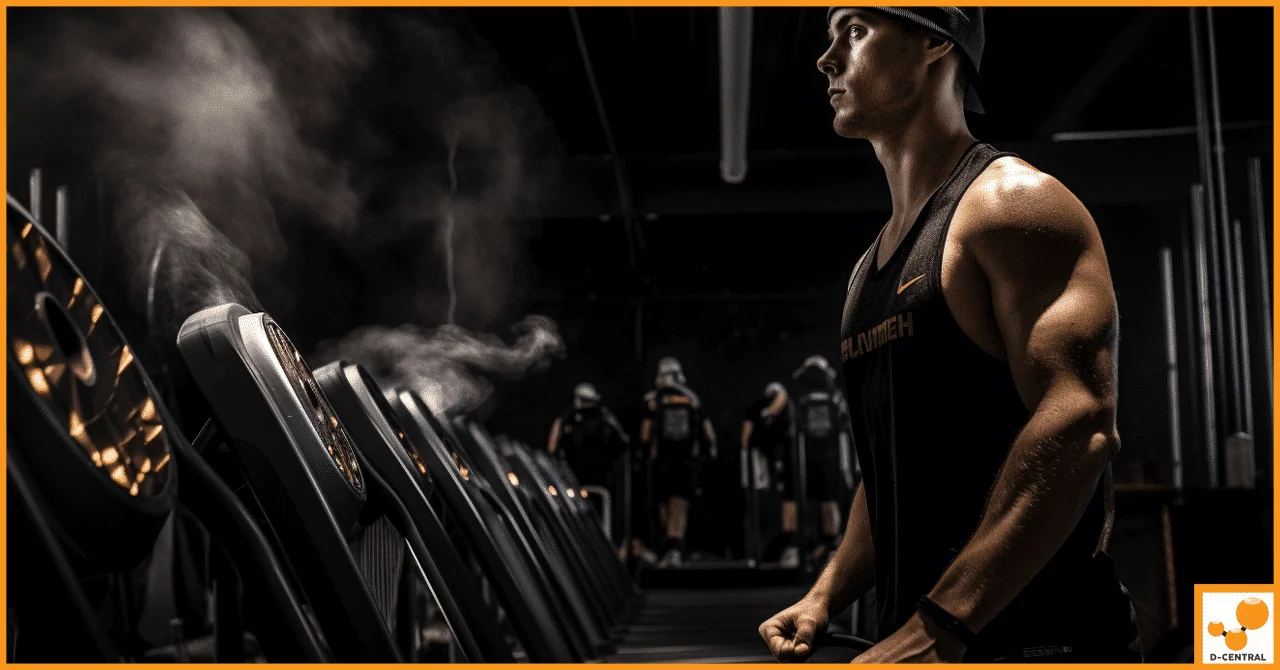
The noise factor deserves special attention. A standard Antminer S19 series runs at approximately 75 dB — comparable to a loud vacuum cleaner. That is a non-starter for an office or retail space, but in a gym environment where music is playing, weights are clanging, and treadmills are running, the noise profile is far more manageable. With proper sound attenuation enclosures, mining noise can be reduced to levels that blend into the ambient gym environment.
The Economics: Running the Numbers
Let us model a realistic scenario for a mid-sized Canadian gym using Bitcoin mining heat.
Baseline Assumptions
| Parameter | Value |
|---|---|
| Gym size | 3,000 sq ft |
| Heating season | 7 months (October – April, typical Canadian) |
| Current annual heating cost | $8,000 – $15,000 CAD (gas/electric) |
| Electricity rate | $0.08 – $0.12 CAD/kWh (commercial rate) |
| Miners deployed | 4x Antminer S21 (3,500W each, 200 TH/s each) |
| Total mining power | 14 kW (= 14 kW of heating) |
| Total hashrate | 800 TH/s |
Heat Output Analysis
Fourteen kilowatts of continuous heat output is equivalent to roughly 47,800 BTU/h — enough to serve as the primary heat source for a 3,000 sq ft space in moderate cold, or a significant supplemental source in extreme cold. During Canadian shoulder seasons (October, November, March, April), four S21 miners could handle heating duties entirely. In deep winter (-20C and below), they would supplement a conventional system and reduce its workload by 60-80%.
Bitcoin Revenue
At 800 TH/s and current network difficulty above 110T, a pool mining setup would generate approximately 0.0003-0.0005 BTC per day (numbers fluctuate with difficulty adjustments and Bitcoin price). Over a 7-month heating season (roughly 210 days), that accumulates to 0.063-0.105 BTC. At Bitcoin prices in the six-figure range, this represents meaningful revenue — potentially $6,000-$15,000+ CAD — that directly offsets the electricity cost of running the miners.
The critical point: the heating is essentially free or even profitable, depending on your electricity rate and Bitcoin’s market value. You were going to spend that energy on heating anyway. The miners just happen to earn Bitcoin while producing that heat.
Implementation Strategies
There are three primary approaches to deploying mining heat in a fitness center, each with different trade-offs.
Strategy 1: On-Site Mining Installation
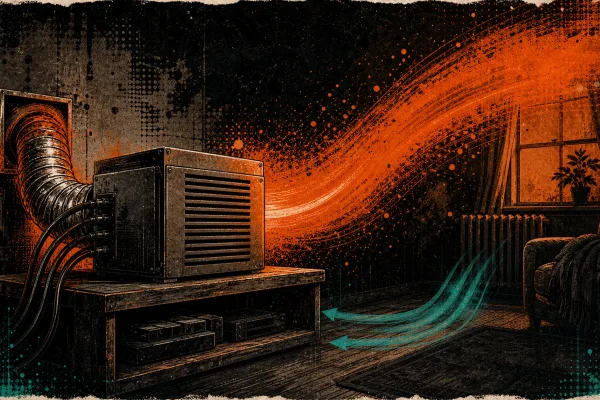
The most direct approach — install ASIC miners on the gym premises and duct their hot exhaust into the building’s HVAC system.
How it works:
- Miners are placed in a dedicated mechanical room, utility closet, or purpose-built enclosure
- Hot exhaust air (typically 50-70C at the miner outlet) is ducted into the building’s air handling system
- Fresh intake air is drawn from outside or from the gym space, creating a circulation loop
- In summer months, hot air is exhausted outside, and miners continue earning Bitcoin
Advantages: Full control over hardware and Bitcoin revenue. No middlemen. The gym owns the miners and keeps 100% of the Bitcoin earned.
Considerations: Requires electrical upgrades (dedicated 240V circuits), noise attenuation, and someone with basic technical knowledge to monitor the miners. D-Central offers mining consulting services to help commercial clients plan and execute exactly this kind of deployment.
Strategy 2: Partnership with a Mining Operator
A gym partners with a local Bitcoin mining company that installs and manages equipment on the gym’s premises. The mining operator handles all technical aspects, and the gym receives free or discounted heat.
How it works:
- Mining operator installs and maintains the hardware
- Gym provides space and electrical service
- Revenue sharing: operator keeps Bitcoin, gym gets free heat (or a split is negotiated)
- Operator handles repairs, monitoring, and hardware upgrades
Advantages: Zero technical burden on the gym. No capital expenditure for mining hardware. Professional management of equipment.
Considerations: Lower Bitcoin upside for the gym (revenue sharing). Requires a trustworthy local operator. Contract terms need careful negotiation.
Strategy 3: Bitcoin Space Heater Units
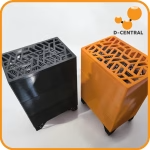
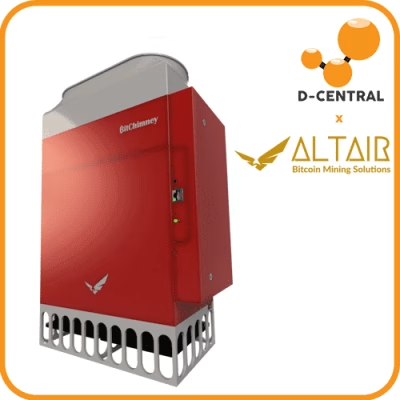
The simplest approach — deploy purpose-built Bitcoin Space Heaters that are designed specifically for commercial and residential heating applications. These units package ASIC mining hardware inside sound-attenuated enclosures with integrated heat distribution.
How it works:
- Pre-built units are installed like conventional space heaters
- Plug into standard or high-amperage outlets depending on the model
- Built-in noise reduction eliminates the need for separate sound attenuation
- Managed via web interface or mobile app for temperature and hashrate control
Advantages: Lowest complexity. Purpose-designed for heating applications. No custom HVAC ductwork needed. Ideal for gyms that want to start small and scale up.
Considerations: Higher per-unit cost than raw ASIC miners. Hashrate may be lower than dedicated mining rigs due to noise and thermal management trade-offs.
Noise Management in a Gym Environment
Noise is the single biggest objection to indoor Bitcoin mining, and it is a legitimate concern. Here is how to handle it in a gym context:
- Dedicated mechanical room: Place miners in a separate room with sound insulation (mass-loaded vinyl, acoustic foam, sealed ducting). This is the gold standard approach and keeps noise completely isolated from the gym floor.
- Immersion cooling: Submerging miners in dielectric fluid eliminates fan noise entirely. This is a premium solution but results in near-silent operation and extends hardware lifespan.
- Custom shrouds and enclosures: D-Central manufactures sound-attenuated enclosures and ASIC shrouds that reduce noise by 15-25 dB while maintaining proper airflow. Check our shop for available options.
- Strategic placement: Position miners near weight rooms or cycling studios where ambient noise is highest. Avoid placing near yoga studios or stretching areas.
- Fan speed underclocking: Running miners at 70-80% power reduces noise significantly while still producing substantial heat and hashrate. Custom firmware like Braiins OS+ allows granular control.
Electrical and Infrastructure Requirements
Before installing mining equipment, a gym needs to assess its electrical capacity:
Electrical Checklist
- Service panel capacity: Four S21 miners at 3,500W each require approximately 60A at 240V. Most commercial gyms have headroom, but verify with a licensed electrician.
- Dedicated circuits: Each miner or pair of miners should have its own dedicated 240V circuit with appropriate breakers (typically 20A per miner).
- Power distribution units (PDUs): Commercial-grade PDUs with surge protection are recommended for managing multiple miners.
- Ventilation: Ensure adequate airflow — miners need cool intake air and a path for hot exhaust. In winter, outside air serves as ideal cold intake. In summer, hot exhaust must be vented outside.
- Internet connectivity: Miners require a stable internet connection (minimal bandwidth — under 1 Mbps per miner). Hardwired Ethernet is preferred over WiFi for reliability.
If electrical upgrades are needed, budget $2,000-$5,000 CAD for a licensed electrician to install dedicated circuits and a sub-panel. This is a one-time cost that pays for itself quickly through Bitcoin revenue.
Seasonal Strategy: Year-Round Value
The obvious question: what happens in summer when the gym does not need heating?
This is where flexibility matters:
- Exhaust heat outside: Duct the hot air through an exterior vent. Miners continue earning Bitcoin year-round — you just do not use the heat for the building. Your Bitcoin revenue continues, and the only cost is electricity.
- Reduce hashrate: Underclock miners during warm months to reduce heat output and electricity consumption while still earning some Bitcoin.
- Relocate to a hosting facility: During summer, move miners to a dedicated mining hosting facility where cooling infrastructure is already in place. D-Central operates hosting in Quebec with competitive electricity rates. Ship them back for heating season.
- Hot water heating: If the gym has showers (most do), mining heat can be directed to preheat water year-round using a water-to-air heat exchanger. Hot water demand exists regardless of season.
The hot water application is particularly compelling for gyms. A typical fitness center spends $2,000-$4,000 CAD annually on water heating. Mining heat can offset a significant portion of this, providing year-round value beyond space heating.
Hardware Selection for Gym Heating
Not all miners are created equal when it comes to heating applications. Here is what to look for:
| Miner | Wattage | Heat Output (BTU/h) | Best For |
|---|---|---|---|
| Antminer S9 (Space Heater) | 1,300W | ~4,400 BTU/h | Small rooms, offices, yoga studios |
| Antminer S19 series | 3,000-3,250W | ~10,200-11,000 BTU/h | Medium gym spaces, weight rooms |
| Antminer S21 | 3,500W | ~11,900 BTU/h | Large gym floors, primary heating |
| Bitaxe (solo miner) | 12-15W | ~40-50 BTU/h | Reception desk display, conversation starter |
For serious gym heating, the S19 and S21 series are the workhorses. The older S9 units, while less efficient per hash, are dirt cheap on the secondary market and make excellent budget heating units — that is exactly why D-Central builds S9-based Space Heater editions. They may not be the most profitable miners in 2026, but when your primary goal is heat and Bitcoin is a bonus, the economics work beautifully.
For a fun addition to the gym lobby or reception area, a Bitaxe solo miner makes an excellent conversation piece. It produces minimal heat but runs silently and gives members something to watch — the hashrate display and solo mining lottery ticker are oddly mesmerizing.
Maintenance and Monitoring
ASIC miners are industrial equipment and require basic maintenance:
- Dust management: Gyms generate significant airborne dust and lint from clothing, rubber flooring, and human activity. Miners should have intake filters that are cleaned or replaced monthly. Compressed air blowouts every 3-6 months keep heatsinks clear.
- Monitoring: Use mining pool dashboards and tools like Foreman or Hive OS to monitor hashrate, temperature, and fan speeds remotely. Set up alerts for hardware failures so a dead miner does not leave a section of the gym cold.
- Repairs: ASICs occasionally need hashboard repairs, fan replacements, or controller board service. D-Central’s ASIC repair service handles all major manufacturers — Bitmain, MicroBT, Canaan, and more — with fast turnaround times from our Montreal, Quebec facility.
- Firmware updates: Keep firmware current for security patches and efficiency improvements. Custom firmware like Braiins OS+ offers autotuning that optimizes performance based on your target power draw.
Legal and Regulatory Considerations
Running Bitcoin miners in a commercial space in Canada involves a few considerations:
- Electrical code: All electrical work must be performed by licensed electricians and comply with the Canadian Electrical Code. Commercial installations may require permits.
- Noise bylaws: Verify local noise ordinances. Interior mining with proper sound attenuation typically falls well within commercial zoning limits, but verify if exterior exhaust vents could create issues.
- Insurance: Inform your commercial insurance provider about the mining equipment. ASIC miners are valuable assets (typically $2,000-$8,000 each) and should be covered under your business property policy.
- Tax implications: Bitcoin mined in Canada is taxed as business income at the time of receipt, based on fair market value. Consult a tax professional familiar with cryptocurrency reporting requirements.
- Fire safety: Ensure mining installations comply with fire code requirements. Proper ventilation, non-combustible enclosures, and smoke/heat detection near mining equipment are essential.
Real-World Case Studies
The concept of mining-heated commercial spaces is not theoretical — it is already happening globally:
- North Vancouver, British Columbia: A community development used Bitcoin mining waste heat to warm residential buildings, demonstrating the viability of mining heat for occupied spaces at scale.
- Whistle Pig brewery (Vermont, USA): Uses Bitcoin miners to heat their brewing facility, showcasing cross-industry heat recovery in a commercial setting.
- Multiple Nordic facilities: Scandinavian companies have pioneered mining heat recovery for greenhouses, district heating, and commercial buildings, taking advantage of cold climates and cheap hydroelectric power — a model that translates directly to Canadian operations.
The fitness industry application follows the same physics and economics. Gyms that adopt this approach early gain a competitive edge: lower operating costs, a unique brand story (especially appealing to Bitcoin-friendly clientele), and exposure to Bitcoin appreciation over time.
Getting Started: A Practical Roadmap
- Assess your heating load: Calculate your gym’s current heating costs and energy consumption. This tells you how many miners you need and what your potential offset looks like.
- Audit your electrical service: Have a licensed electrician evaluate your panel capacity and determine what upgrades (if any) are needed for miner installation.
- Choose your strategy: On-site mining, partnership, or Bitcoin Space Heater units. Start small (1-2 miners) to test the concept before scaling.
- Source hardware: Purchase miners from a reputable supplier. D-Central stocks a full range of ASIC miners and space heater units with warranty support and Canadian-based service.
- Install and configure: Set up miners on a mining pool, configure monitoring, and integrate heat distribution with your existing HVAC system.
- Monitor and optimize: Track Bitcoin earnings, electricity costs, and heating performance. Adjust hashrate and power draw seasonally to balance heat demand with mining profitability.
For gyms that want expert guidance through this process, D-Central’s mining consulting team specializes in commercial heat recovery deployments. We have been building these solutions since 2016 — before most people even knew what a space heater miner was.
The Bigger Picture: Decentralizing Bitcoin’s Hashrate
Every gym that deploys Bitcoin miners is not just saving on heating costs — it is contributing to the decentralization of Bitcoin’s hashrate. When mining is concentrated in a handful of large data centers, the network becomes vulnerable to political pressure, regulatory seizure, and single points of failure.
Distributed mining — in homes, gyms, offices, breweries, greenhouses, and every other building that needs heat — is how we protect Bitcoin’s censorship resistance. Every hash counts, whether it comes from a warehouse in Texas or a CrossFit box in Montreal.
That is the cypherpunk vision we build toward at D-Central: decentralization of every layer of Bitcoin mining. Heating your gym with mining hardware is not just economically smart. It is ideologically aligned with Bitcoin’s core mission.
Frequently Asked Questions
How much can a gym save on heating costs with Bitcoin miners?
Depending on the number of miners deployed and your local electricity rates, Bitcoin miners can offset 60-80% of a gym’s heating costs during cold months. The miners consume electricity to produce heat (identical to electric heaters) but also earn Bitcoin, effectively subsidizing or fully covering the electricity expense. A typical 4-miner setup producing 14 kW of heat can offset $5,000-$12,000 CAD in annual heating costs while generating meaningful Bitcoin revenue.
Are Bitcoin miners too loud for a gym environment?
Standard ASIC miners produce 70-80 dB of noise, which is significant. However, when placed in a dedicated mechanical room with sound insulation, noise can be reduced to 40-50 dB at the gym floor — quieter than the ambient noise level in most active gym spaces. Purpose-built Bitcoin Space Heater enclosures further reduce noise. Weight rooms and cycling studios, which already have high ambient noise, are the most forgiving environments.
What happens to the miners in summer when heating is not needed?
You have several options: exhaust the hot air outside while continuing to mine and earn Bitcoin; reduce hashrate to lower heat and electricity consumption; relocate miners to a hosting facility for the summer; or redirect heat to preheat shower water, which gyms need year-round. Many operators run miners year-round and simply vent excess heat during warm months.
How much does it cost to set up Bitcoin mining heat for a gym?
A basic setup with 2-4 ASIC miners costs approximately $8,000-$30,000 CAD including hardware, electrical upgrades, sound attenuation, and ducting. The investment typically pays for itself within 12-24 months through Bitcoin earnings and heating cost offsets, depending on electricity rates and Bitcoin’s market value. Starting with a single Bitcoin Space Heater unit ($2,000-$4,000) is a lower-risk way to test the concept.
Do I need technical expertise to run Bitcoin miners in my gym?
Basic setup and monitoring can be learned in a few hours — mining pools and modern firmware have user-friendly interfaces. However, for the initial installation, electrical work, HVAC integration, and hardware repairs, professional help is recommended. D-Central offers consulting services for commercial deployments and full ASIC repair support for ongoing maintenance.
Is Bitcoin mining heat recovery legal in Canada?
Yes, Bitcoin mining is fully legal in Canada. Commercial installations must comply with the Canadian Electrical Code, local noise bylaws, fire safety regulations, and building codes. Mined Bitcoin is treated as business income for tax purposes. Consult a licensed electrician for installation and a tax professional for reporting requirements.