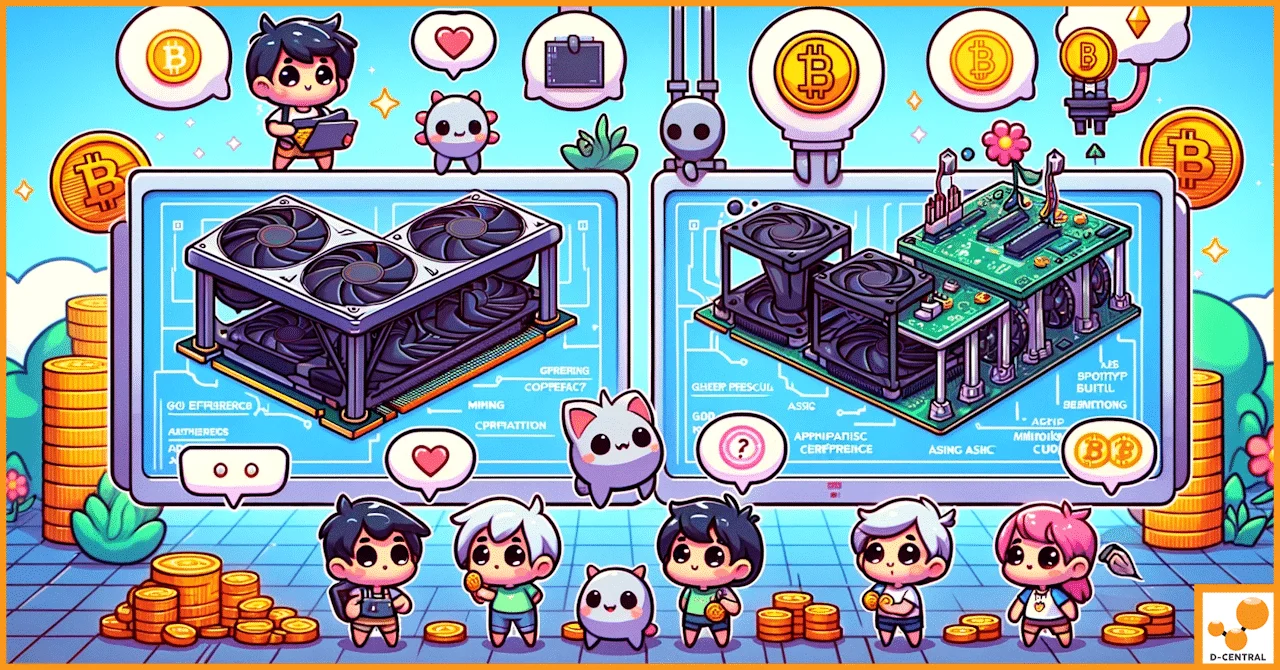
If you are choosing hardware to mine Bitcoin, the decision between GPU mining and ASIC mining is not really a close call anymore. What was once a genuine debate has been settled by years of relentless innovation in application-specific integrated circuits. Yet the question keeps resurfacing, especially among newcomers who see affordable graphics cards and wonder whether they can point that hashpower at the Bitcoin network.
This guide breaks down the technical reality of GPU mining versus ASIC mining in the context of Bitcoin specifically. We are not interested in altcoin narratives here. Bitcoin is the only proof-of-work network that matters for the long term, and your hardware choice should reflect that conviction. Let us walk through the engineering, the economics, and the strategic calculus so you can make an informed decision.
How Bitcoin Mining Actually Works
Bitcoin mining is the process that secures the most robust decentralized monetary network ever created. Miners compete to find a valid SHA-256 hash that meets the current difficulty target. The miner who finds it first gets to propose the next block of transactions and earns the block reward of 3.125 BTC (since the April 2024 halving) plus all transaction fees in that block.
As of early 2026, the Bitcoin network hashrate exceeds 800 EH/s (exahashes per second). That is 800 quintillion SHA-256 hash computations every single second, performed by millions of machines worldwide. This staggering amount of computational work is what makes Bitcoin’s ledger practically immutable. To attack it, you would need to control more than half of that hashrate — an economically and logistically impossible feat.
The difficulty adjustment algorithm recalibrates every 2,016 blocks (roughly two weeks) to maintain the target of one block every ten minutes on average. This elegant feedback loop means that as more hashrate comes online, the puzzles get harder. It is a relentless arms race, and the hardware you choose determines whether you are competitive or burning electricity for nothing.
What Is GPU Mining?
GPU mining uses graphics processing units — the same chips that render video games and accelerate machine learning workloads — to perform the hash computations required for mining. GPUs excel at parallel processing: they contain thousands of small cores that can execute many simple calculations simultaneously.
The Historical Role of GPUs in Bitcoin
In Bitcoin’s earliest days (2009-2012), mining progressed from CPUs to GPUs. A single high-end GPU could mine hundreds of bitcoins per day when the network hashrate was measured in megahashes. Those days are gone and they are never coming back. The shift to GPUs was the first step in Bitcoin’s hardware evolution, but it was just that — a step, not a destination.
By 2013, field-programmable gate arrays (FPGAs) had already begun displacing GPUs, and within months, the first purpose-built ASIC miners appeared. The GPU era of Bitcoin mining lasted roughly three years. We are now over a decade past that transition.
Can You Mine Bitcoin with a GPU in 2025?
Technically, yes. Practically, no. A modern high-end GPU like the NVIDIA RTX 4090 produces roughly 250 MH/s on SHA-256. The latest generation of ASIC miners produces over 200 TH/s — that is 200,000,000 MH/s. A single ASIC miner outperforms approximately 800,000 RTX 4090 GPUs. The efficiency gap is even more dramatic: that ASIC achieves this hashrate at around 15-20 J/TH, while the GPU equivalent would consume orders of magnitude more electricity per hash.
There is no configuration of GPUs, no matter how clever, that can make GPU mining of Bitcoin economically rational in 2025. The numbers are not close. The math does not lie.
What Is ASIC Mining?
ASIC stands for Application-Specific Integrated Circuit. Unlike GPUs, which are general-purpose parallel processors, ASICs are chips designed from the transistor level up to do exactly one thing: compute SHA-256 hashes as fast and as efficiently as possible. Every transistor on the die serves the mining algorithm. Nothing is wasted.
The Evolution of Bitcoin ASICs
The ASIC evolution in Bitcoin mining has been remarkable:
- 2013: First-generation ASICs (65nm and 28nm process nodes) — a quantum leap over GPUs
- 2016-2018: The Antminer S9 era (16nm) — the workhorse that decentralized mining to homes worldwide and still runs today in Bitcoin Space Heaters
- 2020-2022: Sub-10nm ASICs (S19 series, Whatsminer M30) — dramatic efficiency improvements
- 2023-2025: Current generation (S21, T21, Whatsminer M60) — pushing below 15 J/TH with hashrates exceeding 200 TH/s on a single unit
Each generation has roughly doubled efficiency while increasing hashrate, driven by semiconductor process improvements and custom chip architecture refinements. This is the power of purpose-built silicon: when you remove every circuit that does not serve your algorithm, you extract maximum performance per watt.
The Open-Source ASIC Revolution
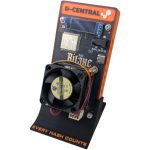
One of the most exciting developments in ASIC mining is the rise of open-source miners like the Bitaxe. These devices put a real ASIC chip (like the BM1366, BM1368, or BM1370) on a compact, open-source board that anyone can build, modify, and run. The Bitaxe is not going to compete with a rack of S21s on hashrate, but that is not the point. It represents the decentralization of mining hardware itself — no more relying solely on a handful of manufacturers to access SHA-256 ASIC silicon.
D-Central has been a pioneer in the Bitaxe ecosystem since its inception. We created the original Bitaxe Mesh Stand, developed leading heatsink solutions for the Bitaxe and Bitaxe Hex, and stock every variant: Supra, Ultra, Hex, Gamma, and GT. For miners who care about sovereignty at every layer, open-source ASICs are the future.
GPU vs. ASIC Mining: Head-to-Head Comparison
Let us put the two technologies side by side with real numbers relevant to Bitcoin mining in 2025.
| Factor | GPU Mining (RTX 4090) | ASIC Mining (Antminer S21) |
|---|---|---|
| SHA-256 Hashrate | ~250 MH/s | ~200 TH/s |
| Efficiency (J/TH) | ~1,400,000 J/TH | ~15 J/TH |
| Power Draw | ~350W | ~3,500W |
| Unit Cost (approx.) | $1,500-$2,000 | $3,000-$6,000 |
| Bitcoin per Day (solo) | Effectively zero | ~0.00003 BTC (at pool) |
| Time to Mine 1 BTC (solo) | Millions of years | ~90 years (but pool payouts daily) |
| Noise Level | Moderate (40-55 dB) | High (70-80 dB stock) |
| Setup Complexity | Moderate (OS, drivers, software) | Simple (plug in, configure pool, run) |
| Resale Value | High (gaming market) | Variable (depends on efficiency vs. newer models) |
| Bitcoin Mining Viability | Not viable | The only serious option |
The efficiency difference is not incremental. It is a factor of nearly 100,000x. This is the entire argument in one number. ASIC miners are not just better at mining Bitcoin — they are the only technology that makes any sense for it.
Why GPUs Cannot Compete on Bitcoin
The reason GPUs fail at Bitcoin mining comes down to chip architecture. A GPU is a massively parallel processor designed for floating-point arithmetic, texture mapping, and general compute workloads. It has cache hierarchies, memory controllers, display outputs, video decoders, and thousands of other circuits that are completely useless for SHA-256 hashing.
An ASIC strips all of that away. Every square millimeter of silicon is dedicated to SHA-256. The result is a chip that does one thing, but does it with an efficiency that no general-purpose processor can touch. This is not a temporary advantage that GPU manufacturers can close with a new generation. It is a fundamental architectural reality.
The Economics Are Brutal
At an electricity cost of $0.10/kWh:
- An RTX 4090 GPU mining Bitcoin earns approximately $0.000001 per day while consuming about $0.84 in electricity. You lose money on every hash.
- An Antminer S21 mining Bitcoin earns approximately $8-15 per day (varying with BTC price and difficulty) while consuming about $8.40 in electricity. At current prices, it is profitable in most scenarios.
The GPU does not just underperform. It operates at a loss so severe that you would need free electricity AND free hardware AND infinite patience to make it work. Meanwhile, ASIC miners provide real, measurable returns that you can calculate with a mining profitability calculator.
Where GPUs Still Have a Role
To be fair, GPUs are not useless hardware. They simply have no place in Bitcoin mining. Here is where GPUs remain relevant:
- Machine learning and AI workloads: GPUs dominate AI training and inference
- Gaming: Their primary design purpose
- 3D rendering and video production: Professional creative workflows
- Scientific computing: Simulations, molecular modeling, cryptographic research
If you already own a GPU, use it for what it was designed for. If you want to mine Bitcoin, get an ASIC. Trying to do both with the same hardware means doing neither well.
The Real Choice: What Kind of ASIC Miner?
Since ASICs are the clear winner for Bitcoin mining, the real question for a new miner is not “GPU or ASIC?” but rather “which ASIC, and how do I run it?” This is where the landscape gets interesting and where D-Central’s Mining Hacker ethos comes into play.
Full-Scale ASIC Miners
Industrial ASIC miners like the Antminer S21 series and Whatsminer M60 series deliver the highest hashrate and best efficiency. They are the workhorses of the network. The trade-off is noise (70-80+ dB), heat output (3,000-3,500W of continuous thermal load), and power requirements (typically 220V/30A circuits).
For home miners, D-Central has pioneered solutions to make these machines livable. Our Bitcoin Space Heaters repurpose the heat output of ASIC miners into functional home heating. Instead of venting 3,500W of heat into the atmosphere, you are heating your home while earning sats. In Canada’s cold climate, this dual-purpose approach makes the economics significantly more attractive.
Open-Source Solo Miners
The Bitaxe and its variants (Supra, Ultra, Hex, Gamma, GT) represent a different philosophy. They use genuine ASIC chips on open-source boards, producing modest hashrates (500 GH/s to several TH/s depending on the model). They are whisper-quiet, run on 5V or 12V DC power, and fit on your desk.
Will a Bitaxe find a block? The odds on any given day are slim, but every hash counts. Solo miners around the world have hit blocks with small devices. It is lottery mining with provable odds, and every hash you contribute strengthens Bitcoin’s decentralization. The Bitaxe is not about maximizing profit per watt — it is about participating in the network on your own terms, with hardware you fully control and understand.
Custom and Modified ASICs
D-Central’s Antminer Slim Edition, Pivotal Edition, and Loki Edition are custom builds that modify standard ASICs for specific home mining use cases. Whether it is reducing noise, optimizing airflow for a particular enclosure, or underclocking for better efficiency at the cost of some hashrate, these modifications embody the Mining Hacker philosophy: take institutional-grade technology and hack it to work for the individual.
The Decentralization Argument
There is a narrative in certain corners of the internet that ASIC mining is “bad for decentralization” because it concentrates hashrate among those who can afford expensive specialized hardware. This argument deserves examination.
The reality is more nuanced. GPU mining did not prevent mining centralization — large GPU farms existed just as large ASIC farms do today. What actually decentralizes mining is:
- Accessible hardware: Open-source ASICs like the Bitaxe lower the barrier to participation
- Geographic distribution: Home miners in every country running small setups contribute to geographic decentralization
- Pool diversity: Miners choosing smaller pools and solo mining rather than defaulting to the two or three largest pools
- Energy arbitrage: Miners using stranded, curtailed, or excess renewable energy that would otherwise be wasted
- Dual-purpose mining: Space heaters that mine Bitcoin make the economics viable even when mining alone would not be profitable
The Mining Hacker approach to decentralization is not to wish for less efficient hardware. It is to make the most efficient hardware accessible to the widest possible audience. That is what D-Central does every day.
Getting Started with ASIC Mining
If you have read this far and decided (correctly) that ASIC mining is the path forward for Bitcoin, here is a practical roadmap:
1. Assess Your Electrical Capacity
Full-scale ASICs draw 3,000-3,500W continuously. That requires a dedicated 220V/30A circuit in most cases. Smaller open-source miners like the Bitaxe run on standard 5V or 12V power supplies and can plug into any outlet.
2. Plan for Heat and Noise
Every watt of electricity your miner consumes becomes heat. A 3,500W ASIC is a 3,500W heater. In winter, this is a feature. In summer, you need a plan. Noise management is equally important — stock ASIC fans run at 70-80 dB. Solutions range from duct shrouds and fan replacements to purpose-built enclosures.
3. Choose Your Mining Strategy
- Pool mining: Join a mining pool for steady, predictable payouts proportional to your hashrate
- Solo mining: Point your hashrate at the network directly and hope to find a block. High variance, but the full 3.125 BTC block reward is yours if you hit
- Hybrid approach: Run your main ASICs in a pool and keep a Bitaxe running solo for the lottery ticket
4. Source Your Hardware
Buy from a reputable source that tests every machine before shipping. D-Central tests, configures, and stress-tests every ASIC miner before it leaves our facility. We also offer ASIC repair services for when your hardware needs maintenance — because in this industry, the relationship between miner and hardware vendor should not end at the point of sale.
5. Start Mining
ASIC miners are genuinely plug-and-play. Connect power, connect ethernet, configure your pool credentials through the web interface, and you are hashing. No drivers, no operating system configuration, no GPU overclocking profiles. It just works.
The Verdict: ASIC Mining Wins, and It Is Not Close
For Bitcoin mining in 2025, the GPU vs. ASIC debate has a clear, unambiguous answer: ASIC mining is the only viable option. The efficiency gap is not a small margin that might close with the next GPU generation. It is a chasm of nearly 100,000x that exists because of fundamental architectural differences between general-purpose and application-specific silicon.
GPUs are magnificent pieces of engineering. Use them for gaming, AI, rendering, and scientific computing. But do not mine Bitcoin with them. The electricity you waste would be better spent running even the smallest ASIC miner, which would produce more meaningful hashrate than a warehouse full of GPUs.
The real question for anyone interested in Bitcoin mining is not whether to use an ASIC — it is which ASIC, at what scale, and with what strategy. Whether you start with a Bitaxe on your desk for the solo mining lottery or invest in an S21 inside a Bitcoin Space Heater to warm your home while stacking sats, you are participating in the most important decentralized network in human history.
Every hash counts. Make sure yours come from the right hardware.
Frequently Asked Questions
Can I mine Bitcoin with a GPU in 2025?
Technically you can point a GPU at a Bitcoin mining pool, but the returns are effectively zero. A top-end GPU like the RTX 4090 produces roughly 250 MH/s on SHA-256, while a modern ASIC produces over 200 TH/s — an 800,000x difference. At any realistic electricity cost, GPU mining Bitcoin operates at a loss. The era of GPU mining for Bitcoin ended in 2013 when the first ASICs arrived.
Why are ASICs so much more efficient than GPUs for Bitcoin mining?
ASICs are designed from the transistor level to do exactly one thing: compute SHA-256 hashes. Every circuit on the chip serves the mining algorithm. GPUs, by contrast, contain display outputs, video decoders, cache hierarchies, and thousands of other components that are useless for mining. This architectural specialization gives ASICs a roughly 100,000x efficiency advantage over GPUs for SHA-256 computation.
What is the current Bitcoin block reward?
Since the April 2024 halving, the block reward is 3.125 BTC per block. This halving occurs approximately every four years (every 210,000 blocks), reducing the reward by half each time. The next halving is expected around 2028, when the reward will drop to 1.5625 BTC. In addition to the block reward, miners also earn transaction fees from the transactions included in each block.
How much does it cost to start ASIC mining Bitcoin?
Entry-level open-source ASIC miners like the Bitaxe start well under $200, making them accessible for solo mining enthusiasts. Full-scale ASIC miners like the Antminer S21 range from $3,000 to $6,000 depending on the model and market conditions. Beyond the hardware, factor in electrical infrastructure (potentially a dedicated 220V circuit), noise management solutions, and ongoing electricity costs. For a comprehensive estimate, use a mining profitability calculator to model your specific electricity rate and hardware choice.
What is the Bitcoin network hashrate in 2025?
As of early 2026, Bitcoin’s network hashrate exceeds 800 EH/s (exahashes per second). That translates to over 800 quintillion SHA-256 hash computations per second across the entire network. This massive hashrate is what makes Bitcoin the most secure computational network ever built. The difficulty adjusts every 2,016 blocks to maintain the target of one block every ten minutes on average.
What is the Bitaxe and why does it matter?
The Bitaxe is an open-source Bitcoin ASIC miner that puts genuine ASIC chips (like the BM1366, BM1368, or BM1370) on compact, community-designed circuit boards. It matters because it decentralizes the mining hardware supply chain itself — rather than relying solely on a few large manufacturers, anyone can build, modify, and run a Bitaxe. D-Central has been a pioneer in the Bitaxe ecosystem, creating the original Mesh Stand and developing leading heatsink solutions for every Bitaxe variant.
Is Bitcoin mining profitable for home miners?
Profitability depends on your electricity cost, hardware efficiency, and Bitcoin’s price. At electricity rates below $0.08/kWh with current-generation ASICs, mining is typically profitable. The equation improves dramatically when you offset heating costs — a 3,500W ASIC miner produces 3,500W of heat, which is equivalent to a large space heater. In cold climates like Canada, dual-purpose mining (heating + earning BTC) can make mining viable even at higher electricity rates where pure-play mining would not break even.
What is the difference between pool mining and solo mining?
Pool mining combines your hashrate with other miners, and the pool distributes rewards proportionally to each miner’s contribution. You receive small, steady payouts. Solo mining means you are searching for a block entirely on your own — if you find one, you keep the full 3.125 BTC block reward plus fees, but the variance is extremely high. Most full-scale ASIC operations use pools for predictable income. Solo mining is popular with open-source miners like the Bitaxe, where the philosophy is about participation and the possibility of winning the block lottery.
Do ASIC miners lose their value quickly?
ASIC miners depreciate as newer, more efficient models are released, but the depreciation curve depends on the machine’s efficiency relative to current electricity costs. Highly efficient current-gen machines (like the S21 at ~15 J/TH) hold value well because they remain profitable at most electricity rates. Older models find second lives in creative applications — the legendary Antminer S9, released in 2016, still runs profitably inside Bitcoin Space Heaters where its waste heat offsets home heating costs. The resale market for ASICs is active and liquid.
How can D-Central help me get started with Bitcoin mining?
D-Central Technologies is Canada’s leading Bitcoin mining service provider. We sell tested and configured ASIC miners from all major manufacturers, carry the full range of Bitaxe and open-source miners, build custom Bitcoin Space Heaters for dual-purpose mining, and provide ASIC repair services when your hardware needs maintenance. We have been in the Bitcoin mining business since 2016 and have repaired thousands of mining machines. Whether you want a Bitaxe on your desk or a full mining operation, we have the hardware, expertise, and support to get you hashing.