The Antminer S19 series remains one of the most consequential hardware lines in Bitcoin mining history. Bitmain’s SHA-256 workhorse pushed efficiency boundaries when it launched, and even as newer generations like the S21 line have arrived, the S19 family continues to earn its place in home mining operations, space heater builds, and budget-conscious hash farms worldwide. With the Bitcoin network now exceeding 800 EH/s and the block reward sitting at 3.125 BTC post-halving, choosing where and how you buy an S19 matters more than ever.
This guide breaks down every purchasing avenue for the Antminer S19 series — from direct manufacturer orders to trusted resellers, used markets, and the red flags you need to watch for. No fluff. No affiliate bait. Just straight technical and practical guidance from a team that has repaired, modified, and deployed thousands of these machines since they first shipped.
The Antminer S19 Series: What You Need to Know in 2026
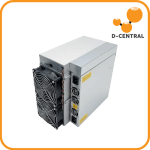
The S19 family spans multiple models, each with different hash rates, efficiency ratings, and use cases. Before you spend a dollar, understand what you are actually buying.
S19 Series Model Breakdown
| Model | Hash Rate | Efficiency (J/TH) | ASIC Chip | Best Use Case |
|---|---|---|---|---|
| S19 | 95 TH/s | 34.5 J/TH | BM1398 | Budget mining, space heater builds |
| S19 Pro | 110 TH/s | 29.5 J/TH | BM1398 | Balanced efficiency for home miners |
| S19j | 90 TH/s | 34.5 J/TH | BM1398 | Budget entry, DIY projects |
| S19j Pro | 104 TH/s | 29.5 J/TH | BM1362 | Best value in the S19 family |
| S19j Pro+ | 122 TH/s | 27.5 J/TH | BM1362 | Higher hash rate, improved bins |
| S19 XP | 140 TH/s | 21.5 J/TH | BM1366 | Top-tier S19 efficiency |
| S19k Pro | 120 TH/s | 23 J/TH | BM1366 | Excellent efficiency, widely available |
The key metric is joules per terahash (J/TH) — this determines your electricity cost per unit of hash power. At current difficulty levels and a 3.125 BTC block reward, every watt matters. The S19k Pro and S19 XP remain competitive machines even against the S21 line, especially when purchased at the right price on the secondary market.
Why the S19 Series Still Matters Post-Halving
After the April 2024 halving cut the block reward from 6.25 to 3.125 BTC, many predicted a mass S19 shutdown. That did not happen — and for good reason:
- Cold-climate advantage: In Canada and northern regions, miners double as space heaters during 6+ months of winter. The “cost” of electricity becomes your heating bill — which you were paying anyway. This fundamentally changes the profitability equation.
- Custom firmware: Tools like BraiinsOS and VNish allow underclocking for better J/TH, or overclocking for maximum hash rate. A stock S19j Pro at 104 TH/s can be tuned to 80 TH/s at dramatically better efficiency.
- Price collapse = opportunity: Used S19 units are available at a fraction of their original MSRP. When hardware is cheap and your electricity is low-cost (or offset by heating value), the math works.
- Decentralization: Every S19 running in a home basement is hash rate that is NOT controlled by a publicly traded mining company or a state actor. That matters for Bitcoin’s censorship resistance.
Where to Buy an Antminer S19: Every Option Ranked
Not all purchasing channels are equal. Here is a candid breakdown of every avenue, with the risks and advantages that actually matter.
Option 1: Direct from Bitmain
Bitmain’s official website (shop.bitmain.com) is the manufacturer-direct channel. For the S19 series specifically, direct availability is limited in 2026 — Bitmain has shifted production focus to the S21 and newer lines. However, for units still listed:
- Guaranteed authentic hardware with manufacturer warranty
- Latest firmware pre-installed
- MOQ (Minimum Order Quantity) often applies — Bitmain increasingly caters to institutional buyers, not individual home miners
- Shipping from China — expect customs duties, longer transit times, and potential import complications depending on your jurisdiction
- No customization — you get stock configuration only
Verdict: Good for authenticity, impractical for most home miners buying one or two units. MOQ requirements and shipping logistics from Shenzhen are designed for bulk buyers, not pleb miners.
Option 2: Trusted Resellers (Best Option for Most Miners)
A reputable reseller bridges the gap between manufacturer-direct and the wild west of peer-to-peer markets. The right reseller offers tested hardware, North American shipping, warranty coverage, and — critically — technical support when something goes wrong.
What to look for in a reseller:
- Physical business address — not a PO box, not a forwarding service
- In-house repair capability — if they can fix what they sell, they stand behind it
- Published phone number — a real business answers the phone
- Years of operation — anyone can spin up a Shopify store during a bull market
- Refurbished options — a reseller offering tested, refurbished units at lower prices demonstrates technical competence and adds a budget-friendly tier
- Custom configurations — can they underclock for home use? Build a Bitcoin Space Heater? Swap fans for quiet operation? This is where reseller value exceeds manufacturer-direct
D-Central Technologies has operated out of Montreal, Quebec since 2016 — before most of today’s mining hardware resellers existed. We stock new and refurbished S19 units, offer full ASIC repair services for every S19 variant, and build custom configurations like the Antminer S19 Space Heater Edition and the Loki Edition (a 110V-compatible, underclocked S19 designed specifically for home miners). When you buy from a reseller that also repairs thousands of these machines per year, you are getting hardware that has been genuinely tested — not just powered on for 30 seconds and boxed.
Option 3: Online Marketplaces (Amazon, eBay, AliExpress)
General-purpose marketplaces are convenient but introduce significant risk when purchasing specialized industrial hardware like ASIC miners.
Amazon:
- Buyer protection and easy returns are genuine advantages
- Most listings are third-party sellers using Amazon as a storefront — the same trust evaluation applies as any unknown seller
- Pricing is typically inflated to cover Amazon’s fees
- Sellers rarely have mining-specific technical knowledge for support
eBay:
- Largest selection of used and refurbished mining hardware
- PayPal/eBay buyer protection helps with outright scams
- High variance in seller quality — from legitimate mining operations offloading equipment to clueless flippers who bought untested pallets
- Common issue: units listed as “tested” that have degraded hashboards outputting 60-70% of rated hash rate
AliExpress:
- Lowest prices, but you are buying direct from Chinese sellers with minimal recourse
- Counterfeit control boards and relabeled/reballed chips are documented risks
- Shipping times of 30-60 days, with customs uncertainty
- No practical way to verify hardware before payment clears
Verdict: eBay is viable if you know exactly what to inspect on arrival. Amazon is overpriced for what you get. AliExpress is for experienced buyers who can diagnose and repair hardware themselves. None of these channels offer the technical support, customization, or repair backing that a specialized mining reseller provides.
Option 4: Peer-to-Peer and Mining Forums
Platforms like Reddit (r/BitcoinMining), Telegram groups, and dedicated mining forums host peer-to-peer sales. The prices can be excellent — miners upgrading to newer hardware often sell S19 units below market rate to move them quickly.
The risks are real:
- No buyer protection on most P2P channels
- Scam prevalence is high, especially on Telegram
- No way to verify hash rate claims before purchase
- Damaged or degraded hashboards are commonly misrepresented
If you go P2P: Use escrow, demand video proof of the miner running with pool dashboard visible, verify serial numbers against Bitmain’s database, and preferably buy local so you can test in person. Even then, understand that you have zero recourse if a hashboard dies a week after purchase.
Option 5: Mining Hardware Brokers
Brokers act as intermediaries, sourcing hardware from farms, liquidations, and manufacturer overstock. They can sometimes access bulk pricing and pass savings to individual buyers.
Evaluate brokers the same way you evaluate resellers: How long have they been operating? Do they have a physical presence? Can they provide hash rate test reports? Do they offer any warranty? A legitimate broker will be transparent about sourcing and condition. A shady one will pressure you for crypto-only payment with no escrow.
What to Inspect When Your S19 Arrives
Regardless of where you buy, every Antminer S19 should go through a systematic inspection before you consider the purchase “complete.” This is non-negotiable, especially for used or refurbished units.
Physical Inspection
- Fan condition: Spin both intake and exhaust fans by hand. They should rotate freely with no grinding or wobble. Replacement fans are cheap but indicate overall wear.
- Heatsink integrity: Look through the intake side. All heatsink fins should be straight and undamaged. Bent fins restrict airflow and cause thermal throttling.
- Control board: Check the Ethernet port, SD card slot, and all ribbon cable connections. Loose or corroded connectors are trouble.
- Hashboard connectors: Each S19 has three hashboards connected to the control board via ribbon cables and power connectors. Ensure all connections are firmly seated.
- Serial number label: Should be intact and legible. Cross-reference with Bitmain’s warranty lookup if purchasing as “new.”
- Smell test: Seriously. Burnt components have a distinctive smell. If the miner smells like melted plastic or burnt electronics, inspect the hashboards closely for blackened components.
Power-On Testing
- Use a proper PSU — the APW12 is standard for most S19 models. Never power an S19 with an undersized power supply.
- Monitor the kernel log via the web interface during the first 10 minutes. Look for ASIC chip errors, temperature spikes, and voltage irregularities.
- Verify all three hashboards report — each should show individual hash rate and chip counts. A missing hashboard means 33% less hash rate.
- Run for 24 hours minimum before declaring the unit healthy. Intermittent failures often do not appear in the first hour.
- Check actual hash rate vs. rated hash rate — a stock S19 Pro should stabilize around 110 TH/s (+/- 5%). Significantly lower readings indicate degraded or defective ASIC chips.
If any of these tests reveal issues, this is exactly why buying from a reseller with in-house ASIC repair capability matters. D-Central’s technicians diagnose and repair S19 hashboards down to the individual chip level — BM1398 and BM1362 replacements, thermal paste reapplication, voltage domain troubleshooting, and control board reflashing are standard procedures in our facility.
Custom S19 Configurations for Home Miners
A stock Antminer S19 is designed for a data center: loud fans, 240V power, and enough heat output to warm a server room. Home miners need something different. This is where the “Mining Hacker” approach transforms a stock industrial machine into a practical home appliance.
The Loki Edition: 110V Home Mining
The Antminer Loki Edition solves one of the biggest barriers to home mining: most North American homes have 15A or 20A circuits at 110V. A stock S19 draws over 3,000 watts on 240V — impossible on a standard outlet. The Loki Edition runs on a single hashboard, underclocked to approximately 40 TH/s, pulling around 1,200 watts at 110V. Plug it into a standard outlet and start mining.
Bitcoin Space Heaters: Mining + Heating
The S19 Space Heater Edition takes the waste heat narrative and turns it on its head. Every watt your miner consumes becomes a watt of heat for your home. In Canadian winters — where heating costs can exceed $300/month — replacing an electric space heater with a mining space heater means your heating bill is subsidized by Bitcoin rewards. The physics are simple: 1 watt of electrical input = 1 watt of heat output, whether from a resistive heater or an ASIC miner. The miner just happens to also produce hash rate.
Shrouds and Noise Reduction
Stock S19 fans produce 75+ dB — roughly the volume of a vacuum cleaner running continuously. For home deployment, ASIC shrouds redirect airflow through larger, slower fans and into ductwork. This drops noise levels dramatically while maintaining adequate cooling. Combined with underclocking via custom firmware, you can get an S19 down to conversation-level noise.
Protecting Your Investment: Maintenance and Repair
An Antminer S19 is not a “set it and forget it” device. These are industrial machines running 24/7 with significant heat output and power draw. Proactive maintenance extends lifespan; neglect accelerates failure.
Routine Maintenance Checklist
- Monthly: Compressed air blowout of heatsinks and fan assemblies. Dust accumulation is the number one cause of thermal throttling and premature chip failure.
- Quarterly: Inspect all cable connections for looseness or corrosion. Check fan RPMs via the web interface — declining RPMs indicate bearing wear.
- Annually: Consider thermal paste reapplication on hashboard heatsinks. Factory thermal paste degrades over time, especially in high-temperature environments.
- Firmware updates: Keep firmware current. BraiinsOS provides regular updates with efficiency improvements and security patches.
When Repair Beats Replacement
A single dead hashboard on an S19 Pro drops your hash rate from 110 TH/s to roughly 73 TH/s — a 33% revenue reduction. Replacing the entire unit is wasteful when a hashboard repair often costs a fraction of a new machine. D-Central’s repair lab handles everything from individual BM1398 chip replacements to full hashboard rebuilds, control board diagnostics, and power domain repairs.
Our dedicated S19 repair page details the specific failure modes, diagnostic procedures, and repair options for every S19 variant. With 60+ model-specific repair pages covering Bitmain, MicroBT, Innosilicon, and Canaan hardware, D-Central operates the most comprehensive ASIC repair knowledge base in North America.
Red Flags: How to Spot Scams and Bad Deals
The mining hardware market attracts scammers like moths to a lamp. Protect yourself by recognizing these warning signs:
- Price too good to be true: If an S19 Pro is listed at 50% below the lowest market price, it is either stolen, defective, or does not exist. Check current market pricing across multiple sources before buying.
- Crypto-only payment with no escrow: Legitimate businesses accept credit cards, wire transfers, or crypto with proper invoicing. A seller demanding irreversible crypto payment with no escrow is planning to disappear with your money.
- No physical address or phone number: A website with no verifiable physical location is a red flag. D-Central’s facility is at 1325 Rue Bergar, Laval, QC — you can verify this on Google Maps, call 1-855-753-9997, or visit in person.
- Pressure tactics: “Only 2 left!” “Price goes up tomorrow!” Scammers create urgency to bypass your judgment. Legitimate sellers do not need to pressure you.
- No return policy or warranty: Even used hardware sellers should offer a testing window. If a seller will not allow you 48-72 hours to verify the hardware, walk away.
- Stock photos only: Ask for actual photos of the specific unit(s) you are buying, with a handwritten note showing the date and your username/order number. Scammers use manufacturer stock photos or images stolen from legitimate listings.
The Bigger Picture: Why Buying an S19 Is a Sovereignty Decision
Purchasing a Bitcoin miner is not just a financial calculation — it is an act of participation in the most decentralized monetary network ever built. Every Antminer S19 running in a Canadian basement, an American garage, or a European workshop adds hash rate to the network that is controlled by an individual, not a corporation.
The Bitcoin network currently operates at over 800 EH/s. The overwhelming majority of that hash rate is concentrated in large-scale facilities operated by publicly traded companies. When you run your own miner — even a single S19 — you are contributing to hash rate decentralization. You are making Bitcoin more censorship-resistant. You are making it harder for any single entity to control transaction ordering or block production.
This is the Mining Hacker ethos. Take industrial-grade technology designed for corporate data centers and deploy it in your home. Use the heat. Run it on renewable energy. Stack sats directly from the coinbase transaction. No exchange. No KYC. No intermediary. Just you, your miner, and the Bitcoin network.
Frequently Asked Questions
Is the Antminer S19 still profitable in 2026?
Profitability depends on your electricity cost. At $0.05/kWh or below, most S19 variants remain profitable even post-halving at 3.125 BTC per block. In cold climates where you offset heating costs, the effective electricity rate drops further. The S19k Pro and S19 XP with their sub-25 J/TH efficiency are the strongest performers in the family. Use a mining profitability calculator with your actual power rate to determine your specific ROI.
What power supply do I need for an Antminer S19?
The standard PSU for S19 models is the Bitmain APW12 (12V, 15V output, 3600W capacity). The APW9+ also works for lower-wattage S19 variants. For 110V home mining, the Loki Edition configuration runs on a single hashboard at reduced wattage, compatible with a standard 15A circuit. Never use a generic ATX power supply — ASIC miners require stable, high-amperage DC power that consumer PSUs cannot provide.
How loud is an Antminer S19?
Stock S19 units operate at approximately 75 dB — comparable to a running vacuum cleaner. This is not livable in a shared space without modification. Solutions include ASIC shrouds with larger/slower fans, duct routing to exhaust outside, underclocking via custom firmware (which reduces fan speed), and full space heater enclosures that muffle sound. With proper modification, noise can be reduced to 45-55 dB.
Should I buy new or refurbished?
Refurbished units from a reputable source with in-house repair capability offer the best value. A properly tested and reconditioned S19 Pro performs identically to a new unit at a significantly lower price. The key is the source: a refurbished unit from a company that repairs thousands of miners per year (and can fix anything that goes wrong) is a fundamentally different product than a “refurbished” unit from an unknown eBay seller who powered it on once.
Can I mine Bitcoin at home with an S19 on standard 110V power?
A stock S19 requires 240V and draws 3,000+ watts — far too much for a standard North American 110V outlet. However, custom configurations like D-Central’s Loki Edition run a single hashboard at reduced power, making 110V operation possible on a standard 15A or 20A circuit. Alternatively, an electrician can install a dedicated 240V circuit (like a dryer outlet) for full-power operation.
What is the lifespan of an Antminer S19?
With proper maintenance — regular dust cleaning, adequate cooling, stable power supply, and reasonable ambient temperatures — an S19 can operate for 5+ years. The primary failure points are fan bearings (cheap to replace), thermal paste degradation (serviceable), and individual ASIC chip failures (repairable at the board level). The control board and power delivery components are generally robust for the platform’s expected lifespan.
How do I verify an S19 is genuine and not counterfeit?
Check the serial number on Bitmain’s warranty lookup page. Inspect the PCB quality — genuine Bitmain boards have clean solder joints, consistent component placement, and clear silkscreen printing. Counterfeit hashboards often have visibly lower-quality solder work, misaligned components, or generic/missing identification markings. When in doubt, buy from a source that has the technical expertise to verify authenticity at the component level.
What happens if a hashboard fails?
A failed hashboard reduces your hash rate by approximately 33% (one of three boards). You can continue mining on two hashboards while the third is repaired. Professional ASIC repair services can diagnose and fix hashboard issues — from individual chip replacements to voltage domain repairs — at a fraction of the cost of buying a new unit. D-Central stocks replacement hashboards for all S19 variants if a board is beyond repair.