MicroBT has been waging a quiet war against Bitmain’s dominance since 2016, and the Whatsminer series is their primary weapon. For home miners, repair technicians, and anyone running a serious operation, understanding the full evolution of this hardware line is not optional — it is operational intelligence.
This is not a puff piece about corporate milestones. This is a technical breakdown of every generation of Whatsminer hardware, what changed under the hood, and what it means for miners deploying these machines in 2026. From the crude M1 to the monstrous M70 series pushing past 300 TH/s in air-cooled configurations, we are mapping the entire lineage.
MicroBT: The Challenger That Refused to Lose
MicroBT was founded in 2016 by Yang Zuoxing, a former Bitmain chip designer who understood exactly where the incumbent was vulnerable. The ASIC mining hardware market at that point was effectively a monopoly — Bitmain’s Antminer series controlled the overwhelming majority of global hashrate. For Bitcoin’s decentralization, this concentration was a structural risk.
Yang’s thesis was straightforward: build better silicon, compete on efficiency, and give miners a real alternative. MicroBT entered a market where supply chains, chip fabrication partnerships, and distribution networks were all locked up by the incumbent. The company faced patent litigation from Bitmain almost immediately — a pattern that would continue for years.
None of that stopped them. The first Whatsminer models hit the market and proved that MicroBT could compete on the metrics that actually matter: joules per terahash, operational stability, and total cost of ownership. The mining community took notice.
For those of us in the ASIC repair business, the arrival of Whatsminer hardware diversified our workload and gave us machines that were, in many ways, better engineered for serviceability than the Antminer equivalents.
Generation by Generation: The Whatsminer Lineage
M1 and M3 Series: Proof of Concept (2017-2018)
The Whatsminer M1 was MicroBT’s debut — a 16nm machine delivering roughly 12 TH/s. By the standards of 2017, this was competitive but unremarkable. The M3, which followed shortly after, pushed hashrate to around 12-13 TH/s with improved thermal management and a more refined chassis design.
These were not world-beaters. They were proof that MicroBT could tape out a chip, manufacture a complete mining system, and ship it to customers who would not throw it in the garbage after a month of operation. That might sound like a low bar, but in the ASIC mining hardware market of 2017, it genuinely was not.
The M1/M3 series established MicroBT’s engineering philosophy: prioritize reliability and thermal design over raw clock speed. This philosophy would pay massive dividends in later generations.
M10 Series: The Efficiency Leap (2018-2019)
The M10 marked MicroBT’s first serious architectural jump. Moving to a more advanced process node, the M10 delivered around 33 TH/s at roughly 65 J/TH — a dramatic improvement over the M3 generation. Power efficiency nearly halved, which in the mining world translates directly to profitability.
The M10 also introduced design elements that would become Whatsminer signatures: the dual-fan layout, the modular hashboard architecture, and the integrated power supply unit. For repair technicians, the M10 was a relatively straightforward machine to work on — clear layout, accessible components, logical board design.
This was the generation where miners started taking MicroBT seriously as a long-term player, not just a one-generation curiosity.
M20 Series: Competing Head-to-Head (2019-2020)
The M20 series was MicroBT’s declaration of war. The M20S delivered 68 TH/s at approximately 48 J/TH using Samsung 12nm chips. This put MicroBT in direct competition with Bitmain’s Antminer S17 series — and in many benchmarks, the Whatsminer came out ahead on reliability.
The M20 generation coincided with a period where Bitmain was struggling with quality control issues on certain S17 batches. MicroBT capitalized aggressively, offering machines that miners could deploy with confidence. The M20S earned a reputation as a workhorse — not the flashiest specs, but rock-solid operational stability.
For home miners and smaller operations, the M20S was often the recommended machine during this period. It ran cooler, handled ambient temperature variations better, and required less frequent maintenance than its Bitmain counterpart.
M30 Series: The Breakthrough (2020-2022)
The M30 series is where MicroBT became a genuine threat to Bitmain’s market share. The M30S delivered 86 TH/s at 38 J/TH using Samsung 8nm chips, and the M30S++ pushed to 112 TH/s at 31 J/TH — numbers that rivaled or exceeded Bitmain’s Antminer S19 series.
This was the generation that earned MicroBT large-scale institutional contracts. Mining farms that had been exclusively Bitmain shops started splitting their orders, and many found that Whatsminer machines had lower failure rates over extended deployment periods.
The M30 series also introduced hydro-cooled variants (M33S+, etc.), signaling MicroBT’s move into liquid cooling — a technology that would become increasingly important as power densities climbed.
From a repair perspective, the M30 series hashboards use a clean layout that makes diagnostic work manageable. At D-Central’s repair facility, we have serviced hundreds of M30 series machines and can attest to their build quality compared to certain Antminer generations.
M50 Series: The 5nm Revolution (2022-2023)
MicroBT’s jump to Samsung 5nm fabrication with the M50 series was a watershed moment. The M50S delivered 126-130 TH/s at approximately 26 J/TH — a stunning efficiency figure that pushed the boundaries of air-cooled mining hardware.
The 5nm process node gave MicroBT access to dramatically better transistor density, which translated directly into more hashes per watt. The M50 series also refined the cooling system, with improved heatsink design and optimized airflow paths that reduced the thermal throttling common in high-density ASIC deployments.
The M50S became a staple machine for operations running in moderate-temperature environments. For Canadian miners leveraging cold ambient air during winter months — a strategy we discuss extensively in our mining hosting pages — the M50S was particularly well-suited.
M60 Series: Pushing the Envelope (2023-2024)
The M60 series represented MicroBT’s most aggressive push for efficiency and hashrate. Built on refined 5nm silicon, the standard M60S delivered 186 TH/s at 18.5 J/TH — a machine that could hold its own against anything Bitmain was shipping at the time.
The M60S++ variant took things further: 226 TH/s at roughly 16 J/TH. These were serious numbers that made institutional miners reassess their fleet composition strategies.
MicroBT also expanded its cooling portfolio with the M60 generation:
- M60/M60S — Standard air-cooled, 172-206 TH/s
- M63/M63S — Hydro-cooled variants, 340-406 TH/s
- M66/M66S — Immersion-cooled variants, 270-348 TH/s
The hydro and immersion variants showed that MicroBT was no longer content to compete only in air-cooled markets. They were building a full product stack for every deployment scenario.
M70 Series: The Current Frontier (2025-2026)
Announced at Bitcoin MENA 2025 in Abu Dhabi, the M70 series represents MicroBT’s latest and most advanced generation. The headline figure is 12.5 J/TH efficiency — a number that would have seemed impossible just three generations ago.
The M70 lineup spans three efficiency tiers across air-cooled, hydro-cooled, and immersion-cooled configurations:
| Model | Cooling | Hashrate | Efficiency |
|---|---|---|---|
| M70 | Air | 214-236 TH/s | 14.5 J/TH |
| M70S | Air | 226-258 TH/s | 13.5 J/TH |
| M72S | Air | 264-300 TH/s | 13.5 J/TH |
| M76S+ | Immersion | 390-440 TH/s | 12.5 J/TH |
| M78S | Immersion | 472-522 TH/s | 13.5 J/TH |
| M79S | Hydro | 930-1,040 TH/s | 13.5 J/TH |
Read those numbers again. The M79S hydro-cooled unit pushes past 1,000 TH/s — a single machine producing a full petahash of compute. The M76S+ achieves 12.5 J/TH, setting a new efficiency benchmark for production ASIC hardware.
These machines are designed for a network that now operates at roughly 1 ZH/s total hashrate with difficulty above 144 T. In this environment, efficiency is not a luxury — it is the difference between profitable mining and burning electricity for nothing.
The Whatsminer Advantage: Why It Matters for Home Miners
For the home mining community — the audience that D-Central exists to serve — the Whatsminer evolution tells an important story about competition and choice.
Build Quality and Repairability
Across multiple generations, Whatsminer machines have maintained a reputation for solid build quality. The hashboard layouts are logical, the thermal paste application from factory tends to be more consistent than some Bitmain batches, and the control board firmware has matured significantly since the M10 era.
When a Whatsminer machine does need service, the repair process is generally straightforward for experienced technicians. The modular design philosophy that MicroBT established in the M10 generation has been refined but never abandoned. This matters if you are running machines long-term and expect to maintain them yourself or through a professional repair service.
Noise and Thermal Management
Home miners care about noise. Unlike an industrial facility where 75+ dB is irrelevant, a machine running in your garage, basement, or spare room needs to be manageable. Whatsminer machines have generally offered good fan speed control and thermal curve tuning, especially with custom firmware options.
For miners using machines as space heaters — converting their ASIC waste heat into home heating — the Whatsminer’s thermal characteristics are relevant. The exhaust heat profile, temperature differential, and fan configuration all factor into how effectively you can duct and redirect heat into living spaces.
Firmware and Software Ecosystem
MicroBT has historically been more restrictive with firmware than Bitmain, though the ecosystem has matured. Third-party firmware support for Whatsminer machines now exists, though it remains less extensive than the Antminer equivalent. For advanced users who want to undervolt, overclock, or run custom pools, this is a consideration.
The stock Whatsminer firmware has improved substantially over the generations. Auto-tuning capabilities, pool configuration options, and monitoring interfaces have all been upgraded. The M60 and M70 series include better web-based management interfaces than anything MicroBT shipped previously.
Whatsminer vs. Antminer: The Ongoing Rivalry
No discussion of Whatsminer evolution is complete without addressing the elephant in the room: how does it stack up against Bitmain’s Antminer series?
| Generation | Whatsminer | Antminer Equivalent | Verdict |
|---|---|---|---|
| 2018-2019 | M10 (~33 TH/s) | S15 (~28 TH/s) | Whatsminer edge on hashrate |
| 2019-2020 | M20S (~68 TH/s) | S17 (~56 TH/s) | Whatsminer edge on reliability |
| 2020-2022 | M30S++ (~112 TH/s) | S19 Pro (~110 TH/s) | Near parity, both excellent |
| 2022-2023 | M50S (~130 TH/s) | S19 XP (~140 TH/s) | Antminer edge on hashrate |
| 2023-2024 | M60S++ (~226 TH/s) | S21 (~200 TH/s) | Whatsminer edge on efficiency |
| 2025-2026 | M70S (~258 TH/s) | S21 XP (~270 TH/s) | Tight competition, both sub-14 J/TH |
The takeaway: MicroBT and Bitmain have been trading blows for the better part of a decade, and the mining community benefits directly from this competition. More choices, better efficiency, lower prices — this is what happens when a market has genuine competition instead of a monopoly.
For Bitcoin’s security model, this matters enormously. Hardware supply chain diversity means no single manufacturer can dictate terms to the entire network. Every miner running a Whatsminer is contributing to a more decentralized, more resilient Bitcoin network.
Deploying Whatsminer Hardware in 2026
With the Bitcoin network hashrate hovering around 1 ZH/s and difficulty at 144 T as of February 2026 — with the block reward at 3.125 BTC post-halving — machine efficiency is everything. Here is what you need to know about deploying Whatsminer hardware today.
Power Cost Calculations
At 13.5 J/TH (M70S tier), running a 258 TH/s machine draws approximately 3,483 watts. At a Canadian residential rate of $0.07/kWh, that is roughly $5.85 per day in electricity — before considering the heating offset if you are running the machine as a space heater during winter months.
For miners in colder climates, the dual-purpose mining equation is compelling: every watt consumed by the ASIC becomes a watt of heat you did not have to buy from your furnace. During a six-month Canadian winter, this effectively subsidizes your electricity cost.
Fleet Management Considerations
If you are running multiple Whatsminer machines, the M60 and M70 series offer significantly improved management capabilities. The web interface supports fleet-level configuration, and the monitoring endpoints are well-documented for integration with custom dashboards.
For miners scaling beyond a few units, our mining consulting service can help optimize your deployment — from electrical panel upgrades to noise mitigation to heat recovery system design.
Repair and Maintenance
Whatsminer machines, like all ASIC hardware, require maintenance. Fan bearings wear out, thermal paste degrades, and hashboards can develop faults over extended operation. The good news is that MicroBT’s modular design makes most repairs economically viable.
D-Central repairs Whatsminer machines across all generations. If you are running M20, M30, M50, M60, or M70 series hardware and need diagnostics, hashboard repair, or preventive maintenance, our ASIC repair team has the tooling and experience to get your machines back online.
The Bigger Picture: Why Hardware Competition Matters for Bitcoin
Bitcoin’s security model depends on decentralized hashrate. If one manufacturer controlled all mining hardware, they could theoretically influence the network through firmware updates, kill switches, or supply restrictions. This is not a hypothetical concern — it is a structural risk that the Bitcoin community has discussed extensively.
MicroBT’s existence as a credible Bitmain competitor is good for Bitcoin. Full stop. Every Whatsminer machine deployed is a machine that did not come from a monopoly supplier. The more manufacturers competing on efficiency, reliability, and price, the more resilient the Bitcoin network becomes.
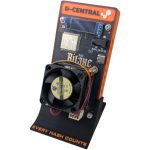
This same philosophy drives the open-source mining movement. Projects like the Bitaxe take decentralization even further by making the hardware designs themselves open and permissionless. While Whatsminer and Antminer machines dominate hashrate production, open-source miners represent the ideological frontier — solo mining, lottery blocks, and the pure cypherpunk ethos of running your own silicon.
At D-Central, we carry both ends of this spectrum. From Whatsminer and Antminer industrial hardware to Bitaxe open-source solo miners, the goal is the same: put hash power in the hands of individuals, not institutions.
What Comes Next for Whatsminer
MicroBT has demonstrated a consistent cadence of generational improvements: better process nodes, higher hashrates, lower J/TH figures. If the pattern holds, we can expect sub-10 J/TH machines within the next generation or two, potentially leveraging 3nm or more advanced fabrication processes.
The liquid and immersion cooling variants are also likely to become more mainstream. As power densities increase and data center operators push for higher rack utilization, the air-cooled form factor hits physical limits. MicroBT’s investment in hydro and immersion cooling positions them well for this transition.
For home miners, the air-cooled models will remain the primary focus. The M70 air-cooled variants already deliver exceptional efficiency, and future generations will likely push those numbers even lower while maintaining the form factor and noise levels that make home deployment feasible.
If you are considering deploying Whatsminer hardware or need support with existing machines, explore our hardware shop for current inventory or reach out through our consulting service for deployment guidance. For those interested in the open-source side of mining, the Bitaxe Hub is your starting point.
Frequently Asked Questions
What is the most efficient Whatsminer model available in 2026?
The Whatsminer M76S+ immersion-cooled model achieves 12.5 J/TH, making it the most efficient production Whatsminer as of early 2026. For air-cooled models, the M70S delivers 13.5 J/TH at 226-258 TH/s. These figures represent a massive improvement over earlier generations — the M30S++ was considered excellent at 31 J/TH just a few years ago.
Are Whatsminer machines good for home mining?
Whatsminer machines are widely used in home mining setups. They offer solid build quality, consistent thermal management, and decent noise levels for ASIC hardware. The key considerations for home deployment are electrical capacity (most current-gen models draw 3,000-3,500W), noise mitigation, and heat management. Many home miners use Whatsminer machines as space heaters during colder months, turning the electricity cost into useful home heating.
How does Whatsminer compare to Antminer for reliability?
Both manufacturers produce reliable hardware, but the comparison varies by generation. The Whatsminer M20S earned a strong reputation during a period when certain Antminer S17 batches had quality issues. The M30 and M50 series maintained solid reliability records. In the current M60/M70 generation, both MicroBT and Bitmain are shipping mature, well-tested designs. The best approach is to evaluate specific models rather than making blanket manufacturer comparisons.
Can D-Central repair Whatsminer machines?
Yes. D-Central’s ASIC repair facility services all Whatsminer generations, from the M20 series through the latest M70 hardware. Common repairs include hashboard diagnostics, fan replacement, thermal paste reapplication, control board troubleshooting, and power supply testing. We also stock replacement parts for popular Whatsminer models.
What is the current Bitcoin mining difficulty and how does it affect Whatsminer profitability?
As of February 2026, Bitcoin mining difficulty stands at approximately 144 T, with network hashrate around 1 ZH/s. The block reward is 3.125 BTC following the April 2024 halving. At these levels, machine efficiency is the primary determinant of profitability. Current-generation Whatsminer models (M60S++, M70 series) at 13-16 J/TH remain profitable at moderate electricity rates, while older models like the M30 series face tighter margins and may only be viable in low-cost power environments or dual-purpose heating setups.
Should I buy a Whatsminer or an open-source miner like the Bitaxe?
These serve fundamentally different purposes. A Whatsminer (or any industrial ASIC) is for serious hashrate production and potential profitability — these machines produce hundreds of terahashes per second. A Bitaxe is an open-source solo miner that contributes a fraction of a terahash but gives you sovereign, permissionless mining with a lottery chance at a full 3.125 BTC block reward. Many miners in the D-Central community run both: industrial ASICs for steady sats accumulation via pools, and a Bitaxe for the solo mining experience and the ideological commitment to decentralized hash power.