The ASIC miner market is the Wild West of Bitcoin hardware. For every legitimate seller shipping genuine machines, there are a dozen scam operations running fake storefronts, selling dead hashboards, or flipping cloned firmware onto inferior chips. If you are putting your hard-earned sats into mining hardware, you need to know exactly what you are buying, who you are buying from, and how to verify every claim before you hand over a single dollar.
This guide breaks down the entire ASIC buying process — from understanding the specs that actually matter, to identifying red flags that separate real deals from elaborate traps. We have been repairing, refurbishing, and selling miners at D-Central Technologies since 2016. We have seen every scam in the book, and we are going to share what we have learned.
Understanding ASIC Miner Specifications That Actually Matter
Before you compare prices, you need to understand what you are comparing. Too many buyers fixate on hashrate alone and ignore the metrics that determine whether a miner will actually be profitable in their specific setup.
| Specification | What It Measures | Why It Matters |
|---|---|---|
| Hashrate (TH/s) | Trillions of SHA-256 hashes per second | Higher hashrate = more attempts to find a valid block. With the Bitcoin network exceeding 800 EH/s, every terahash counts. |
| Power Consumption (W) | Wall power draw under load | This is your largest ongoing cost. A machine pulling 3400W at $0.08/kWh costs roughly $6.50/day in electricity alone. |
| Efficiency (J/TH) | Joules consumed per terahash | The single most important metric. Lower J/TH means more hashing per watt. Current-gen machines hit 15-21 J/TH; older units sit at 30-80+ J/TH. |
| Algorithm | SHA-256 for Bitcoin | Make sure the miner runs SHA-256. Some sellers list altcoin ASICs (Scrypt, X11) alongside Bitcoin miners to confuse buyers. |
| Noise Level (dB) | Acoustic output at full speed | Critical for home miners. A stock Antminer S19 pushes 75 dB — louder than a vacuum cleaner. Fan mods and shrouds are essential for residential use. |
| Operating Temperature | Safe ambient range for the machine | Most ASICs are rated 5-40°C. Canadian winters are an advantage — cold air is free cooling — but humidity and condensation must be managed. |
The golden rule: efficiency (J/TH) beats raw hashrate every time for home miners. A machine that hashes 100 TH/s at 30 J/TH will bleed money at most residential electricity rates, while a 150 TH/s unit at 18 J/TH prints sats.
Current-Generation ASIC Miners Worth Considering
The ASIC landscape changes fast. Models that were top-tier 18 months ago are now mid-pack or obsolete. Here is what the current generation looks like for Bitcoin SHA-256 mining:
| Model | Hashrate | Efficiency | Best For |
|---|---|---|---|
| Antminer S21 | 200 TH/s | 17.5 J/TH | Serious home miners with dedicated space and electrical capacity |
| Antminer S21 Pro | 234 TH/s | 15 J/TH | Maximum efficiency — top of the current lineup |
| Whatsminer M60S | 186 TH/s | 18.5 J/TH | Reliable alternative to Bitmain with strong build quality |
| Antminer S19k Pro | 120 TH/s | 23 J/TH | Strong mid-range option, widely available, good parts supply |
| Antminer S9 (modded) | ~14 TH/s | ~80 J/TH | Budget entry, space heater conversions, learning platform |
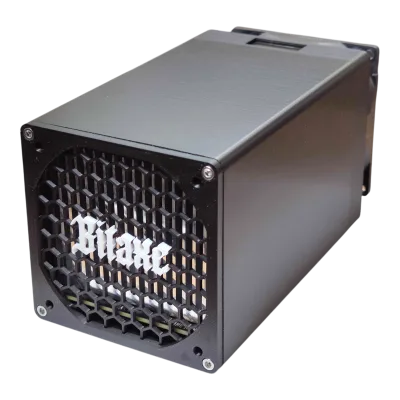
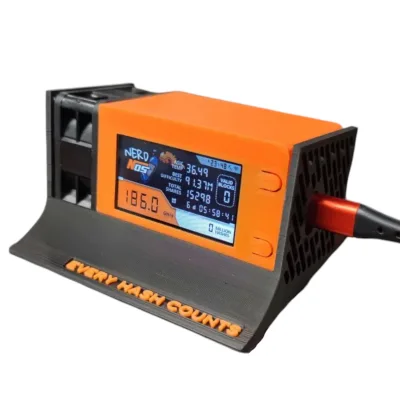
For home miners who want to start small or go the solo mining route, open-source miners like the Bitaxe offer a completely different approach: low power, silent operation, and the thrill of solo block hunting — where the current block reward of 3.125 BTC goes entirely to you if your hash hits.
Where to Buy: Trusted Sources vs. Scam Storefronts
This is where most buyers get burned. The ASIC market is flooded with fraudulent sellers, and the scam operations have gotten disturbingly sophisticated. Here is how to separate the legitimate from the fraudulent:
Signs of a Legitimate ASIC Seller
- Verifiable physical address — not a P.O. box, not a virtual office. A real business with a real location you can verify on Google Maps.
- Established track record — years of operation, not weeks. Check domain registration dates (WHOIS lookup), social media history, and community references.
- Technical support capability — a company that sells miners should be able to answer detailed technical questions about hashboard configurations, firmware versions, and power requirements. If they cannot, they are likely just a dropshipper or worse.
- Transparent return and warranty policies — legitimate sellers publish their policies clearly. Vague language like “all sales final” on new hardware is a red flag.
- Multiple payment options with buyer protection — credit cards, PayPal, Interac (in Canada). Be cautious of sellers who only accept wire transfers or irreversible crypto payments.
- Repair and service capabilities — a seller that also offers ASIC repair services has deep hardware expertise. This is a strong trust signal because scammers do not invest in repair infrastructure.
Red Flags That Scream “Scam”
- Prices 30-50% below market — if the current market price for an S21 is $3,500 and someone is selling for $1,800, it is a scam. Period. Miners are commodities with relatively tight market pricing.
- Pressure tactics — “only 2 left,” “price goes up tomorrow,” “send payment now to lock in.” Legitimate sellers do not pressure buyers with artificial urgency.
- No phone number or live support — contact-form-only businesses are easy to set up and abandon. Real hardware companies have real humans you can talk to.
- Stock photos instead of actual inventory — if the product images are pulled from the manufacturer’s media kit and the seller has no original photography, be suspicious.
- Brand-new website with no history — check the Wayback Machine. If the site appeared three weeks ago and is already selling $5,000 miners, walk away.
- Social media accounts with purchased followers — look at engagement ratios. An account with 50,000 followers and 3 likes per post bought those followers.
Buying Used ASIC Miners: High Reward, Higher Risk
Used miners can be excellent value — a well-maintained Antminer S19j Pro at half the new price is a solid buy. But the used market is also where the most sophisticated scams operate.
What to Verify on Any Used ASIC
- Serial number verification — check the serial number against the manufacturer’s database. Bitmain provides serial lookup on their website. If the seller refuses to share the serial before purchase, walk away.
- Live hashrate proof — demand a screenshot or video showing the miner’s web interface with the current hashrate, chip temperatures, and fan speeds. This should be timestamped and show the miner’s IP address or serial in the interface.
- Hashboard count — confirm all hashboards are present and hashing. An S19 with only 2 of 3 hashboards operational is worth dramatically less. Ask for the miner status page showing all boards active.
- Chip temperature distribution — healthy boards show relatively uniform chip temperatures. Wide temperature spreads (some chips at 65°C, others at 95°C) indicate dying chips or poor thermal paste.
- Physical condition photos — request detailed photos of heatsinks, connectors, and fan blades. Heavy dust buildup suggests poor maintenance. Corroded connectors or burned-looking components are deal-breakers.
- Operating environment history — ask where the miner was run. A machine from a temperature-controlled facility with filtered air intake is far better than one pulled from a humid, dusty garage.
- Firmware version — verify the miner runs stock or known-good firmware. Modified firmware can hide hashboard problems, report inflated hashrates, or contain backdoors that redirect a percentage of your mining output to someone else’s wallet.
At D-Central, every used miner we sell goes through a full diagnostic process — we test every hashboard, replace thermal paste, clean heatsinks, flash stock firmware, and run a 24-hour burn-in test before it ships. If you are buying used elsewhere, make sure the seller can describe their testing process in detail.
Maintenance: Protecting Your Investment After Purchase
Buying the right miner is only half the battle. Proper maintenance is what separates a machine that hashes reliably for years from one that dies in six months.
Essential Maintenance Practices
- Compressed air cleaning every 1-3 months — dust is the silent killer of ASICs. It insulates heatsinks, blocks airflow, and causes chips to throttle or fail. A $15 can of compressed air protects a $3,000 machine.
- Fan inspection and replacement — fans are consumable parts. They run 24/7 at high RPM and will eventually fail. Listen for bearing noise, check for wobble, and replace proactively rather than waiting for failure. Keep spares on hand.
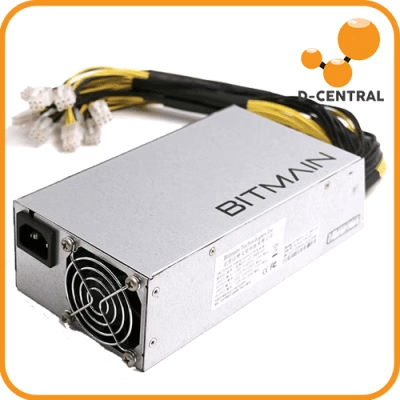
- Stable power delivery — power fluctuations and outages cause hash controller crashes and can corrupt firmware. A quality surge protector is the minimum. A UPS is better. Dedicated circuits are ideal.
- Temperature monitoring — set up alerts for chip temperatures exceeding manufacturer limits. Most miner web interfaces support this natively. If ambient temperatures regularly push chips above 85°C, you need better cooling or underclocking.
- Firmware updates — manufacturers release firmware updates that improve efficiency, fix bugs, and patch security vulnerabilities. Stay current, but read release notes before updating — some updates have bricked miners in rare cases.
- Noise management for home miners — stock ASIC fans are industrial-grade and extremely loud. Custom shrouds, inline duct fans, and sound-dampened enclosures make residential mining viable without driving your household insane. D-Central’s Bitcoin Space Heaters are purpose-built for exactly this — turning mining noise and heat from a problem into a feature.
The Home Miner’s Advantage: Why Small-Scale Matters
Here is something the institutional mining crowd does not want you to think about: home miners have structural advantages that large-scale operations cannot replicate.
Free heat recovery. Every watt your miner consumes becomes heat. In a data center, that heat is an expensive problem requiring industrial cooling. In your home, it offsets your heating bill. A single Antminer S19 produces roughly 10,000 BTU/hr — equivalent to a decent space heater. In Canadian winters, that is not waste heat, it is your heating system earning Bitcoin.
Residential electricity rates. In many Canadian provinces, residential electricity rates are lower than commercial rates, especially with time-of-use pricing. Running miners during off-peak hours can significantly reduce your cost-per-hash.
Decentralization. Every home miner is a node in the Bitcoin network’s immune system. Geographic distribution of hashrate makes the network more resilient against regulatory attacks, natural disasters, and infrastructure failures. When you mine at home, you are not just earning sats — you are strengthening Bitcoin itself.
Sovereignty. Your miner, your hashrate, your keys. No custodial risk, no counterparty risk, no permission required. That is the entire point.
Making Your Purchase Decision
Here is a practical framework for evaluating any ASIC miner purchase:
- Calculate your electricity cost per kWh — this is the single biggest variable in mining economics. Check your utility bill for the actual rate including delivery charges and taxes.
- Model your daily operating cost — multiply the miner’s wattage by 24 hours by your electricity rate. A 3,400W miner at $0.07/kWh costs $5.71/day.
- Check current mining revenue — use a mining calculator with the miner’s hashrate and current Bitcoin difficulty. Be conservative — difficulty trends upward over time.
- Factor in heat value — if the miner’s heat replaces electric or gas heating, subtract that value from your operating cost. This is often the factor that makes home mining profitable at electricity rates that would be unprofitable for pure mining operations.
- Verify the seller — use the trust signals and red flags outlined above. Take 30 minutes to research the seller. It can save you thousands.
- Plan your setup before buying — electrical capacity, ventilation, noise management, and network connectivity should all be solved before the miner arrives, not after.
FAQ
What is the most important specification when buying a Bitcoin ASIC miner?
Energy efficiency, measured in joules per terahash (J/TH), is the most important specification for most buyers. A miner with better efficiency produces more hashrate per watt of electricity consumed, which directly impacts your operating costs and profitability. Raw hashrate matters, but only in the context of how much power it takes to achieve it.
How can I tell if an ASIC miner seller is a scam?
The biggest red flags are prices significantly below market value (30-50% cheaper than competitors), no verifiable physical address, pressure to pay via wire transfer or irreversible cryptocurrency, no phone number or live support, and a website with no history (check the Wayback Machine and domain registration date). Legitimate sellers have verifiable addresses, published warranty policies, multiple payment options with buyer protection, and technical support staff who can answer detailed hardware questions.
Is it safe to buy a used ASIC miner?
Used ASIC miners can be excellent value if you verify the hardware properly. Always confirm the serial number with the manufacturer, request live hashrate screenshots showing all hashboards active, check chip temperature distributions for uniformity, inspect physical condition photos for corrosion or damage, and verify the firmware is stock or known-good. Buy from sellers who can describe their testing and refurbishment process in detail. Avoid sellers who refuse to provide serial numbers or live performance data before purchase.
What ongoing maintenance do ASIC miners need?
Essential maintenance includes compressed air cleaning every 1-3 months to remove dust from heatsinks and fans, regular fan inspection and proactive replacement before failure, firmware updates from the manufacturer, stable power delivery via surge protectors or UPS units, and temperature monitoring with alerts for chips exceeding safe limits. Home miners should also invest in noise management solutions like custom shrouds or enclosures.
Can I mine Bitcoin profitably at home?
Yes, especially in Canada where cold climates provide free cooling and many provinces offer competitive residential electricity rates. The key factor most profitability calculators miss is heat recovery — every watt your miner consumes becomes heat that offsets your heating costs. A single Antminer S19 produces roughly 10,000 BTU/hr. When you subtract the heating value from your electricity costs, home mining becomes profitable at rates that would be unprofitable for industrial operations running dedicated cooling systems.
What are the advantages of buying from a Canadian ASIC retailer?
Buying from a Canadian retailer like D-Central means no international shipping delays, no customs duties or import taxes, warranty support in the same country, access to in-house repair services if hardware issues arise, and a seller who understands the specific advantages and challenges of mining in Canadian climates. A domestic seller with repair capabilities is a strong trust signal — scam operations do not invest in service infrastructure.
Should I buy the newest and most expensive ASIC miner available?
Not necessarily. The newest generation offers the best efficiency (lowest J/TH), but it also carries the highest price tag. A previous-generation miner at half the price can deliver better ROI depending on your electricity costs. The right choice depends on your specific electricity rate, available space, budget, and whether you are recovering heat value. Run the numbers for your specific situation before defaulting to the newest model.
What is the difference between pool mining and solo mining with an ASIC?
Pool mining combines your hashrate with other miners to find blocks more frequently, splitting the 3.125 BTC block reward proportionally among participants. You earn small, consistent payments. Solo mining means your machine works independently — you earn nothing until your hash finds a valid block, at which point you receive the entire 3.125 BTC reward. With full-size ASICs, most miners choose pools for consistent income. Solo mining is popular with smaller open-source devices like the Bitaxe, where the low power cost makes the lottery-style approach viable and exciting.