Every watt your ASIC consumes becomes heat. That is a law of physics no firmware update can bypass. In a world where the Bitcoin network hashrate exceeds 800 EH/s and the block reward sits at 3.125 BTC after the 2024 halving, every percentage point of efficiency matters. An overheating miner is not just underperforming — it is actively destroying itself, burning through its own silicon while you lose sats to thermal throttling and unplanned downtime.
At D-Central Technologies, we have been inside more overheated ASICs than we can count. Since 2016, we have repaired thousands of miners across every major manufacturer — Bitmain, MicroBT, Canaan, Innosilicon — and the single most common cause of failure we see on the repair bench is thermal damage. Burnt MOSFET arrays, delaminated hashboard PCBs, cracked BGA solder joints, warped heatsink assemblies. All of it traces back to one root cause: heat that was not managed.
This guide is the comprehensive manual we wish every miner had before they sent us a scorched S19. We will cover the physics of why ASICs overheat, how to diagnose thermal problems before they become catastrophic, the preventative measures that actually work, DIY repair techniques for the technically inclined, and when it is time to send the unit to professionals who know what they are doing.
Why ASIC Miners Overheat: The Physics and the Engineering
An ASIC miner is, at its core, a dense array of custom silicon dies running the SHA-256 hashing algorithm billions of times per second. Each hash operation requires switching transistors on and off, and every transistor switch dissipates energy as heat. Multiply that by the billions of transistors on a modern mining chip, and you have a device that can consume 3,000+ watts while generating the thermal output of a small space heater.
The Thermal Budget Problem
Every ASIC has a thermal budget — the maximum amount of heat it can generate before the silicon begins to degrade. Modern mining chips from Bitmain (BM1397, BM1366, BM1370) and MicroBT (WM23xx series) are designed to operate at junction temperatures between 75-95 degrees Celsius. Push past that envelope consistently, and you trigger a cascade of failure modes:
- Electromigration: Copper atoms in the chip’s interconnects physically migrate under high current and temperature, eventually creating open circuits. This is permanent and irreversible.
- Thermal cycling fatigue: Repeated heating and cooling cycles stress solder joints — particularly the BGA (Ball Grid Array) connections between ASIC chips and the hashboard PCB. Micro-cracks form, resistance increases, and the chip runs even hotter in a vicious feedback loop.
- MOSFET degradation: The voltage regulation modules that feed power to each ASIC chip are themselves heat-sensitive. When ambient board temperatures climb, MOSFETs lose efficiency, generate more waste heat, and can fail catastrophically — sometimes taking neighbouring components with them.
- Thermal paste breakdown: The thermal interface material (TIM) between chips and heatsinks degrades over time, especially at sustained high temperatures. As thermal conductivity drops, chip temperatures spike even if airflow remains constant.
Common Causes of Overheating
Based on the thousands of units we have repaired and diagnosed at our ASIC repair facility, here are the root causes we see most frequently, ranked by prevalence:
1. Dust Accumulation and Blocked Airflow
This is the number one cause, full stop. ASIC miners are essentially vacuum cleaners — their high-CFM fans pull massive volumes of air through tightly packed heatsink fins. In a home mining environment without industrial-grade air filtration, dust, pet hair, fabric fibres, and even pollen accumulate on the heatsink fins within weeks. A 2-3mm layer of dust on the fins can increase chip temperatures by 10-15 degrees Celsius, pushing a stable miner into thermal throttling territory.
2. Inadequate Ventilation and Hot Air Recirculation
Many home miners make the mistake of operating ASICs in enclosed spaces — closets, small rooms, or sealed cabinets — without proper ventilation planning. The miner exhausts hot air into the room, the room temperature climbs, and the miner’s intake pulls that same hot air back in. Within minutes, the ambient temperature around the intake can exceed 40 degrees Celsius, and the miner begins throttling.
The fix is simple but non-negotiable: dedicated intake and exhaust paths. Cool air in, hot air out, with no possibility of recirculation.
3. Failed or Degraded Fans
ASIC miner fans are not designed for infinite life. Most stock fans (Bitmain’s APW-series fans, for example) are rated for 30,000-50,000 hours — roughly 3.5 to 5.5 years of continuous operation. In dusty environments, bearing failure can occur much sooner. A single failed fan in a dual-fan miner can cause one side of the hashboard array to overheat while the other side appears normal. We see this pattern regularly: one or two boards throwing temperature errors while the third runs fine.
4. Degraded Thermal Interface Material
The thermal paste or thermal pads between ASIC chips and their heatsinks degrade over time. Factory-applied TIM on budget units is often mediocre to begin with. After 12-18 months of continuous operation at elevated temperatures, the paste can dry out, crack, and lose up to 50% of its thermal conductivity. Reapplying quality thermal paste is one of the highest-impact maintenance tasks you can perform.
5. Overclocking Without Adequate Cooling
Custom firmware like Braiins OS+, Vnish, and LuxOS gives miners the power to push their hardware beyond stock frequencies. That is a legitimate tool in the Bitcoin Mining Hacker toolkit. But every frequency bump increases power consumption — and heat — on a roughly cubic curve. A 10% overclock might require a 20-30% increase in cooling capacity. Running aggressive overclocking profiles without upgrading fans, heatsinks, or ambient cooling is a fast path to our repair bench.
6. Environmental Extremes
While Canada’s cold climate is one of our biggest advantages for mining, not every miner operates in an ideal environment. High ambient humidity accelerates corrosion on PCB traces and connector pins, creating increased resistance and localized hot spots. Extreme heat in summer months can overwhelm cooling systems that worked fine in winter. Altitude also matters — thinner air at higher elevations carries less heat per cubic meter, reducing the effectiveness of air-cooled systems.
Diagnosing Overheating: Read the Signs Before the Damage Is Done
A miner that is overheating will tell you — if you know how to listen. Here is a systematic diagnostic approach.
Physical Indicators
- Exhaust air temperature: Hold your hand behind the miner’s exhaust. You should feel hot air, yes, but if it is painful to keep your hand there for more than a few seconds, something is likely wrong. A cheap infrared thermometer pointed at the exhaust stream should read below 65 degrees Celsius under normal operation for most models.
- Fan noise changes: A sudden increase in fan RPM without a corresponding change in ambient temperature indicates the miner’s controller is compensating for elevated board temperatures. Conversely, a fan that suddenly goes quiet has likely failed.
- Visual inspection: Open the miner (with power disconnected) and look for discolouration on the PCB — brown or yellow spots around MOSFET arrays, darkened solder joints, or heat-warped plastic connectors. These are signs of thermal abuse.
Software Diagnostics
Every modern ASIC miner provides temperature telemetry through its web interface or API. Here is what to monitor:
- Chip temperature (Tchip): This is the junction temperature reported by on-die thermal sensors. Most miners should stay below 85-90 degrees Celsius. Sustained readings above 95 degrees Celsius are in the danger zone.
- Board temperature (Tboard): The ambient temperature on the hashboard PCB itself. Should typically be 20-30 degrees Celsius below chip temperature. If the gap narrows, your cooling is losing effectiveness.
- Fan RPM: Monitor actual fan speed versus the requested speed. A fan reporting 0 RPM or significantly below target is failing. Many miners will automatically shut down a hashboard when fan RPM drops below a threshold.
- Hashrate drops: Thermal throttling manifests as a gradual or sudden drop in hashrate. If your S21 is supposed to run at 200 TH/s but is hovering at 160 TH/s, check temperatures before anything else.
- Kernel logs: For the technically inclined, reading kernel logs via SSH can reveal temperature-related errors, chip communication failures, and voltage regulation warnings that the web interface does not surface.
Using a Multimeter for Deeper Diagnosis
If software diagnostics point to a specific hashboard but you cannot pinpoint the issue, a multimeter becomes essential. Measure the resistance across the voltage domains on the suspect board and compare against known-good values. Elevated resistance on a power rail often indicates a failed MOSFET or damaged trace — both commonly caused by sustained overheating. Our multimeter guide for ASIC repair walks through this process in detail.
Preventative Measures: Keep Your Miner Running Cold and Hashing Hard
Prevention is not optional. It is the difference between a miner that runs profitably for five years and one that ends up as e-waste in eighteen months.
Cooling Technologies That Actually Work
Air cooling optimization: Most home miners will stick with air cooling, and that is perfectly fine — as long as it is done properly. The key factors are:
- Clean heatsinks: Blow out dust with compressed air every 30-90 days depending on your environment. This single habit prevents the majority of overheating issues we see.
- Fan upgrades: Aftermarket high-static-pressure fans can deliver 20-30% more airflow than stock units. For home environments where noise is a concern, variable-speed fans with PWM control let you balance cooling against acoustics.
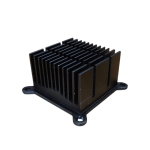
- Shrouds and duct adapters: ASIC shrouds channel airflow precisely through the heatsink array, eliminating dead zones and recirculation within the miner chassis. This is one of the most cost-effective cooling upgrades available.
Immersion cooling: For serious operations, immersion cooling eliminates the fan-and-heatsink paradigm entirely. Submerging a miner in dielectric coolant (engineered mineral oils or synthetic fluids) transfers heat directly from the chip surface to the fluid, which is then circulated through a heat exchanger. Benefits include virtually silent operation, elimination of dust as a failure vector, and the ability to overclock aggressively without thermal throttling. The trade-off is complexity and upfront cost.
Heat reuse — the Mining Hacker approach: If you are generating all that heat anyway, why not put it to work? D-Central’s Bitcoin Space Heater lineup turns the waste heat problem into a feature: a miner that heats your home, shop, or greenhouse while earning sats. When your mining hardware is also your heating system, the effective cost of electricity drops dramatically because every watt serves double duty. This is the decentralization ethos in practice — not just decentralizing hashrate, but decentralizing the utility of mining itself.
Environmental Controls
- Dedicated intake and exhaust: Route fresh air directly to the miner’s intake and exhaust hot air outside or to an area where the heat is useful. Insulated dryer duct works well for home setups.
- Temperature monitoring: A cheap WiFi temperature sensor at the intake and exhaust points gives you continuous data without needing to physically check on the miner. Set alerts for intake temperatures above 30 degrees Celsius.
- Humidity management: Keep relative humidity below 60%. In humid climates, a dehumidifier in the mining room protects against corrosion. In very dry environments, static discharge is the risk — an anti-static mat under the miner and proper grounding mitigate this.
- Seasonal planning: In Canada and the northern US, winter is free cooling season. In summer, you may need to reduce clock speeds, increase fan RPM, or add supplementary cooling. Plan for both extremes.
Firmware and Operational Best Practices
- Keep firmware updated: Manufacturers and third-party firmware developers regularly release updates that improve thermal management algorithms, fan curve tuning, and chip voltage regulation. Running outdated firmware is leaving free thermal headroom on the table.
- Use auto-tune features: Modern firmware like Braiins OS+ includes auto-tuning that dynamically adjusts frequency per chip and voltage per voltage domain based on real-time temperature data. Let the algorithm do what it does best.
- Set conservative thermal limits: Configure your firmware’s thermal shutdown threshold 5-10 degrees Celsius below the manufacturer’s maximum. This gives you a safety margin for unexpected ambient temperature spikes.
- Monitor, monitor, monitor: Whether through the miner’s web UI, a farm management tool, or a simple cron job that pings the API, continuous temperature monitoring is non-negotiable. By the time you notice your miner is quiet, the damage may already be done.
Maintenance Schedule: The Preventative Repair Calendar
Here is the maintenance schedule we recommend to every miner who wants to maximize hardware lifespan:
Monthly:
- Blow out dust from heatsinks and fan blades with compressed air
- Check fan RPM in the web interface — compare against baseline values
- Verify hashrate is at expected levels
- Inspect power cables and connections for heat damage or loosening
Quarterly:
- Deep clean: remove heatsinks if accessible, clean individual fin stacks
- Inspect fan bearings for noise or wobble — replace any suspect fans
- Check firmware for updates
- Review temperature logs for any upward trends over time
Annually:
- Reapply thermal paste on all ASIC chips (use quality TIM — MX-4, Noctua NT-H1, or Thermal Grizzly Kryonaut)
- Replace thermal pads on MOSFET arrays and voltage regulators
- Replace fans proactively if they have more than 25,000 hours of runtime
- Full visual inspection of PCBs for signs of corrosion, discolouration, or damaged traces
- Test power supply output voltages under load — degraded PSUs increase ripple and heat
DIY Repair for Overheated ASICs: What You Can Fix at Home
Not every thermal issue requires a professional repair. Here is what a technically competent home miner can tackle, and where the line is.
Repairs You Can Do
Thermal paste replacement: This is the single most impactful DIY repair for an overheating miner. Remove the heatsink assembly, clean off the old paste with isopropyl alcohol (99% purity), apply fresh paste in thin, even coverage, and reassemble. For most Antminer models, this is a straightforward process that requires only basic hand tools and patience.
Fan replacement: Stock fans are typically held in place with screws and connected via standard connectors. Replacement fans are widely available. Match the voltage, connector type, and CFM rating. When in doubt, go higher on CFM — more airflow never hurt anyone.
Cleaning and dust removal: Beyond the monthly compressed air treatment, a thorough cleaning involves removing the hashboards from the chassis, cleaning the heatsink fins with a soft brush, and using compressed air to clear the control board and PSU intake. A clean miner is a cool miner.
Connector and cable inspection: Heat damage often manifests at connection points first. Inspect the power connectors between the PSU and hashboards, the data ribbon cables between boards and the control board, and the fan connectors. Melted, discoloured, or loose connectors should be replaced.
When to Stop and Call the Professionals
There are clear boundaries to DIY repair. If you encounter any of the following, the miner needs to go to a professional repair facility:
- Burnt or visibly damaged ASIC chips: Chip-level repair requires BGA rework stations, hot air soldering equipment, and replacement chips. This is not kitchen-table work.
- Failed MOSFETs or voltage regulators: These surface-mount components require precision soldering and an understanding of the power delivery circuit. A mistake here can cascade into destroying additional components.
- Cracked or delaminated PCB: If the board itself is physically damaged — warped, cracked, or showing layer separation — that requires assessment by someone who can determine whether the board is salvageable or needs replacement.
- Multiple hashboards failing simultaneously: This pattern often points to a PSU issue or control board problem rather than thermal damage on the boards themselves. Misdiagnosing the root cause wastes time and money.
- Any repair you are not 100% confident performing: Mining hardware is valuable. A botched DIY repair can turn a repairable $200 problem into a $2,000 replacement. When in doubt, send it in.
Professional ASIC Repair: When to Send Your Miner to the Experts
D-Central Technologies has been Canada’s leading ASIC repair service since 2016. We have repaired thousands of miners across every major manufacturer and model, and thermal damage is the single most common category of repair we perform.
What Professional Repair Looks Like
When a thermally damaged miner arrives at our repair facility in Montreal, Quebec, here is what happens:
- Intake diagnostics: We power up the unit on our test bench and capture comprehensive telemetry — chip temperatures, hashrate per board, voltage domain readings, fan RPM, and kernel log analysis.
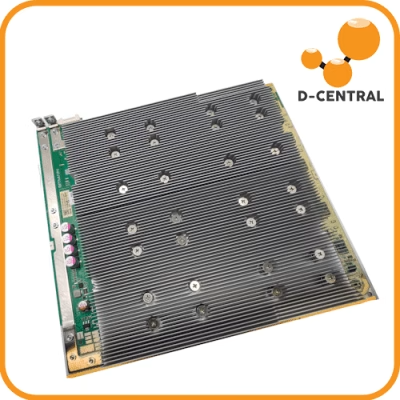
- Visual inspection: Every hashboard is removed and inspected under magnification for burnt components, solder joint failures, PCB damage, and thermal paste condition.
- Component-level testing: Using oscilloscopes, multimeters, and thermal imaging cameras, we identify the specific failed components. This is where professional equipment makes the difference — we can see a failing MOSFET on thermal camera before it shows any visible damage.
- Repair: Failed components are replaced using professional BGA rework stations for chip replacements and precision soldering for SMD components. New thermal paste is applied, thermal pads are replaced, and the unit is reassembled.
- Burn-in testing: The repaired miner runs on our test bench for an extended period under full load. We verify stable temperatures, consistent hashrate, and clean kernel logs before the unit ships back to you.
Why D-Central for ASIC Repair
- Experience since 2016: We have been in this space longer than most competitors have existed. Eight-plus years of hands-on experience across every generation of mining hardware.
- Bitcoin Mining Hackers: We are not a generic electronics repair shop. We are miners ourselves, we understand the economics, and we make decisions about repairability with your ROI in mind.
- Retail-focused: We serve home miners and small operations, not just institutional farms. Your single S19 gets the same diagnostic attention as a pallet of machines.
- Canadian-based: Located in Montreal, Quebec, we serve all of Canada and accept cross-border repairs from the US. No shipping hardware overseas and hoping for the best.
- Full ecosystem: Repair is just one piece. We also sell replacement parts, cooling accessories, custom-built miners, and provide hosting services. If your miner cannot be economically repaired, we can help you find the right replacement.
Turning Heat Into an Advantage: The Decentralization Angle
Here is a perspective that most guides miss entirely: heat is not just a problem to solve. It is a resource to exploit.
Every watt your ASIC consumes becomes heat. In a traditional mining setup, that heat is waste — you pay to generate it and then pay again (via cooling costs) to get rid of it. But in a home mining setup, especially in a cold climate like Canada, that heat has real economic value.
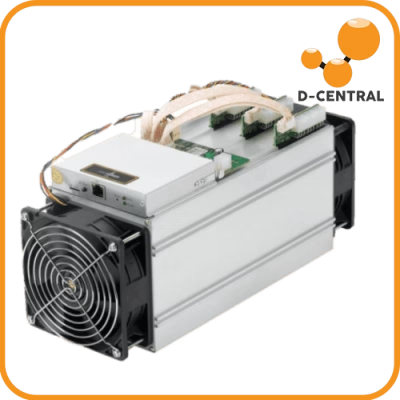
A Bitmain S19 consuming 3,250 watts produces approximately 11,090 BTUs per hour of heat — the equivalent of a medium-sized electric space heater. If that miner is heating your home, garage, or workshop during the 6-8 months of Canadian winter, the effective electricity cost of mining drops dramatically because you would have been paying for heating anyway.
This is the Bitcoin Mining Hacker philosophy: do not just accept the constraints of the hardware, hack around them. Turn the waste heat problem into a dual-purpose solution. Decentralize not just the hashrate, but the utility of the mining operation itself.
D-Central’s Space Heater line is built on exactly this principle — purpose-built enclosures that safely direct miner exhaust heat into living and working spaces while earning sats every second.
Frequently Asked Questions
What temperature is too hot for an ASIC miner?
Most modern ASIC miners are designed to operate with chip junction temperatures between 75-95 degrees Celsius. Sustained operation above 95 degrees Celsius accelerates silicon degradation, solder joint fatigue, and MOSFET failure. If your miner’s chip temperature regularly exceeds 90 degrees Celsius, you should address your cooling setup before damage occurs. Board (ambient) temperatures should stay below 65 degrees Celsius for most models.
How often should I clean my ASIC miner?
In a typical home environment, blow out dust with compressed air every 30-90 days. If you have pets, run the miner in a dusty workshop, or live in a high-pollen area, clean monthly. Quarterly, do a deeper clean by removing heatsinks and cleaning individual components. Annually, replace thermal paste and proactively swap fans that are approaching end of life.
Can overheating permanently damage my ASIC miner?
Yes, absolutely. Sustained overheating causes electromigration in chip interconnects (permanent), thermal cycling fatigue in solder joints (progressive and permanent), MOSFET degradation (permanent), and PCB delamination (permanent). Some thermal damage is repairable — we regularly replace failed MOSFETs and reball BGA solder joints — but the ASIC chips themselves cannot be repaired once the internal structures are damaged. Prevention is always cheaper than repair.
Is it safe to overclock my ASIC miner?
Overclocking is safe when done responsibly with adequate cooling headroom. Use firmware with auto-tuning capabilities (Braiins OS+, Vnish, LuxOS) that dynamically adjusts per-chip frequencies based on temperature. Increase frequency in small increments (5-10% at a time), monitor temperatures for 24-48 hours at each step, and never push beyond the point where chip temperatures consistently exceed 85 degrees Celsius. If your cooling system is already near its limits at stock speeds, overclocking is not advisable without hardware upgrades.
What thermal paste should I use when replacing TIM on an ASIC miner?
Use a high-quality non-conductive thermal compound. Recommended options include Arctic MX-4, Noctua NT-H1, and Thermal Grizzly Kryonaut. Avoid liquid metal compounds on ASIC miners — the risk of electrical shorts on densely packed PCBs outweighs the marginal thermal benefit. Apply a thin, even layer that covers the full die surface without excess that could squeeze onto surrounding SMD components.
Should I repair my overheated ASIC myself or send it to a professional?
DIY is appropriate for thermal paste replacement, fan swaps, cleaning, and cable inspection. These are low-risk, high-impact maintenance tasks that any careful person can perform. For anything involving soldering, component replacement, or diagnosing intermittent electrical faults, professional repair is the safer and often cheaper option in the long run. A misdiagnosed problem or botched solder job can escalate repair costs significantly. D-Central Technologies offers professional ASIC repair with diagnostics, component-level repair, and burn-in testing.
How can I use my ASIC miner’s waste heat productively?
The most practical approach is using your miner as a space heater during cold months. Direct the exhaust into a room, garage, workshop, or greenhouse. Purpose-built enclosures like D-Central’s Bitcoin Space Heater lineup make this safe and efficient. Other creative applications include drying firewood, heating a hot tub or pool, warming a chicken coop, or preheating air for an HRV system. The key principle: if you were going to pay for electric heat anyway, mining with that electricity first is essentially free heating.
Does operating in a cold climate like Canada help prevent ASIC overheating?
Significantly, yes. Lower ambient intake temperatures give your cooling system more headroom, reduce fan RPM requirements (quieter operation), and extend component lifespan. A miner pulling in 0 degrees Celsius intake air in a Canadian winter versus 35 degrees Celsius summer air in a hot climate has a 35-degree head start on thermal management. This is one reason Canada is one of the best places on Earth for home mining — cold air is free and abundant for most of the year.