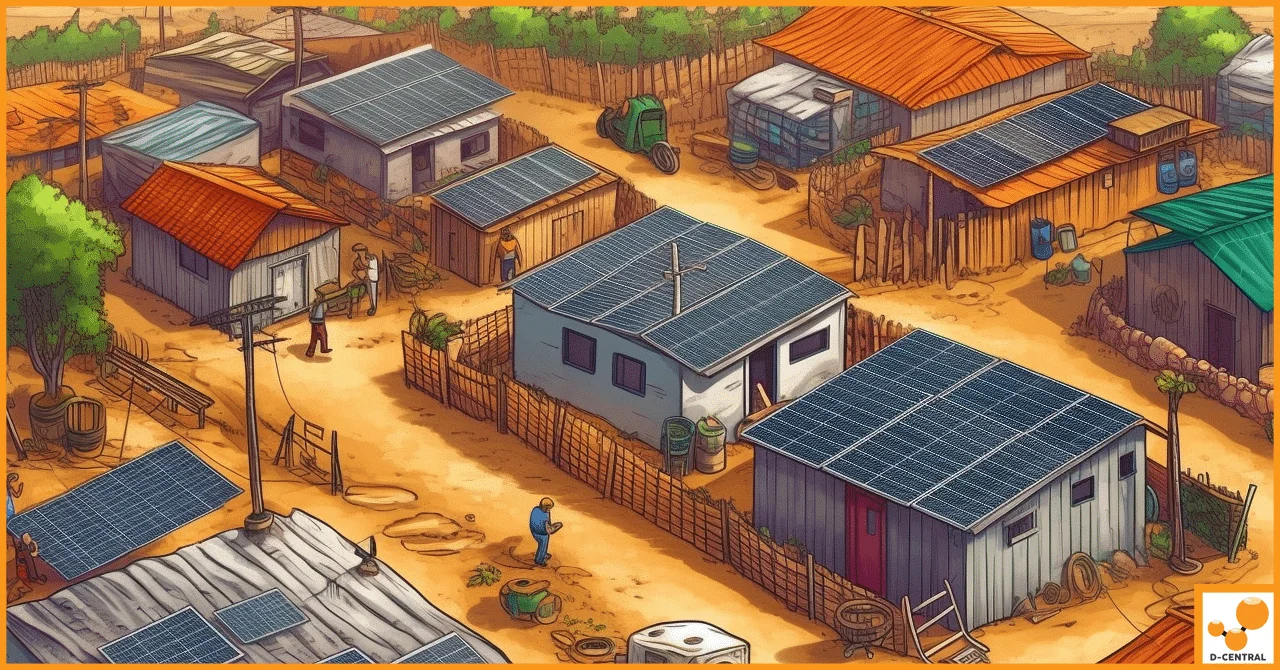
Over a billion people on this planet still lack reliable electricity. Meanwhile, the Bitcoin network hashes at over 800 EH/s, consuming energy at a scale that critics love to condemn. Here is the twist they never mention: that very energy demand is one of the most powerful tools available for bringing electricity to the communities that need it most.
Bitcoin mining does not just secure a decentralized monetary network. It can serve as the economic engine that makes micro-grid electrification financially viable in remote regions where traditional utilities have zero incentive to build. This is not theory — it is already happening. And at D-Central Technologies, we have spent since 2016 understanding every layer of Bitcoin mining infrastructure, from the ASIC chips to the power grids that feed them.
The Energy Access Crisis: A Problem Waiting for Bitcoin
The International Energy Agency estimates that roughly 685 million people still have no electricity at all, with hundreds of millions more relying on unreliable connections that drop out for hours daily. The majority are concentrated in Sub-Saharan Africa and South Asia. Traditional grid extension to these remote, low-density populations is economically unviable — the cost per connection can exceed $2,000 USD, and the revenue from a handful of rural households will never recoup it.
Mini grids (also called micro-grids) offer a decentralized alternative: small-scale, self-contained power networks serving a community from local generation — typically solar, hydro, or wind. They are the obvious solution. But they have a brutal economics problem.
The “Tyranny of Small Size” — And Why Mining Fixes It
Mini grid developers face what energy economists call the “tyranny of small size.” The fixed costs of building generation capacity, distribution wiring, and metering infrastructure are largely the same whether you serve 50 households or 5,000. But with only a few dozen customers paying modest tariffs, the revenue barely covers operating expenses, let alone the capital investment.
The result: mini grids in rural areas often run at 20-40% utilization during the day, and even less at night. Investors see poor returns. Developers struggle to secure financing. Communities stay in the dark.
Bitcoin mining obliterates this problem by providing a reliable, location-agnostic, interruptible industrial load that can absorb every watt of excess generation capacity. Here is how the economics shift:
| Metric | Mini Grid WITHOUT Mining | Mini Grid WITH Mining |
|---|---|---|
| Capacity Utilization | 20–40% | 80–95% |
| Revenue Stability | Seasonal, unpredictable | 24/7 baseline from mining |
| Investor Confidence | Low — uncertain payback | High — guaranteed off-taker |
| Payback Period | 8–15 years | 3–6 years |
| Community Tariffs | Higher (subsidizing fixed costs) | Lower (mining absorbs base load cost) |
| Grid Expansion Incentive | Minimal | Strong — more capacity = more mining revenue |
The key insight is that Bitcoin mining is the only industrial process that can be deployed anywhere on Earth with just an internet connection and electricity. It requires no supply chain of raw materials, no proximity to markets, no transportation infrastructure for finished goods. A container of ASICs dropped next to a solar array in rural Kenya generates the same revenue as one plugged into a hydro dam in Quebec. That is a property unique to Bitcoin mining — and it is revolutionary for electrification.
How It Works: Mining as the Anchor Tenant
In commercial real estate, an “anchor tenant” is the large, reliable tenant whose lease secures financing for the entire development. Bitcoin mining serves exactly this role for micro-grids.
Here is the operational model:
1. Generation is sized for growth, not current demand. Instead of building a solar or hydro installation sized to just barely cover current household demand, the developer builds for projected 5–10 year demand. The “excess” capacity is immediately monetized through mining.
2. Mining absorbs surplus, yields to community. Smart load management ensures that when household or commercial demand rises, mining rigs throttle down or shut off. The community always gets priority. Mining only consumes what would otherwise be wasted.
3. Revenue flows in BTC. Mining revenue arrives in Bitcoin — a borderless, censorship-resistant asset that does not depend on local banking infrastructure, currency stability, or government policy. For operators in regions with volatile local currencies, this is not a minor detail. It is a lifeline.
4. The grid pays for itself faster. With mining revenue supplementing tariff income, the mini grid achieves profitability years earlier. This accelerated payback unlocks more financing for additional communities.
The current Bitcoin block reward of 3.125 BTC (post-April 2024 halving) still represents significant value. Even small-scale mining operations contributing a fraction of the network’s 800+ EH/s total hashrate generate meaningful revenue — especially when the alternative is zero revenue from wasted kilowatts.
The Hardware Reality: What Goes Into a Remote Mining Site
Building a mining operation at a micro-grid site is not plug-and-play. It demands expertise in both mining hardware and remote infrastructure deployment. This is where companies like D-Central Technologies bring critical value — we have been repairing, customizing, and deploying ASIC miners since 2016.
| Component | Requirements | Considerations |
|---|---|---|
| ASIC Miners | 110+ TH/s modern units (e.g., S21, S19 XP) | Efficiency (J/TH) matters most in low-cost power environments |
| Power Infrastructure | Step-down transformers, PDUs, proper grounding | Must handle variable solar/hydro output |
| Cooling | Ventilation, exhaust management, dust filtration | Tropical environments require robust thermal planning |
| Connectivity | Reliable internet (satellite if necessary) | Starlink has changed the game for remote sites |
| Containment | Modified shipping containers or purpose-built enclosures | Protection from weather, dust, theft, and wildlife |
| Monitoring | Remote management software, ASIC health dashboards | Minimize need for on-site technical staff |
| Local Workforce | Trained technicians for maintenance and repair | Creates local employment and skills transfer |
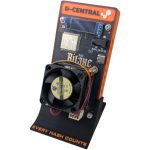
For smaller-scale or educational deployments, even open-source miners like the Bitaxe platform can demonstrate the concept — a single Bitaxe running on a few watts of solar shows a community firsthand how Bitcoin mining converts electricity into value. It is a powerful educational tool and a gateway to understanding decentralized systems.
Renewable Energy Symbiosis: Why Mining Loves Clean Power
Bitcoin mining critics love to paint mining as an environmental villain. The reality, particularly in the micro-grid context, tells the opposite story.
Solar, hydro, and wind installations in remote areas frequently generate stranded energy — power that is produced but has no consumer. A solar array sized for daytime peak loads produces excess at midday. A run-of-river hydro plant generates around the clock whether anyone needs the power or not. Without storage (which remains expensive), this energy is simply wasted.
Bitcoin mining is the ultimate energy sink of last resort. It monetizes stranded energy that would otherwise produce zero value. And because mining rigs can be throttled, curtailed, or shut off within seconds, they are the perfect flexible load — absorbing surplus when available and yielding instantly when community demand rises.
This creates a virtuous cycle:
- Mining makes renewable installations more profitable
- Greater profitability attracts more investment in renewables
- More renewable capacity means more electricity for communities
- Mining absorbs the surplus, maintaining profitability as communities grow
In Canada, we understand this intimately. Our own mining hosting operations in Quebec leverage clean hydroelectric power — the same principle applies whether the hydro dam is on the Manicouagan River or a small river in rural Uganda.
Regulatory Navigation and Security
Deploying mining operations in developing regions requires navigating regulatory frameworks that range from supportive to hostile to nonexistent. Key considerations include:
Regulatory compliance: Some nations have embraced Bitcoin mining (El Salvador, certain African nations with forward-thinking energy policy). Others have banned it outright. Due diligence on the legal landscape is non-negotiable before deploying hardware.
Physical security: ASIC miners are valuable hardware. Remote sites need proper physical security — fencing, surveillance, access control, and ideally local community buy-in (communities that benefit from cheaper electricity have a vested interest in protecting the mining infrastructure).
Cybersecurity: Mining pools, wallets, and remote management interfaces must be hardened against attack. VPN access, firmware verification, and network segmentation are baseline requirements.
Insurance and partnerships: Working with local energy providers, community organizations, and NGOs builds the social license and operational partnerships necessary for long-term success.
The Decentralization Imperative
At D-Central Technologies, our mission is the decentralization of every layer of Bitcoin mining. Micro-grid mining embodies this philosophy in its purest form.
When mining is concentrated in a few massive data centers, the network is vulnerable — to regulation, to single points of failure, to political pressure. When mining is distributed across thousands of small operations worldwide, including micro-grid sites in remote regions, the network becomes genuinely antifragile.
Every micro-grid mining operation is:
- A new node in the global hash rate distribution
- A community with a direct economic stake in Bitcoin’s success
- A demonstration that decentralized systems create real-world value
- A step toward the future Satoshi envisioned: a network secured by participants everywhere, not controlled by anyone
This is why we do what we do. Whether you are setting up a Bitcoin space heater in your Canadian basement or planning a solar-powered mining container in East Africa, the principle is the same: convert energy into sovereignty.
Getting Started: From Concept to Kilowatts
If you are exploring Bitcoin mining as an anchor load for micro-grid development, here is a practical path forward:
1. Assess your energy resource. What is the generation capacity? What percentage is currently utilized? What is the cost per kWh? What is the variability profile (solar vs. hydro vs. wind)?
2. Size the mining operation. Match ASIC count and power draw to available surplus. Start conservative — it is easier to add machines than to manage an overloaded grid.
3. Source the right hardware. Efficiency matters. Modern ASICs pulling 110+ TH/s at under 25 J/TH are the sweet spot for 2026. Check our shop for current-generation miners.
4. Plan for the long haul. Mining hardware has a lifespan. Budget for maintenance, replacement, and the ongoing training of local technicians. Our consulting services can help you build a sustainable operational plan.
5. Monitor and optimize. Remote monitoring, pool selection, firmware optimization, and regular maintenance schedules are the difference between a profitable operation and an expensive experiment.
FAQ
How does Bitcoin mining improve micro-grid economics?
Bitcoin mining provides a guaranteed, 24/7 industrial electricity consumer that absorbs surplus generation capacity. This transforms a mini grid from a low-utilization, money-losing project into a high-utilization, revenue-generating asset. Mining revenue supplements household tariff income, shortens payback periods from 8-15 years to 3-6 years, and attracts investor financing by demonstrating reliable returns.
What is the “tyranny of small size” in micro-grid development?
The tyranny of small size refers to the disproportionately high per-unit cost of building small-scale energy infrastructure. A mini grid serving 50 households faces nearly the same fixed costs (generation equipment, distribution wiring, metering) as one serving 5,000 — but generates a fraction of the revenue. This makes small rural mini grids economically challenging without an additional revenue stream like Bitcoin mining.
Can mining rigs yield priority to community electricity needs?
Yes. Modern mining operations use smart load management systems that throttle or shut down ASICs within seconds when community demand rises. The mining load is classified as “interruptible” — it runs only on surplus capacity and always yields priority to households and businesses. This is one of mining’s key advantages as an anchor load: it provides revenue without competing with community needs.
What type of mining hardware works best for remote micro-grid sites?
For maximum revenue per watt, current-generation ASICs with efficiency ratings under 25 J/TH are ideal — models producing 110+ TH/s. For smaller demonstrations or educational deployments, open-source miners like the Bitaxe series offer an accessible entry point running on minimal power. The choice depends on available generation capacity and budget.
Does Bitcoin mining at micro-grid sites harm the environment?
When paired with renewable micro-grids, Bitcoin mining actually improves environmental outcomes. It monetizes stranded energy (power that would otherwise be wasted), making renewable installations more profitable and attracting further investment in clean energy. Mining does not increase generation — it utilizes existing surplus. The net effect is more renewable energy capacity built and a stronger economic case for clean power.
How much internet bandwidth does a remote mining site require?
Bitcoin mining requires surprisingly little bandwidth — a few hundred kilobytes per second is sufficient for most operations. The real requirement is reliability, not speed. Satellite internet (such as Starlink) has made even the most remote locations viable for mining operations. Pool communication protocols are designed to be lightweight and tolerant of intermittent connectivity.
What is the current Bitcoin block reward and why does it matter for micro-grid mining?
As of 2026, the Bitcoin block reward is 3.125 BTC per block (set by the April 2024 halving). While this is half the previous reward, the increase in Bitcoin’s value and the extremely low energy costs at micro-grid sites mean that mining remains profitable. The block reward, combined with transaction fees, provides the revenue stream that makes mining-anchored micro-grids economically viable.