In 2013, a Bitcointalk forum user misspelled “holding” during a market crash and accidentally coined one of Bitcoin’s most enduring mantras: HODL. What started as a typo became a philosophy — the conviction that Bitcoin’s long-term trajectory rewards patience over panic, and that the strongest hands belong to those who understand what they hold and why.
But HODLing is not just about buying Bitcoin on an exchange and sitting on it. The most sovereign form of HODLing is mining your own sats — earning Bitcoin directly from the protocol through proof-of-work, with no counterparty, no KYC, and no exchange risk. Every block reward you mine is Bitcoin that never touched a centralized order book. It is the purest form of accumulation.
At D-Central Technologies, we have been building the infrastructure for this exact strategy since 2016. As Canada’s Bitcoin Mining Hackers, we take institutional-grade mining technology and hack it into accessible solutions for home miners, pleb miners, and sovereignty-focused Bitcoiners who understand that running hashpower is running Bitcoin.
What HODLing Actually Means in 2026
HODLing is not a passive “set and forget” investment strategy. It is an active conviction — a deliberate decision to accumulate and hold Bitcoin because you understand its properties as the hardest money ever created: fixed supply of 21 million coins, predictable issuance schedule, censorship resistance, and permissionless transfer.
In February 2026, the Bitcoin network operates at over 800 EH/s of hashrate, with mining difficulty exceeding 110 trillion. The block reward stands at 3.125 BTC following the April 2024 halving, and the next halving is expected around 2028. Every four years, the supply shock tightens. Every cycle, the conviction of long-term holders is tested and rewarded.
HODLing is the recognition that Bitcoin operates on a timescale that dwarfs quarterly earnings reports and day-trading charts. The protocol does not care about your feelings — it produces a new block roughly every ten minutes, rewards the miner who finds it, and marches forward. Aligning yourself with that timeline is what HODLing is about.
Mining: The Most Sovereign Way to HODL
There is a critical distinction between buying Bitcoin and earning Bitcoin. When you purchase from an exchange, you inherit counterparty risk, KYC exposure, and the possibility of frozen accounts. When you mine Bitcoin, the protocol pays you directly. Your sats arrive in your wallet through proof-of-work — the same mechanism that secures the entire network.
This is why mining and HODLing are not just complementary strategies — they are the same strategy executed at different layers of the stack. Mining is HODLing with hashpower.
Solo Mining: Every Hash Counts
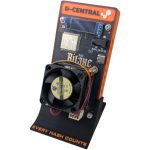
Solo mining with devices like the Bitaxe represents the purest expression of this philosophy. You point your hashpower directly at the Bitcoin network, and if your device finds a valid block, you receive the full 3.125 BTC block reward plus transaction fees — no pool fees, no intermediaries.
Yes, the probability is low for any single device. A Bitaxe Supra running at ~500 GH/s against a network doing 800+ EH/s has astronomical odds per block. But solo miners have won blocks. It happens. And the expected value calculation changes when you factor in that you are accumulating non-KYC Bitcoin — sats that carry no surveillance baggage.
D-Central is a pioneer in the Bitaxe ecosystem, involved since the beginning. We created the original Bitaxe Mesh Stand — the first company to manufacture it — and have developed leading solutions including heatsinks, custom cases, and accessories for every Bitaxe variant: Supra, Ultra, Hex, Gamma, and GT. We stock the full open-source mining lineup including NerdAxe, NerdNOS, Nerdminer, and NerdQAxe.
Important hardware note: Bitaxe devices (Supra, Ultra, Gamma) use a 5V barrel jack (5.5×2.1mm DC) powered by a 5V/6A PSU — not USB-C. The USB-C port is for firmware flashing and serial communication only. Getting this wrong is one of the most common beginner mistakes.
Pool Mining: Consistent Accumulation
For those who prefer steady accumulation, pool mining with ASIC hardware distributes risk across thousands of miners. You contribute hashpower to a pool, and in return you receive proportional payouts based on your contribution. The sats flow daily, and you stack them into cold storage as part of your long-term HODL strategy.
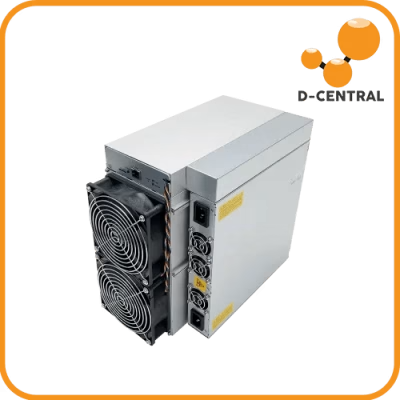
Full-scale ASIC miners like the Antminer S21 series deliver terahashes of power. D-Central’s shop carries a full range of mining hardware — from entry-level open-source miners to industrial ASICs — alongside the replacement parts, power supplies, and cooling solutions needed to keep operations running.
Dual-Purpose Mining: Heat Your Home, Stack Your Sats
One of the most compelling arguments for mining as a HODLing strategy is dual-purpose mining — using your ASIC miner as a space heater. Every watt consumed by a Bitcoin miner is converted to heat with near-perfect efficiency. Instead of paying an electric company to warm your home with a resistive heater, you pay the Bitcoin network and receive sats in return.
D-Central’s Bitcoin Space Heaters are purpose-built for this use case. Available in S9, S17, and S19 editions, these units take proven ASIC hardware and package it into enclosures designed for home environments — managing noise, directing airflow, and integrating cleanly into living spaces.
For Canadian miners especially, this changes the economics outright. Canada’s cold climate means six or more months of heating season where your miner is not just paying for itself — it is replacing your heating bill while stacking sats. The economics are clear:
| Factor | Traditional Heater | Bitcoin Space Heater |
|---|---|---|
| Energy Conversion | 100% to heat | 100% to heat |
| Bitcoin Output | 0 BTC | Daily sat accumulation |
| Net Heating Cost | Full electricity cost | Electricity minus BTC earned |
| Sovereignty Contribution | None | Hashrate decentralization |
Why Mining Beats Exchange Accumulation for HODLers
The typical HODLing advice is “buy Bitcoin and put it in cold storage.” That is good advice. But mining offers structural advantages that exchange purchases cannot match:
No Counterparty Risk
When you mine, the protocol pays you. There is no exchange that can freeze your account, no bank that can reverse your transaction, no compliance department that can flag your withdrawal. Your miner connects to the network, does work, and earns Bitcoin. The relationship is between you and the protocol — no one else.
Non-KYC Accumulation
Mined Bitcoin arrives in your wallet without identity verification attached. In an era of increasing financial surveillance, this matters. KYC-free sats are fungible sats — they carry no history of your identity, no chain analysis metadata linking them to your government ID.
Dollar-Cost Averaging Through Hashpower
Mining acts as a natural dollar-cost averaging mechanism. Your miner runs continuously, earning sats regardless of whether the price is up or down. You are not timing the market — you are mining through it. Over time, this smooths out your acquisition cost just as DCA does, but with the added benefit of network participation.
Network Security Contribution
Every hash your miner produces contributes to Bitcoin’s security. You are not just accumulating an asset — you are actively defending the network that makes that asset valuable. HODLers who mine are putting their money where their mouth is, backing their conviction with actual proof-of-work.
The HODL Mindset and Mining Operations
Running a mining operation — whether it is a single Bitaxe on your desk or a rack of S21s in your garage — requires the same psychological framework as HODLing. You will face periods where electricity costs exceed mining revenue. You will watch difficulty adjustments eat into your margins. You will hear people say mining is “not profitable.”
The HODLer-miner does not panic. They understand several things:
- Bitcoin is priced in fiat, but valued in sovereignty. Measuring mining profitability in dollars misses the point. You are acquiring a scarce, censorship-resistant asset. The fiat price today is irrelevant to its utility a decade from now.
- Difficulty adjusts. When less efficient miners capitulate, difficulty drops, and your machine earns more. The protocol self-corrects. Patience is rewarded.
- Hardware has residual value. ASIC miners are physical assets that can be repaired, resold, or repurposed. A Bitaxe sitting on your shelf is still a functional miner — plug it in whenever the economics shift.
- Heat is never wasted. If your miner heats your space, the “unprofitable” equation changes fundamentally. You were going to pay for heat anyway.
Maintaining Your Mining Hardware
A HODLing strategy measured in years means your mining hardware needs to last. ASIC miners are industrial equipment running 24/7 under thermal stress. Fans wear out. Hashboards develop faults. Control boards need firmware updates. Dust accumulation degrades thermal performance.
D-Central’s ASIC Repair service is the backbone of long-term mining operations. With expertise spanning every major manufacturer — Bitmain, MicroBT, Innosilicon, Canaan — and 60+ model-specific repair pages documenting common failures and solutions, D-Central is the Western hemisphere’s leading ASIC repair authority.
Keeping your hardware running is not maintenance — it is protecting your stack. Every day a miner sits offline is a day of sats you did not earn. Every hashboard repaired instead of replaced is money that stays in your HODL pile.
Hosting: Mining at Scale for Serious HODLers
Not every HODLer has the electrical capacity or noise tolerance to run industrial ASICs at home. D-Central’s mining hosting facility in Quebec provides the infrastructure for miners who want to accumulate at scale without converting their living room into a data center.
Quebec’s advantages for hosted mining are significant:
- Hydroelectric power — among the cheapest and cleanest electricity in North America
- Cold climate — natural cooling reduces energy costs and extends hardware lifespan
- Political stability — Canada offers regulatory clarity and infrastructure reliability
- Geographic decentralization — running hashrate in Canada diversifies the network away from jurisdictional concentration
Your hardware, your Bitcoin, your keys. Hosting just provides the rack space, power, and cooling. The sats flow to your wallet.
Building a HODLing-Mining Strategy: A Framework
Whether you are just starting or expanding an existing operation, here is a practical framework for combining mining with HODLing:
| Stage | Hardware | Strategy | HODL Action |
|---|---|---|---|
| Entry | Bitaxe / Nerdminer | Solo mining lottery | Learn, participate, hope for a block |
| Home Miner | Bitcoin Space Heater | Pool mining + heat recovery | Daily sats to cold storage, offset heating costs |
| Dedicated | S19/S21 at home | Pool mining with noise/heat management | Accumulate aggressively, never sell |
| Scaled | Multiple ASICs hosted | Hosted mining in Quebec | Industrial-grade accumulation, long-term hold |
HODLing vs. Trading: The Miner’s Perspective
The trading mindset and the mining mindset are fundamentally incompatible. Traders optimize for fiat returns. Miners optimize for sat accumulation. These are different games with different rules.
A trader looks at a miner and sees a depreciating asset producing a volatile commodity. A miner looks at a trader and sees someone paying exchange fees, capital gains taxes, and counterparty risk for the privilege of timing a market that is structurally designed to go up over long timeframes.
The HODLer-miner does not care about today’s price. They care about:
- How many sats per day their hardware produces
- Their all-in cost per kWh
- Hardware uptime and efficiency
- The next halving and its effect on supply
- Whether their sats are in self-custody
This is a fundamentally different — and we would argue superior — relationship with Bitcoin. You are not speculating on price. You are participating in the network.
The Decentralization Imperative
There is a dimension to mining-and-HODLing that pure exchange buyers miss entirely: decentralization. Every home miner running a Bitaxe or a Space Heater is a node of hashrate that does not belong to a mega-corporation. Every pleb miner pointing their device at the network makes Bitcoin harder to attack, harder to censor, harder to control.
D-Central’s mission is the decentralization of every layer of Bitcoin mining. When you mine at home, you are not just stacking sats — you are defending the network. You are making Bitcoin more resilient. You are contributing to the security model that makes your HODL stack valuable in the first place.
This is the virtuous cycle: mine, hold, defend, repeat. The more decentralized the hashrate, the more valuable Bitcoin becomes. The more valuable Bitcoin becomes, the more people mine. The more people mine at home, the more decentralized the hashrate. Every hash counts.
Getting Started
If you are ready to combine HODLing with mining — to earn your Bitcoin directly from the protocol rather than buying it from an exchange — D-Central Technologies has everything you need:
- Bitaxe Hub — the definitive guide to every Bitaxe model, with setup guides, accessories, and overclocking tips
- Shop — full range of mining hardware from open-source solo miners to industrial ASICs
- Bitcoin Space Heaters — dual-purpose mining and heating units for Canadian winters
- ASIC Repair — keep your hardware running and your stack growing
- Mining Hosting — Quebec-based facility for scaled operations
Since 2016, D-Central has been hacking institutional mining technology into accessible solutions for home miners across Canada and beyond. Your sovereignty starts with your hashpower. Start mining. Start stacking. Start HODLing — the right way.
Frequently Asked Questions
What does HODL mean in Bitcoin?
HODL originated from a misspelling of “hold” in a 2013 Bitcointalk forum post. It has become a philosophy representing the commitment to hold Bitcoin long-term through market volatility, based on the conviction that Bitcoin’s fixed supply and decentralized properties make it a fundamentally sound long-term asset. HODLing is not passive laziness — it is an active decision rooted in understanding Bitcoin’s monetary properties.
How does Bitcoin mining complement a HODLing strategy?
Mining allows you to accumulate Bitcoin directly from the protocol without purchasing on an exchange. This means no counterparty risk, no KYC exposure, and no exchange fees. Mined sats flow directly to your wallet through proof-of-work, and you can hold them indefinitely as part of your long-term accumulation strategy. Mining is HODLing with hashpower — the most sovereign form of Bitcoin acquisition.
Is solo mining with a Bitaxe worth it for HODLers?
Solo mining with a Bitaxe is a low-probability, high-reward strategy. At ~500 GH/s against an 800+ EH/s network, the odds of finding a block are extremely small, but the payout is the full 3.125 BTC block reward plus fees. For HODLers, the value goes beyond probability — you are participating directly in Bitcoin’s consensus mechanism, earning non-KYC sats, and supporting network decentralization. D-Central stocks every Bitaxe variant and created the original Mesh Stand.
What is a Bitcoin Space Heater and how does it relate to HODLing?
A Bitcoin Space Heater is an ASIC miner housed in an enclosure designed for home use, converting all consumed electricity into both heat and Bitcoin. Since resistive heaters also convert electricity to heat at 100% efficiency, a Space Heater gives you identical heating with Bitcoin as a bonus. For HODLers in cold climates like Canada, this means your heating bill effectively becomes a Bitcoin accumulation mechanism — dramatically improving the economics of both mining and holding.
How much Bitcoin can I mine per day in 2026?
Daily mining output depends on your hashrate, the network difficulty (currently 110T+), electricity cost, and the block reward (3.125 BTC). A single Antminer S21 producing ~200 TH/s in a pool will earn a small fraction of BTC daily. The exact amount fluctuates with difficulty adjustments every 2,016 blocks. Use D-Central’s mining resources to estimate output for specific hardware. Remember: HODLers measure success in sats accumulated over years, not daily fiat value.
Do I need to sell mined Bitcoin to cover electricity costs?
This is a personal decision that depends on your financial situation and conviction level. Many HODLer-miners cover electricity from fiat income and never sell a single sat. Others sell just enough to cover power costs and hold the rest. If you use a Bitcoin Space Heater, the mining offsets heating costs you would pay anyway, reducing or eliminating the need to sell. The strongest HODLers treat electricity as the cost of acquiring non-KYC, sovereignty-preserving Bitcoin.
Why does D-Central host miners in Quebec specifically?
D-Central’s hosting facility is located in Quebec because of its access to abundant hydroelectric power — among the cheapest and cleanest electricity in North America. Quebec’s cold climate also provides natural cooling, reducing energy costs and extending hardware lifespan. Combined with Canada’s political stability and regulatory clarity, Quebec offers an optimal environment for long-term mining operations that align with a HODLing strategy.
What happens to my mining operation during a bear market?
Bear markets test conviction. Less efficient miners shut down, network difficulty drops, and your hardware earns more sats per unit of hashpower. This is the HODLer-miner’s advantage — while others capitulate, you continue accumulating at a lower effective cost. If your electricity is cheap and your hardware is maintained (D-Central’s ASIC Repair service helps here), bear markets are accumulation opportunities, not reasons to panic.
What power supply does a Bitaxe need?
Bitaxe models (Supra, Ultra, Gamma) require a 5V power supply with a 5.5×2.1mm DC barrel jack connector, rated at 5V/6A. The USB-C port on these devices is for firmware flashing and serial communication only — it does not provide sufficient power to run the miner. The Bitaxe GT and Bitaxe Hex use a 12V DC XT30 connector instead. D-Central stocks compatible PSUs for every Bitaxe variant.
How does home mining contribute to Bitcoin’s decentralization?
Every home miner adds hashrate that is geographically distributed and independently operated. This makes Bitcoin’s network more resistant to government shutdowns, corporate consolidation, and coordinated attacks. When mining is concentrated in large facilities, it creates single points of failure. Home miners — even small ones running a Bitaxe — diversify the network’s security model. D-Central’s mission is the decentralization of every layer of Bitcoin mining, and home miners are the front line of that mission.