Your ASIC miner is running. The fans are spinning. Hashes are being submitted. But is your hardware still earning its keep — or is it silently bleeding sats through inefficiency?
Every Bitcoin miner faces this question eventually. The network difficulty adjusts upward relentlessly, new chip generations push joules-per-terahash lower, and your electricity meter keeps spinning regardless of whether your rig is competitive. Knowing when to upgrade — and when to hold — is one of the most consequential decisions a home miner can make.
At D-Central Technologies, we have been in the trenches of Bitcoin mining since 2016. We have repaired thousands of ASICs, built custom mining solutions, and helped home miners across Canada and beyond navigate every generation of hardware from the S9 era to the current S21 lineup. This guide distills that experience into a practical framework you can use right now.
The Bitcoin Mining Hardware Lifecycle
Every ASIC miner follows a predictable arc. Understanding where your machine sits on this curve is the first step toward making a rational upgrade decision.
Phase 1: Peak Performance
When a new-generation miner ships, it represents the bleeding edge of silicon efficiency. Early adopters who secure units at launch enjoy maximum competitiveness. Hash rate is high relative to the network, and the joules-per-terahash (J/TH) ratio is best-in-class. This is when your machine earns the most sats per kilowatt-hour.
Phase 2: Competitive Plateau
Within 12 to 24 months, competing models arrive and network difficulty absorbs the new hashrate. Your miner is still profitable, but margins are thinner. This is the longest phase for well-built hardware — and the phase where dual-purpose setups like Bitcoin space heaters shine, because the heat output offsets your heating bill regardless of mining margins.
Phase 3: Diminishing Returns
Electricity costs begin to dominate. Your miner’s J/TH ratio is now two or three generations behind. You are spending more on power per terahash than miners running current hardware. At this point, the machine still works — but the economics are working against you.
Phase 4: Retirement or Repurpose
The miner can no longer cover its electricity cost at your local power rate. But “retirement” does not always mean the scrap heap. Older ASICs can be repurposed as space heaters (where the heat value subsidizes operation), used for solo mining as low-cost lottery tickets, or sold to miners in regions with cheaper power.
Six Signals That It Is Time to Upgrade
Do not upgrade on impulse. Upgrade when the data tells you to. Here are the concrete signals that your hardware has entered the diminishing-returns zone.
1. Your J/TH Ratio Is More Than Double the Current Generation
Joules per terahash is the single most important efficiency metric for any ASIC miner. As of early 2026, the Antminer S21 XP Hyd delivers around 12 J/TH, while the standard S21 sits at roughly 17.5 J/TH. If your machine is running at 30+ J/TH (typical of S19-era units) or 50+ J/TH (S17 territory), you are paying two to four times more electricity per hash than current hardware. That gap compounds every single day.
2. Electricity Costs Are Eating Your Mining Revenue
Pull up your power bill and your mining dashboard. Calculate your all-in cost per kilowatt-hour (including cooling if applicable) and compare it against your daily BTC revenue. If electricity is consuming more than 70-80% of your gross mining income, your margins are dangerously thin. A network difficulty increase or a dip in BTC price could push you into negative territory overnight.
3. Network Difficulty Has Risen Significantly Since You Bought
Bitcoin’s mining difficulty adjusts approximately every two weeks to maintain the 10-minute block target. In early 2026, network difficulty sits above 110 trillion — a figure that would have been unimaginable just a few years ago. If you purchased your miner when difficulty was 40-50 trillion, your share of the network hashrate has been diluted by more than half, even though your machine’s absolute hashrate has not changed.
4. New Hardware Offers 2x or Greater Efficiency Gains
When a new generation of ASICs delivers at least a 2x improvement in J/TH over your current hardware, the upgrade math starts to work in your favor. The jump from the S19 series (roughly 30 J/TH) to the S21 series (roughly 17.5 J/TH) represented exactly this kind of generational leap. Watch for similar jumps — they are the clearest buy signals the market gives you.
5. Repair Frequency Is Increasing
ASICs are industrial machines running 24/7 under thermal stress. Fans wear out, thermal paste degrades, and hashboards can develop faults over time. If you are sending your miner in for repair more than once a year — or if a single repair would cost more than 30-40% of the machine’s current resale value — it may be more economical to upgrade. That said, professional ASIC repair can extend a machine’s useful life significantly, so get a diagnostic before writing off repairable hardware.
6. Your Miner Cannot Run the Latest Firmware
Firmware updates often include efficiency optimizations, new pool protocol support, and security patches. If your hardware has been abandoned by its manufacturer with no further firmware updates, you are locked out of incremental improvements that newer machines receive automatically. Custom firmware options like Braiins OS can extend some older models, but eventually even these reach their limits.
Bitcoin Mining Hardware Landscape in 2026
The current generation of Bitcoin ASICs represents a massive leap in efficiency compared to hardware from even two years ago. Here is where the market stands as of February 2026.
Bitmain Antminer S21 Series
The S21 lineup is Bitmain’s current flagship. The standard Antminer S21 delivers approximately 200 TH/s at around 17.5 J/TH — a substantial improvement over the S19 generation. The S21 XP pushes efficiency further, and the hydro-cooled S21 XP Hyd achieves roughly 12 J/TH, making it one of the most efficient production miners ever built. For home miners, the air-cooled S21 models hit the sweet spot of performance versus operational simplicity.
Bitmain Antminer S21 Pro
The S21 Pro targets operators who want maximum hashrate per unit. With enhanced cooling and higher power draw, it suits miners who have negotiated favorable electricity rates and want to maximize output per rack slot.
MicroBT Whatsminer M60 and M63 Series
MicroBT continues to compete aggressively. The Whatsminer M60S and M63S offer competitive J/TH ratios and have earned a reputation for build quality and reliability. These are solid alternatives for miners who prefer MicroBT’s engineering philosophy.
Open-Source Miners: Bitaxe and the Nerd Series
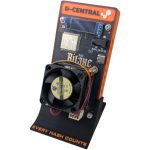
Not every upgrade means buying a bigger ASIC. The open-source mining movement has exploded, and D-Central is a pioneer in this space. The Bitaxe — available in Supra, Ultra, Hex, Gamma, and GT variants — lets you solo mine Bitcoin with a single ASIC chip at minimal power consumption. The NerdAxe, NerdQAxe, and NerdOctaxe expand the open-source lineup further. These are not hash-rate competitors to full ASICs; they are sovereignty tools. Every hash counts — and a solo miner running a Bitaxe has a non-zero chance of finding a full block reward. D-Central created the original Bitaxe Mesh Stand and has been part of this ecosystem since its inception.
The Upgrade Decision Framework
Before you spend a single sat on new hardware, run through this framework.
Step 1: Calculate Your Current Cost per Terahash
Take your monthly electricity cost for mining and divide it by your total hashrate. This gives you your operating cost per TH/s per month. Now do the same calculation for the new hardware you are considering, using your actual electricity rate. The difference between these two numbers is your potential monthly savings per TH/s.
Step 2: Determine Your Break-Even Period
Divide the purchase price of the new hardware by the monthly savings you calculated in Step 1. If the break-even period is under 12 months, the upgrade is strongly justified. If it is 12-18 months, it is reasonable. Beyond 18 months, proceed with caution — a lot can change in the mining landscape over that timeframe.
Step 3: Factor in the Resale or Repurpose Value of Your Current Hardware
Your current miner is not worthless. Older ASICs have an active resale market, especially for space heater conversions. An S19 that is no longer competitive as a pure miner might still fetch a meaningful price from someone who wants to heat their garage while stacking sats. That resale value reduces your net upgrade cost.
Step 4: Consider Your Power Situation
Home miners in Canada have a unique advantage: cold winters mean ASIC heat output directly displaces heating costs for roughly six months of the year. If you are running your miner as a space heater during winter, the effective electricity cost drops significantly because you are getting double value from every watt. This can shift the upgrade calculus — sometimes it makes sense to keep an older, less efficient miner running during heating season and only upgrade before the warm months when heat output is a liability rather than a benefit. Use our Mining Power Cost Calculator to model different scenarios.
Step 5: Check Repair Viability
Before committing to a full replacement, get your current hardware assessed. A hashboard repair, fan replacement, or thermal paste refresh can restore a miner to near-original performance for a fraction of the cost of new hardware. D-Central’s repair team has brought thousands of “dead” ASICs back to life. Sometimes the best upgrade is the one you do not have to make.
Upgrading Strategies for Home Miners
Not every upgrade has to be a wholesale replacement. Here are strategies that home miners use to stay competitive without breaking the bank.
Staggered Upgrades
If you run multiple machines, replace them one at a time rather than all at once. This spreads the capital expenditure over months, reduces risk if hardware prices drop, and ensures you always have mining capacity online.
The Heat-Mining Calendar
Run older, less efficient miners during heating season (October through April in most of Canada) when their heat output has tangible value. Transition to newer, more efficient hardware for the warm months when you are paying for cooling rather than benefiting from heat. This maximizes the useful life of every machine you own.
Sell and Upgrade
The used ASIC market is active. Sell your current hardware while it still has meaningful resale value — do not wait until it is completely obsolete. Apply the proceeds toward your next-generation machine. Timing the sell-and-upgrade cycle well can reduce your net cost significantly.
Firmware Optimization Before Hardware Replacement
Custom firmware like Braiins OS+ can unlock efficiency gains on supported hardware. Before buying a new machine, check whether firmware optimization can squeeze more performance from your existing one. On some S19-series models, custom firmware can improve efficiency by 10-20%, potentially extending the machine’s competitive life by another year.
Add a Bitaxe for Solo Mining
Even if your main ASIC is your workhorse, adding a Bitaxe to your setup gives you a solo mining lottery ticket running 24/7 at negligible power cost. It is not a replacement for your primary miner — it is an addition that aligns with the cypherpunk ethos of participating in the Bitcoin network as a sovereign individual. Every hash you submit is a vote for decentralization.
Why D-Central for Your Next Upgrade
D-Central Technologies is not a faceless hardware reseller. We are Bitcoin mining hackers — we have been taking institutional-grade mining technology and making it accessible to home miners since 2016. Here is what that means for your upgrade decision:
- Full-spectrum expertise: We sell hardware, repair hardware, build custom solutions, and host miners. We understand the entire lifecycle of a mining machine because we work with them at every stage.
- ASIC repair as a differentiator: Before you decide to replace, let us assess whether a repair makes more sense. Our repair service covers Bitmain, MicroBT, Canaan, and Innosilicon machines with model-specific expertise across 40+ models.
- Open-source mining pioneers: We were early in the Bitaxe ecosystem, created the original Mesh Stand, and carry every variant plus accessories. If your upgrade path includes adding open-source miners, we are the authority.
- Bitcoin space heaters: We build custom mining rigs designed to heat your home. If you are upgrading out of an older ASIC, ask us about converting it into a space heater build that extends its useful life.
- Canadian-based, shipping worldwide: Located in Montreal, Quebec, we understand the unique advantages and challenges of mining in northern climates. Cold air is free cooling. Excess heat is free heating. We help you leverage both.
Frequently Asked Questions
How often should I upgrade my Bitcoin mining hardware?
There is no fixed schedule. The right time to upgrade depends on your electricity cost, your current hardware’s J/TH ratio compared to current-generation miners, and whether the break-even period on new hardware is under 12-18 months. Most miners find that a full hardware generation lasts 2-4 years before efficiency gains in new models justify a replacement.
Is it worth repairing an older ASIC miner instead of upgrading?
Often, yes. A hashboard repair or fan replacement can cost a fraction of new hardware and restore your miner to full performance. The rule of thumb: if the repair cost is under 30-40% of the machine’s current resale value, repair is usually the better economic choice. D-Central’s repair team can diagnose your machine and give you an honest assessment of repair-versus-replace.
What is the most important spec to compare when evaluating new mining hardware?
Joules per terahash (J/TH). This metric captures the relationship between power consumption and hashrate in a single number. A lower J/TH means you produce more hashes per watt of electricity consumed. When comparing two miners, the one with the lower J/TH will almost always be more profitable at the same electricity rate, assuming comparable uptime and reliability.
Should I keep mining with an old ASIC during Bitcoin bear markets?
If your electricity cost allows you to mine at or near break-even, continuing to mine during bear markets means you accumulate BTC at a cost basis close to production cost. Many veteran miners view bear-market mining as a form of dollar-cost averaging. If your miner doubles as a space heater during winter, the effective cost drops further. The decision comes down to your conviction about Bitcoin’s long-term value and your ability to absorb short-term operating costs.
What should I do with my old mining hardware when I upgrade?
You have several options: sell it on the used market (older ASICs still have demand, especially for space heater conversions), repurpose it as a Bitcoin space heater in your home or workshop, use it for solo mining as a low-cost lottery ticket, or sell it to miners in regions with cheaper electricity where it may still be profitable. D-Central can also help with trade-in assessments.
How do I calculate whether an upgrade is worth it financially?
Calculate your current monthly electricity cost per TH/s and compare it to what you would pay running the new hardware. Multiply the monthly savings by the expected useful life of the new hardware and subtract the purchase price (minus the resale value of your old machine). If the net result is positive within 12-18 months, the upgrade is financially sound. Use D-Central’s Mining Profitability Calculator to model different scenarios with your actual power rate.
Does Bitcoin’s halving affect when I should upgrade?
Yes, significantly. The most recent halving in April 2024 cut the block subsidy from 6.25 BTC to 3.125 BTC. This means miners earn half as much BTC per block, which increases the pressure on less efficient hardware. After a halving, the J/TH threshold for profitability tightens, and older machines get pushed out faster. Planning your upgrade to coincide with — or ideally precede — a halving cycle is a smart strategic move.
Are open-source miners like the Bitaxe a viable alternative to full ASICs?
They serve a different purpose. A Bitaxe running a single BM1368 or BM1366 chip produces a tiny fraction of the hashrate of a full ASIC like the S21. It is not a replacement for production mining. However, it is a powerful tool for solo mining — the Bitcoin equivalent of a lottery ticket that runs 24/7 on a few watts of power. Multiple solo Bitaxe miners have found full blocks, earning the entire 3.125 BTC reward. The Bitaxe is about sovereignty and participation in the network, not competing on hashrate.
What role does electricity cost play in the upgrade decision?
Electricity cost is arguably the most critical variable. A miner paying $0.04/kWh can profitably run hardware that would bleed money at $0.12/kWh. This is why Canadian home miners — especially those in Quebec and Manitoba with low hydro rates — can extend the life of their hardware longer than miners in high-cost regions. Your local electricity rate determines where the profitability line falls for any given J/TH ratio.
Can I use my Bitcoin miner as a heater to offset upgrade costs?
Absolutely. This is one of D-Central’s core specialties. An ASIC miner converts nearly 100% of its electrical input into heat. By ducting that heat into your living space during winter, you replace your conventional heating source while simultaneously mining Bitcoin. This dual-purpose approach means your effective mining cost drops by whatever you would have spent on heating. For Canadian miners, this can make even older-generation hardware viable during the heating season. Check out our Bitcoin Space Heaters page to see purpose-built solutions.